
Reviewed · HISTORICAL TOURS
Cordoba: Jewish History Private Tour
Córdoba’s Jewish Quarter is best understood on foot, and this private tour gives its narrow lanes a clear human story. You’ll visit the 14th-century synagogue, one of Spain’s last surviving historic synagogues, then follow the lives of thinkers such as Moshe Ben Maimon, better known as Maimonides.
I like the personal format and the way the route joins buildings, streets, and important figures rather than treating the quarter as a pretty maze. I also like that the two-hour schedule includes both the synagogue and the Mudejar chapel, two very different but important sites.
The main consideration is access. The route passes through old streets and is not suitable for wheelchair users, so anyone with mobility concerns should choose with care.
In This Review
- Key points at a glance
- Why this short walk matters in Córdoba
- Starting at Puerta de Almodóvar
- Inside Córdoba’s 14th-century synagogue
- The Mudejar Chapel of San Bartolomé
- Calleja de la Hoguera and the character of the quarter
- Plaza de Judá Levi and the Jewish intellectual world
- Maimonides and Córdoba’s wider intellectual story
- San Basilio and the final walk to Puerta de Sevilla
- What the $131 price means
- Who will get the most from this tour
- Practical advice before you go
- Should you book Córdoba’s Jewish History Private Tour?
- FAQ
- How long does the Jewish History Private Tour in Córdoba last?
- Where does the tour begin?
- Where does the tour finish?
- Is the Córdoba Synagogue included?
- Is the Mudejar Chapel included?
- Is Casa Sefarad included?
- What languages are available, and is the tour private?
Key points at a glance
- The synagogue is the tour’s anchor: See one of Spain’s few remaining medieval synagogues and its detailed Mudejar decoration.
- Maimonides gets more than a passing mention: The stop at his monument connects Córdoba with Jewish philosophy and Islamic thought.
- The route is genuinely private: You can ask questions and shape the conversation around your interests.
- Two historic faith traditions meet: The Mudejar chapel offers a useful comparison with the Jewish sites nearby.
- The walk crosses the old quarter: Start at Puerta de Almodóvar and finish at Puerta de Sevilla, with several named streets and squares along the way.
- Guide quality matters here: Lola has received especially warm praise for her friendly approach and willingness to answer questions.
Why this short walk matters in Córdoba
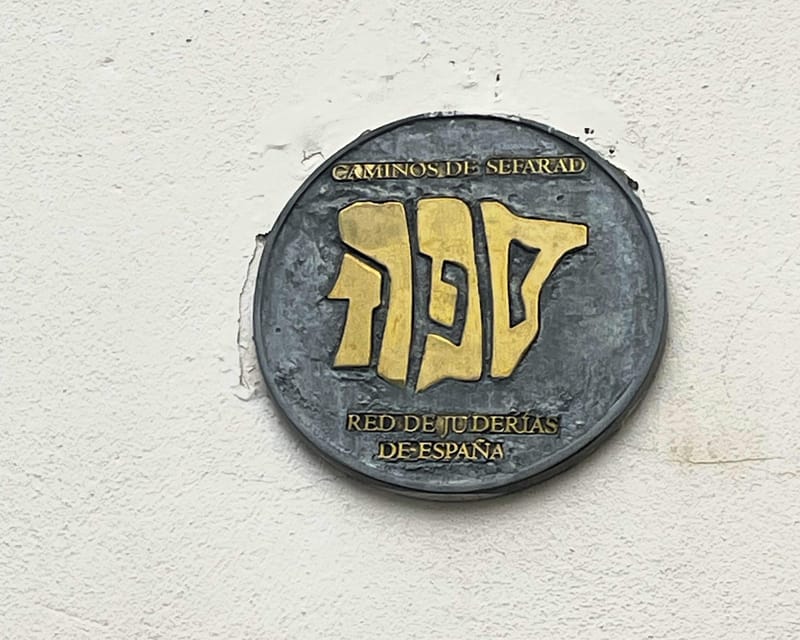
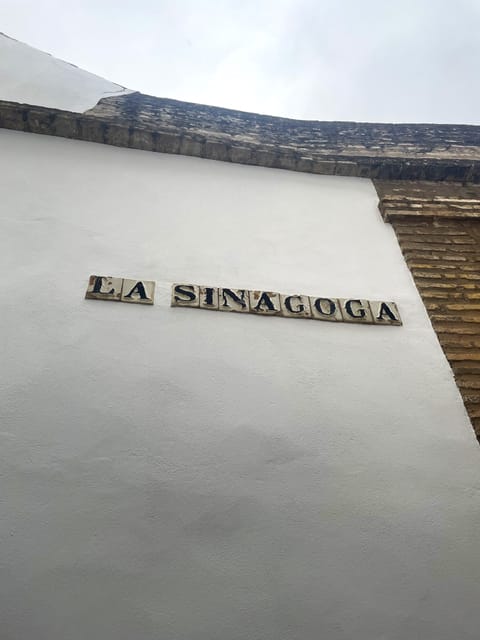
Córdoba is often reduced to its grand mosque-cathedral and Roman bridge. Those sights deserve your time, but the city’s Jewish past is easier to miss. This tour helps you notice the smaller places and names that explain how Jewish life formed part of Córdoba’s long intellectual and religious story.
You begin at Puerta de Almodóvar, an old city gate that provides a sensible meeting point at the edge of the historic center. From there, the route leads into the Jewish Quarter, where whitewashed buildings and winding streets create an appealing setting, but can also make the area hard to read without a guide.
I like this approach because the setting is not treated as decoration. As you walk, the guide places streets, monuments, scholars, and religious buildings into one story. You are not simply looking at old walls. You are learning why these places matter.
The private format is important. With a group of your own, you can pause to ask about Jewish customs, medieval scholarship, architecture, or the later fate of Córdoba’s Jewish community. The guide speaks English or Spanish, and the experience is designed for a private group rather than a large shared walk.
More History Tours in Cordoba
- Córdoba: Skip-the-Line Great Mosque-Cathedral History Tour
★ 4.7 · 1,690 reviews - Mosque of Cordoba History Tour in English Tickets included
★ 5.0 · 257 reviews - Cordoba: Segway Tour historic center
★ 4.8 · 15 reviews
Starting at Puerta de Almodóvar
Meet in front of the arch at Puerta de Almodóvar. This is a straightforward location, but give yourself enough time to find the correct side of the gate and meet your guide before the two-hour walk begins.
The gate introduces the old city well. You are moving from a major entrance into a quarter of tighter lanes and smaller spaces. That change in scale is part of the charm, though it also explains why this is a walking experience rather than a tour built around vehicle transfers.
The tour ends at Puerta de Sevilla, so you do not return to the starting point. That matters when planning the rest of your day. If you have a reservation elsewhere, leave time to walk from the finishing point or arrange your next stop before setting out.
Inside Córdoba’s 14th-century synagogue
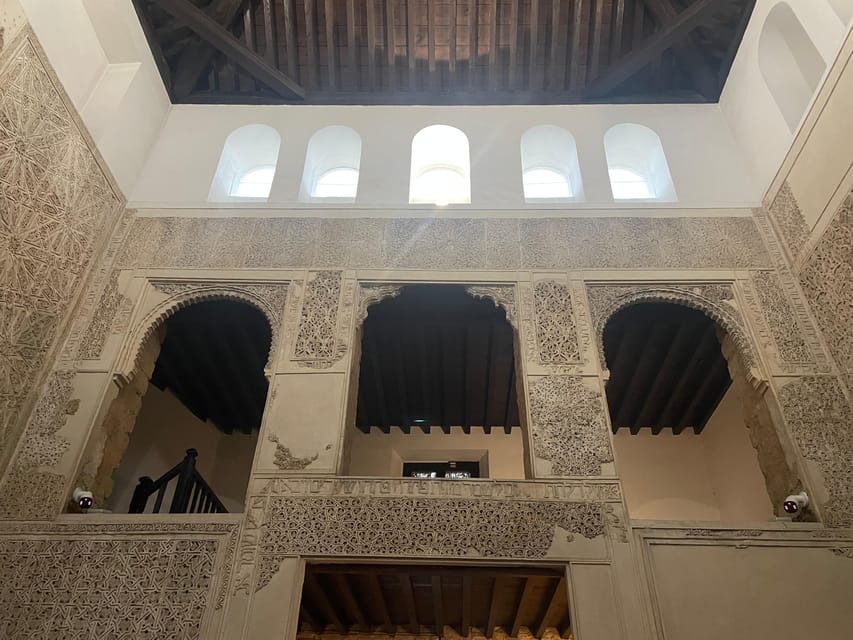
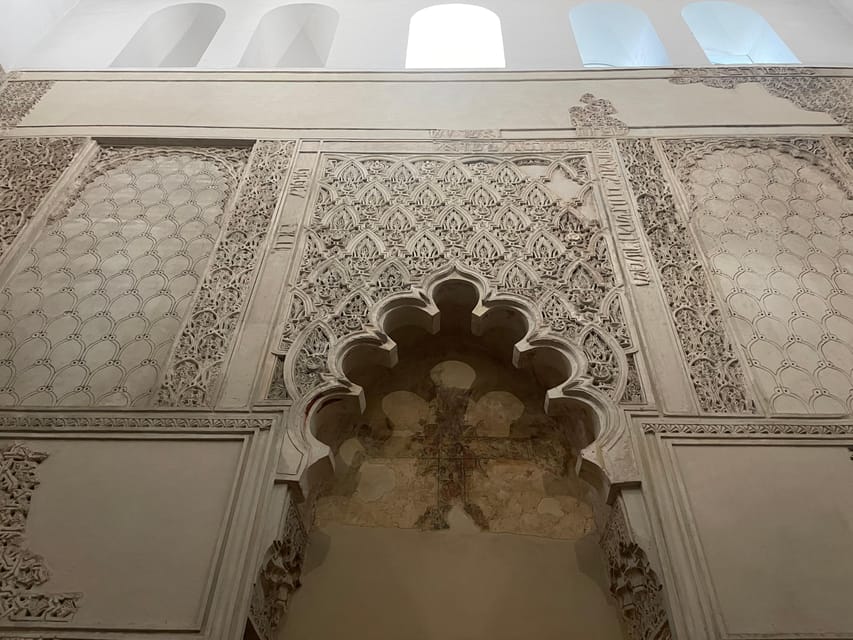
The synagogue is the clearest reason to book this experience. It is one of Spain’s last remaining historic synagogues, and the guided visit lets you look beyond its size and simple exterior.
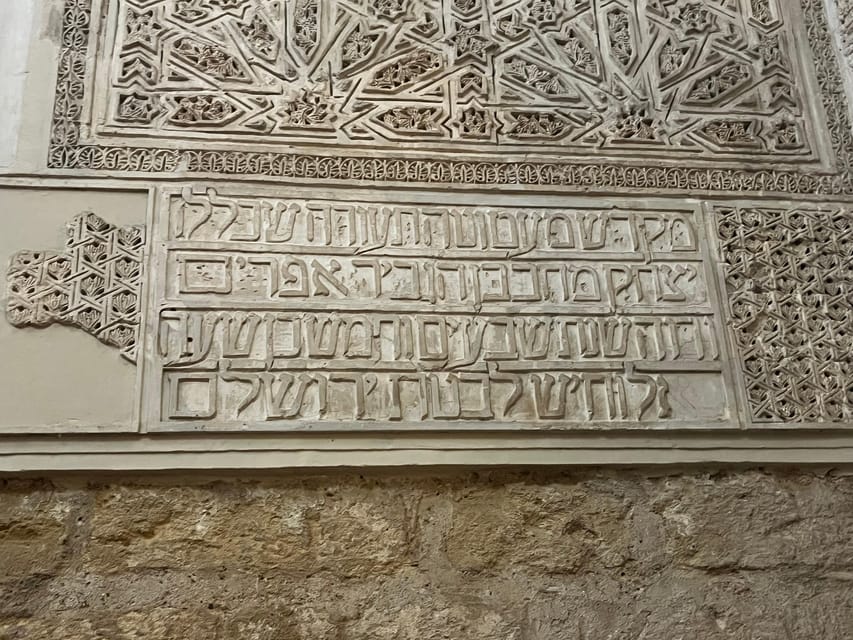
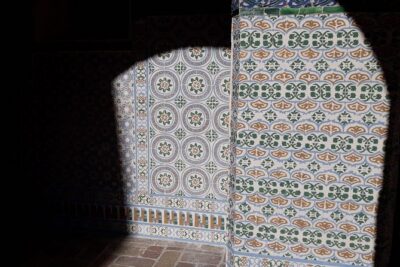
The building’s Mudejar details are especially important. Mudejar design reflects the influence of Islamic artistic traditions in Christian and Jewish buildings, often through geometric decoration, plasterwork, and careful use of pattern. Here, the architecture helps show that Córdoba’s different religious and cultural traditions did not develop in total isolation.
A guide adds value because the building can be easy to misunderstand when seen quickly. The synagogue is not just an attractive old room. It connects to the Jewish community that lived, worshipped, studied, and worked in Córdoba.
You should expect the visit to focus on the site’s historical and architectural meaning. The supplied details do not promise a long independent exploration or a particular sequence inside the building, so keep your expectations practical: this is one stop within a two-hour walking tour, not a full museum visit.
Still, it is a strong use of time. The synagogue gives the tour a physical center, while the surrounding streets and monuments add names and context.
The Mudejar Chapel of San Bartolomé
Next comes the Capilla de San Bartolomé, also known as the Chapel of San Bartolomé. This is the second included interior visit and gives you a useful point of comparison with the synagogue.
The chapel is associated with Mudejar architecture, a style shaped by Islamic artistic influence. Seeing it alongside the synagogue helps you notice shared decorative ideas without confusing the buildings’ different religious purposes.
I like having both sites in the same short tour. If you only visit the synagogue, you may leave with a narrow picture of Córdoba’s medieval architecture. The chapel broadens that view and shows how styles and building traditions crossed religious boundaries.
The chapel is also a reminder that the Jewish Quarter is not a single-purpose historic zone. Its streets hold layers of religious, civic, and domestic history. A private guide can explain those connections as you move between stops, rather than leaving you to make sense of each building alone.
The two interior visits are included in the tour price. That is useful when comparing this experience with a general neighborhood walk that may focus only on outdoor sites.
A completely different day out from Cordoba:
- Córdoba: Skip-the-Ticket-Line Mosque-Cathedral Guided Tour
★ 4.6 · 9,634 reviews - Cordoba Mosque-Cathedral: Skip-the-Line Guided Tour
★ 4.7 · 6,610 reviews - Córdoba: Jewish Quarter, Mosque, and Alcázar Tour
★ 4.7 · 4,279 reviews - Cordoba: Equestrian Show General Entry
★ 4.5 · 2,333 reviews
Calleja de la Hoguera and the character of the quarter
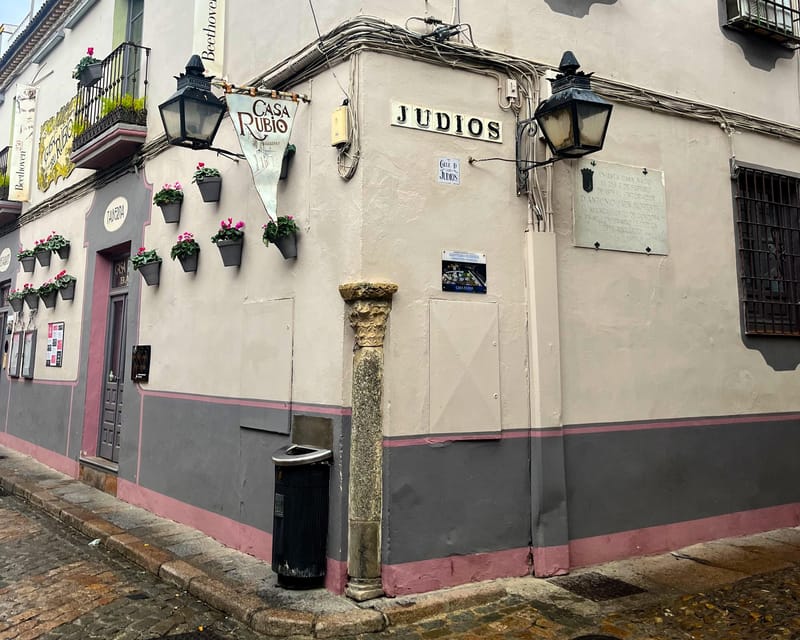
Calleja de la Hoguera is one of the smaller street stops on the route. The name and setting give the guide another chance to explain how the old quarter worked as a lived neighborhood, not simply as a collection of monuments.
The narrow lanes and whitewashed buildings are attractive, but they can blur together if you walk without context. This is where a private tour earns its keep. You can ask which details are historically significant and which are simply part of the quarter’s later appearance.
Do not expect every street to offer a dramatic landmark. Some of the pleasure comes from linking modest spaces to larger themes. The value is in the explanation, especially if you want to understand how Jewish life fitted into Córdoba’s urban fabric.
Because the route moves through old streets, wear comfortable shoes and be ready for a steady walking pace. The activity information specifically says it is not suitable for wheelchair users. No additional accessibility details are given, so anyone needing step-free access should contact the provider before booking.
Plaza de Judá Levi and the Jewish intellectual world
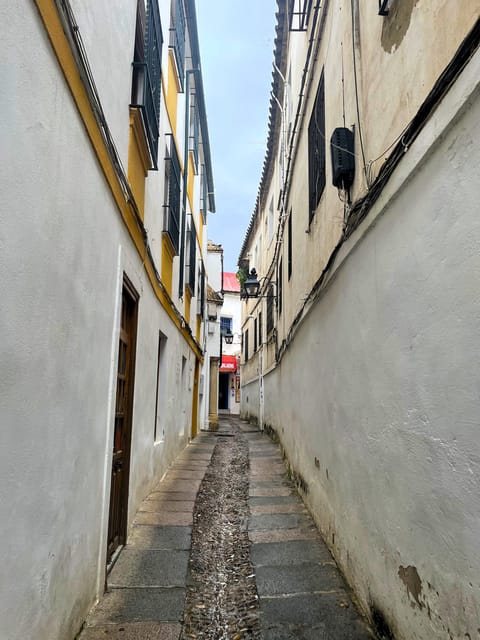
The stop at Plaza de Judá Levi brings the tour back to people and ideas. Judah Levi was a major Jewish poet and thinker, and his name helps shift the focus from buildings to the intellectual life associated with medieval Jewish Spain.
This is one of the strongest reasons to choose the tour if you enjoy history through biography. A street or square becomes more memorable when it is tied to a person whose work shaped Jewish thought and literature.
The tour also introduces Hasday Ibn Shaprut, another major figure linked to Córdoba’s Jewish past. His inclusion widens the story beyond Maimonides and shows that the city’s Jewish contribution was not the work of one famous scholar alone.
The information provided does not specify how long the guide spends at each named stop, so the depth will depend partly on your questions and the guide’s style. That is not necessarily a weakness. In a private group, you can signal whether you want more biography, architecture, religious history, or connections with Islamic scholarship.
If you have a particular interest in medieval Jewish thinkers, tell the guide at the start. The experience is short, and a little direction can help you get more from it.
Maimonides and Córdoba’s wider intellectual story
The monument to Moshe Ben Maimon, known as Maimonides or RaMBaM, is the route’s most recognizable personal link. Maimonides was a famous Jewish philosopher and physician, and the tour connects his work with both Jewish and Islamic thought.
That connection is valuable because Córdoba’s story is not neatly divided into separate religious boxes. The tour presents the city as a place where ideas developed in contact with one another. You will not get a full academic course in two hours, but you should come away with a better sense of why Córdoba mattered to Jewish intellectual history.
The stop at the statue also gives you a visual reference point. Buildings can be difficult to remember after a long day of sightseeing. A named figure, a monument, and a short explanation often stay with you longer.
One verified booking described Lola as friendly, well informed, and happy to answer questions. Another particularly praised her ability to explain Jewish history in Córdoba and Spain in a way that made the subject feel relevant to the present. If Lola leads your tour, you can expect a guide who encourages questions rather than simply reciting dates.
Guide assignment may vary, so the safest expectation is an expert English- or Spanish-speaking guide, not a guaranteed individual guide. Still, the available feedback gives Lola special mention and makes her a name worth noting when you book.
San Basilio and the final walk to Puerta de Sevilla
San Basilio is the last named neighborhood stop before the tour finishes at Puerta de Sevilla. It extends the walk beyond the central cluster of Jewish Quarter sights and gives the route a more complete shape.
The finish is useful for orientation. You began at Puerta de Almodóvar and end at another historic gate, giving you a clear line through the old city rather than an out-and-back walk. You can plan your next activity from there, though the tour does not include transportation after the finish.
The supplied information does not specify what you will enter or see inside San Basilio, so treat it as a guided neighborhood stop rather than a promised museum visit. The strength here is continuity. The guide carries the themes of architecture, community, and Córdoba’s Jewish legacy through to the end.
At two hours, this is a compact introduction. It should fit well before or after a larger visit to the Mosque-Cathedral, but you should not expect the same level of detail as a full-day history program.
What the $131 price means
At $131 per person, the tour is not a casual budget walk. Its value depends on how many people are in your private group and how much you care about focused interpretation.
For one or two people, the cost may feel high for two hours. You are paying for a private guide, the synagogue visit, the Mudejar chapel, and the ability to ask questions without being tied to a large group. That can be worthwhile if Jewish history is a main reason you are visiting Córdoba.
For a larger private group, the per-person value may improve, depending on the booking arrangement. The price includes the synagogue and Mudejar chapel, which is important when making comparisons. Casa Sefarad, the Sepharad Center, is not included, though you can visit it after the tour.
I would not book this solely for sightseeing photos. The quarter’s streets are easy to explore on your own. I would book it for interpretation, especially if you want to understand Maimonides, Hasday Ibn Shaprut, Judah Levi, the synagogue, and the architectural links between Jewish, Islamic, and Christian Córdoba.
The reserve-now, pay-later option also helps if your schedule is still shifting. Free cancellation is available up to 24 hours before the start for a full refund. Those terms reduce some of the risk, but check the starting time before finalizing your day because the activity lasts two hours and available times can vary.
Who will get the most from this tour
This experience suits you best if you want a focused introduction to Jewish Córdoba without committing to a full day. It is especially useful for visitors who prefer history explained through people and places rather than a long list of dates.
I would recommend it to:
- Anyone with an interest in Jewish history, Maimonides, or medieval scholarship
- Visitors who want a private guide and room for questions
- People who value historic interiors, especially the synagogue and chapel
- Couples, families, or small groups who prefer a set pace
- Visitors who want to connect Córdoba’s Jewish and Islamic intellectual traditions
It may not suit you if you have limited mobility, dislike walking on old streets, or want a broad survey of every major Córdoba monument. Casa Sefarad is also separate, so add it afterward only if you have enough time and want to continue the subject.
Practical advice before you go
Meet in front of the arch at Puerta de Almodóvar, not at the synagogue. That sounds obvious, but historic centers often have several nearby landmarks with similar names.
The languages are English and Spanish. If your group has a preferred language, make that clear when arranging the tour. You can also contact the provider through WhatsApp or iMessage if you need to reach them, with email available for other matters.
Wear shoes suited to a two-hour walk. The route includes narrow, winding streets and several outdoor stops, and it is not suitable for wheelchair users. The available information does not provide further access details, so contact the provider if you need specific accommodations.
Consider visiting Casa Sefarad after the walk. It is not part of the tour, but it offers a logical continuation for anyone who wants more about Sephardic culture and Córdoba’s Jewish past.
Should you book Córdoba’s Jewish History Private Tour?
Book it if the synagogue, Maimonides, and the Jewish intellectual story of Córdoba are high on your list. The two included interior visits give the walk substance, while the private format lets you ask the questions that make a short tour worthwhile.
I would be more cautious if you are mainly looking for a general introduction to Córdoba or the lowest possible price. In that case, a broader city walk may serve you better.
For the right visitor, this is a focused and useful two hours. Lola’s friendly, question-ready guiding style has been singled out, and the route gives you a thoughtful way to read the Jewish Quarter, from Puerta de Almodóvar to Puerta de Sevilla.
FAQ
How long does the Jewish History Private Tour in Córdoba last?
The tour lasts two hours.
Where does the tour begin?
It begins at Puerta de Almodóvar, in front of the arch.
Where does the tour finish?
The tour finishes at Puerta de Sevilla.
Is the Córdoba Synagogue included?
Yes. A guided visit to the synagogue is included.
Is the Mudejar Chapel included?
Yes. The tour includes a guided visit to Capilla de San Bartolomé, the Mudejar chapel.
Is Casa Sefarad included?
No. Casa Sefarad, also called the Sepharad Center, is not included, but you can visit it after the tour.
What languages are available, and is the tour private?
The tour is available in English and Spanish, and it is arranged for a private group.
Just added around Cordoba
- Tapas Tour Cordoba & Wine Experience with chef and sommelier★ 4.8 · 3 reviews
- O75 . The Oliva experience that you deserve★ 5.0 · 3 reviews
- Private Tour of Cordoba Week Days 2 Hours Tickets included★ 5.0 · 3 reviews
- Private Tour: Mezquita-Catedral from Cordoba★ 5.0 · 3 reviews
- Córdoba: Private Mosque-Cathedral and City Tour★ 5.0 · 3 reviews
- Cordoba private tour from Seville including the great Mosque for up to 8 persons★ 4.0 · 3 reviews
- Cordoba Highlights: Guided Day Tour from Seville★ 4.5 · 3 reviews
- Visit Cathedral Mosque of Córdoba★ 4.5 · 4 reviews
Historical Tours, compared.
Sevilla Food Tour: Tapas, Wine, History & Traditions
Read our review →
Ultimate Seville Tapas, Wine & History Small Group Tour
Read our review →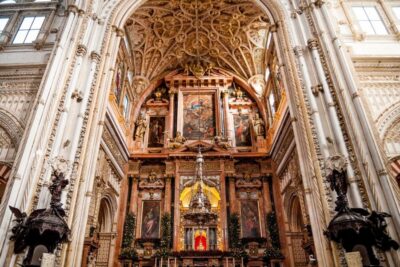
Skip-the-Line Great Mosque-Cathedral History Tour
Read our review →
Seville Evening Historical Tour with Haunted History
Read our review →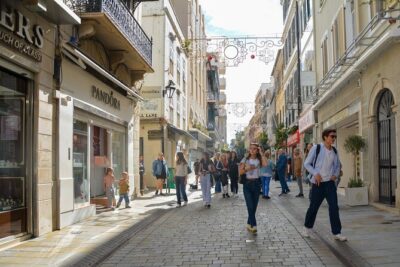
Historic Gibraltar Rock and St Michael’s Cave Tour from Seville
Read our review →
Historical Italica: Half-Day Guided Tour from Seville
Read our review →Browse the lists this tour appears in