
Reviewed · WALKING TOURS
Enchanted Seville Walking Tour
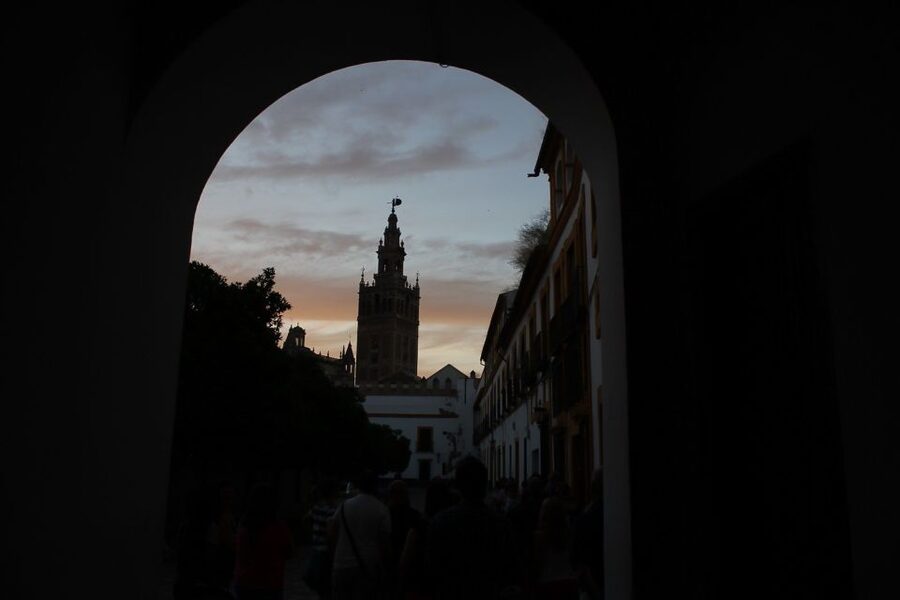
Seville’s old center changes character after sunset. This $17 evening walk links earthquake history, Jewish-quarter legends, Roman columns, medieval revenge tales, Muslim-era passages, and the modern Las Setas in one compact route. It is a good way to see the city as a stage for stories rather than a string of monuments.
I like the route’s small-scale, street-level focus and its clear path through several historic districts. I also like the value: a local guide, two hours of conversation, and a gentle introduction to Seville’s past for less than the price of many museum tickets. The main caution is timing. One departure was shortened to about 90 minutes and ended somewhere different, so confirm the route if the full two hours matter to you.
In This Review
- Key points at a glance
- Starting under the Immaculate statue at Plaza del Triunfo
- Patio de Banderas and the threshold of Judería
- Doña Elvira, Susona, and Alfaro after sunset
- Calle Aire and the city beneath your feet
- Roman columns on Calle Mármoles
- The grim tale of Cabeza del Rey Don Pedro
- Alfalfa and traces of Muslim Seville
- Finishing at Las Setas in Plaza de la Encarnación
- What the $17 price really gives you
- Timing, language, and practical comfort
- Who will enjoy this Seville night walk
- Should you book the Enchanted Seville Walking Tour?
- FAQ
- Where does the tour start?
- How long does the walking tour last?
- What languages are available?
- What places does the route visit?
- Where does the tour finish?
- Is food included?
- Is the tour suitable for wheelchair users?
Key points at a glance
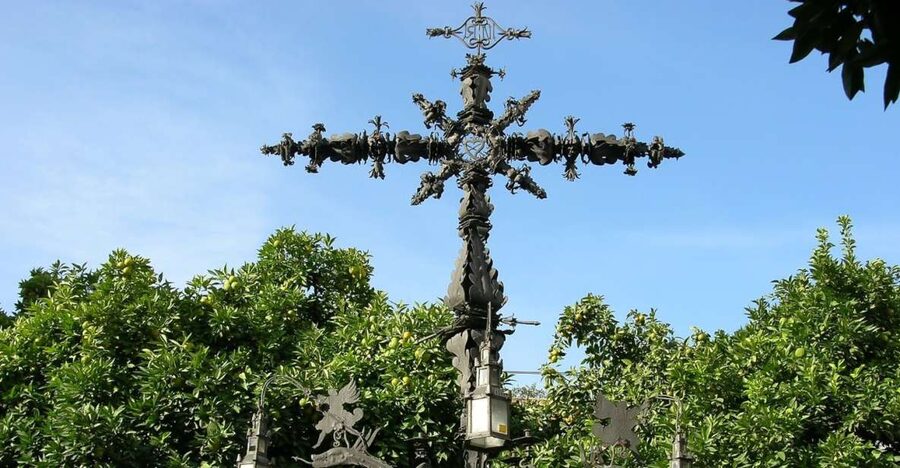
- Start at an earthquake-shaped plaza: Plaza del Triunfo recalls the 1755 Lisbon earthquake and Seville’s connection to that disaster.
- Walk the old Judería after dark: Narrow lanes and small squares provide the setting for stories about Seville from 1248 to today.
- Hear the tale behind Calle Susona: The route turns streets and houses into characters, with legends of betrayal and haunted buildings.
- Compare Roman, Muslim, medieval, and modern Seville: Roman columns, Alfalfa’s underground passages, and Las Setas appear on the same walk.
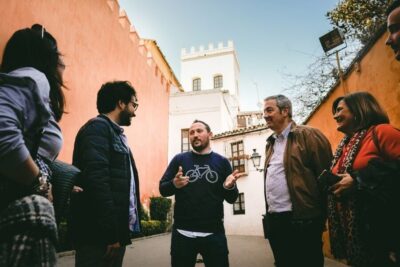
- Expect lively, personal guiding: Emilio has been praised for being friendly, entertaining, and willing to answer questions. Valentine has also led an informative historic walk.
- Bring comfortable shoes, not a meal: Food and drinks are not included, and the route is not suitable for wheelchair users.
Starting under the Immaculate statue at Plaza del Triunfo
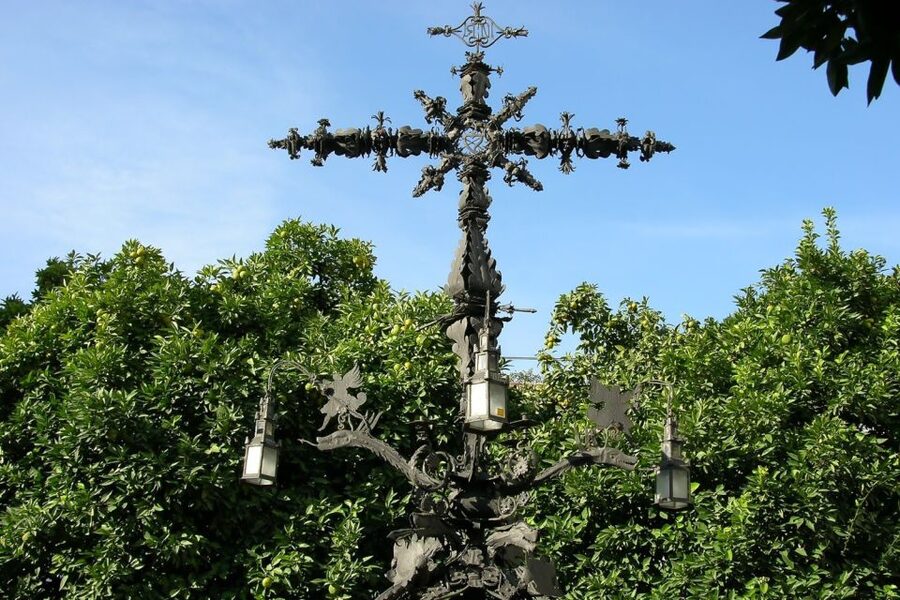
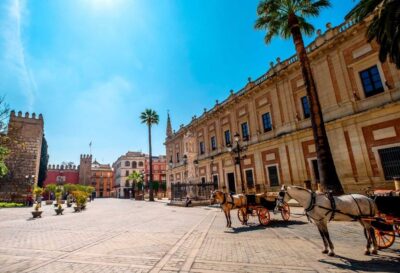
Meet your guide at the Monumento a la Inmaculada in Plaza del Triunfo. This is an easy place to find in Seville’s monumental center, but give yourself enough time to locate the statue before the start. You will not be collecting tickets at a museum entrance or boarding transport. The experience begins on foot, in the open air.
The plaza earns its name from an event far beyond Seville. In 1755, a huge earthquake struck Lisbon and was felt in Seville. Your guide explains how the disaster affected the city and why this particular square became linked with the word Triunfo, or triumph.
The opening stop also introduces three important buildings around the plaza. The supplied details do not name each one, so expect your guide to point them out and explain their place in Seville’s story. This is a useful start because you get the city’s wider setting before entering the tighter lanes of the old quarter.
The mood depends on the departure time. In the evening, the square offers a natural transition from sightseeing in daylight to a more atmospheric walk through Seville. You will hear history while the city moves into its night routine, which is part of the appeal.
More Walking Tours in Seville
- Seville: Small-Group City Highlights Walking Tour
★ 5.0 · 1,204 reviews - Cultural Walking Tour of Seville Monumental
★ 5.0 · 861 reviews - Seville: Tapas, Taverns, and History Walking Tour
★ 4.9 · 676 reviews
Patio de Banderas and the threshold of Judería
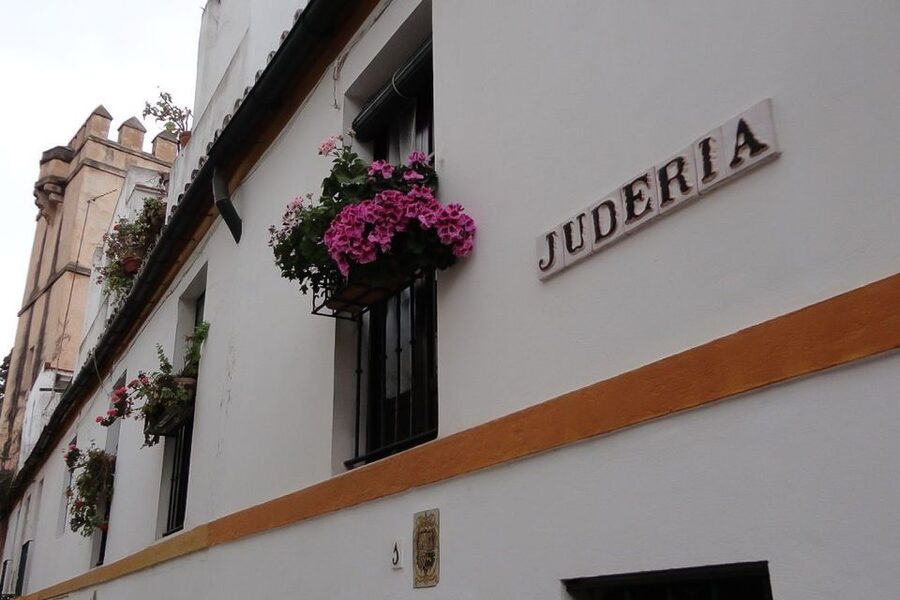
From Plaza del Triunfo, the walk moves toward Patio de Banderas and the old Jewish quarter, known as Judería. The stop lasts about 10 minutes, enough for an introduction rather than a long lecture.
This area helps you understand how Seville’s districts overlap. The walk is not built around entering a series of interiors. Instead, the guide uses plazas, street corners, walls, and changes in the street plan to explain what happened here.
The focus reaches from the Christian conquest of Seville in 1248 to the present day. That broad time span is useful for first-time visitors who want a basic framework. You will hear about different cultures that shaped the city, rather than receiving a single-period account.
If you have already spent hours inside Seville’s major palaces and churches, this section gives you a different way to read the city. If you want detailed architectural analysis, it may feel brief. The value lies in the connections between stops.
Doña Elvira, Susona, and Alfaro after sunset
Plaza de Doña Elvira is one of the route’s more pleasant pauses. The guide spends around 10 minutes here, then leads you through Calle Susona and on to Plaza de Alfaro. These stops are close enough to form a continuous walk, but each has a different story attached to it.
The lanes of Judería are narrow, and that physical setting matters. You are not hearing legends in an anonymous lecture room. You are standing in the same confined streets and small squares where the stories are set. The route includes tales of unusual events, haunted houses, and dramatic characters.
Calle Susona is especially tied to a striking local story. The tour presents the story behind the street, including the tale associated with Susona and the themes of secrecy and betrayal. Treat these accounts as Seville’s legends, not as a strict history seminar. That does not make them useless. Legends show what a city chooses to remember and how it turns a street name into a conversation starter.
Plaza de Alfaro adds another atmospheric setting. The supplied information describes this part of the neighborhood as home to special stories and haunted houses. You might find the tales entertaining, eerie, or a little theatrical, depending on your taste.
This is the section most likely to appeal to you if you enjoy folklore. It may be less satisfying if you prefer only documented dates and political history. The guide’s delivery matters here. Emilio has been described as friendly, fun, and engaging, which suits a story-led walk. He has also been praised for answering questions and making the outing interesting.
Calle Aire and the city beneath your feet
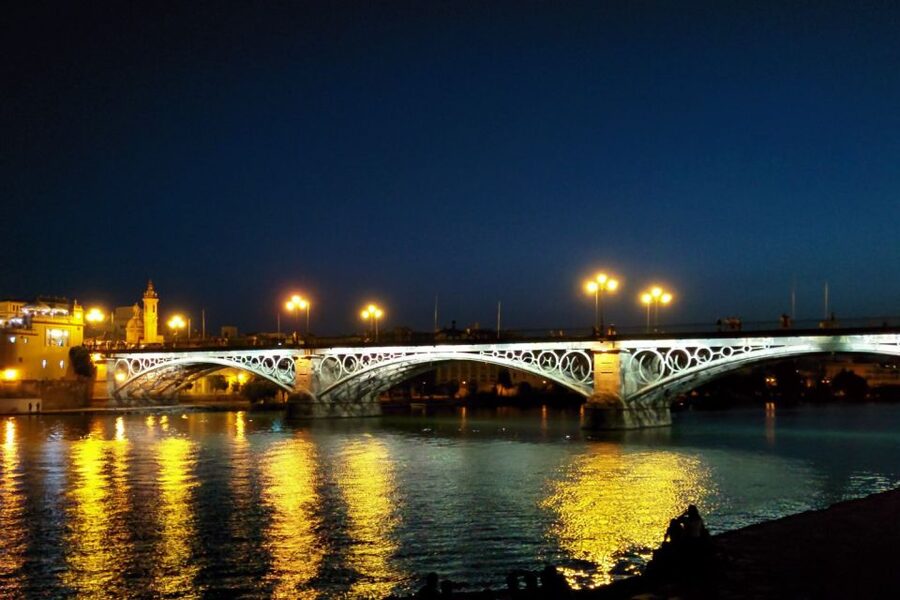
The route continues along Calle Aire, with about 15 minutes of guiding. This is one of the longer stops, giving the guide room to explain how Seville’s street plan and older layers fit together.
A night walk can make small details easier to notice. You are encouraged to look at the shape of the lanes and the spaces between buildings, not simply rush toward a famous landmark. The guide’s job is to supply the missing context.
The tour presents Seville as a city shaped by several cultures. The information covers Jewish, Christian, Roman, and Muslim influences. You should expect a connected story rather than separate mini-talks with no link between them.
The pace is generally manageable for people who can walk for two hours. Still, comfortable shoes are important. The route passes through old streets and plazas, and the tour is not designed for wheelchair users. The walking requirement is part of the experience, not a minor detail to ignore.
A completely different day out from Seville:
- Seville: Royal Alcázar Entry Ticket
★ 4.6 · 28,378 reviews - Seville: Cathedral and La Giralda Entry Ticket
★ 4.5 · 24,592 reviews - Seville: Live Flamenco Dancing Show Ticket at the Theater
★ 4.7 · 16,396 reviews - Seville: Casa de la Memoria Flamenco Show
★ 4.8 · 12,964 reviews
Roman columns on Calle Mármoles
The next major change in atmosphere comes at the Roman columns, listed as Columnas Romanas. The stop takes around 10 minutes and shifts the story back much earlier than the Judería tales.
These columns remind you that Seville’s age is not measured only from the medieval period. Roman remains sit within the modern city, surrounded by ordinary streets and shops. That contrast is one of the route’s strengths. You do not have to visit a distant archaeological site to see evidence of an older Seville.
The guide uses the columns to explain the Roman layer of the city. The supplied information does not specify their original building or exact date, so do not expect a detailed archaeological report. Instead, this is a compact chance to see ancient remains as part of the living center.
I like this stop because it breaks up the legends with something physical and visible. If you need a strong monument at every stage, remember that this is a neighborhood walk. Some stops are about a view or a ruin, while others depend on the guide’s storytelling.
The grim tale of Cabeza del Rey Don Pedro
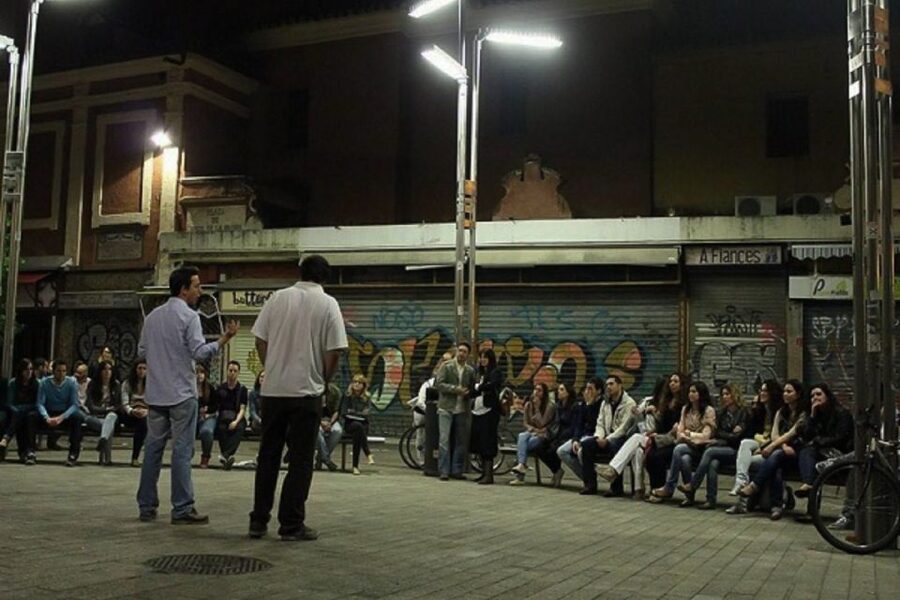
From the columns, you walk to Calle Cabeza del Rey Don Pedro. The guide spends about 10 minutes here explaining the extraordinary story behind the street’s name.
This is the sort of stop that makes a guided walk worthwhile. You could pass the street without knowing why it is called that, then hear a tale involving power, conflict, and a severed head. The supplied details call it an incredible story but do not provide the full account, so the guide’s version will supply the drama and local context.
The stop also shows how Seville’s history survives in names. Street signs are easy to ignore when you are heading toward a cathedral or palace. A guide helps you pause and ask why a lane has such an unsettling title.
This section will suit you if you enjoy stories with a dark edge. It is not a family activity built around fear, though, and the outing is officially suitable for all ages. Parents should use their own judgment about how much folklore their children enjoy.
Alfalfa and traces of Muslim Seville
The route then reaches Plaza de la Alfalfa, another 10-minute stop. Here, the focus moves toward the Muslim period and the less visible parts of the city.
The tour points out underground passages and small shops created during the Muslim period. These details are valuable because they take you beyond the grand sights. You are looking for traces in the layout and daily use of the neighborhood, not just admiring a preserved monument.
Alfalfa also provides a change of pace after the tight lanes of Judería. The square is part of contemporary Seville, yet the guide connects it with older layers. That mixture is a central theme of the walk: the past is not fenced off from present-day life.
Do not expect a long underground visit. The description says you can find passages and shops connected with the Muslim period, but it does not promise entry into them. Think of this as a guided explanation of what lies beneath and around the plaza.
Finishing at Las Setas in Plaza de la Encarnación
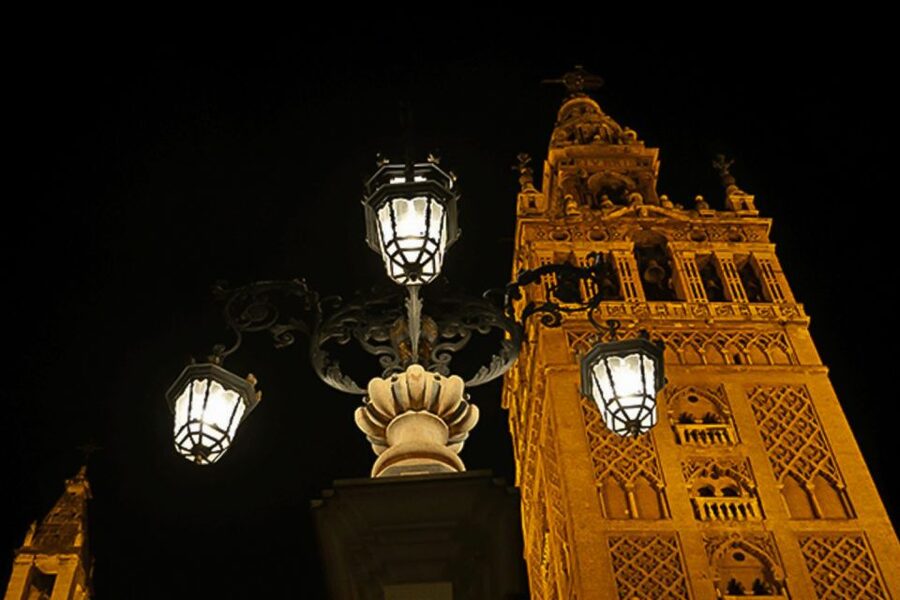
The walk finishes in Plaza de la Encarnación, beside Las Setas, the large modern structure that has become one of Seville’s recognizable contemporary sites. The contrast is deliberate. After Roman columns, medieval streets, Jewish-quarter legends, and Muslim-era traces, you end with modern architecture in the middle of the city.
The listed schedule gives this final stop 15 hours, which conflicts with the stated two-hour duration. It is almost certainly a timetable error, but you should confirm the expected finish time when booking. The stated ending point is Calle Laraña, 5, 41003 Sevilla, Spain, while the final sightseeing stop is Plaza de la Encarnación. Because one past departure ended somewhere different, it is sensible to ask the guide where the walking portion will finish.
Las Setas is a useful end point for an evening outing. You finish near central streets, small shops, and nightlife rather than at an isolated attraction. The tour does not include food or drinks, so you can make your own plans afterward.
This final contrast gives the walk a satisfying shape. Seville is presented as ancient, layered, and still changing. You do not simply finish with another old church. You finish by looking at a modern addition in a historic center.
What the $17 price really gives you
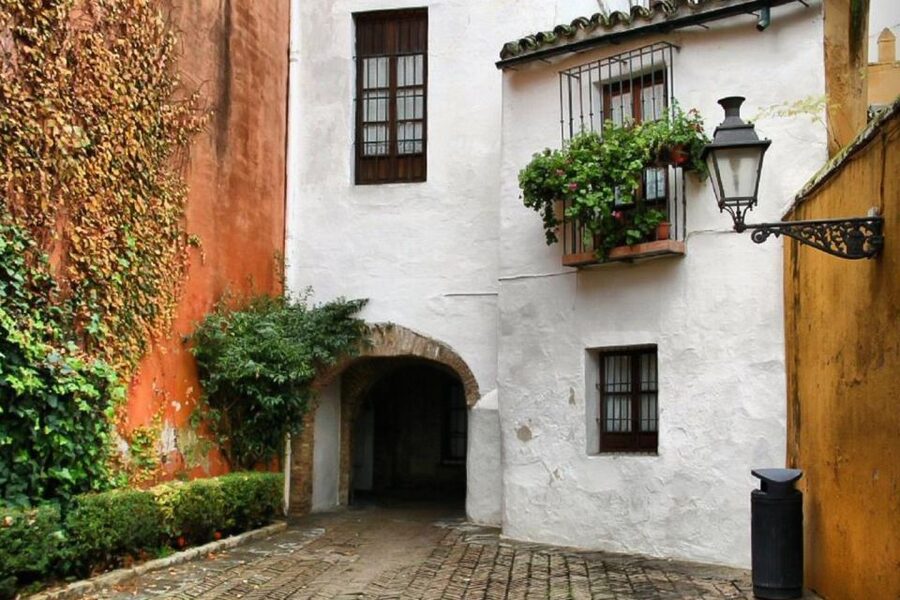
At $17 per person, this is a low-cost way to get a two-hour introduction to Seville. The price includes a professional local guide, the walking tour in English or Spanish, and taxes. There are no food or drink costs built in, and tips are not included.
The value is strongest if you want orientation and stories. A guide connects places that might otherwise seem unrelated, from the 1755 earthquake to Roman remains and the legends of Judería. You are paying for interpretation and company, not admission to a major monument.
The price is less compelling if you expect entry to palaces, museums, or archaeological sites. Nothing in the experience includes interior admissions. You also need to account for your own drinks, snacks, and any evening activity after the walk.
A 4.8 rating from 41 bookings suggests a strong overall response, with particular praise for the guides’ friendliness, clear explanations, humor, and willingness to answer questions. Emilio receives repeated positive attention for making the walk informative and fun. One departure, however, was shortened and did not follow the full route. That single problem is worth taking seriously because a two-hour walking tour is short already.
Timing, language, and practical comfort
The walk is offered in English or Spanish with a live guide. Check the available start times because this is a night walk, not a fixed daytime tour. The evening setting is one of the experience’s main advantages, especially as the sun goes down and Seville’s old streets take on a different mood.
Wear comfortable shoes. The route covers several districts over roughly two hours, and the old center includes narrow streets and historic surfaces. The activity is not suitable for wheelchair users, so anyone with mobility concerns should assess the route carefully before reserving.
The tour is suitable for all ages, but the stories include haunted houses, betrayal, and darker historical themes. Children who enjoy legends may have a good time. Those who prefer bright, activity-based sightseeing might find the talk-heavy format less engaging.
You can cancel up to 24 hours before the start for a full refund. The reserve-now-and-pay-later option lets you hold a place without paying immediately, which is useful when your Seville schedule is still shifting. These terms do not change the route itself, so confirm the meeting and ending points as the date approaches.
Who will enjoy this Seville night walk
I would choose this for a first or second evening in Seville, when you want a clear introduction without committing to a long full-day activity. It also suits repeat visitors who have seen the headline monuments and want street stories, local legends, and the city’s older neighborhoods.
It is a good match for:
- Couples looking for an evening activity with a strong sense of place
- Families whose children enjoy legends and slightly spooky stories
- Solo visitors who want a guide while walking the old center
- Budget-minded visitors who want more context than a self-guided stroll
- History fans interested in how Roman, Jewish, Muslim, Christian, and modern Seville overlap
I would look elsewhere if you need step-free access, guaranteed monument entry, or a strictly academic account of Seville’s past. I would also hesitate if you have a tight connection afterward, given the report of a shortened tour and a different ending point.
Should you book the Enchanted Seville Walking Tour?
Book it if you want stories tied to actual streets, a friendly local guide, and a modestly priced evening introduction to Seville. The strongest parts are the Judería lanes, Calle Susona, the Roman columns, and the shift from old neighborhoods to Las Setas.
Before paying, confirm the start time, expected duration, and final meeting point. If Emilio is guiding your departure, you can expect the warm, engaging style associated with his past walks, though guides can vary. With comfortable shoes and realistic expectations, this is a useful, entertaining way to meet Seville after dark.
FAQ
Where does the tour start?
The meeting point is Plaza del Triunfo, by the Monumento a la Inmaculada, also called the Immaculate statue.
How long does the walking tour last?
The stated duration is approximately two hours. One past departure was reported as lasting about 90 minutes, so confirm the timing if you need the full route.
What languages are available?
The live tour guide is available in English or Spanish.
What places does the route visit?
The walk includes Patio de Banderas, Plaza de Doña Elvira, Calle Susona, Plaza de Alfaro, Calle Aire, the Roman columns on Calle Mármoles, Calle Cabeza del Rey Don Pedro, Plaza de la Alfalfa, and Plaza de la Encarnación near Las Setas.
Where does the tour finish?
The listed finish is Calle Laraña, 5, 41003 Sevilla, Spain. The final sightseeing stop is Plaza de la Encarnación, so confirm the exact ending point before the walk.
Is food included?
No. Food and drinks are not included, and tips are also separate.
Is the tour suitable for wheelchair users?
No. The activity is not suitable for wheelchair users. Comfortable shoes are recommended for all participants.
Just added around Seville
- Seville: Wine and Gourmet Tapas Tour★ 5.0 · 3 reviews
- Tapas Tour Cordoba & Wine Experience with chef and sommelier★ 4.8 · 3 reviews
- The most complete tour of Seville: All the highlights included★ 5.0 · 3 reviews
- Seville: Spritz Tasting Experience★ 4.8 · 3 reviews
- Ronda and White Villages Private Day Trip from Seville★ 5.0 · 3 reviews
- Jerez: Historic center of Jerez and horse show★ 5.0 · 3 reviews
- SEVILLE: REAL ALCÁZAR TOUR★ 5.0 · 3 reviews
- Royal Alcazar of Seville Guided Tour★ 5.0 · 3 reviews
Walking Tours, compared.
Walking Tour through Cádiz: Stories from the hand of a local guide
Read our review →
Small-Group Jewish Quarter Discovery Walking Tour
Read our review →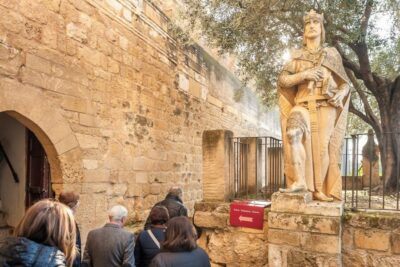
English Cádiz Tour: Walking Tour with Local Guide
Read our review →Browse the lists this tour appears in