
Reviewed · SETAS DE SEVILLA TICKETS
Guided walking tour to Setas, La Macarena and Dueña’s Palace in Seville
The best part of this Seville walk is its change of pace. You begin beneath the modern Metropol Parasol, pass Roman remains and medieval churches, meet the deeply local world of La Macarena, then finish inside Dueñas Palace, where aristocratic rooms and courtyards tell a very different story of the city.
I like the route for two clear reasons: it links places you might not connect on your own, and the palace entrance is included in the $44.71 price. Guides Mari Paz and Julián receive repeated praise for clear explanations, warm manners, and a pleasant three-and-a-half-hour pace.
The main consideration is the length. You will be on foot for about 3 hours and 30 minutes, with no bottled water or snacks supplied. Also, one serious service complaint involved a canceled departure without timely notice, so I would confirm the meeting details before setting out.
In This Review
- Key things to know before booking
- From the Setas to Seville’s older streets
- La Macarena and the city gate
- San Luis Street and the Cardo Máximo
- The Mudejar Palace of the Marquis of Aljaba
- Plaza del Pumarejo and Santa Marina
- One hour inside Dueñas Palace
- What the three-and-a-half-hour timing means
- How the price compares with the experience
- Guide quality and one service caution
- Who should choose this Seville walk
- Should you book it?
- FAQ
- Where does the tour start?
- What time does the tour begin?
- Where does the tour end?
- How long does the tour last?
- Is admission to Dueñas Palace included?
- Who lived in Dueñas Palace?
- Which areas of Seville does the walk visit?
- Will I see the Virgen de la Macarena?
- Are food and drinks included?
- What happens if the tour is canceled?
Key things to know before booking
- The route begins at Setas de Sevilla: Meet at Plaza de la Encarnación at 10:00 a.m., beneath or near the Metropol Parasol.
- La Macarena is more than one monument: The walk brings together the basilica, the city gate, San Luis Street, local squares, and medieval churches.
- Dueñas Palace is the tour’s main interior visit: You spend about one hour inside the former home of the Dukes of Alba.
- Roman and medieval Seville appear side by side: Archaeological remains, the old Cardo Máximo, and Mudejar churches give the route strong historical range.
- Mari Paz and Julián are named guides: Their explanations and friendly approach are the strongest repeated feature of the experience.
- The group can reach 30 people: That is manageable for a city walk, though the feel may be less personal at full capacity.
From the Setas to Seville’s older streets
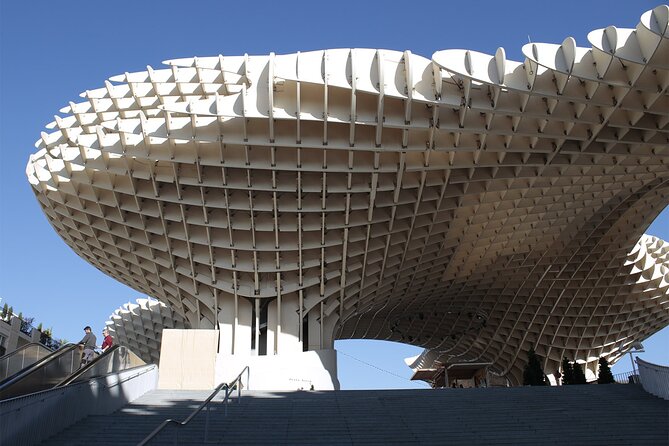
The meeting point is Setas de Sevilla, the large wooden structure at Plaza de la Encarnación. It is an easy place to identify in the center and gives the tour a useful opening contrast: modern Seville above ground, older Seville beneath your feet and around the surrounding streets.
The route includes Roman archaeological remains in the city center. That detail matters because Seville’s story did not begin with its palaces or churches. The remains help place the later medieval buildings in a much longer timeline, even if the archaeological stop itself is not described in detail.
From here, the walk heads toward the Macarena district. This is a good choice for anyone who wants more than Seville’s best-known cathedral quarter. The northern part of the old center has its own identity, shaped by religious brotherhoods, neighborhood churches, old streets, and traditional public life.
You should expect the first part of the experience to be mainly an outdoor orientation walk. The appeal is not a single grand interior, but the way the guide connects separate corners of the city into one story.
More Walking Tours in Seville
- Seville: Small-Group City Highlights Walking Tour
★ 5.0 · 1,204 reviews - Cultural Walking Tour of Seville Monumental
★ 5.0 · 861 reviews - Seville: Tapas, Taverns, and History Walking Tour
★ 4.9 · 676 reviews
La Macarena and the city gate
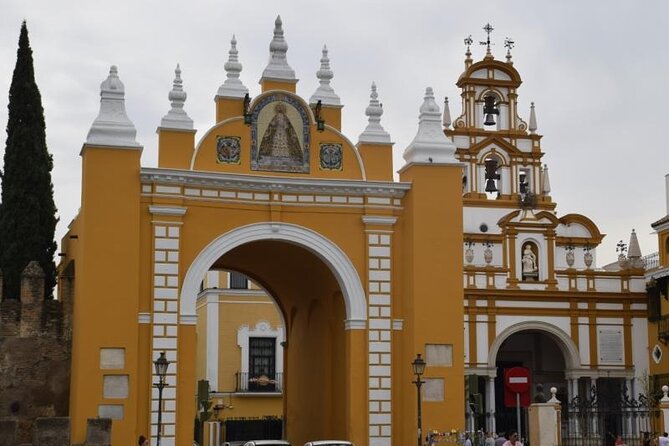
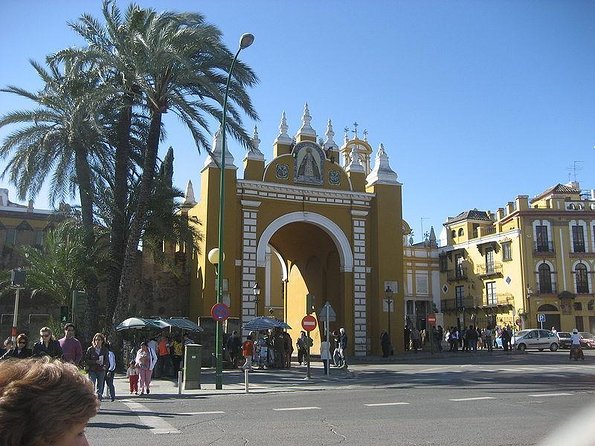
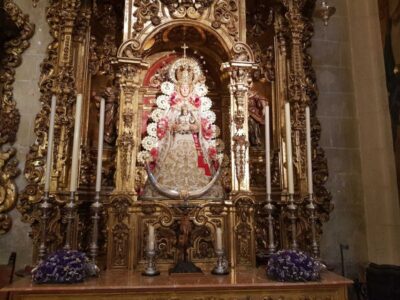
The Basilica of La Macarena and the city gate are key points on the route. The basilica is closely tied to the Brotherhood of La Macarena and to one of Seville’s most recognized religious images, the Virgen de la Macarena.
For many visitors, this is the moment when Seville’s Holy Week culture becomes easier to understand. The Virgin is not simply an artwork viewed in isolation. She belongs to a living religious and neighborhood tradition, and the brotherhood gives the surrounding area a strong sense of place.
The route also includes the old city gate. That helps you picture Seville as a walled city, rather than just a collection of pretty streets. The gate, basilica, and adjoining district give the guide several ways to explain how faith, neighborhood life, and the old defensive city fit together.
The supplied information does not promise a timed interior visit to every church or monument along the walk. That is worth noting. You are booking a guided route through these areas, with the included admission specifically listed for Dueñas Palace. If a particular church interior is your top priority, ask the operator what access is planned on your date.
San Luis Street and the Cardo Máximo
The walk continues along Calle San Luis, following the line of the ancient Cardo Máximo, the main north-south road in a Roman city. This is one of the more useful historical ideas on the tour because it turns an ordinary modern street into a clue about Seville’s earlier shape.
You will also pass Plaza del Pumarejo. The route then reaches the Mudejar Church of Santa Marina and its surroundings. Mudejar architecture in Seville reflects the blending of Christian, Islamic, and local building traditions after the Christian conquest. Its value is in the details: brickwork, arches, proportions, and a quieter visual character than the city’s grandest monuments.
The Church of San Juan de la Palma is another important stop. It is described as an emblematic place in Seville and sits beside one of the city’s most traditional street markets. That pairing is useful. You are not only looking at a church as a historic object. You are seeing how religious buildings and everyday neighborhood activity share the same streets.
The precise market schedule is not provided, so you should not assume you will see a full market in action. Still, the location offers a good chance to understand the district as a lived-in part of Seville rather than a string of monuments arranged for sightseeing.
The Mudejar Palace of the Marquis of Aljaba
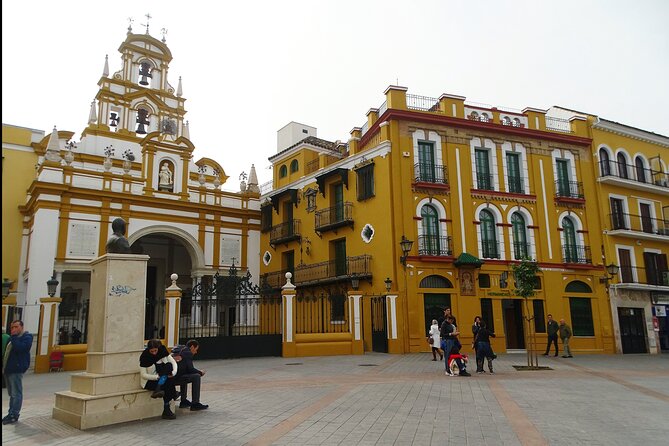
The route passes the Mudejar Palace of the Marquis of Aljaba, next to the Church of Omnium Sanctorum. This is one of the tour’s less familiar pairings and one of its more useful ones.
Omnium Sanctorum is presented as a reminder of Seville’s medieval past. Beside it, the palace adds a second layer of Mudejar design and noble history. You get to see how churches, private residences, and public streets were woven into the same old quarter.
I like this section because it rewards attention. The route is not limited to the headline sights that fill most first-time visits to Seville. You are given a reason to look at the smaller structures and understand why a street may contain several periods of the city at once.
The tradeoff is that the listing does not specify entry to the Marquis of Aljaba palace or Omnium Sanctorum. Treat them as exterior stops unless your guide tells you otherwise.
More Setas de Sevilla tickets:
- Seville: Setas de Sevilla Entry Ticket
★ 4.6 · 8,901 reviews - Seville: Flamenco Show Ticket at Tablao Flamenco Las Setas
★ 4.8 · 2,214 reviews - Seville: Las Setas Guided Tour & Optional City Tour
★ 4.3 · 528 reviews - Espectáculo Flamenco Tablao “Las Setas”
★ 5.0 · 59 reviews
Plaza del Pumarejo and Santa Marina
Plaza del Pumarejo marks another change in the walk. After the basilica and the busier historical points, the square helps place the route within a neighborhood setting.
From there, you reach the Mudejar Church of Santa Marina. The church and its surroundings are part of the walk’s effort to show Seville’s medieval layers through several smaller landmarks rather than one enormous monument.
A guide is particularly useful here. Without context, a Mudejar church can look like one more attractive old building. With a clear explanation, you can start to recognize the mix of architectural traditions that makes Seville different from a purely Gothic or Renaissance city.
Mari Paz and Julián are the two guides named in the material for this experience. Their strongest reported qualities are clear explanations, extensive command of the route and monuments, and a friendly manner. Julián is also praised for making the three-and-a-half-hour route feel quick and easy to follow. Mari Paz is described as professional, charming, and especially good at making the visit enjoyable.
Those details matter more than polished scenery on a tour like this. Much of the value comes from how well someone explains the connection between a church, a street, a brotherhood, and a palace.
One hour inside Dueñas Palace
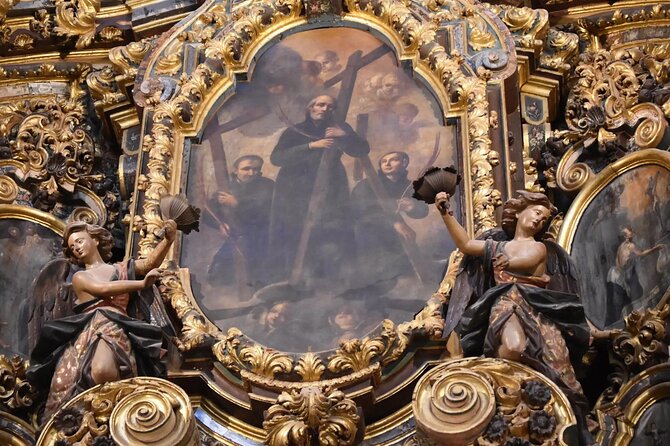
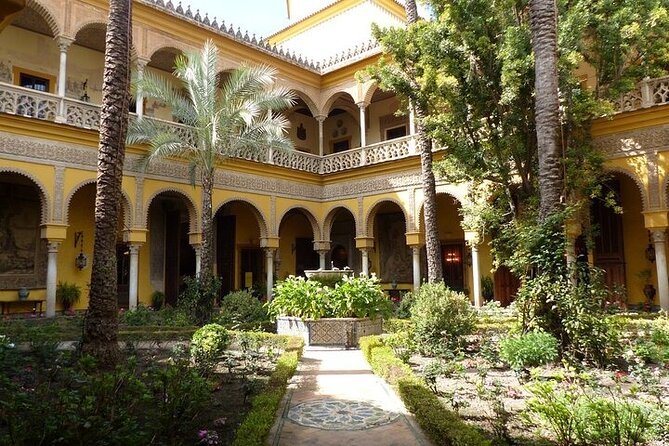
The walk ends at Palacio de las Dueñas, at Calle Dueñas 5. Entry to the palace is included, and the scheduled interior visit lasts about one hour.
Dueñas was the home of the Dukes of Alba and the last residence of the Duchess of Alba. Unlike the public scale of Seville’s great cathedral complex, this palace offers a more intimate view of aristocratic life. The interest lies in the rooms, courtyards, and domestic setting, where power and wealth appear through a private residence rather than a huge civic building.
The palace also gives the tour a strong finish. You begin with a modern landmark, move through Roman traces and medieval streets, encounter La Macarena’s religious tradition, and end in a noble house. That range makes the experience feel like a broad introduction to Seville’s old center.
The included ticket is important when judging the price. At $44.71 per person, you are paying for a professional guide, a long guided walk, and admission to a major palace. I would consider that fair value if you want background and structure rather than simply collecting exterior photographs.
The value is weaker if you prefer to explore at your own speed or already know Seville’s northern historic center. The group may hold as many as 30 people, and a larger group can make palace commentary or street-side explanations less personal.
What the three-and-a-half-hour timing means
The tour starts at 10:00 a.m. and runs for approximately three hours and 30 minutes. The finish is at Dueñas Palace, not back at Setas, so you end in a different part of the old center.
That one-way design is practical. You do not spend the final part of the morning retracing your steps. You can continue from Dueñas Palace into the central area after the visit, though the tour information does not provide a planned onward route.
Because the walk is long, wear comfortable shoes and bring water. Bottled water and snacks are not included. The supplied details do not list a scheduled food or drink stop, so take care of that before meeting the guide.
The tour is listed as suitable for most participants, with service animals allowed and public transportation nearby. No special fitness requirement is stated, but three and a half hours on foot is still a meaningful commitment. If you prefer frequent sitting breaks, confirm the day’s rhythm before booking.
How the price compares with the experience
The $44.71 fee is easiest to justify for three types of visitor.
First, it suits a first-time visitor who wants a clear route through less familiar parts of the center. You get a guide to explain why the Macarena district matters, how the Cardo Máximo fits into the street plan, and how Mudejar churches fit into Seville’s past.
Second, it suits anyone who values Dueñas Palace admission included. Buying a guided walk and palace ticket separately can take more planning, and this arrangement makes the palace the final anchor of the morning.
Third, it works for visitors who enjoy social and religious history. The Brotherhood of La Macarena, the Virgen de la Macarena, San Juan de la Palma, and the old churches give the walk a strong connection to local traditions.
I would be less quick to recommend it to someone focused only on Seville’s largest sights. The route does not include admission to the cathedral, the Alcázar, or the Giralda. It is a different kind of city tour, with neighborhood streets and smaller historic buildings carrying much of the interest.
Guide quality and one service caution
The clearest strength is the guiding. Mari Paz receives praise for a professional, friendly style and for making the visit well documented without making it dull. Julián is praised for explaining the route and landmarks clearly, and for maintaining a pleasant relationship with the group throughout the long outing.
That is exactly what this route needs. A walk through several districts can feel scattered if the guide only gives isolated facts. The best version of this experience will show you the thread from Roman planning to medieval architecture, neighborhood brotherhoods, aristocratic life, and modern Seville.
There is one caution I would not ignore. One booking reportedly went ahead without the staff arriving, followed by poor communication and no timely phone notification. The operator apologized and said it had taken note of the problem, but the incident means I would confirm the departure shortly before 10:00 a.m., especially if your schedule is tight.
The tour requires good weather and a minimum number of participants. If weather or low enrollment causes cancellation, you are offered another date or experience, or a full refund.
Who should choose this Seville walk
I would choose this tour if you want a guided introduction beyond the cathedral quarter, especially on a first or second visit. It suits people who like architecture, local religious traditions, old street plans, and historic homes more than a rapid checklist of famous sights.
It also fits travelers who prefer a half-day activity with a clear beginning and end. The 10:00 a.m. start leaves the rest of the day open, while the final stop at Dueñas Palace gives the route a satisfying destination.
Families and mixed-age groups may find the route workable because most travelers can participate, but the length still calls for comfortable footwear and water. Service animals are allowed.
I would hesitate if you have limited mobility, dislike long walks, or want guaranteed entry into every church named along the route. The data only confirms the included palace ticket, not admission to the other religious or aristocratic buildings.
Should you book it?
Book it if you want Seville explained through its neighborhoods, not just its grandest monuments. The route has real variety: Setas, Roman remains, La Macarena, the old city gate, San Luis Street, Mudejar churches, the Cardo Máximo, and one hour inside Dueñas Palace.
At $44.71, the combination of a professional guide and palace admission gives the tour a reasonable value. I would confirm the meeting arrangements before the start, bring water, and allow the full three and a half hours.
Skip it if you want a short, self-directed stroll or if the cathedral and Alcázar are your only priorities. For everyone else, this is a useful way to see a more local side of Seville and finish with one of the city’s most appealing historic houses.
FAQ
Where does the tour start?
It starts at Setas de Sevilla, Plaza de la Encarnación, in Seville’s old center.
What time does the tour begin?
The start time is 10:00 a.m.
Where does the tour end?
The tour ends at Palacio de las Dueñas, at Calle Dueñas 5. The meeting point there is the entrance gate.
How long does the tour last?
The experience lasts approximately 3 hours and 30 minutes.
Is admission to Dueñas Palace included?
Yes. The ticket to the House Palace of Dueñas is included, and the visit inside the palace lasts about one hour.
Who lived in Dueñas Palace?
Dueñas Palace was the home of the Dukes of Alba and the last residence of the Duchess of Alba.
Which areas of Seville does the walk visit?
The route includes Setas, the Macarena district, San Luis Street, Plaza del Pumarejo, San Juan de la Palma, Santa Marina, and the area around Dueñas Palace.
Will I see the Virgen de la Macarena?
Yes. The route includes the Basilica of La Macarena and the city’s famous Virgen de la Macarena.
Are food and drinks included?
No. Bottled water and snacks are not included.
What happens if the tour is canceled?
If you cancel at least 24 hours before the start time, you can receive a full refund. If the provider cancels because of poor weather or because the minimum number of participants is not met, you are offered another date or experience, or a full refund.
Just added around Seville
- Seville: Wine and Gourmet Tapas Tour★ 5.0 · 3 reviews
- Tapas Tour Cordoba & Wine Experience with chef and sommelier★ 4.8 · 3 reviews
- The most complete tour of Seville: All the highlights included★ 5.0 · 3 reviews
- Seville: Spritz Tasting Experience★ 4.8 · 3 reviews
- Ronda and White Villages Private Day Trip from Seville★ 5.0 · 3 reviews
- Jerez: Historic center of Jerez and horse show★ 5.0 · 3 reviews
- SEVILLE: REAL ALCÁZAR TOUR★ 5.0 · 3 reviews
- Royal Alcazar of Seville Guided Tour★ 5.0 · 3 reviews
Setas de Sevilla Tickets, compared.


Flamenco Show Ticket at Tablao Flamenco Las Setas
Read our review →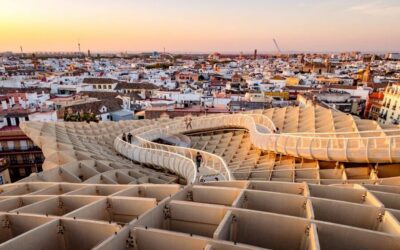

Salvador Church, Casa Pilatos, and Metropol Tour
Read our review →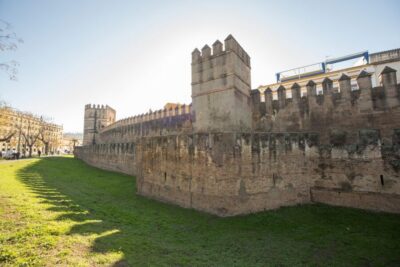
Palacio de Las Dueñas, La Macarena & Las Setas Tour
Read our review →Browse the lists this tour appears in