
Reviewed · HISTORICAL TOURS
History of Women of Seville Private Tour
Seville’s past looks different when you follow the women who helped shape it. This private walk with Alba moves through the old center, linking royal lives, working women, legends, and public monuments in a way that gives Seville a more complete voice.
I like the small private format, since you can focus on the stories that interest your group instead of keeping pace with strangers. I also like the clear route from Plaza de la Pescadería to Paseo de Catalina de Ribera, a useful way to get your bearings early in a Seville stay. The main consideration is price: at $134.17 per person, it makes the most sense for visitors who care deeply about social history and can share the cost with a group.
In This Review
- Key points at a glance
- Seville told through its women
- Starting at Plaza de la Pescadería
- María Dolores López and the power of a personal story
- The legend of the two sisters
- Maria Luisa Fernanda de Borbón and Queen Isabel II
- The Cigarreras and Seville’s working women
- Catalina de Ribera and Queen Isabel I
- What the private format is really worth
- Access, timing, and what to plan
- Who will get the most from this walk
- Should you book the History of Women of Seville tour?
- FAQ
- How long is the History of Women of Seville tour?
- What language is the tour offered in?
- Is this a private tour?
- Who guides the tour?
- Where does the tour begin?
- Where does the tour end?
- Is the tour wheelchair and stroller accessible?
- Can I cancel for a full refund?
Key points at a glance
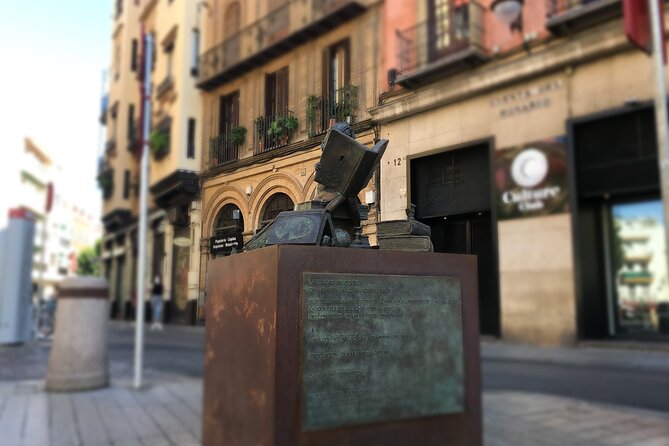
- Clara Campoamor begins the story: The tour opens with the achievement of a major figure connected to women’s rights.
- Alba leads in English: Her storytelling mixes historical facts with personal stories and cultural context.
- The Cigarreras add a working women’s perspective: Their lives bring Seville’s social history beyond palaces and queens.
- Royal sisters receive careful attention: Maria Luisa Fernanda de Borbón and Queen Isabel II show how women shaped Spain from the court.
- A private walk keeps the pace personal: Only your group participates, with no large crowd to manage.
- The route works for many visitors: Wheelchair and stroller access, service animals, and nearby public transportation make planning easier.
Seville told through its women
Many first walks through Seville center on kings, churches, grand buildings, and famous male figures. This tour takes another route. It asks you to notice the women connected to the city, from political pioneers and queens to factory workers and women remembered through local legend.
That change in focus matters. You still learn about Seville’s history, but the subjects are not limited to official monuments or royal decisions. The stories include women who worked, organized, influenced public life, or became part of the city’s cultural memory.
The tour lasts about two hours. That is enough time for a strong introduction without turning into an all-day history lesson. I would use it near the start of a Seville visit, since the walk helps you understand the old center while pointing out people and places you might otherwise pass without context.
Alba, the guide, leads the experience in English. The information available about her style is encouraging: she is described as an engaging storyteller who supports her stories with historical facts. That combination is important. A tour based only on anecdotes can feel thin, while a lecture packed with dates can lose you after ten minutes. Here, the aim is to connect facts with memorable lives.
More History Tours in Seville
- Sevilla Food Tour: Tapas, Wine, History & Traditions
★ 5.0 · 3,468 reviews - Ultimate Seville Tapas, Wine & History Small Group Tour
★ 5.0 · 1,766 reviews - Seville: Tapas, Taverns, and History Walking Tour
★ 4.9 · 676 reviews
Starting at Plaza de la Pescadería
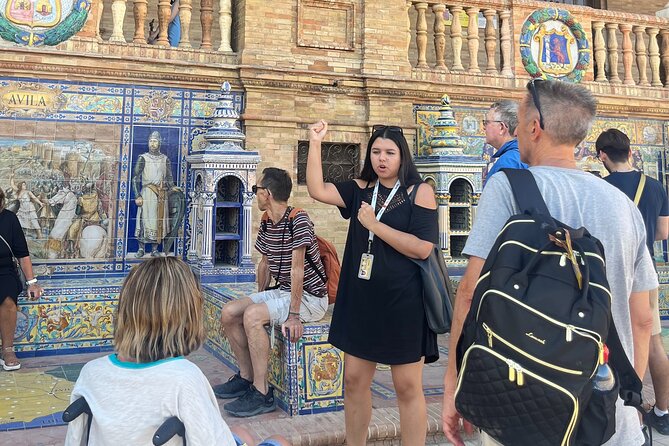
The meeting point is Plaza de la Pescadería, at Pl. Pescadería, 15, in Seville’s Casco Antiguo. The walk begins in the historic center, where narrow lanes can make first-time orientation tricky.
The opening subject is Clara Campoamor and her achievement. Her name gives the tour an immediate political and social dimension. Rather than beginning with a general overview of Seville, Alba starts with a woman whose public work carries national importance.
This is a smart opening for a tour about women. It sets up the larger question: how do we decide whose contributions deserve to be remembered? From there, the route can move between public achievement, private life, labor, family, and legend.
You should arrive ready to walk through old streets rather than expect a seated talk. The supplied details do not specify the number of stops, the exact walking distance, or the interior access to any building. Plan for an outdoor city walk, and wear shoes that feel comfortable on historic-center streets.
María Dolores López and the power of a personal story
The next subject is María Dolores López. The information provided does not explain her exact role or the precise location connected with her, so Alba’s presentation is likely to supply the needed context during the walk.
That uncertainty is not a problem if you enjoy discovering a story as it unfolds. It does mean you should not book this expecting a printed, fully itemized lecture outline in advance. The appeal lies in the guide’s narration and in seeing how each woman connects to Seville.
I like this part of the route in principle because it keeps the tour from becoming a simple parade of famous names. A city’s character often comes through people whose stories are less familiar. This stop gives the guide room to show how individual lives fit into the wider city.
For you, the practical value is attention. Keep an ear open for the details that connect a person to a street, building, family, or local tradition. Since this is a private group, you can ask Alba to clarify a name or return to a point that catches your interest.
The legend of the two sisters
The story of the two sisters brings a different tone. Not every part of a city’s identity comes from official documents. Legends help explain how people remember places, even when the details belong to folklore rather than confirmed history.
Alba’s role here is especially useful. A good guide can distinguish a local legend from a documented event without stripping the story of its charm. The supplied information presents Alba as someone who backs stories with historical origins and facts, so you can expect this section to balance atmosphere with explanation.
I would not approach this stop looking for a single proven answer. Enjoy it as a window into Seville’s storytelling traditions. Ask questions if you want to know which parts are historical record and which belong to oral tradition.
The two-sisters story also adds variety to the two-hour route. Without a change of pace, a tour about social history could become too formal. This legend gives the walk a more human and imaginative moment before the focus shifts to the royal family.
A completely different day out from Seville:
- Seville: Royal Alcázar Entry Ticket
★ 4.6 · 28,378 reviews - Seville: Cathedral and La Giralda Entry Ticket
★ 4.5 · 24,592 reviews - Seville: Live Flamenco Dancing Show Ticket at the Theater
★ 4.7 · 16,396 reviews - Seville: Casa de la Memoria Flamenco Show
★ 4.8 · 12,964 reviews
Maria Luisa Fernanda de Borbón and Queen Isabel II
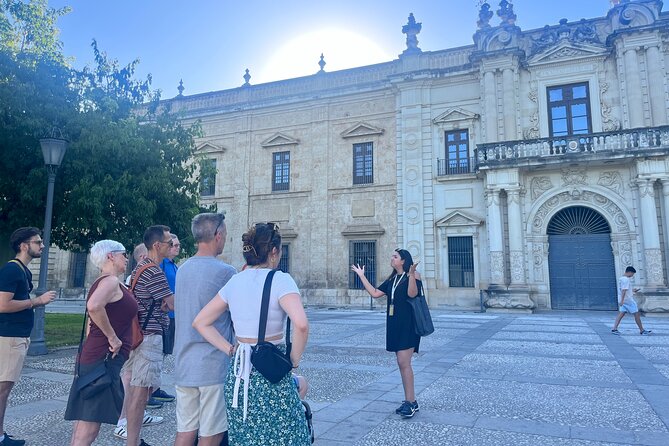
The lives of Maria Luisa Fernanda de Borbón and her sister, Queen Isabel II, form one of the tour’s strongest historical sections. Royal women are easy to reduce to titles, marriages, and palace politics. A guide can make them more useful to you by placing their lives within the power structures and social customs of their time.
The two sisters also offer a natural comparison. One was an infanta, while the other became queen. Their different positions let you consider how rank shaped a woman’s choices, duties, public role, and place in Spanish history.
The tour does not claim to cover every part of their lives. In two hours, Alba can offer selected stories and connections rather than a full royal biography. That is a strength if you want a readable introduction, but less suitable if you are looking for an academic study of nineteenth-century Spain.
I like that this section sits beside stories of working women rather than replacing them. Seville’s past was shaped by both the court and ordinary labor. Putting these subjects on the same route makes the tour more balanced than one focused only on palaces and famous families.
The Cigarreras and Seville’s working women
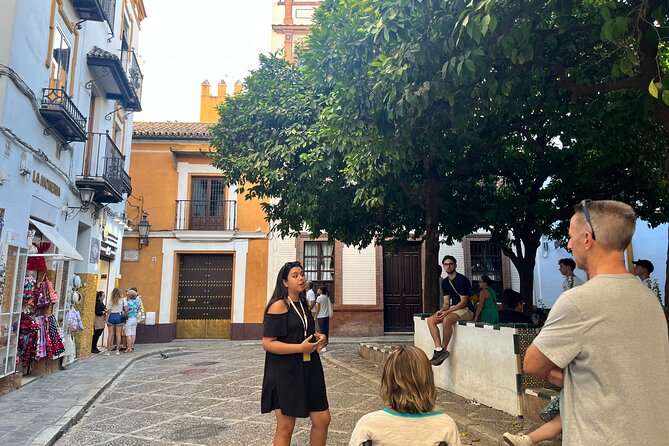
The Cigarreras are among the most distinctive subjects on the walk. These women were connected with Seville’s cigar-making culture, and their lives bring work, class, and industry into the story.
This is where the tour’s social focus becomes especially clear. A royal biography can tell you about power at the top. The Cigarreras help you think about the women whose labor supported the city’s economy and daily life.
The supplied details do not identify a specific building or promise entry to a former workplace. You should therefore expect the guide to explain their lives and significance along the route, not necessarily to tour an interior connected with them.
For me, this is the kind of subject that makes a themed walking tour worthwhile. It gives you something to look for later as you explore Seville on your own. You may begin noticing how work, family, public space, and class appear in parts of the city that a standard sightseeing route might pass over.
Alba’s storytelling style matters here. One strong five-star assessment specifically praised her ability to tell stories while grounding them in historical facts. That is the right approach for the Cigarreras, whose importance is best understood through both their working lives and the social setting around them.
Catalina de Ribera and Queen Isabel I
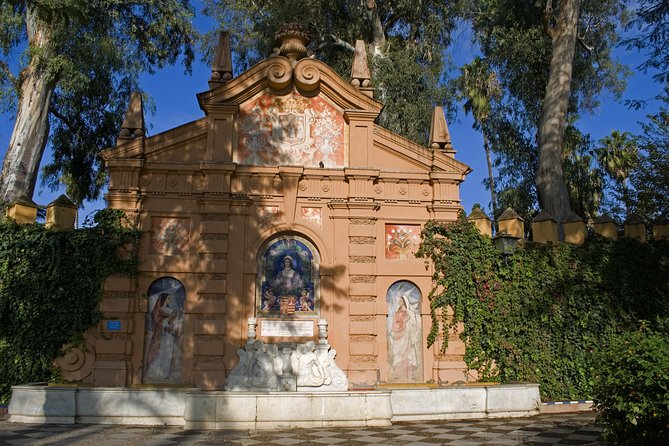
The route ends at Paseo de Catalina de Ribera. This gives the final section a clear physical destination instead of leaving you somewhere vague in the old center.
The tour includes monuments connected with Catalina de Ribera and Queen Isabel I. These women represent another useful pairing: one tied to Seville’s local memory and public setting, the other a major figure in Spain’s royal past.
Monuments can make history easier to remember because they give you something visible to connect with a name. At the same time, a monument never tells the whole story. Listen for what Alba adds about why these women are remembered, how their public images were formed, and what the city chooses to place in view.
Ending here also gives you a practical point from which to continue exploring. The tour does not include private transportation, food, or drinks, so you will make your own way onward. Since the end point is Paseo de Catalina de Ribera, check your next destination before starting and allow time for your own plans after the walk.
What the private format is really worth
The price is $134.17 per person. Since this is a private activity, only your group takes part. That changes the value calculation.
For one person or a couple, the cost is fairly high for a two-hour walking tour. You are paying for a dedicated guide and a specialized theme, not for transport, meals, or admission to a major attraction. If your main goal is a low-cost overview of Seville, a regular group walk may suit you better.
For a family or group of friends, the price can feel more reasonable when divided among several people. Group discounts are available, though the exact reduced price is not provided. If you are traveling with people who enjoy history, personal stories, and discussion, the private format gives you more control over the experience.
I see the greatest value in the subject matter. This is not a basic checklist of Seville’s best-known sights. It offers a particular lens, with women from politics, royalty, labor, legend, and public memory. You should book it because that focus interests you, not simply because you need a general city tour.
The guide also makes a difference. Alba received full marks in the supplied feedback, with praise for her storytelling and factual grounding. Another assessment said the walk offered a new angle on Seville and provided many insights into the city’s history and culture. Those comments point to the tour’s strongest feature: interpretation, not sightseeing quantity.
Access, timing, and what to plan
The experience is wheelchair and stroller accessible, and service animals are allowed. Most people can participate. Those details make it easier for families and visitors with mobility needs to consider the tour, though the supplied information does not describe the exact street surfaces, slopes, or restroom access.
The route is near public transportation. That is useful in Seville’s old center, where driving and parking can be awkward. You will still need to plan your own way to Plaza de la Pescadería and away from Paseo de Catalina de Ribera because private transportation is not included.
The tour is offered in English. Confirmation normally arrives at booking. If you reserve within 12 hours of the start, confirmation comes as soon as possible and depends on availability, so last-minute planners should check carefully before setting out.
Free cancellation is available if you cancel at least 24 hours before the start time. Cancellations or changes inside that window are not accepted for a refund, and the cut-off follows Seville’s local time.
Who will get the most from this walk
I would choose this experience for a first or second visit to Seville when you want more than the standard royal and religious story. It suits history-minded visitors, families with older children, and anyone who wants women’s experiences placed at the center rather than added as a brief footnote.
It is also a good match for a private group with mixed interests. One person can ask about politics, another about local legend, and another about working life. Alba can respond to your questions without a large group waiting.
You may want to skip it if you prefer long visits inside museums, formal academic talks, or a tour built around major architectural sights. The details provided do not include museum admission, interior visits, food, or transport. This is a short, guided walk with stories and monuments along the way.
The tour also works well for people who have trouble finding their way through Seville’s narrow lanes. It will not replace a map or solve every navigation problem, but the route gives you a useful first sense of the old center.
Should you book the History of Women of Seville tour?
Book it if you want a focused, personal introduction to Seville led by a guide who tells stories and explains their historical basis. The combination of Clara Campoamor, María Dolores López, the two sisters, royal women, the Cigarreras, Catalina de Ribera, and Queen Isabel I gives the walk a broad range within two hours.
The decision comes down to price and interest. At $134.17 per person, it is not the bargain choice for a quick orientation. Shared among a private group, it offers better value, especially if you would rather ask questions and follow one theme than join a large general tour.
I would place it early in your stay, wear comfortable shoes, and arrive with curiosity about women whose roles were political, royal, working, legendary, and local. If that sounds like the Seville you want to understand, this is a strong choice.
FAQ
How long is the History of Women of Seville tour?
The tour lasts approximately two hours.
What language is the tour offered in?
The experience is offered in English.
Is this a private tour?
Yes. Only your group participates in the activity.
Who guides the tour?
The experience provider is ALTAI, Alba Tourism and Interpretation. The guide identified in the available information is Alba.
Where does the tour begin?
The tour begins at Plaza de la Pescadería, Pl. Pescadería, 15, Casco Antiguo, 41004 Sevilla, Spain.
Where does the tour end?
The tour ends at Paseo de Catalina de Ribera, P.º de Catalina de Ribera, Casco Antiguo, Seville, Spain.
Is the tour wheelchair and stroller accessible?
Yes. The experience is wheelchair and stroller accessible.
Can I cancel for a full refund?
Yes, if you cancel at least 24 hours before the experience start time. Cancellations made less than 24 hours in advance are not refunded.
Just added around Seville
- The most complete tour of Seville: All the highlights included★ 5.0 · 3 reviews
- Seville: Wine and Gourmet Tapas Tour★ 5.0 · 3 reviews
- Tapas Tour Cordoba & Wine Experience with chef and sommelier★ 4.8 · 3 reviews
- Seville: Spritz Tasting Experience★ 4.8 · 3 reviews
- Ronda and White Villages Private Day Trip from Seville★ 5.0 · 3 reviews
- Jerez: Historic center of Jerez and horse show★ 5.0 · 3 reviews
- SEVILLE: REAL ALCÁZAR TOUR★ 5.0 · 3 reviews
- Royal Alcazar of Seville Guided Tour★ 5.0 · 3 reviews
Historical Tours, compared.
Sevilla Food Tour: Tapas, Wine, History & Traditions
Read our review →
Ultimate Seville Tapas, Wine & History Small Group Tour
Read our review →
Skip-the-Line Great Mosque-Cathedral History Tour
Read our review →
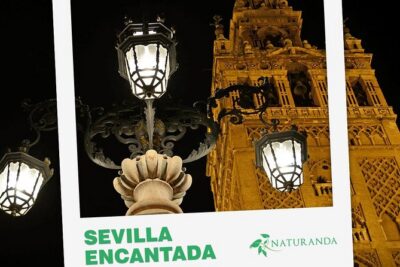
Seville Evening Historical Tour with Haunted History
Read our review →
Historic Gibraltar Rock and St Michael’s Cave Tour from Seville
Read our review →
Historical Italica: Half-Day Guided Tour from Seville
Read our review →Browse the lists this tour appears in