Reviewed · SEVILLE TOURS
Make Authentic Espadrilles in Seville
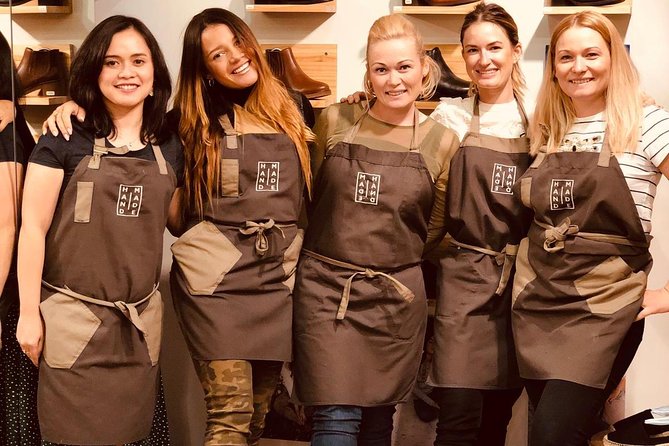
Making a pair of espadrilles by hand is a fine way to take Seville home with you. At this private workshop on Calle Sierpes, you learn how a simple rope-soled shoe moved from humble workwear to a fashion item, then choose your materials and stitch a pair of your own.
I like the hands-on work and the chance to choose colors, sizes, ribbons, and styles. I also like the small celebration at the end, with cava, snacks, music, photos, and your new shoes ready to wear. The main drawback is value: at $120.56 per person, you are paying for the teaching, setting, drinks, and memory as much as for the shoes themselves.
In This Review
- Key points to know before you book
- Why making shoes beats buying another souvenir
- Starting at Calle Sierpes at 3 p.m.
- Choosing your colors, size, and style
- One hour of stitching with artisan guidance
- Learning to lace your new espadrilles
- Cava, snacks, dancing, and a wearable memory
- Is $120.56 a fair price?
- Who will enjoy this Seville workshop most?
- Practical details that affect your plans
- Should you book Make Authentic Espadrilles in Seville?
- FAQ
- Where does the espadrille workshop take place?
- What time does the activity start?
- How long does the experience last?
- Is the workshop offered in English?
- What do I make during the class?
- What materials are included?
- Are drinks and food included?
- Can I cancel for a full refund?
Key points to know before you book
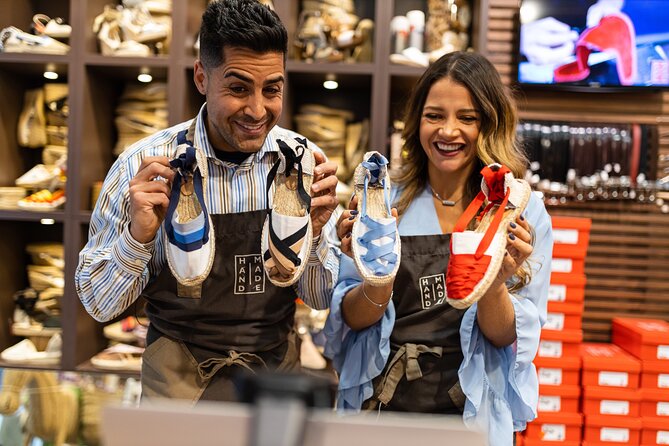
- Your own pair of shoes: You stitch and lace a traditional pair of Spanish espadrilles to take home.
- A private workshop: The session is reserved for your party, so the artisans can give you direct help.
- Calle Sierpes location: The workshop is in Seville’s Casco Antiguo, near public transportation and easy to pair with shopping and sightseeing.
- A two-hour creative break: The session includes a short introduction, material selection, about an hour of stitching, and a final celebration.
- Celebration included: Cava, alcoholic drinks, snacks, and a festive finish are part of the experience.
- Possible upgrades: You can pay extra for a premium base, such as a wedge, heel, or platform.
Why making shoes beats buying another souvenir
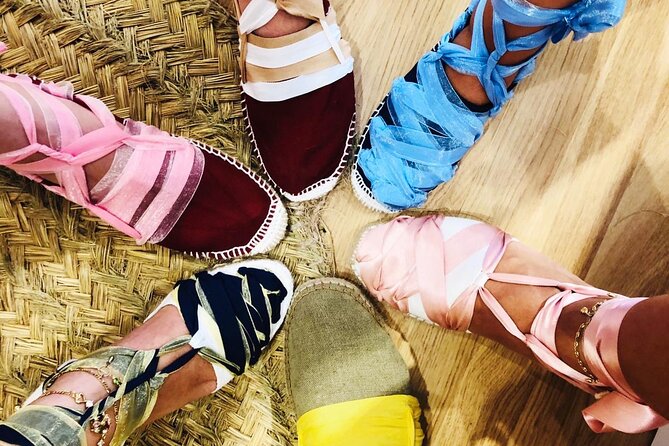
Seville has no shortage of things to buy. You can bring home ceramics, fans, orange blossom products, flamenco items, and leather goods. An espadrille workshop gives you something different: a souvenir connected to a skill, a story, and your own two hands.
You are not simply selecting a finished pair from a shelf. You learn how the shoe is put together, make choices about its appearance, and stitch the ribbons into place with help from the artisans. The result may not have the perfect finish of a shoe made by a professional, but that is part of the point. It shows that you made it.
The workshop also gives you a useful bit of Spanish culture. Espadrilles are often linked with summer style today, yet their beginnings were much more modest. The opening talk explains how these shoes developed from practical footwear into a fashionable item. That background helps you see the finished pair as more than a colorful accessory.
I especially like this kind of activity for a trip with limited shopping time. You leave with a gift that is light, useful, and easy to explain. It also works well as a birthday activity, and the staff can add a small celebration for a special occasion.
A few more Seville tours worth comparing
- Seville: Royal Alcázar Entry Ticket
★ 4.6 · 28,378 reviews - Seville: Cathedral and La Giralda Entry Ticket
★ 4.5 · 24,592 reviews - Seville: Live Flamenco Dancing Show Ticket at the Theater
★ 4.7 · 16,396 reviews
Starting at Calle Sierpes at 3 p.m.
The meeting point is C. Sierpes, 70, in Seville’s old center. You meet at the entrance hall at 3 p.m., and the workshop ends at the same place. That makes planning simple. You do not need to arrange a second pickup point or find your way across town after the class.
Calle Sierpes is one of Seville’s main shopping streets. Arrive early if you want time to walk around the surrounding Casco Antiguo before the workshop. The area is also useful for a meal or a drink afterward, although the workshop itself already includes refreshments.
The first 15 minutes are relaxed. You have a drink while the artisans explain the humble origins of the espadrille and its later move into the world of fashion. This introduction is short enough not to delay the practical part, but it gives the class a reason to exist beyond making a pair of shoes.
Because the activity is offered in English, you can follow the instructions and ask questions without needing to know Spanish. The format is private for your party, though the stated maximum capacity is 25 people. For a small booking, that private arrangement should give you more direct support than a large public craft class.
Choosing your colors, size, and style
The next 20 minutes are spent looking at traditional materials and deciding how your shoes will look. You choose the size, colors, and style before sitting down to sew.
This is one of the most important parts of the class. Your pair is not a fixed kit handed to you without choices. The color decisions affect how often you will wear the shoes, so I would think about your usual summer clothes before arriving. A simple color combination may be easier to match, while brighter ribbons can make the pair feel more festive.
The included supplies are practical and specific:
- An apron
- An espadrille needle
- Ribbon laces
- An espadrille base
The base is the foundation of the shoe, while the ribbon gives you room to personalize the look. You also learn different ways to lace the finished espadrilles. That lesson matters because the ribbons can change the appearance of the shoes and the way they sit around your ankle.
A premium base is available for an additional charge. The upgrade options include a wedge, heel, or platform. If you want the most basic traditional pair, the included base should be enough. If you prefer a dressier shoe, ask about the extra cost before choosing your design.
One hour of stitching with artisan guidance
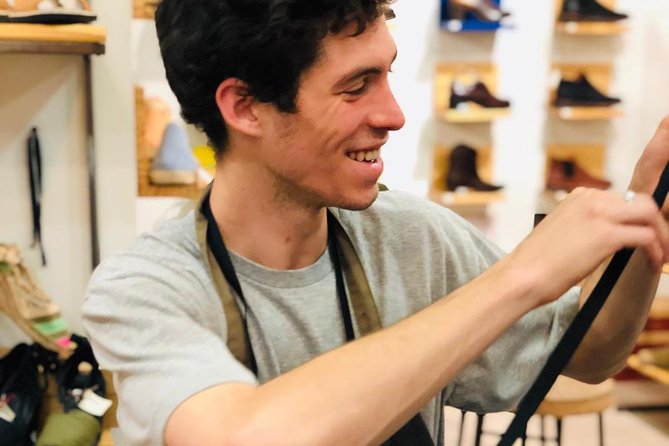
The main part of the class lasts about an hour. You sit at the workshop tables, use the needle and materials, and stitch your own espadrilles. Two artisans lead the session and offer direct help as you work.
This is where the private format earns its keep. Sewing footwear is not the same as threading a simple craft project. You may need help holding the materials in the right position, working the needle through the proper spot, or keeping the ribbons even. The instructors are there to guide you rather than simply demonstrate and leave you alone.
The activity is designed for most people to participate, but your finished pair may show the fact that it was handmade by a beginner. That is not a flaw, unless you expect a flawless, shop-quality result. A professional artisan has the speed and control needed for a perfect finish. You are paying to learn the process and enjoy the making, not to replace a shoe factory.
This distinction is important because one piece of feedback raised a concern about the wording and price, suggesting the activity felt more like customizing a basic shoe than making one from the beginning. The provider explained that the class centers on a local ribbon-stitching tradition and on learning the craft, rather than producing a highly elaborate professional shoe. I would book with that expectation.
The experience may suit children, too. One family completed it with children aged eight and ten, and found the instructor patient and encouraging. Still, the class includes needlework, so an adult should be ready to help younger children. The supplied information says most people can participate, but it does not promise that every very young child will find the sewing easy.
A completely different day out from Seville:
- Seville: Casa de la Memoria Flamenco Show
★ 4.8 · 12,964 reviews - Seville: 1-Hour Guadalquivir River Sightseeing Eco Cruise
★ 4.2 · 10,281 reviews - Córdoba: Skip-the-Ticket-Line Mosque-Cathedral Guided Tour
★ 4.6 · 9,634 reviews - Seville: Cathedral, Giralda, and Royal Alcázar Guided Tour
★ 4.7 · 9,165 reviews
Learning to lace your new espadrilles
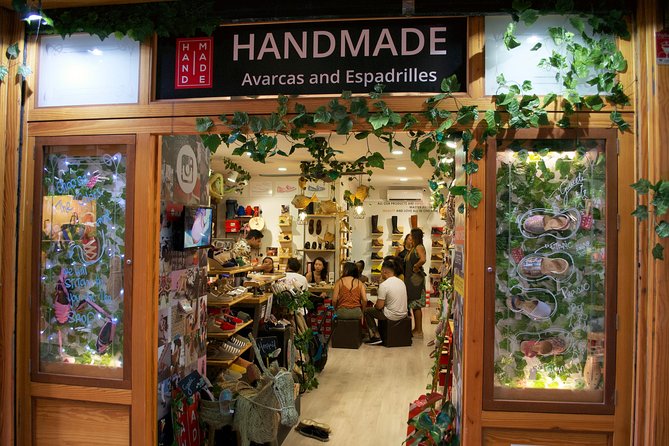
Once the stitching is finished, the artisans show you different ways to tie and wear the ribbons. This adds more value than it first appears to. Espadrille laces can be arranged in several styles, and the tie changes the look from casual to more dressed up.
The lacing lesson also gives you a chance to correct the fit. If the ribbons feel too loose, too tight, or uneven, you can ask for help before leaving. Since the shoes are meant to be worn, not just displayed, this practical stage is worth your attention.
I would take a few minutes to look carefully at the finished pair before the celebration begins. Check the stitching, the ribbon placement, and the way the shoe sits on your foot. The artisans can help while you are still at the table. It is easier to make a small adjustment then than after you have gone back to your hotel.
Cava, snacks, dancing, and a wearable memory
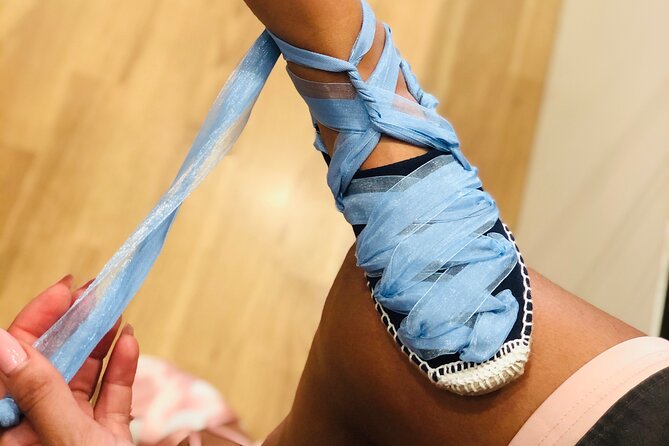
The final 25 minutes turn the workshop into a small party. You open a bottle of champagne or cava, enjoy snacks, take pictures, and celebrate with your new shoes. Dancing is part of the finish, so this is not a quiet craft lesson from start to end.
The festive ending makes the activity work well for birthdays and small groups of friends. One birthday participant received a surprise bottle of cava, and another family had a similar celebration. If you are marking an occasion, tell the provider in advance. The supplied information confirms that cava and snacks are included, but it does not promise a particular birthday arrangement for every booking.
The food is described as snacks, with references to churros in the feedback. I would treat this as a light refreshment rather than a meal. If you are hungry, plan lunch before the 3 p.m. start or dinner afterward.
The photographs are useful because the process itself becomes part of the souvenir. You leave with a pair of shoes and a record of the afternoon you made them. That combination is more personal than a standard purchase, especially if you are making shoes with children, a partner, or friends.
Is $120.56 a fair price?
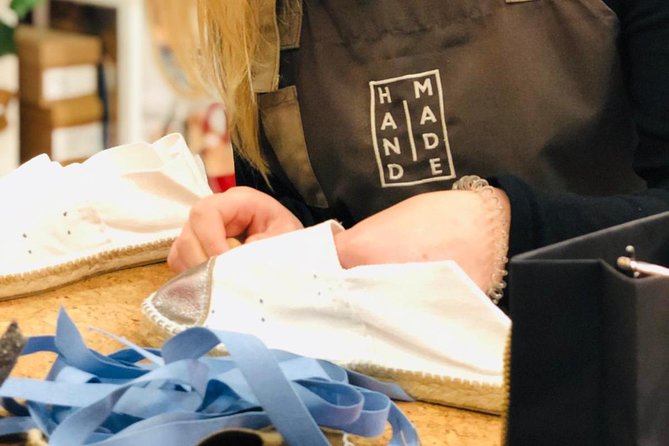
The price is $120.56 per person. That is not cheap for a pair of basic espadrilles, especially if your main goal is simply to buy shoes. The value depends on how much you want the full two-hour activity.
Your fee covers the private instruction, the materials, the base, ribbon laces, the apron, the time at the worktable, and the cava and snacks at the end. You also receive an English-language introduction to the tradition and help from two artisans. In other words, this is a workshop and social activity that includes shoes, not a shoe purchase with a short demonstration attached.
The optional private-group food arrangement costs an extra 20 euros per person and includes free-flowing cava and additional food. That upgrade is most useful for a larger celebration. For a regular booking, the included drinks and snacks may be enough.
The premium shoe base costs extra as well. Ask about the price before committing to a wedge, heel, or platform. If you want a high-end, highly finished pair, buying professionally made espadrilles in the shop may offer better value. If you want the story of making your own pair, the class has a stronger case.
The high overall score, 4.9 out of 5 from 84 ratings, and the 99 percent recommendation figure suggest that the format works very well for most people. Still, the one serious criticism is worth taking seriously. Do not book this expecting to complete a complex luxury shoe from raw materials. Book it as a guided tradition-based craft session with a wearable result.
Who will enjoy this Seville workshop most?
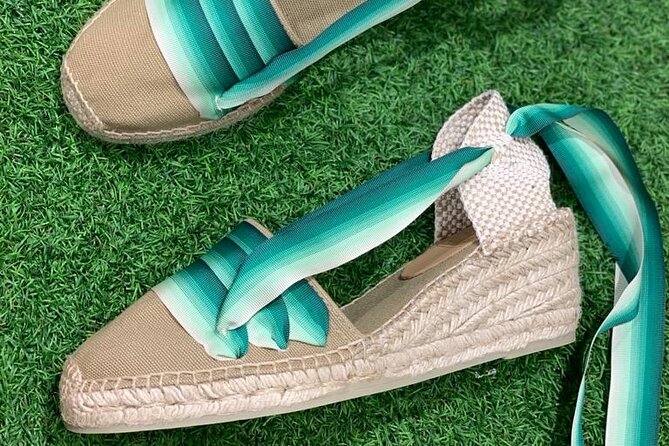
I would recommend it most strongly to:
- Couples who want a shared activity rather than another museum visit
- Families with older children who can handle a needle with adult help
- Friends celebrating a birthday or special trip
- Shoppers who want a handmade souvenir with a story
- Anyone curious about Spanish clothing traditions and small-scale craft
It may be less suitable if you dislike sewing, have very limited time, or only want the lowest possible price for an ordinary pair of espadrilles. It is also not the best match for someone seeking a professional shoemaking course. The class gives you a taste of the process, with the artisans doing the difficult teaching and correction, but it is not a full vocational lesson.
The experience is also a good choice for a rainy afternoon or a break from sightseeing. Two hours is long enough to feel substantial without taking over the day. Since it starts at 3 p.m. and returns you to the same central location, you can fit morning sightseeing around it.
Practical details that affect your plans
Confirmation is provided at booking. The activity is near public transportation, service animals are allowed, and most people can take part. The group capacity is listed as 25, while the experience itself is private for your party, so check the arrangement for your particular booking if group size matters.
You can cancel for a full refund if you do so at least 24 hours before the local start time. Changes or cancellations inside that window are not accepted for a refund. The class also requires a minimum number of participants, and if the provider cancels for that reason, you are offered another date or activity, or a full refund.
Wear something that can handle a little craft work. An apron is supplied, but comfortable clothing still makes sense when you are sitting at a workshop table and handling materials. The important thing is to arrive ready to participate rather than simply watch.
Should you book Make Authentic Espadrilles in Seville?
Book this experience if you want a personal souvenir and enjoy learning by doing. The direct help from two artisans, the choice of colors and styles, and the cava-fueled finish make it more memorable than buying a ready-made pair.
Skip it if $120.56 feels too high for a basic shoe or if you expect professional-level construction. The fairest way to judge the price is to count the shoes as one part of the purchase. You are also paying for a private lesson, a cultural introduction, a celebration, and an afternoon you can share with your own group.
For many people, that is the real souvenir: not just the espadrilles in your suitcase, but the story of how you stitched them in Seville.
FAQ
Where does the espadrille workshop take place?
It starts at C. Sierpes, 70, in the Casco Antiguo area of Seville. The activity ends back at the same meeting point.
What time does the activity start?
The workshop starts at 3 p.m.
How long does the experience last?
The experience lasts approximately two hours.
Is the workshop offered in English?
Yes. The activity is offered in English.
What do I make during the class?
You make your own pair of traditional espadrilles. You choose colors, sizes, and styles, stitch the shoes, and learn different ways to lace them.
What materials are included?
The price includes an apron, espadrille needle, ribbon laces, and an espadrille base.
Are drinks and food included?
Yes. Cava or other alcoholic beverages and snacks are included for the celebration at the end.
Can I cancel for a full refund?
Yes, if you cancel at least 24 hours before the local start time. Cancellations or changes made less than 24 hours before the start are not refundable.
Just added around Seville
- Seville: Wine and Gourmet Tapas Tour★ 5.0 · 3 reviews
- Tapas Tour Cordoba & Wine Experience with chef and sommelier★ 4.8 · 3 reviews
- The most complete tour of Seville: All the highlights included★ 5.0 · 3 reviews
- Seville: Spritz Tasting Experience★ 4.8 · 3 reviews
- Ronda and White Villages Private Day Trip from Seville★ 5.0 · 3 reviews
- Jerez: Historic center of Jerez and horse show★ 5.0 · 3 reviews
- SEVILLE: REAL ALCÁZAR TOUR★ 5.0 · 3 reviews
- Royal Alcazar of Seville Guided Tour★ 5.0 · 3 reviews
Seville Tours, compared.


Live Flamenco Dancing Show Ticket at the Theater
Read our review →

1-Hour Guadalquivir River Sightseeing Eco Cruise
Read our review →
Cathedral, Giralda, and Royal Alcázar Guided Tour
Read our review →