Reviewed · PRIVATE
Private tour to the bullring La Maestranza
La Maestranza is not just a grand arena. It is a working symbol of Seville, and this private visit takes you beyond the pretty ochre-and-white façade into the museum, ring, stables, and bullfighter’s chapel. Guide Isabel explains the sport’s customs, personalities, and place in Spanish culture, while also addressing why bullfighting remains so controversial.
I like the private format, which lets your own group of up to seven ask questions and set the pace. I also like the clear focus on context. Isabel has been praised for keeping children and teenagers interested, and for explaining both the social meaning and difficult ethical questions tied to the sport.
The main catch is simple: the tour price does not include the monument’s entrance ticket. One visitor noted an additional 6 euro admission charge, so check the current fee before booking. The scheduled visit is also short, about 45 minutes, and the guide’s personal views may occasionally enter a subject that calls for careful balance.
In This Review
- Key points to know before booking
- Why La Maestranza matters in Seville
- A private visit with Isabel
- Inside the bullfighting museum
- The arena at La Maestranza
- Stables, corridors, and the working side of the building
- The bullfighter’s chapel
- What the $132.15 group price really covers
- Timing, meeting point, and practical planning
- Who will get the most from this experience
- How to decide if La Maestranza belongs on your Seville plans
- FAQ
- Where does the private La Maestranza tour begin?
- Where does the tour end?
- How long does the visit last?
- What parts of La Maestranza are included?
- Is the entrance ticket included in the price?
- How many people can join the private tour?
Key points to know before booking
- Private group of up to seven: You get the guide’s attention rather than joining a large crowd.
- Five distinct areas: The visit includes the museum, bullring, stables, corridors, and bullfighter’s chapel.
- Isabel is the named guide: Her explanations cover history, Spanish culture, bulls, matadors, and the debate around bullfighting.
- Tickets cost extra: The tour fee covers the official guide and private visit, not the monument admission.
- Short and easy to fit in: The planned visit lasts about 45 minutes and returns to the starting point.
- English-language option: Mobile tickets are offered, and the tour is conducted in English.
Why La Maestranza matters in Seville
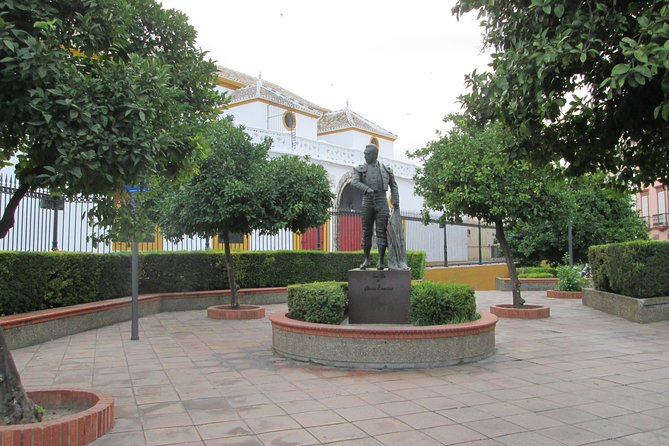
Bullfighting is one of Spain’s most recognized traditions, but it is not a simple subject. It carries ceremony, family ties, local pride, art, and strong opposition. A visit to La Maestranza gives you a way to understand that mix without needing to attend a fight.
The official name is Real Maestranza de Caballería de Sevilla, and the arena sits on Paseo de Cristóbal Colón, close to the historic center. Its location near public transportation makes it practical to reach as part of a day in central Seville.
I see the value here in the setting as much as the subject. Rather than hearing a broad explanation of bullfighting on a walking tour, you are inside the actual arena, surrounded by the spaces connected to the tradition. The building supplies the visual details that a guidebook cannot.
If you feel unsure about bullfighting, that is not a reason to skip the visit. In fact, the tour may be most useful when you want to understand why the practice has supporters and critics. The experience is cultural education, not a requirement to approve of the sport.
A few more Seville tours worth comparing
- Seville: Royal Alcázar Entry Ticket
★ 4.6 · 28,378 reviews - Seville: Cathedral and La Giralda Entry Ticket
★ 4.5 · 24,592 reviews - Seville: Live Flamenco Dancing Show Ticket at the Theater
★ 4.7 · 16,396 reviews
A private visit with Isabel
The guide named in the experience details and feedback is Isabel. Her strongest quality is her ability to explain a complicated topic in a personal, approachable way. Several comments highlight her skill with families, including teenagers and children, which matters in a museum where the subject can feel unfamiliar or heavy.
Isabel’s approach includes more than dates and names. She discusses the history of bullfighting in Seville, the role of bulls and matadors, and the sport’s connection to Spanish society. She also uses anecdotes, which can make the museum displays and arena traditions easier to follow.
The private setup is a real advantage. Your group can ask about a costume, a ritual, a matador, or the controversy surrounding the sport without worrying about holding up a large party. If you are traveling with relatives or friends who have different levels of interest, the guide can explain the subject at a pace that works for your group.
There is one point to keep in mind. One assessment described the guide as somewhat opinionated when discussing bullfighting. Isabel acknowledged that personal views can enter a private tour, especially on a controversial topic, and said she would work toward a more neutral approach. I would treat this as a useful expectation: the visit is led by a person, not an audio guide, so you may hear interpretation as well as factual background.
Inside the bullfighting museum
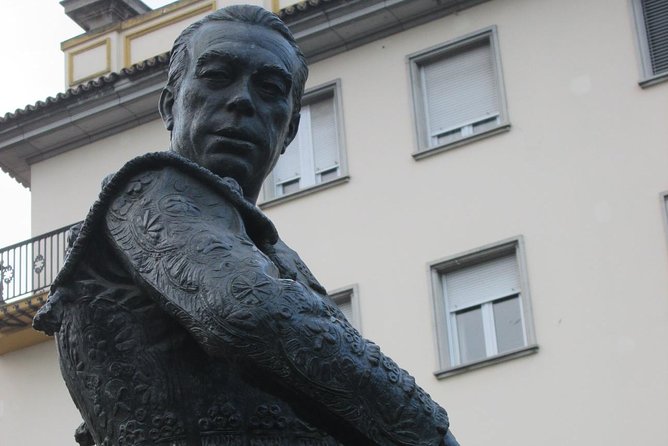
The museum is the best place to begin because it gives the arena a human and cultural frame. You can expect displays connected to bullfighting, including the people, clothing, traditions, and objects that help explain how the spectacle developed.
The museum portion is especially useful if you know little about the sport. Without context, the ring can look like a beautiful circular building with an unusual purpose. The exhibits help explain why the clothing is so ornate, why ceremonies matter, and how matadors became public figures.
Isabel’s explanations are intended to connect the objects with Spanish culture. That is where a private guide adds value. You can ask what a particular item means, how a bullfighter’s role is understood, or why the subject creates such strong reactions.
Do not expect a vast museum visit in 45 minutes. The time must be shared among several parts of the building, so the experience is better for a focused introduction than for a slow examination of every display. If museum collections are your main interest, you may wish the allotted time were longer.
The arena at La Maestranza
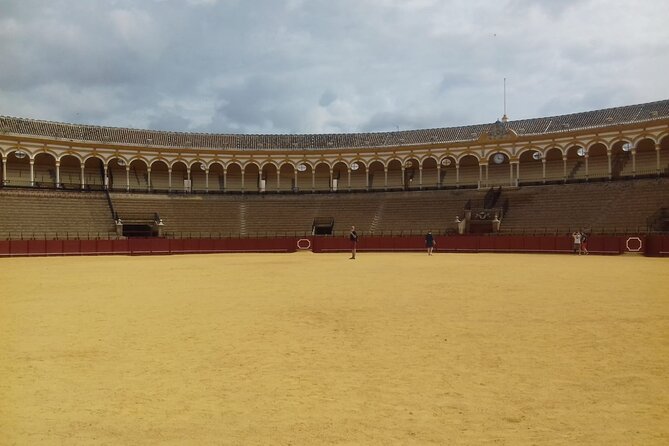
The bullring is the visual center of the visit. Once you see the sand-colored floor, curved seating, and enclosed shape of the arena, the customs described in the museum become easier to picture.
You are not simply looking at a sports venue. The ring is a ceremonial space, and its design helps explain the importance of entrance rituals, public attention, and the relationship between matador, bull, and audience. Isabel can give you the background needed to read the space rather than just photograph it.
One visitor specifically praised the excellent condition of the facility. That detail matters because a well-maintained monument makes the visit more rewarding. The arena remains a place with a clear identity, not merely an old building preserved behind glass.
The ring may also be the most complicated part emotionally. Some people appreciate its architecture and cultural role while feeling uncomfortable with bullfighting itself. You can take the historical and architectural value seriously without pretending the ethical debate does not exist.
A completely different day out from Seville:
- Seville: Casa de la Memoria Flamenco Show
★ 4.8 · 12,964 reviews - Seville: 1-Hour Guadalquivir River Sightseeing Eco Cruise
★ 4.2 · 10,281 reviews - Córdoba: Skip-the-Ticket-Line Mosque-Cathedral Guided Tour
★ 4.6 · 9,634 reviews - Seville: Cathedral, Giralda, and Royal Alcázar Guided Tour
★ 4.7 · 9,165 reviews
Stables, corridors, and the working side of the building
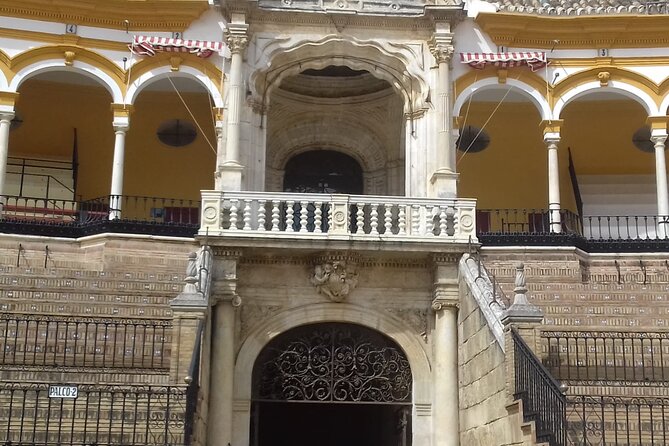
The stables offer a different view of La Maestranza. They move the visit away from the public spectacle and toward the practical spaces associated with preparing for an event.
Corridors add another layer. They connect the polished public image of the arena with the less visible movement of people, animals, and equipment. These areas may not have the instant impact of the ring, but they help you understand that the building was designed for more than an audience sitting in bright afternoon light.
This part of the route is one reason I prefer a guided visit to a quick look from outside. You get a sense of how the arena functions as a complete place. Isabel’s stories and explanations can give meaning to spaces that might otherwise seem plain.
The supplied details do not promise access to every working area during every visit, so you should understand these as planned stops rather than a guarantee of unrestricted exploration. The stated route includes the stables and corridors, with the guide leading the way.
The bullfighter’s chapel
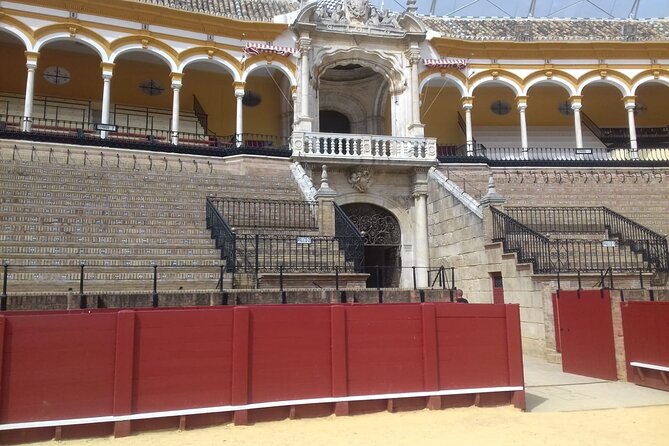
The chapel brings a quieter tone to the experience. It shows the religious and ceremonial side of bullfighting, a tradition often presented through costume, music, crowds, and drama.
You might find this small space more revealing than expected. It helps explain the seriousness with which many participants approach the event. The chapel also makes clear that the sport has long been tied to personal ritual and belief, not only public entertainment.
For visitors interested in Spanish culture, this is an important stop because it broadens the picture. Bullfighting is often reduced to the contest in the ring, but the chapel points to the private preparation and solemn customs surrounding it.
The guide’s role is particularly helpful here. A short visit can leave you with questions about the chapel’s use and symbolism, and a private group gives you room to ask them.
What the $132.15 group price really covers
The listed price is $132.15 per group, for as many as seven people. That means the value improves sharply when you fill most of the places. For seven people, the guide portion works out to roughly $19 per person before the entrance fee. For one or two people, the cost is much less favorable.
The price includes an official guide and a private visit. It does not include the monument ticket. One note places that extra admission at 6 euros, but admission prices can change, so confirm the current amount when you book.
I think the fee makes the most sense for a family or small group that wants a tailored explanation in English. A private guide can be worth more than a cheaper group tour if you care about questions, family pacing, or a careful explanation of a sensitive subject.
The value is also tied to what you want from the visit. If you only need a quick look at the arena, paying for a private guide may feel unnecessary. If you want the museum, chapel, stables, and cultural background explained in one compact visit, the arrangement is more appealing.
Timing, meeting point, and practical planning
The tour begins at the Plaza de Toros de la Real Maestranza de Caballería de Sevilla, at Paseo de Cristóbal Colón, 12, in Seville’s Casco Antiguo. It ends back at the same meeting point, which makes it easy to continue sightseeing nearby.
Allow more time than the stated 45 minutes if you need to find the entrance, handle the separate monument ticket, or meet your guide. The actual guided portion is approximately 45 minutes, so do not book it too close to a fixed lunch, train, or timed attraction.
This is a good stop to place between other central Seville sights because it is short. You can use it as a focused cultural visit rather than giving up half a day. The meeting point is near public transportation, and most people can participate.
The experience is offered in English and uses a mobile ticket. Confirmation normally arrives at booking, though reservations made within three days of the visit may take up to 48 hours to confirm, subject to availability. If your schedule is tight, book earlier rather than waiting until the last minute.
The tour requires good weather. That may seem surprising for a monument visit, but part of the experience takes place in or around an open arena. If poor weather cancels the activity, you are offered another date or a full refund.
Service animals are allowed. The activity is private, so only your own group takes part.
Who will get the most from this experience
I would recommend this visit to anyone curious about Spanish customs but unsure how to approach bullfighting. You do not need prior knowledge, and the short format gives you a clear introduction without asking you to devote an entire morning to the subject.
Families are a strong match. Isabel has been praised for keeping children and teenage boys interested, which suggests that her use of stories and explanation works better than a dry museum talk. The private arrangement also means your group can ask basic questions without embarrassment.
It suits adults interested in architecture, social history, religion, and local identity, too. The bullring, stables, corridors, and chapel create a fuller picture than the arena alone.
I would be more cautious if you want a strongly neutral or purely architectural tour. The guide has acknowledged that personal opinions may sometimes appear in discussion. Also, people who oppose bullfighting on ethical grounds may find parts of the subject difficult, even if the visit explains the controversy thoughtfully.
How to decide if La Maestranza belongs on your Seville plans
Book this tour if you want a compact, private introduction to one of Seville’s most recognizable cultural institutions. The strongest reasons are the small-group format, Isabel’s lively explanations, and access to several parts of the building rather than only an exterior photograph.
Before paying, remember two points: the monument ticket is extra, and the scheduled visit lasts about 45 minutes. If you have seven people sharing the cost, the price is easier to justify. If you are traveling alone, compare it with a standard admission option.
My call: book it if you want context, not just a quick look at a famous arena. It is particularly useful for families and curious first-time visitors who want the history, customs, and arguments explained in plain English. Skip it if you are looking for a long museum visit or know that any discussion of bullfighting will make the experience uncomfortable.
FAQ
Where does the private La Maestranza tour begin?
It begins at the Plaza de Toros de la Real Maestranza de Caballería de Sevilla, Paseo de Cristóbal Colón, 12, Casco Antiguo, 41001 Seville, Spain.
Where does the tour end?
The activity ends back at the meeting point.
How long does the visit last?
The visit lasts approximately 45 minutes.
What parts of La Maestranza are included?
The route includes the bullfighting museum, bullring, stables, corridors, and bullfighter’s chapel.
Is the entrance ticket included in the price?
No. The monument ticket is not included. One visitor noted an additional 6 euro entrance fee, but you should confirm the current charge before visiting.
How many people can join the private tour?
The price covers one private group of up to seven people. Only your group participates.
Just added around Seville
- Seville: Wine and Gourmet Tapas Tour★ 5.0 · 3 reviews
- Tapas Tour Cordoba & Wine Experience with chef and sommelier★ 4.8 · 3 reviews
- The most complete tour of Seville: All the highlights included★ 5.0 · 3 reviews
- Seville: Spritz Tasting Experience★ 4.8 · 3 reviews
- Ronda and White Villages Private Day Trip from Seville★ 5.0 · 3 reviews
- Jerez: Historic center of Jerez and horse show★ 5.0 · 3 reviews
- SEVILLE: REAL ALCÁZAR TOUR★ 5.0 · 3 reviews
- Royal Alcazar of Seville Guided Tour★ 5.0 · 3 reviews
Private, compared.
Tour Welcome Seville with Local Guide in Eco Tuk Tuk Private
Read our review →
Seville Private Walking Tour with Alcazar & Cathedral Tickets
Read our review →
Private White Villages & Ronda Day Tour from Seville
Read our review →
Private Visit Mosque-Cathedral, Jewish quarter, Alcazar and Synagogue
Read our review →
Private Walking Tour Alcazar and Cathedral in Sevilla
Read our review →