
Reviewed · WALKING TOURS
Ronda: Guided Walking Tour with English or Spanish Guide
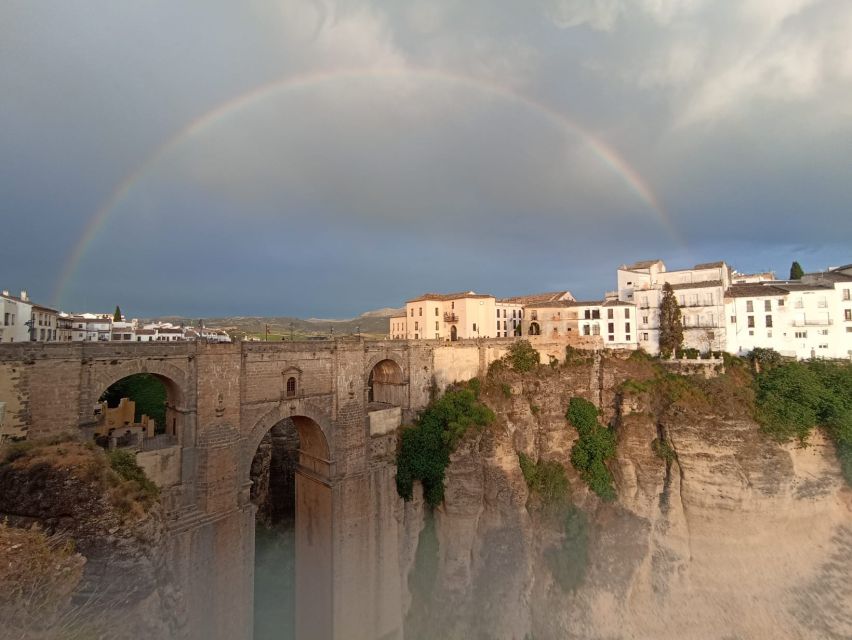
Ronda’s drama is easy to spot: the town sits above a deep gorge, with the famous New Bridge joining its newer quarter to the old city. This walking tour helps you see more than the postcard view, leading you through the bullring area, historic streets, old bridges, grand houses, and viewpoints that are easy to miss on your own.
I like two things right away. First, the route gives you a useful introduction before you decide which buildings and museums deserve more of your time. Second, the guides add practical local advice, from the best places to photograph the bridges to tapas bars, cafés, rooftop views, and free sights. The main consideration is that this is an exterior walking tour, so entry to the bullring, churches, palaces, or museums is not included.
I also like the choice of English or Spanish, and the steady pace reported by many visitors. Guides including Gema, Tanya, Susanna, Lourdes, Dasha, and Bella have been praised for clear storytelling and thoughtful recommendations. At $29 per person, it is a sensible buy if you want orientation, local context, and an efficient first look at Ronda.
In This Review
- Key points to know before booking
- Why a guided walk helps in Ronda
- Starting at Plaza de la Merced
- The bullring and the Walk of the Bullfighters
- Commercial streets and Ronda’s old quarter
- The New Bridge and the best photo angles
- Don Bosco’s House and the Palace of Mondragon
- Santa María la Mayor and the historic center
- Guide quality and the human side of the walk
- Food, drink, and what to do after the walk
- Pace, heat, access, and practical comfort
- Is $29 good value in Ronda?
- Who should book this Ronda walk?
- Should you book it?
- FAQ
- How long does the Ronda walking tour last?
- What languages are available?
- Where does the tour start?
- Where does the tour finish?
- Is hotel pickup included?
- Does the tour include entry to the bullring?
- Do you enter the Palace of Mondragon?
- Is the walking tour wheelchair accessible?
- What should you bring?
- How much does the tour cost?
Key points to know before booking
- The New Bridge is only part of the story: You also see the old town, bullring area, bridges, historic houses, and major church.
- Local guides shape the experience: Gema, Tanya, Susanna, Lourdes, and other guides are noted for clear explanations, humor, and useful food tips.
- You do not enter the attractions: The tour shows you the main buildings from outside, leaving you free to return to the places you want to explore inside.
- The walk is designed as an introduction: Expect roughly 1.5 hours, with the route description allowing up to about two hours.
- Heat matters in Ronda: Shade stops and a manageable pace help, but comfortable shoes and sensible sun protection are important.
- The finish at Plaza España is useful: You end near the New Bridge area, making it easy to continue sightseeing, eat, or return to a favorite viewpoint.
Why a guided walk helps in Ronda
Ronda can look simple on a map. You walk toward the gorge, take a picture of the New Bridge, and assume you have seen the essential sights. That plan misses much of what gives the town its character.
The old quarter has layers of Roman, Islamic, Christian, aristocratic, and literary history. A guide gives you a framework for understanding those layers without asking you to spend half a day inside a museum. You get the broad story first, then choose what deserves a closer look.
The route is also useful because Ronda’s best views are not all in one place. The New Bridge has several good angles, while the older bridges and paths around the gorge offer a different sense of the town’s setting. Guides such as Susanna and Tanya have been especially helpful with picture spots and directions to viewpoints after the walk.
The tour is not built around a long lecture. It moves through the town with regular stops for stories and landmarks. That suits me. Ronda is a place where you want to look around, not stare at a guide speaking for an hour in one square.
More walking tours in Ronda:
- Ronda: Guided Walking Tour
★ 4.6 · 104 reviews - Ronda: 2-Hour Private Walking Tour
★ 4.6 · 87 reviews - Ronda: Sightseeing Walking Tour
★ 4.2 · 40 reviews
Starting at Plaza de la Merced
The meeting point is at Plaza de la Merced, 1. The walk begins in the newer part of Ronda and then works toward the historic center, giving you a natural transition between the two sides of town.
This is a useful starting point for first-time visitors because you begin with the city’s present-day streets before reaching its older quarters. You can get your bearings, see where the commercial area lies, and learn how the modern town connects with the historic center.
The exact pace depends on the guide and the group, but the general pattern is clear: walk, stop, listen, and continue. Several people have found the pace comfortable and not rushed. That matters in Ronda, where uneven pavement, warm weather, and frequent photo stops can make an overly fast route tiring.
If you are arriving by car, allow extra time to reach the meeting point. Parking around Ronda can be difficult, and one late arrival lost about 20 minutes after spending far longer than expected looking for a space. The guide was able to keep the person updated, but you should not count on being able to join easily if you are delayed.
The bullring and the Walk of the Bullfighters
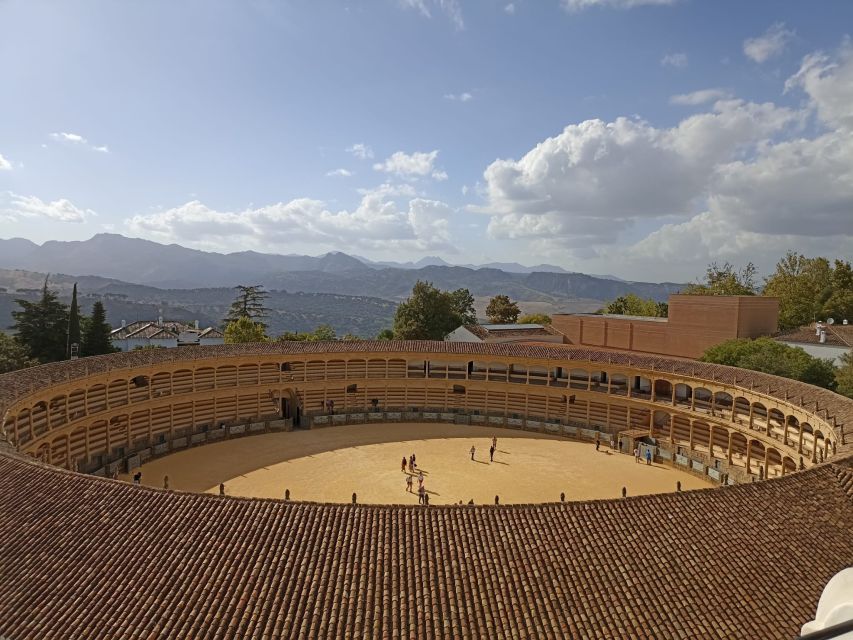
One of the first major themes is Ronda’s bullfighting tradition. The tour takes you through the bullring area and along the Walk of the Bullfighters, connected with the Plaza de Toros de Ronda.
Ronda’s bullring is described as Spain’s oldest, which gives the site more weight than a quick photo stop. The guide can explain how the arena fits into local culture and why Ronda is linked with the development of modern bullfighting traditions.
You see the exterior and surrounding area on this walk. Admission is not included, so you will need a separate ticket if you want to enter and explore the arena. This is not a flaw, but it is important to understand the format. Some people prefer this arrangement because they can decide later if the bullring deserves more time. Others may wish the tour included at least one interior visit.
The bullring works well as an early stop because it gives you a clear example of Ronda’s public traditions and architecture. It also breaks up the bridge-focused sightseeing. If you have little interest in bullfighting, the surrounding history and building may still be worthwhile, but the guide’s treatment of this stop will be more useful than the visit itself.
Commercial streets and Ronda’s old quarter
From the bullring area, the route continues along commercial streets and into the old town. Here the tour becomes less about one famous monument and more about how Ronda works as a living town.
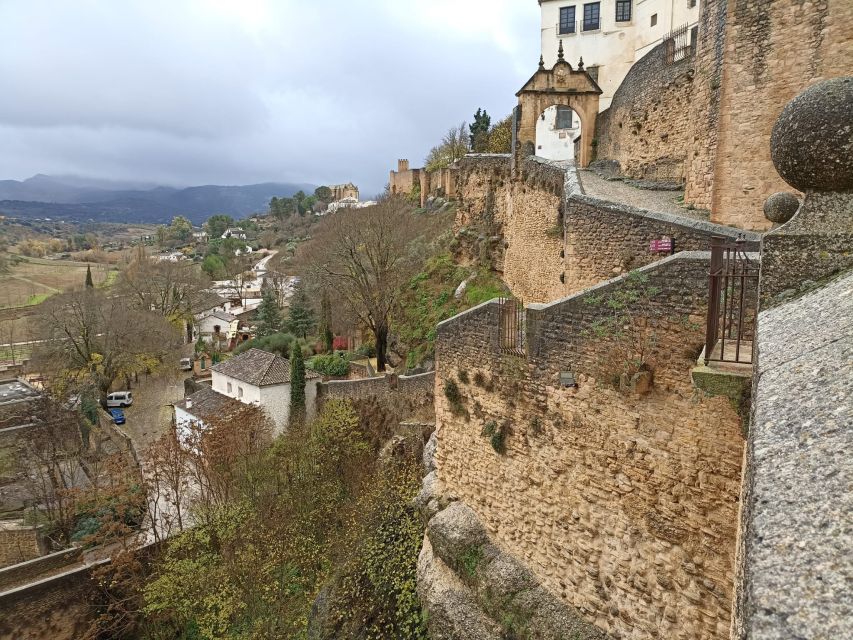
You will see historic façades, narrow streets, public squares, and details that are easy to walk past without explanation. Guides point out lesser-known places, local customs, and buildings that do not always appear on a standard sightseeing map.
This is where a local guide can make a real difference. Gema, who is originally from Ronda, has been particularly good at explaining the town from a resident’s point of view. Other guides, including Lourdes and Bella, have mixed formal history with stories and humor, keeping the route from feeling like a string of dates and names.
The old town is also the best part of the route for deciding what to do next. Guides have suggested museums, additional tours, free places to visit, and spots for food and drink. Recommendations include tapas bars, cafés, and a panoramic hotel rooftop bar. The advice is practical rather than abstract, especially when the guide gives prices or points out which activities can be done without paying.
You should write down the names of places as you go. One useful improvement would be a small map marking the recommended tapas bars. Verbal directions can be hard to remember after a busy walk.
More Ronda trips:
- From Seville: Pueblos Blancos and Ronda Full-Day Trip
★ 4.5 · 3,849 reviews - From Seville: Ronda+Setenil de las Bodegas Day Trip
★ 4.4 · 3,562 reviews - From Malaga: Ronda and Setenil Tour with Scenic Train
★ 4.8 · 2,895 reviews - White Villages and Ronda Day Tour from Seville
★ 4.5 · 2,049 reviews
The New Bridge and the best photo angles
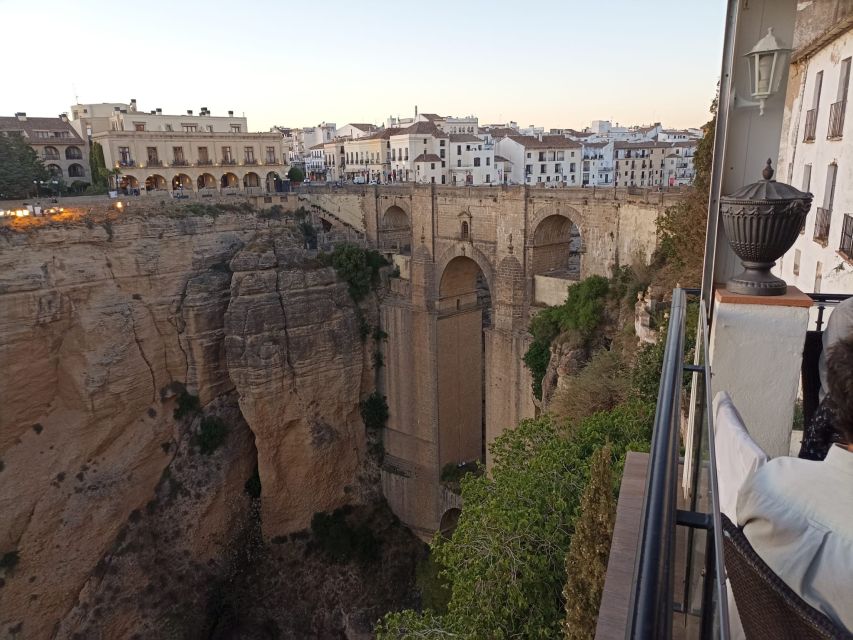
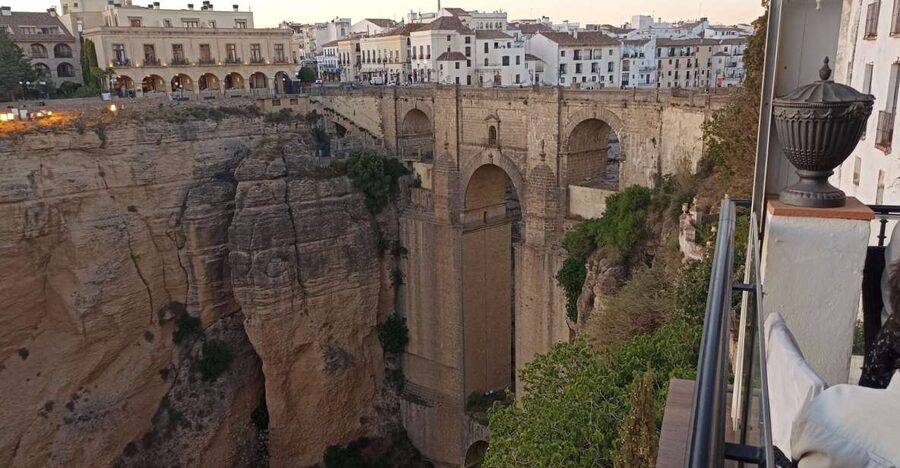
The New Bridge is the visual centerpiece of Ronda, and the tour gives it the time it deserves. The bridge spans the gorge and connects the newer area with the old quarter, creating the view most people associate with the town.
A guide adds value here by directing you to more than one angle. The obvious viewpoint can be crowded, while nearby streets and overlooks may give you a clearer view of the bridge, gorge, and surrounding buildings. Several guides have also pointed out places to photograph the older bridges, which helps you see how Ronda developed around its dramatic setting.
Do not expect a long walk down into the gorge as part of this short route. The activity is described as a town walking tour with scenic views along the way. You see the major viewpoints and learn how to find more of them afterward, but the focus stays on the city streets.
The New Bridge is best appreciated with a little context. On your own, you may spend five minutes taking pictures and moving on. With a guide, you learn why the bridge matters to Ronda’s layout and how the old and new sections of town relate to each other.
The bridge area can also be busy. A September visit was described as crowded, and summer heat can be intense. Your guide may use shaded spots for explanations, as Gema did during a very hot afternoon, but bring water and do not treat the short duration as protection from the sun.
Don Bosco’s House and the Palace of Mondragon
The route includes Don Bosco’s House and the Palace of Mondragon, two stops that broaden the tour beyond the bridge.
Don Bosco’s House adds a more domestic and social side to the town. It helps you imagine how important families and institutions used Ronda’s setting, rather than seeing the city only as a collection of viewpoints.
The Palace of Mondragon brings in a more formal architectural story. Its importance is best understood when a guide explains who used the building and how it fits into Ronda’s changing past. You pass by the palace rather than touring its rooms, so note it as a place to return to if the exterior and the guide’s explanation catch your interest.
These stops are a good reason to take the tour early in your visit. You may not know which buildings deserve entry before you arrive. After hearing the basic story, you can choose where to spend your limited time and admission money.
The route does not promise interior access. That is worth repeating because Ronda has several buildings that look inviting from the street. Budget for separate tickets if you want to go inside the bullring, palace, church, or other sights.
Santa María la Mayor and the historic center
The Collegiate Church of Santa María la Mayor is another important landmark on the route. Its position in the old city makes it a useful anchor for understanding Ronda’s religious and civic center.
The church is seen as part of the guided walk, not as an included interior visit. If you want to study the architecture or enter for a closer look, plan a separate visit after the tour. This arrangement also means you can decide how much time you want to spend there instead of being hurried through with a group.
One person specifically noted that visiting the inside of a church or two would have been welcome. That is the clearest limitation of the format. You receive a broad explanation of the building and its place in the town, but not the full experience of its interior art and architecture.
Still, the stop works well within a short orientation walk. You see the church, learn its significance, and continue through the surrounding old streets. The guide can help you connect religious buildings with the wider story of Ronda’s Christian period and its earlier past.
Guide quality and the human side of the walk
The strongest part of this experience is the guide. Across different dates, guides named Gema, Tanya, Susanna, Lourdes, Dasha, Bella, Marina, Anna, and others have been praised for clear English, good pacing, humor, and warmth.
That variety matters. The experience is not built around one fixed personality, so your exact style may differ. Some guides focus on stories, others on dates and architecture, and some put more energy into food advice and what to do next.
Gema has been especially well received for her local connection, easy English, and ability to manage heat and timing. Tanya is often described as friendly, passionate about Ronda, and generous with suggestions. Susanna has been praised for her history explanations, literary connections, bridge viewpoints, and tapas advice. Lourdes has made a strong impression through storytelling and command of the material.
The practical standard is high: you should be able to hear the guide, follow the route, and ask questions. The walk is conducted in English or Spanish, and the English guides have been described as easy to understand.
The guide is also a useful photo assistant. Susanna has helped with pictures, while several others have identified angles that are hard to find without local direction. If you are traveling alone or with a small party, do not be shy about asking for a photo.
Food, drink, and what to do after the walk
The food advice is one of the best reasons to take this tour near the start of your stay. Guides point out places for tapas, meals, cafés, and drinks, often adding practical notes about cost and location.
This does not include a tasting. You are not paying for food or drinks, and you should plan to visit the recommended places on your own afterward. The value is that you do not waste your first evening choosing blindly in a busy tourist center.
You also receive suggestions for other activities, including a separate bullring visit and additional sights. Some guides point out free places, which can help balance the cost of paid attractions.
The tour finishes at Plaza España, close to the central bridge area. That is a convenient ending point. You can continue to the New Bridge viewpoints, look for lunch or tapas, return to the bullring, or walk back through the old town to explore a place you only saw briefly.
Pace, heat, access, and practical comfort
The tour lasts 1.5 hours according to the booking details, while the route description allows about two hours. Plan for roughly 1.5 to 2 hours so you are not scheduling a train, meal, or second activity too tightly.
You need comfortable shoes. Ronda’s streets can involve uneven surfaces and regular walking, even though the route is described as manageable for the group. The walk is wheelchair accessible, but the available information does not describe every surface, slope, or individual building entrance. If you need very specific access details, confirm them before booking.
Summer heat is a real factor. One walk took place in 35-degree weather, and another guide managed intense heat with shaded stops. Book an earlier or later departure if the available time suits you, carry water, and wear sun protection.
The route is not a hike, but it is still a town walk. You stop often, which helps, yet you should be ready to stay on your feet for most of the activity.
Is $29 good value in Ronda?
At $29 per person, this is not the cheapest way to walk around town. You can see the New Bridge and old streets without paying for a guide. The question is what you want from your first look at Ronda.
I think the price is fair if you value orientation, local stories, and food advice. You also save time by learning where to go next, which viewpoints are worth seeking out, and which buildings may deserve an entrance fee.
The value is stronger for a first visit, a day trip, or a short stay. It is also useful if you want a clear English or Spanish explanation rather than relying on guidebooks or signs.
The price is less convincing if you already know Ronda well, speak Spanish comfortably, or plan to spend the day entering several attractions. Since no admissions are included, your total sightseeing cost can rise if you add the bullring, palace, church, and museums afterward.
Small groups can improve the value because you can hear the guide and ask questions. One visit had only a few participants, while other departures may feel busier, especially in peak months. Group size is not specified, so do not book expecting a private tour.
Who should book this Ronda walk?
I would choose this tour for a first visit, particularly if you have only one day. It gives you the city’s key sights without consuming the whole morning or afternoon.
It suits couples, families with older children, solo visitors, and anyone who prefers stories to self-guided sightseeing. The steady pace and regular stops also help if you want a gentle introduction rather than a demanding walk.
It is a good match for people interested in local food. The tapas and café suggestions can shape the rest of your day, and guides often explain what to do after the main route.
I would be more cautious if your main goal is interior architecture. This walk does not include entry to the bullring, Palace of Mondragon, Santa María la Mayor, or other buildings. In that case, use the tour for orientation, then reserve time and money for separate visits.
You should also think about timing. In hot weather, the route may be pleasant only if you are comfortable walking in the sun. The guides make an effort with shade and pace, but they cannot change Ronda’s weather.
Should you book it?
Book this tour if you want a friendly, efficient introduction to Ronda with strong local advice. The best features are the clear route, the New Bridge viewpoints, the bullring and old-town context, and the guides’ help with food and the rest of your day.
Skip it if you prefer exploring without a schedule or if you want a tour focused on entering monuments. At $29, you are paying for explanation and orientation, not admission tickets.
For most first-time visitors, I would take it early in the visit, wear comfortable shoes, carry water, and keep the rest of the day open. The walk gives you the map in your head. You can then return to the places that deserve more time.
FAQ
How long does the Ronda walking tour last?
The listed duration is 1.5 hours. The route description allows about two hours, so plan for roughly 1.5 to 2 hours.
What languages are available?
You can choose an English-speaking or Spanish-speaking guide.
Where does the tour start?
The starting point is Plaza de la Merced, 1, in Ronda.
Where does the tour finish?
The tour finishes at Plaza España.
Is hotel pickup included?
No. Hotel pickup and drop-off are not included.
Does the tour include entry to the bullring?
No. The walk visits the bullring area and the Walk of the Bullfighters, but admission to Plaza de Toros de Ronda is not included.
Do you enter the Palace of Mondragon?
The tour includes the Palace of Mondragon as a sightseeing stop, but interior admission is not included in the activity.
Is the walking tour wheelchair accessible?
Yes. The activity is listed as wheelchair accessible.
What should you bring?
Bring comfortable shoes. Water and sun protection are also sensible choices, especially in warm weather.
How much does the tour cost?
The listed price is $29 per person. Food, drinks, attraction admissions, and hotel transportation are not included.
Just added around Ronda
- Ronda and White Villages Private Day Trip from Seville★ 5.0 · 3 reviews
- Ronda private tour from Seville★ 5.0 · 3 reviews
- Private tour to Ronda from Seville (several options)★ 5.0 · 3 reviews
- From Seville: Ronda and Setenil de Las Bodegas Private Tour★ 5.0 · 3 reviews
- Private Day Trip to Ronda and Malaga from Seville★ 4.4 · 4 reviews
- White Villages & Ronda 2-Days Trip & Overnight Stay★ 4.6 · 5 reviews
- Private Daytrip to Ronda from Seville★ 5.0 · 5 reviews
- Private Tour from Seville to Setenil and Zahara and Ronda★ 5.0 · 5 reviews
Walking Tours, compared.
Walking Tour through Cádiz: Stories from the hand of a local guide
Read our review →
Small-Group Jewish Quarter Discovery Walking Tour
Read our review →
English Cádiz Tour: Walking Tour with Local Guide
Read our review →Browse the lists this tour appears in