
Reviewed · GUADALQUIVIR RIVER CRUISES
Seville: 2–Hour Guadalquivir River Kayaking Tour
Seville’s story makes more sense from the water. On this two-hour Guadalquivir kayaking tour, you paddle past Triana, the Torre del Oro, the Arenal, and the old Expo 92 grounds while your guide connects the river to Columbus, the first trip around the world, and Seville’s years as Europe’s main gateway for goods from America. The river is your sightseeing route, not just a backdrop.
I like two things here: the small-group format gives you more help with paddling and more time to ask questions, and the view is genuinely different from anything you get on a walking tour. You also get a proper safety lesson, equipment, and a changing room. The catch is simple: this is exercise. Some people find the two hours harder than expected, and you can get wet, so it is not the best choice if you want a completely restful city tour.
In This Review
- Key points to know before you book
- Why the Guadalquivir is the real attraction
- Starting at Club Deportivo RemoSevilla
- Cartuja and the Expo 92 waterfront
- From Sevilla Tower to the Arenal
- Triana, Puente de Isabel II, and Calle Betis
- The Torre del Oro and Seville’s old port
- What the guide adds
- How difficult is two hours of kayaking?
- Timing, weather, and comfort
- Is $46 a fair price?
- Who should book this experience?
- Should you book the Guadalquivir kayak tour?
- FAQ
- Where does the kayaking tour start and finish?
- How long does the tour last?
- What language is the tour offered in?
- Is kayaking equipment included?
- Is there a place to change clothes?
- What should I bring?
- How many people use each kayak?
- Can children join the tour?
- Can I cancel the booking?
Key points to know before you book
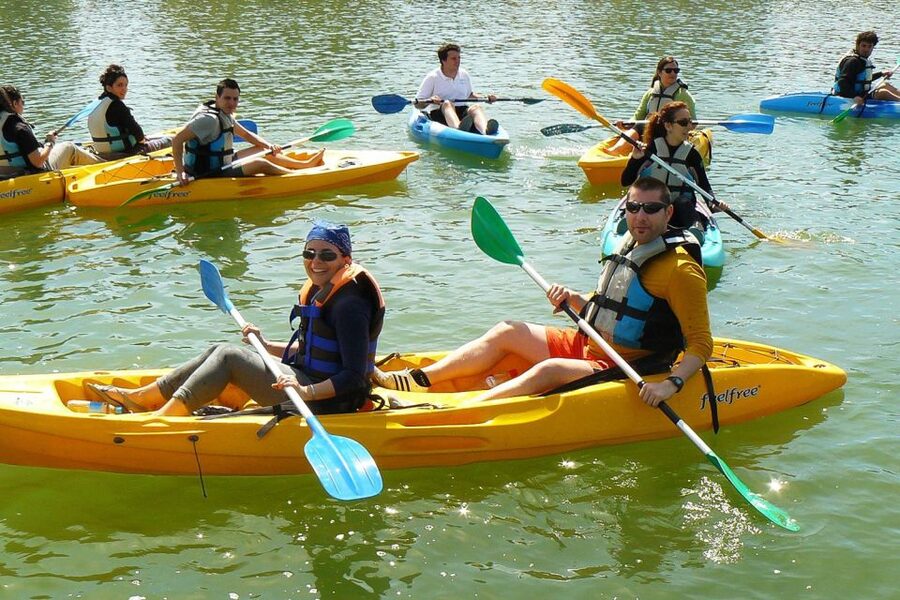
- A history lesson with a paddle in your hands: Learn how the Guadalquivir helped make Seville wealthy, then lost importance after the river silted up.
- A calm but active outing: The river is suitable for beginners, but you still need to paddle for much of the two hours.
- A strong run of city sights: The route includes Triana, Calle Betis, the Torre del Oro, Cartuja, the Arenal, and several bridges.
- Useful changing facilities: The tour starts and ends at Club Deportivo RemoSevilla, with a changing room and a place to leave belongings.
- Good guide support: Guides such as Alex, Karlos, Juan, Rey, Federico, and Pablo have led sessions in Spanish, English, and other cases with strong language support.
- Best for flexible sightseers: You can cancel up to 24 hours ahead, and reserve now while paying later.
Why the Guadalquivir is the real attraction
The river is not merely a convenient place to paddle. The Romans called it Betis, while its present Arabic name means the Big River. For centuries, it was Seville’s economic engine and its link to the Atlantic.
During Seville’s golden era, lasting roughly 150 years, ships brought gold, silver, tobacco, and other goods from America. Seville became Europe’s main port for this trade. That fact can be hard to picture when you are walking among tapas bars and grand plazas, but it becomes clearer from a kayak, where the river’s width and position inside the city are right in front of you.
The river later silted up in the 17th century. Seville lost much of its commercial importance, and the waterway became quieter. The city restored and reshaped parts of the river for the 1992 Universal Exhibition, after which it returned to use for cruises, rowing, canoeing, and kayaking.
That changing role gives your guide plenty to explain. You are not just ticking off monuments. You are seeing how trade, engineering, sport, and urban planning have altered Seville over time.
More river cruises in Seville:
- Seville: 1-Hour Guadalquivir River Sightseeing Eco Cruise
★ 4.2 · 10,281 reviews - Seville: Guadalquivir River Cruise
★ 3.9 · 6,921 reviews - Seville: Guadalquivir Boat Tour with Optional Lunch/Dinner
★ 4.4 · 2,193 reviews
Starting at Club Deportivo RemoSevilla
The tour begins at Club Deportivo RemoSevilla, a rowing club rather than a standard city-tour office. That is useful because you arrive at a working water-sports setting, with changing facilities and kayaking equipment already on hand.
Allow enough time to change into clothes you do not mind getting wet. Bring a towel, comfortable shoes, sunscreen, and an extra set of clothes and shoes. The changing room lets you leave belongings while you are on the river, but you should still keep your packing simple.
Before you set off, the guide gives an introduction to kayaking safety. Expect basic instruction on handling the paddle, staying balanced, and moving the kayak. A warm-up and demonstrations of technique have also been part of past sessions, which is especially helpful if you have never kayaked before.
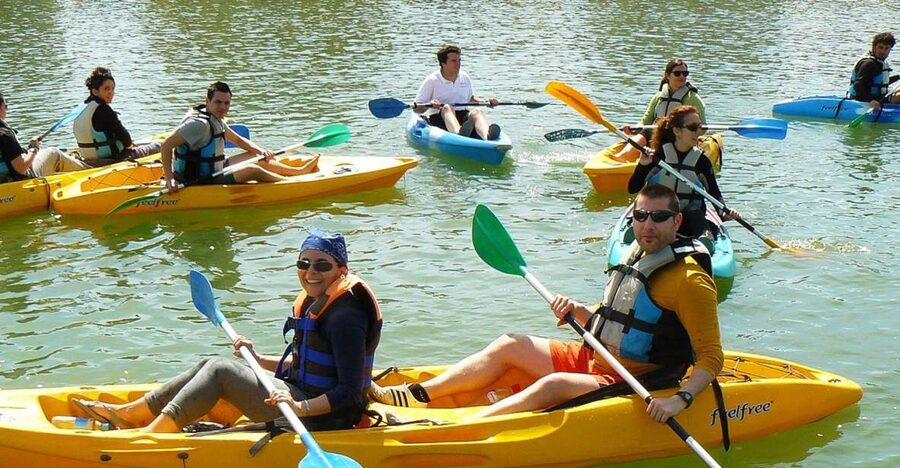
The standard arrangement is two adults per kayak, or one adult and one child. Children must stay with an adult at all times. Private and small-group options are available, a useful choice if you are nervous about learning in front of a larger crowd.
Cartuja and the Expo 92 waterfront
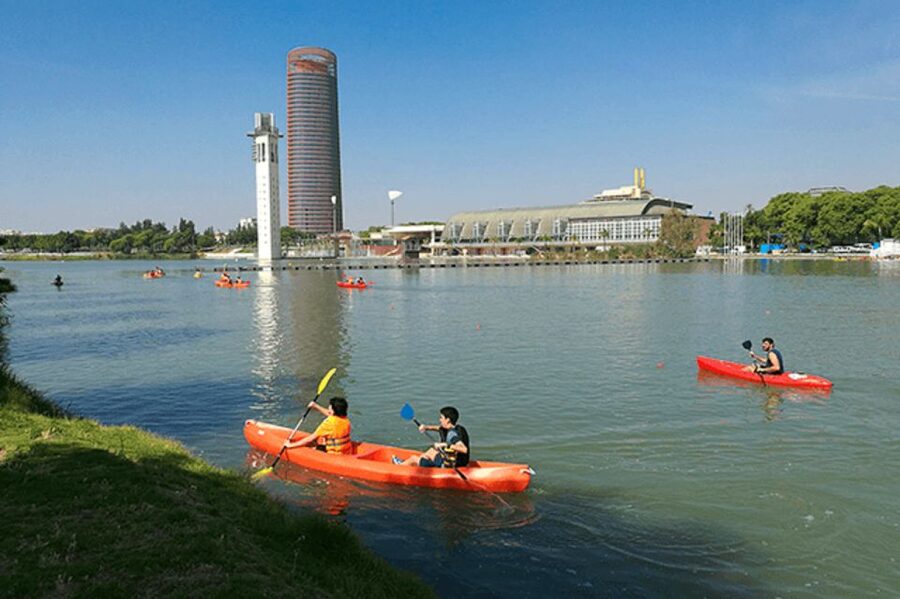
Once on the water, the route heads toward Pasarela de la Cartuja. The bridge gives you an early photo stop and a view of the modern river corridor. Your guide may use this point to introduce Isla de La Cartuja and explain how the area changed for the 1992 Universal Exhibition.
The nearby Pabellón de la Navegación adds another reminder of Seville’s maritime past. You stop briefly for photographs, then continue toward Torre Schindler and Sevilla Tower.
These are not the old Seville sights that appear on every postcard. That is part of their value. The route shows you a more modern side of the city, where exhibition buildings, bridges, and post-Expo development sit beside a river with much older connections to navigation and trade.
You should not expect a long visit inside any building. The tour stays on the water, and the stops are short, usually around five to ten minutes. Think of them as guided viewpoints rather than full museum visits.
From Sevilla Tower to the Arenal
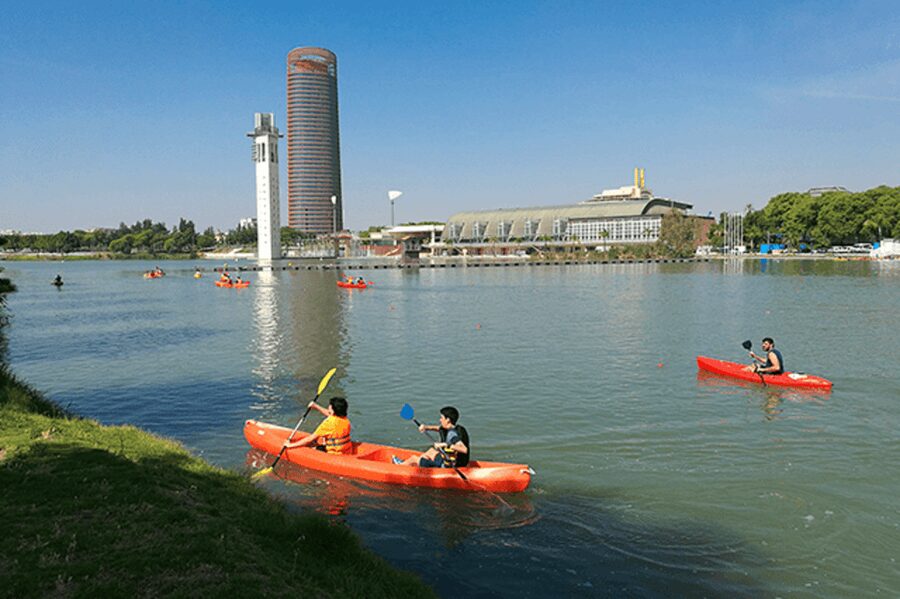
The paddle continues past Sevilla Tower and toward Puente del Cristo de la Expiración. You may notice the mix of rowing boats, canoeists, professional crews, and school groups on the river. This activity gives the route a working feel and reminds you that the Guadalquivir is still used for sport, not only for sightseeing.
The bridge known as Puente del Cristo de la Expiración marks the approach to the older central districts. Your guide gives you time to look around and explains what you are seeing. The pace is not a race, although a few fit paddlers may find themselves trying to keep up with faster crews on the water.
That is where the tour’s exercise element becomes clear. You can paddle at a manageable pace, but you will not simply sit back while someone else does all the work. If you want a relaxed outing, ask for a slower rhythm at the start. Guides have allowed groups to set their own pace, which helps beginners and mixed-ability pairs.
More kayak trips near Seville:
- Seville: Guadalquivir River Kayaking Trip
★ 4.5 · 506 reviews - Seville: Sunset and Evening Paddle Boarding Tour
★ 4.8 · 355 reviews - Seville: Paddle Surf Route and Class
★ 5.0 · 346 reviews - Seville Paddle Surf Sup in the Guadalquivir River
★ 5.0 · 198 reviews
Triana, Puente de Isabel II, and Calle Betis
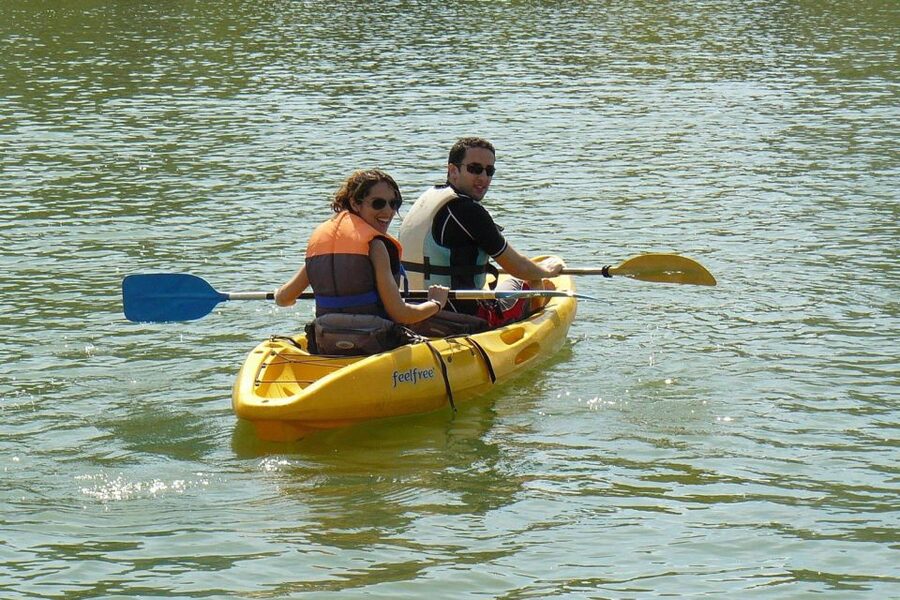
Triana is one of the most rewarding parts of the route. From the river, you see the district from below its famous riverfront rather than approaching it through streets and plazas. The neighborhood is closely tied to the Guadalquivir, and its position makes sense when viewed from the water.
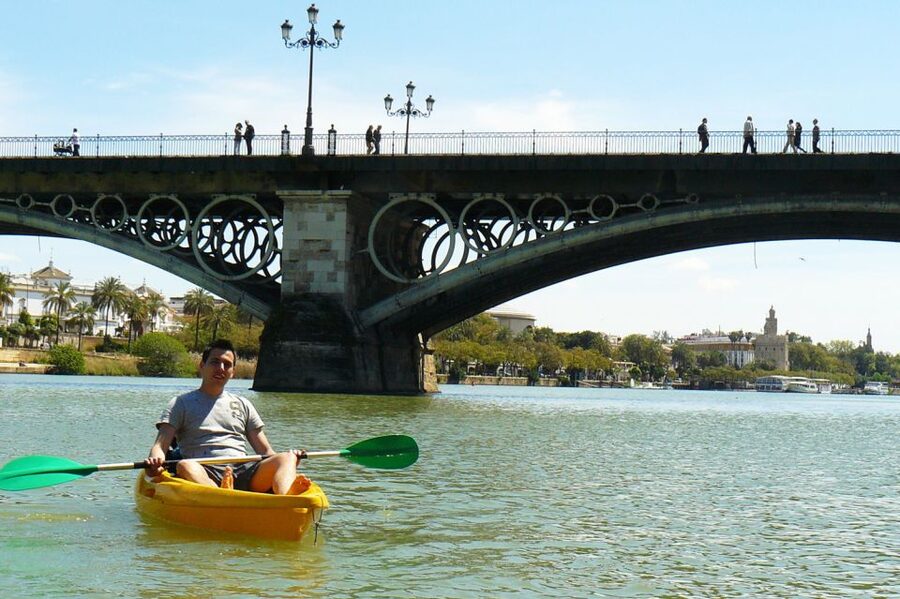
Next comes Puente de Isabel II, better known as the Triana Bridge. It provides one of the clearest visual links between the historic center and Triana. The stop is long enough for photographs and a short explanation, but the kayak keeps moving, so you get a series of views instead of one fixed lookout.
Calle Betis runs along the Triana side of the river. Its colorful buildings and waterside setting make it one of the prettiest sections of the paddle. From your kayak, the riverfront has a lower, wider perspective than it does from the street. You can look back toward the central monuments while also seeing the busy social edge of Triana.
This section is a good reason to choose kayaking over a cycle tour if your main goal is fun and a new angle on Seville. A bike covers more ground and may suit serious sightseeing better. The kayak gives you a slower, closer connection to the river itself.
The Torre del Oro and Seville’s old port
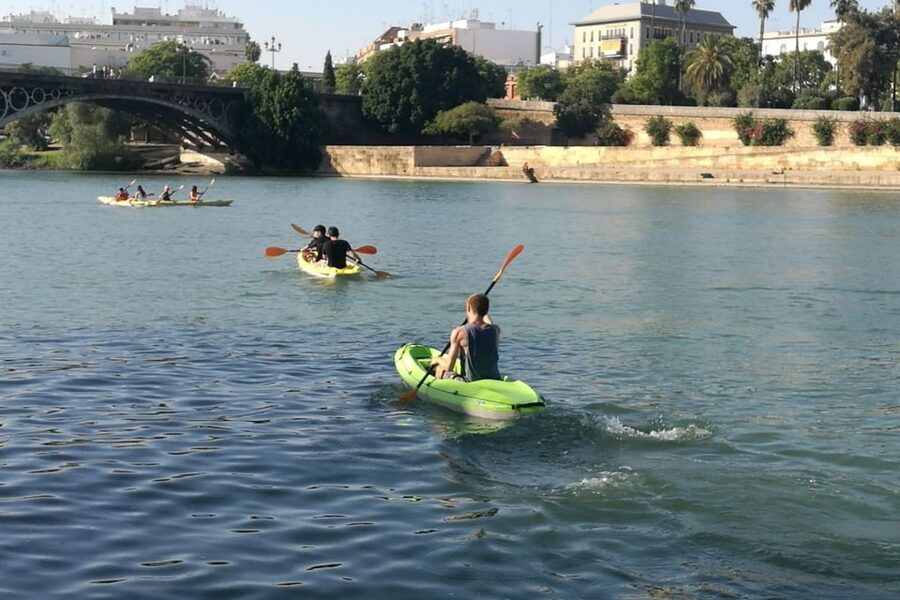
The Torre del Oro is the route’s most famous landmark. This medieval watchtower once guarded the river entrance to Seville, and its position makes much more sense from the water. The guide explains its place in the city’s defenses and port activity while you stop for photographs.
The tower also helps you imagine Seville when ships and cargo were central to city life. The river is quieter now, but this was once the route through which American wealth entered Europe. Looking at the Torre del Oro from a kayak gives that port story a physical setting.
The group then passes Puente de San Telmo before returning toward the rowing club. You get one final chance to look back at the central riverfront and compare the modern structures near Cartuja with the older sights around the Arenal and Triana.
The exact rhythm can vary with the group, the guide, and river conditions. The listed stops include several five-minute and ten-minute photo and explanation pauses, so the tour combines steady paddling with short breaks. It is best to keep your phone secure and use it only during stops, since your hands will otherwise be occupied and the equipment may get wet.
What the guide adds
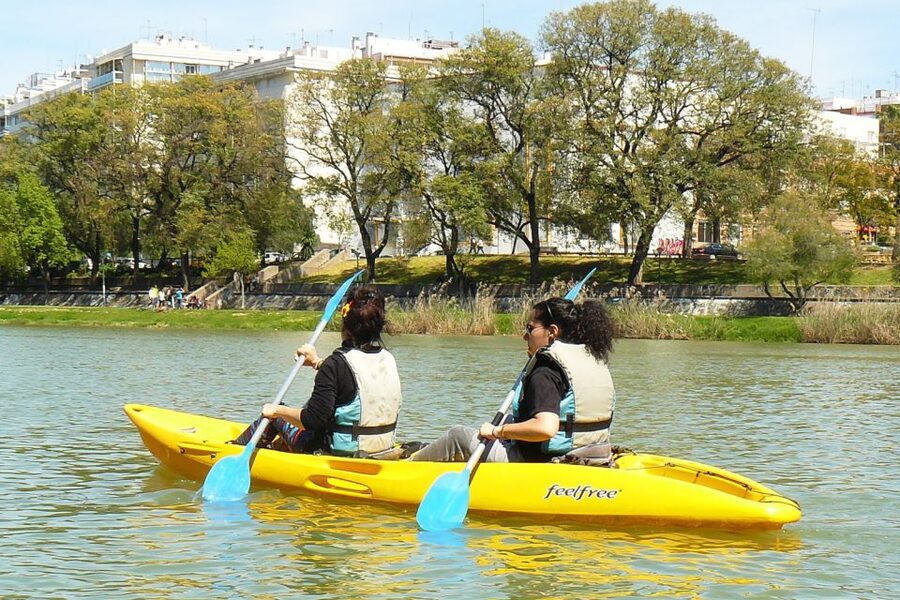
The guide is central to the experience. Without explanations, you would still have a pleasant paddle and attractive views, but you would miss why the river shaped Seville’s fortunes.
Guides named Alex, Karlos, Juan, Rey, Federico, and Pablo have led sessions at different times. Strong points to look for include clear safety instruction, a warm-up, demonstrations of technique, and flexibility with the group’s pace. English and Spanish are offered, and individual guides have also provided other language support in some sessions.
The best guides do more than point at buildings. They connect the sights to Seville’s trade with America, the city’s maritime role, the first circumnavigation, the Expo 92 redevelopment, and present-day river sports. Some guides have also given useful suggestions for food and other places to visit afterward.
If you are booking early in your Seville stay, that advice can help shape the rest of your visit. You may finish with a better sense of which neighborhoods to explore on foot and where to eat around Triana or the Arenal.
How difficult is two hours of kayaking?
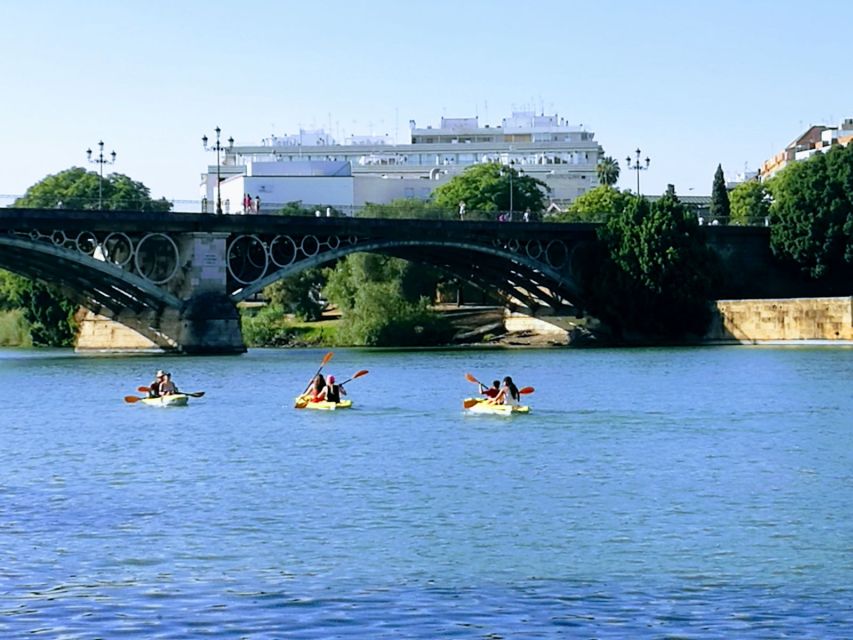
You do not need to be an experienced kayaker, and the safety briefing is designed to get beginners moving. The river is described as calm, which removes one major source of difficulty.
Still, calm water does not mean no effort. You paddle for most of the outing, and two hours can feel demanding if you are not used to the motion. One past participant found the activity harder than expected but still worthwhile, while another said a family group needed excellent physical shape.
I would rate this as manageable for an active beginner, not as a gentle boat ride. You can usually control your pace, and a private booking may be the best choice if you need extra attention or want to stop more often. Children can join only with an adult, and the two-person kayak arrangement means you need to coordinate with your partner.
Wear comfortable clothing that can get wet. Sandals have been provided free on at least one occasion, but do not rely on that for every departure. The safest plan is to bring your own secure water-friendly shoes, towel, sunscreen, and dry clothes.
Timing, weather, and comfort
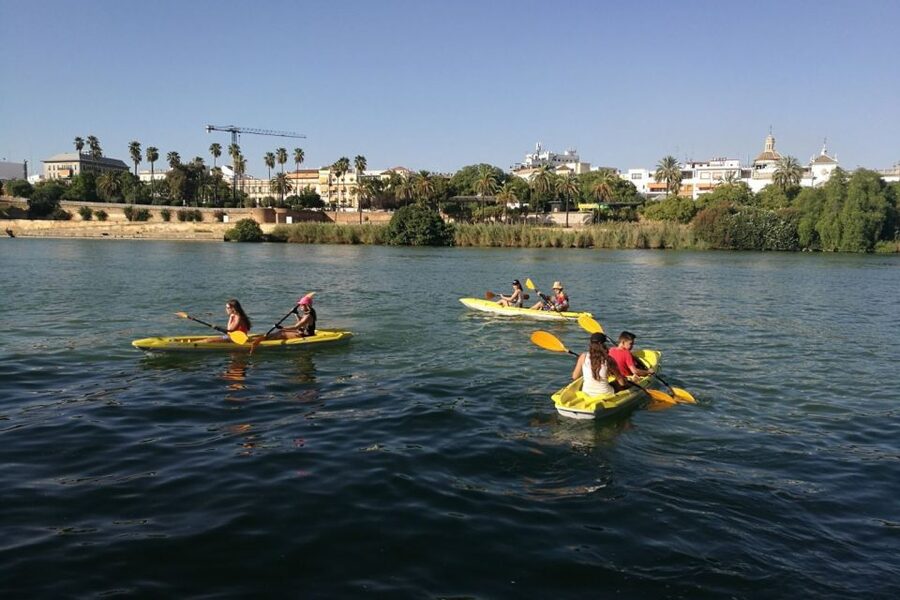
The tour lasts two hours, with several starting times available depending on the date. Seville can be very hot in summer, so a morning or later departure may feel easier, although you should check the available times when booking rather than assume a preferred slot.
Sun protection matters even when the air feels pleasant. There is less shade on the river than in the city’s narrow streets, and water reflects sunlight. A cloudy day can make the outing more comfortable, but conditions vary.
You should also expect to get at least somewhat wet. Paddle drips, movement in the kayak, and handling equipment can leave your clothes damp. Bring the extra outfit even if the forecast looks fine. The rowing-club setting makes changing afterward much easier than it would be on a standard sightseeing cruise.
Food and drinks are not included. Carry water or plan to buy it separately. The tour is short enough that you do not need a meal on the river, but hydration matters in Seville’s heat.
Is $46 a fair price?
At $46 per person, the tour costs more than simply walking along the river, but that is not the right comparison. You are paying for two hours of equipment use, instruction, a professional guide, a safety class, a changing room, and access to views that are not available from the street.
The price makes the most sense if you value active sightseeing and want historical commentary with your exercise. It is also stronger value in a small group, where the guide can correct your technique and answer questions. Private options cost more in many tour settings, but the supplied details do not give a separate private price, so check before committing.
It is weaker value if you mainly want to photograph the monuments quickly. The route has many short stops, but it is not a substitute for entering the Pabellón de la Navegación, touring the Torre del Oro, or spending a full afternoon in Triana. You are buying a river experience first, with sightseeing built into it.
Free cancellation up to 24 hours before the start and reserve-now, pay-later booking make it easier to fit into a changing schedule. Those terms are useful in Seville, where heat and weather can affect how much energy you want to spend outdoors.
Who should book this experience?
I would choose this tour for active couples, friends, families with older children, and first-time visitors who want to connect Seville’s sights in a different way. It is also a smart choice if you have already seen the main plazas and want to understand the city from its river.
Beginners can join, especially in a small or private group, but you should be comfortable with two hours of light-to-moderate physical effort. If you have limited mobility, need highly specialized equipment, or want a completely dry outing, the available information does not establish that this tour will meet your needs, so ask the provider before booking.
This is not the best pick for someone with only a short window who wants to see the greatest number of monuments. A walking or cycling tour may cover more ground. Kayaking wins when your priority is a memorable activity, fresh air, and a closer look at the Guadalquivir.
Should you book the Guadalquivir kayak tour?
Book it if you like learning a city while doing something physical. The route packs in Cartuja, Expo 92 landmarks, Triana, Calle Betis, the Arenal, the Torre del Oro, and several bridges, while the guide explains why the river once made Seville one of Europe’s most important ports.
Skip it if you dislike getting wet, tire easily, or want uninterrupted monument sightseeing. For everyone else, $46 is a sensible price for a small-group experience that combines instruction, history, exercise, and a very different view of Seville. Bring dry clothes, protect yourself from the sun, and consider booking near the start of your stay so the guide’s food and sightseeing tips can improve the rest of your visit.
FAQ
Where does the kayaking tour start and finish?
The tour starts and finishes at Club Deportivo RemoSevilla.
How long does the tour last?
The kayaking experience lasts two hours.
What language is the tour offered in?
Instruction is available in Spanish and English.
Is kayaking equipment included?
Yes. The tour includes kayaking equipment and an introduction to kayaking safety.
Is there a place to change clothes?
Yes. Club Deportivo RemoSevilla has a changing room where you can get ready and leave belongings during the tour.
What should I bring?
Bring comfortable shoes, comfortable clothes, a towel, sunscreen, and an extra set of clothes and shoes in case you get wet.
How many people use each kayak?
The standard arrangement is two adults per kayak, or one adult and one child.
Can children join the tour?
Yes, but children must always be accompanied by an adult.
Can I cancel the booking?
You can cancel up to 24 hours in advance for a full refund. Reserve-now, pay-later booking is also available.
Just added around Seville
- Seville: Wine and Gourmet Tapas Tour★ 5.0 · 3 reviews
- Tapas Tour Cordoba & Wine Experience with chef and sommelier★ 4.8 · 3 reviews
- The most complete tour of Seville: All the highlights included★ 5.0 · 3 reviews
- Seville: Spritz Tasting Experience★ 4.8 · 3 reviews
- Ronda and White Villages Private Day Trip from Seville★ 5.0 · 3 reviews
- Jerez: Historic center of Jerez and horse show★ 5.0 · 3 reviews
- SEVILLE: REAL ALCÁZAR TOUR★ 5.0 · 3 reviews
- Royal Alcazar of Seville Guided Tour★ 5.0 · 3 reviews
Guadalquivir River Cruises, compared.
1-Hour Guadalquivir River Sightseeing Eco Cruise
Read our review →
Guadalquivir Boat Tour with Optional Lunch/Dinner
Read our review →
Cruise along the Guadalquivir River with appetizer
Read our review →
Browse the lists this tour appears in