
Reviewed · TAPAS TOURS
Seville: Andalusian Tapas Class
Seville’s Triana Market is the setting for a cooking class that turns tapas from something you order at a bar into a full meal you understand. You’ll prepare four traditional dishes with an English-speaking chef, then sit down to eat everything with drinks and a sweet local wine.
I like the fresh, seasonal angle, since the school is inside the market and can work with what is available. I also like that the $88 price includes ingredients, an apron, sangria, two meal drinks, and dessert wine. The main consideration is that the class may not be as hands-on for every person. Hanneke van’s session with Dominique and Noelia was friendly and useful, but she wanted more time working directly with the food.
In This Review
- Key details before you book
- Why this class makes sense in Seville
- Meeting at Triana Market
- The opening drink and kitchen introduction
- Four Andalusian tapas, four different lessons
- From cooking lesson to proper dinner
- What the teaching style may be like
- The take-home value of the recipes
- Is $88 a fair price?
- Who should book this Seville cooking class?
- Should you book it?
- FAQ
- Where does the Andalusian tapas class meet?
- How long does the cooking class last?
- Is the class taught in English?
- How many tapas will I prepare?
- What dishes might be on the menu?
- Are drinks included?
- Are ingredients and cooking equipment provided?
- Can the menu accommodate dietary restrictions?
Key details before you book
- Four tapas become your evening meal: You cook the dishes, then eat them at the end rather than sampling only a bite or two.
- The menu changes with the season: Possible recipes include salmorejo, Spanish omelet, garlic toast with spinach, Iberian pork cheeks, cod croquettes, and garlic prawns.
- Triana Market provides the setting: The school occupies stalls 75 to 77 at the market on Plaza del Altozano.
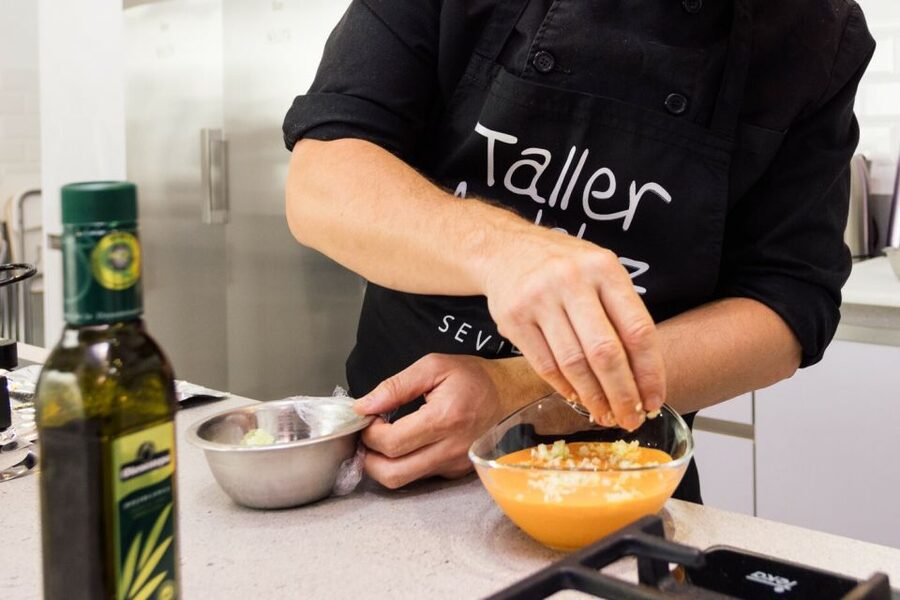
- Drinks are part of the experience: Sangria and table olives appear during the class, followed by two drinks with dinner and local dessert wine.
- English instruction suits a broad range of cooks: The chef guides both beginners and people who already cook at home.
- You receive recipes and tips: The class continues to be useful after Seville, since you can recreate the dishes at home.
Why this class makes sense in Seville
Tapas are often presented as tiny plates to order one after another. That can make them seem simple, but many depend on careful preparation: a smooth chilled soup, a properly set omelet, tender meat, or seafood cooked without turning rubbery.
This class gives you a closer look at those techniques. You do not just eat a plate of Andalusian food and move on. You help prepare four dishes, learn how they fit together, and then eat them as a shared meal.
That format is especially useful if you have already spent a few days eating in Seville and want to understand the food better. You may have ordered salmorejo or a Spanish omelet without knowing what gives each dish its proper texture. Here, the cooking process explains what you are tasting.
The class lasts 3.5 hours, so it is not a rushed demonstration followed by a quick snack. The time allows for preparation, cooking, conversation, and a proper meal. It also makes the activity suitable as an evening plan, since the finished tapas should be enough to serve as dinner.
More tapas crawls in Seville:
- Sevilla Food Tour: Tapas, Wine, History & Traditions
★ 5.0 · 3,468 reviews - Ultimate Seville Tapas, Wine & History Small Group Tour
★ 5.0 · 1,766 reviews - Seville: Tapas Crawl
★ 4.9 · 1,705 reviews
Meeting at Triana Market
You meet at Taller Andaluz de Cocina, located at stalls 75 to 77 inside Triana Market on Plaza del Altozano. The market setting matters. It places the cooking school in one of Seville’s traditional food-shopping areas rather than in a detached classroom.
Fresh and seasonal ingredients are central to the class. Since the school operates inside the market, the menu can change according to the time of year. You should not book expecting one fixed list of four dishes. Instead, think of the menu as a seasonal selection from the school’s Andalusian repertoire.
That changing menu is a strength if you want food that reflects the time of your visit. It is less convenient if you have your heart set on one particular dish. The possible recipes include both familiar Spanish staples and more substantial regional cooking:
- Salmorejo or gazpacho
- Spanish omelet
- Spinach on garlic toast
- Huevos a la Flamenca
- Iberian pork cheeks stew
- Codfish in batter or codfish croquettes
- Shrimps in garlic oil
The meeting point is central to the activity, but be sure to allow time to find stalls 75 to 77 inside the market. The school is not described as a separate street-front restaurant, so the stall numbers are useful details to keep handy.
The opening drink and kitchen introduction
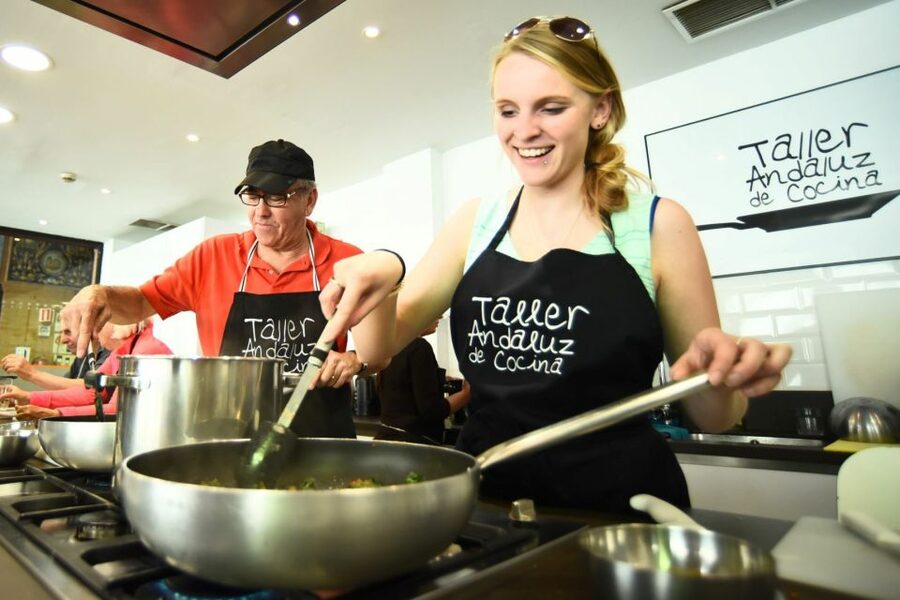
Once the class begins, the school provides the ingredients, utensils, and an apron. Sangria and table olives are served during the cooking period, giving you something to enjoy while the dishes are prepared.
The chef teaches in English and guides the group through the recipes. The instruction is intended for complete beginners as well as experienced home cooks. You do not need a strong cooking background to take part, but you should expect to follow directions, handle ingredients, and work as part of the class.
The level of direct participation can vary. One session with Dominique and Noelia was praised for its friendly atmosphere and the chance to socialize, but Hanneke van felt she would have liked more hands-on time. That is useful to know before booking. This is a participatory cooking lesson, but it may not mean that every person performs every step of every recipe.
If active kitchen time is your top priority, tell the chef early that you want to help with as much preparation as possible. The class is built around participation, but the available tasks may depend on the group, the menu, and the stage of cooking.
Four Andalusian tapas, four different lessons
The best part of the menu is its range. The class does not limit you to one type of tapa. Depending on the season, you may work with cold soup, eggs, vegetables, meat, or seafood.
Salmorejo or gazpacho introduces you to two of Andalusia’s famous chilled soups. They are ideal warm-weather dishes, but the preparation still depends on balance and texture. If you cook one of these, pay attention to the chef’s advice about seasoning and consistency. A good recipe is easy to remember, but small changes can make the result too thin, too sharp, or too heavy.
Spanish omelet looks humble, yet it is one of the most useful dishes to learn. Potatoes, eggs, and careful timing are the core ingredients, but the cooking method determines whether the omelet is dry, firm, or softly set. This is the kind of recipe you can make often at home, which adds real value to the class.
Spinach on garlic toast brings a vegetable dish into the meal. Garlic, bread, and greens create a simple combination, but it shows how Spanish cooking can turn modest ingredients into something satisfying. It also gives you a break from the richer egg, meat, and seafood options.
Huevos a la Flamenca offers a heartier egg-based tapa with a distinctly Andalusian character. The name means flamenco-style eggs, and the dish is suited to a meal rather than a small nibble. It is a good example of how the word tapas can cover substantial food.
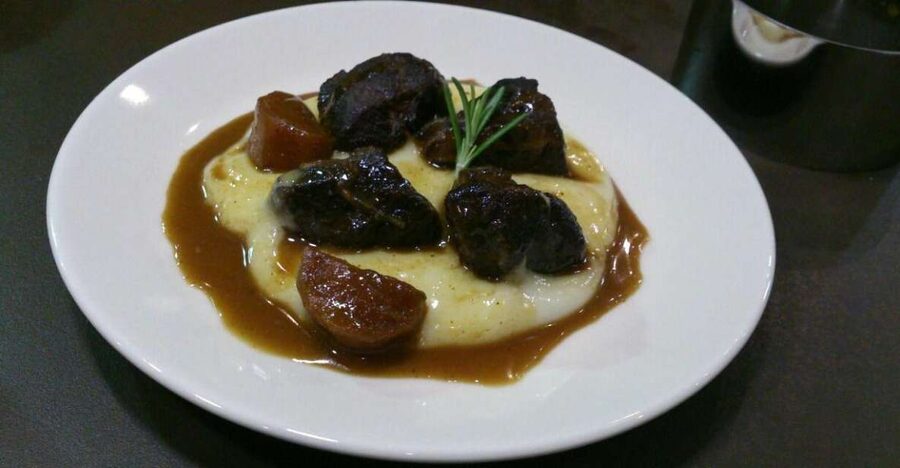
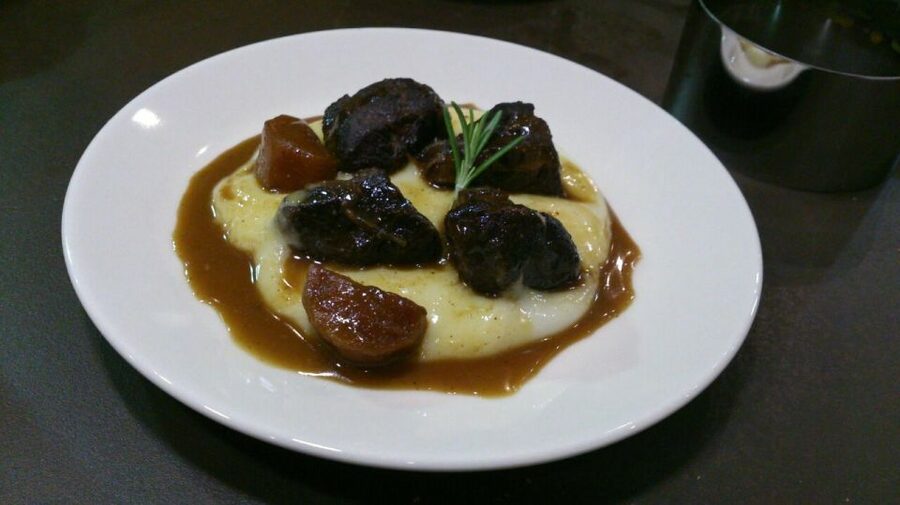
Iberian pork cheeks stew is likely to be the most slow-cooked and filling option in the selection. Pork cheeks are valued for their soft texture after long cooking. If this dish appears during your class, expect a stronger contrast with the lighter chilled soups and vegetable plates.
Codfish in batter or codfish croquettes shows two classic ways to prepare one of Spain’s most useful fish. A battered version focuses on the coating and the cooking temperature, while croquettes bring technique into the mix through their creamy filling and crisp exterior.
Shrimps in garlic oil are another classic. The ingredient list is short, but seafood timing matters. This recipe can teach you how to build flavor with garlic and oil while keeping the prawns tender.
Because the menu is seasonal, you cannot count on all seven choices appearing together. That is not a flaw, but it is worth treating the class as a lesson in Andalusian cooking rather than a guaranteed way to sample every dish listed.
A few more Seville tours worth comparing
- Seville: Flamenco Dance Class with Optional Costume
★ 4.9 · 1,032 reviews - Seville: Spanish Cooking Class with Dinner
★ 4.9 · 900 reviews - Spanish Cooking Class & Triana Market Tour in Sevilla
★ 5.0 · 760 reviews - Seville: 3.5-Hour Spanish Cooking Class & Triana Market Tour
★ 4.9 · 751 reviews
From cooking lesson to proper dinner
At the end, you eat the four tapas you helped prepare. This is an important difference from a class that offers only a tasting plate. The food you make becomes the evening meal, and you can judge the results while the techniques are still fresh in your mind.
Two additional drinks accompany the meal. You can choose from local beer, white wine, red wine, or soft drinks. The earlier sangria is included during the cooking time, and the experience finishes with a local sweet dessert wine.
The drinks help make the class feel like a social dinner rather than a technical workshop. Still, the focus remains the food. If you want a quiet, formal meal with restaurant-style service, this is not the right format. You will be involved in a group activity first, with conversation and shared work before sitting down.
The portion is intended to be enough for dinner. Heather’s session with Mayte and chef Leo included a meal with drinks that she found more than sufficient as an evening meal. That makes the price easier to assess. You are not paying $88 for a short lesson and a few samples. You receive several hours of instruction, a complete meal, drinks, ingredients, and written material to take home.
What the teaching style may be like
The instructors are professionally trained chefs, and the class is taught in English. The supplied feedback names Dominique, Noelia, Mayte, and Leo in different sessions. Dominique and Noelia were described as friendly and willing to leave space for socializing, while Leo was praised for his teaching and useful cooking tips.
The class appears to favor a relaxed atmosphere rather than a strict culinary-school drill. That will suit you if you want to learn while enjoying an evening in Seville. It may be less satisfying if you want intensive individual correction or a highly technical lesson.
The experience is designed for mixed ability levels. Beginners can follow the chef’s instructions, and more experienced cooks can pick up regional methods or ideas for adapting familiar dishes. You may get the most from it by asking questions as you go, especially about substitutions, cooking times, and how to repeat the recipe at home.
All recipes can be adapted to dietary restrictions, but you need to notify the operator in advance if the menu must be changed. Do not wait until the class begins. The menu depends on the season, and advance notice gives the school a chance to plan suitable ingredients.
The take-home value of the recipes
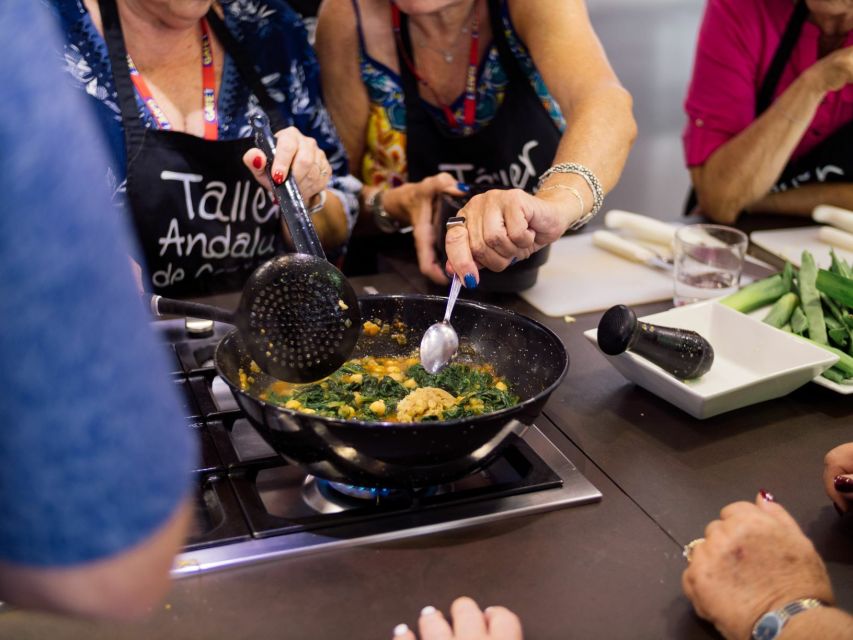
The written recipes and additional tips are one of the strongest practical features. A cooking class can be enjoyable and still fade from memory once you leave Spain. Having the recipes gives you a way to keep using what you learned.
I would pay particular attention to the dishes that fit your normal cooking habits. The Spanish omelet, chilled soup, spinach toast, and garlic prawns are easier to imagine as regular home meals. The pork cheeks stew may take more planning, while cod croquettes can require more patience and preparation.
You can also use the class to build a small Andalusian meal at home. Start with salmorejo or gazpacho, add the omelet or spinach toast, and use seafood or pork as the more substantial dish. The recipes are not just souvenirs. They can help you recreate part of your Seville experience for friends and family.
Is $88 a fair price?
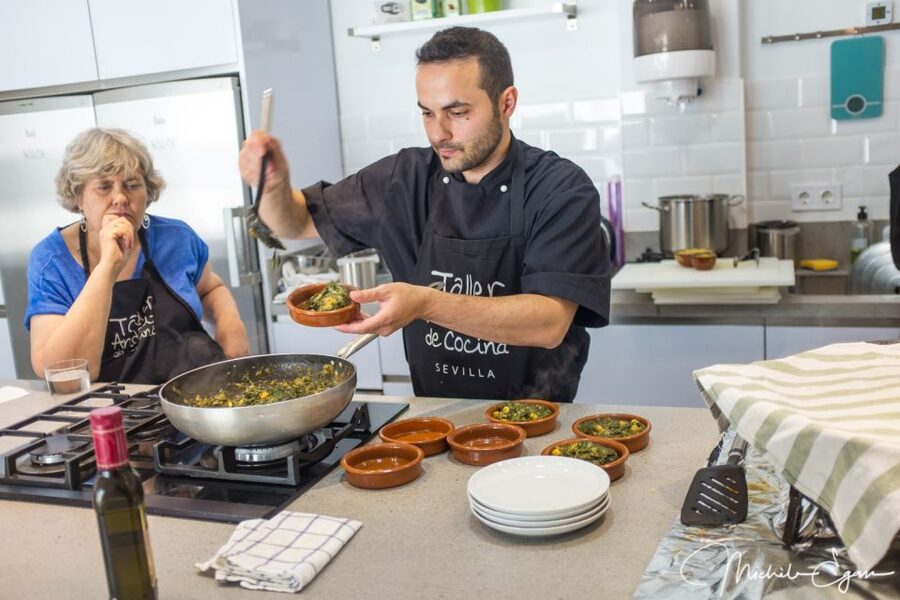
At $88 per person, the class is not the cheapest food activity in Seville. The value depends on what you want from the evening.
The price includes the class itself, all ingredients, use of an apron, sangria, table olives, the four-tapa meal, two additional drinks, and local dessert wine. It also includes English instruction and written recipes. Once you count the food and drinks, the price compares more favorably with a standard evening meal, especially because you receive several hours of instruction as well.
The main question is participation. If you expect constant hands-on work, you may find the value less convincing if the group format leaves some steps to the chef. The experience is best judged as a cooking class plus dinner, not as a private lesson.
The 4.8 rating from five reviews suggests strong satisfaction, but the sample is small. The comments praise the relaxed atmosphere, tasty dishes, useful tips, and generous meal. The one recurring point to keep in mind is the possible limit on individual kitchen time.
Who should book this Seville cooking class?
I would recommend it to you if you enjoy food, want a structured evening activity, and like the idea of learning a few recipes you can repeat at home. It is also a good fit for couples, friends, and families with mixed cooking experience, since the chef teaches in English and welcomes both novices and experienced cooks.
It suits people who want more than a restaurant meal but less pressure than a formal culinary course. The drinks and social time make it easy to treat the class as part of your evening in Triana.
You may want to choose another activity if you dislike group cooking, need a fully private lesson, or want a guaranteed menu. You should also contact the operator in advance if allergies, intolerances, or other dietary restrictions affect what you can eat.
Free cancellation is available up to 24 hours before the activity for a full refund, and you can reserve now and pay later. Those terms help if your Seville schedule is still changing, but the more important planning detail is the starting time, which varies by availability.
Should you book it?
Book this class if you want a substantial food experience with practical recipes, generous inclusions, and a relaxed social mood. The Triana Market setting, seasonal ingredients, and meal of four prepared tapas give it more substance than a simple tasting.
Go in with realistic expectations about the hands-on element. You will participate, but the chef may handle some steps, especially when the group is large or several dishes need attention at once. If you tell the school about dietary needs ahead of time and ask early for kitchen tasks, you should be better positioned to get the kind of class you want.
FAQ
Where does the Andalusian tapas class meet?
The class meets at Taller Andaluz de Cocina inside Triana Market, at stalls 75 to 77 on Plaza del Altozano in Seville.
How long does the cooking class last?
The experience lasts 3.5 hours, including cooking, the meal, drinks, and dessert wine.
Is the class taught in English?
Yes. The class is taught in English by a professionally trained chef.
How many tapas will I prepare?
You will prepare four traditional Andalusian tapas. The exact selection depends on the season.
What dishes might be on the menu?
Possible dishes include salmorejo or gazpacho, Spanish omelet, spinach on garlic toast, huevos a la Flamenca, Iberian pork cheeks stew, codfish in batter, codfish croquettes, and shrimps in garlic oil.
Are drinks included?
Yes. Sangria and table olives are served during the cooking time. The meal includes up to two additional drinks, such as local beer, white wine, red wine, or soft drinks, followed by a local sweet dessert wine.
Are ingredients and cooking equipment provided?
Yes. The school provides all ingredients, utensils, and an apron for use during the class.
Can the menu accommodate dietary restrictions?
The recipes can be adapted to dietary restrictions. You must inform the tour operator in advance about allergies, intolerances, or other food restrictions.
Just added around Seville
- Seville: Wine and Gourmet Tapas Tour★ 5.0 · 3 reviews
- Tapas Tour Cordoba & Wine Experience with chef and sommelier★ 4.8 · 3 reviews
- The most complete tour of Seville: All the highlights included★ 5.0 · 3 reviews
- Seville: Spritz Tasting Experience★ 4.8 · 3 reviews
- Ronda and White Villages Private Day Trip from Seville★ 5.0 · 3 reviews
- Jerez: Historic center of Jerez and horse show★ 5.0 · 3 reviews
- SEVILLE: REAL ALCÁZAR TOUR★ 5.0 · 3 reviews
- Royal Alcazar of Seville Guided Tour★ 5.0 · 3 reviews
Tapas Tours, compared.

Sevilla Food Tour: Tapas, Wine, History & Traditions
Read our review →
Ultimate Seville Tapas, Wine & History Small Group Tour
Read our review →
Authentic Flamenco Show with Tapas & Wine Guided Tour
Read our review →
Flamenco Show at Tablao El Arenal with Drink and Optional Dinner or Tapas
Read our review →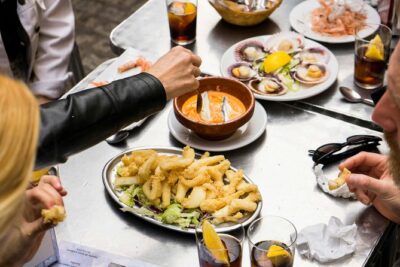
The Seville Tapas Crawl Tour by Food Lover Tour
Read our review →
Browse the lists this tour appears in