
Reviewed · GUADALQUIVIR RIVER CRUISES
Seville: Guadalquivir & Secrets of Triana Small Group Tour
The most revealing part of this walk is the change in viewpoint. You begin beside the Guadalquivir, where Seville’s ships, trade, and overseas ambitions took shape, then cross into Triana, a neighborhood with its own pride, crafts, food traditions, and flamenco story. I like that the tour connects the river to everyday local life rather than treating Triana as just another sightseeing stop. I also like the small group limit of 10, which gives you room to ask questions and hear personal stories from guides such as Carmen, a Trianeira born and raised in the district.
The main consideration is pace. In 90 minutes, you cover the riverfront, a bridge, several historic sites, a market, ceramics, Inquisition history, flamenco, and more. That makes the tour lively and useful, but it also means you will see the outside of places rather than spend long stretches inside them. The walk runs rain or shine, so bring sensible shoes and be ready to start on time.
In This Review
- Key points at a glance
- Why the Guadalquivir is the right place to begin
- Crossing into Triana over Isabel II Bridge
- Triana Market and the neighborhood’s daily life
- Ceramics, ironwork, and old craft guilds
- The Callejón de la Inquisición and Triana’s harder past
- Flamenco, folklore, and Triana’s people
- Santa Ana Church and the final riverfront view
- What the 90-minute format really gives you
- Is $29 a fair price?
- Who should book this Triana walk?
- Should you book it?
- FAQ
- Where does the tour start?
- How do I recognize the guide?
- Where does the tour finish?
- How long does the tour last?
- What language is the tour conducted in?
- How large is the group?
- Is the tour wheelchair accessible?
- Are monument tickets included?
- Is hotel pickup provided?
- What happens if it rains?
- Can I join if I arrive late?
- Can I cancel the booking?
Key points at a glance
- Start beside Torre del Oro: The riverfront introduction explains why Seville became a major trade center.
- Cross Isabel II Bridge: This is the natural gateway from central Seville into Triana.
- See Triana’s working traditions: The market and ceramics center connect the neighborhood to food, tile, and craft guilds.
- Hear the darker stories: The Callejón de la Inquisición adds a less polished side to the district’s past.
- Learn where flamenco fits: The tour links Triana with Andalusian gypsy culture, sailors, bullfighters, and flamenco artists.
- Finish near Santa Ana Church: You end by the river, close to several flamenco venues and the heart of Triana.
Why the Guadalquivir is the right place to begin
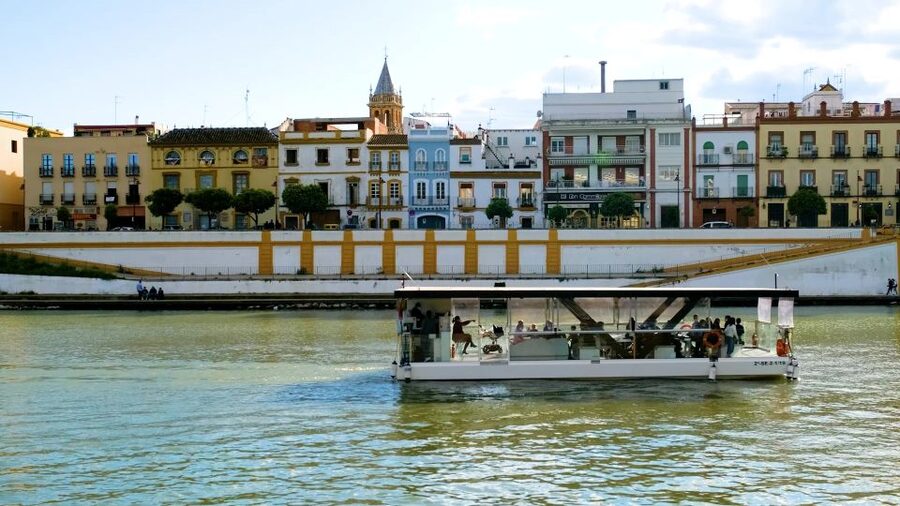
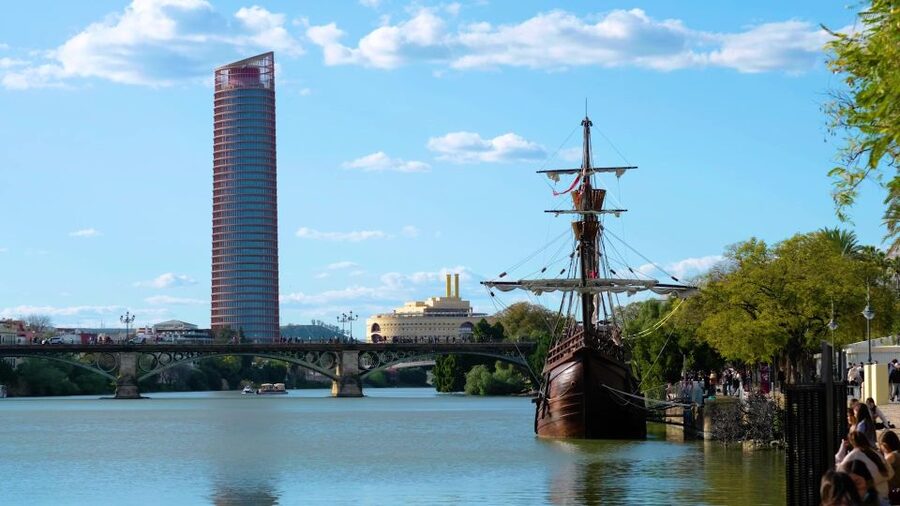
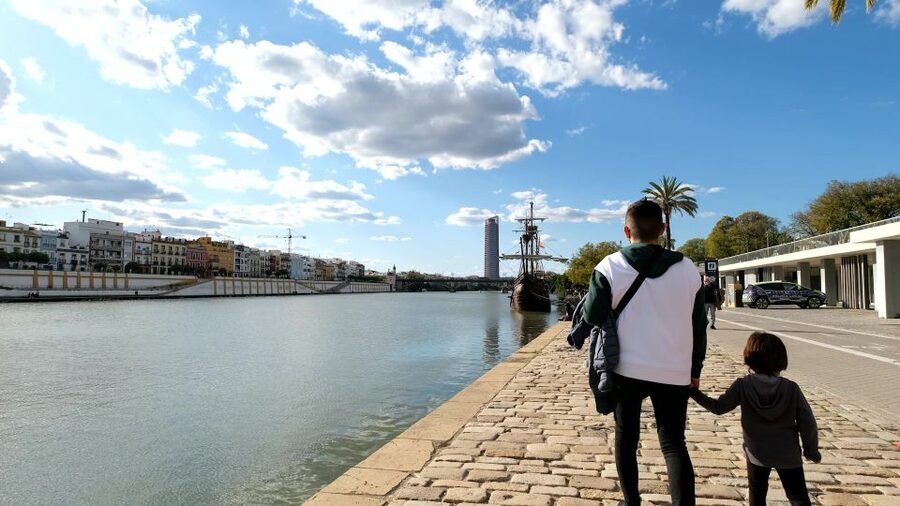
Seville’s old center can make the city feel like a collection of grand buildings. The river gives you the larger picture. At the base of Torre del Oro, your guide introduces the Guadalquivir as Seville’s working artery, not just a pleasant ribbon of water for cruise boats.
That setting helps explain Seville’s role as a trade center. Ships reached the city through the river, and its port connected Spain with the Americas. The tour also discusses Seville as the Port of America, a key part of the city’s rise and later decline. You get useful context before entering Triana, so the neighborhood feels connected to the city’s economy rather than cut off from it.
The starting point is easy to identify. Meet on the riverbank side of Torre del Oro, next to the tourist cruise ticket office. The guide wears a white lanyard and carries a white bag marked Seville Unique Experiences. Check your messages before setting out, since the meeting details are sent by WhatsApp, text, or email.
The first stop is Fundación Nao Victoria, also known as Espacio Exploraterra. The stop lasts about 15 minutes and ties the river to exploration and seafaring. You will not have time for an extended museum visit on this walk, and monument tickets are not included, but the short explanation helps you understand why the waterway mattered so much.
More Triana walks:
- Seville: Live Flamenco Show at “Teatro Flamenco Triana”
★ 4.6 · 3,290 reviews - Seville: Baraka Sala Flamenca Show with Drink in Triana
★ 4.8 · 1,761 reviews - Seville: Traditional Flamenco Show in Triana
★ 4.8 · 1,580 reviews
Crossing into Triana over Isabel II Bridge
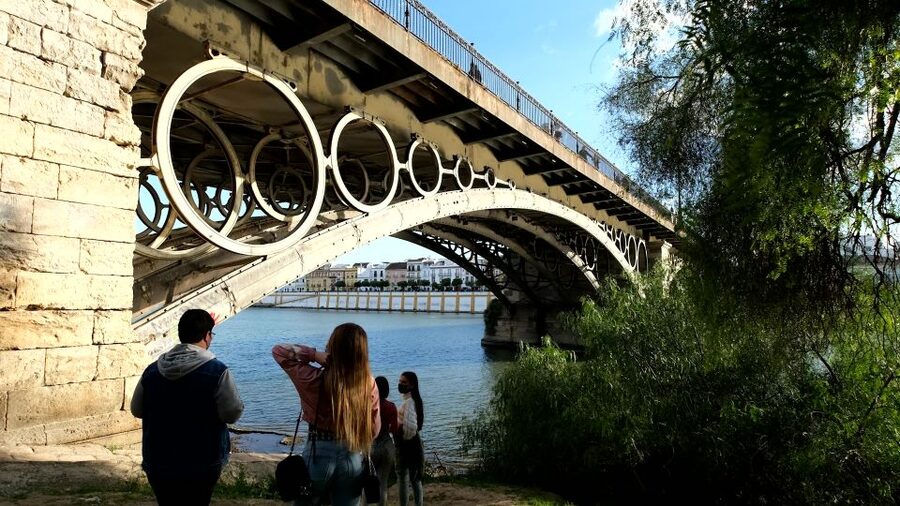
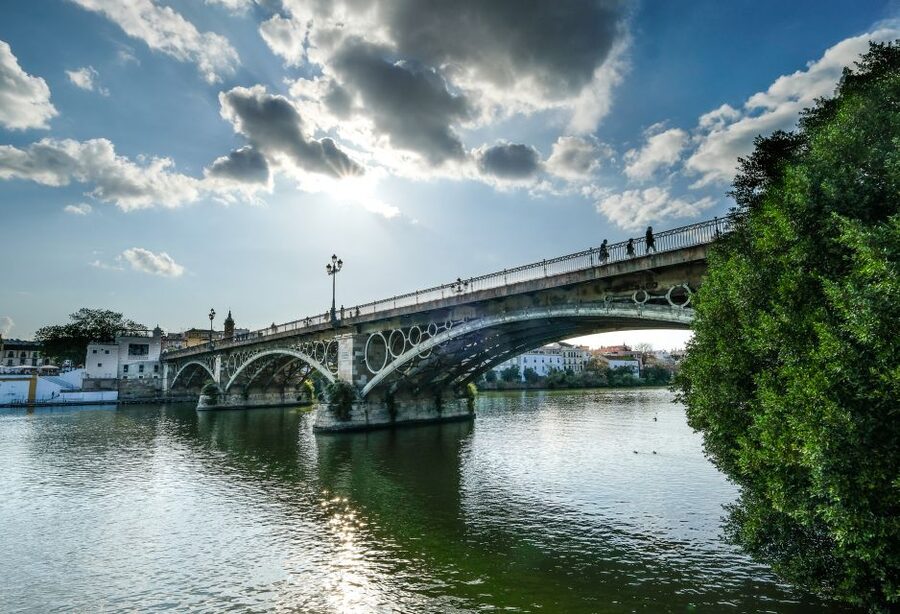
The route continues along the river before reaching Puente de Isabel II, better known as Triana Bridge. The bridge is more than a crossing. It marks the point where Seville’s formal center gives way to a district that developed with a strong identity of its own.
The guided stop here lasts about 15 minutes. You can expect discussion of the bridge, the river, and the relationship between Seville and Triana. The views are part of the appeal, but the real value is the transition. You begin to see Triana as a community facing Seville across the water, not simply an extension of the old center.
I like this part of the route because it gives the walk a clear shape. The first half is about water, trade, travel, and the city’s wider history. The second half is about streets, homes, workshops, faith, food, and performance. In a short tour, that division keeps the story easy to follow.
The bridge also adds a practical note: the walk is accessible, but you are on foot throughout. The tour is advertised as wheelchair accessible, though you should still be prepared for a continuous urban walk lasting about 90 minutes. There is no hotel pickup, so plan to reach Torre del Oro independently.
Triana Market and the neighborhood’s daily life
Triana Market is one of the best stops for understanding the district as a living neighborhood. The guided visit lasts about 15 minutes, enough to discuss the market’s role and Triana’s food traditions without turning the tour into a shopping trip.
The market helps balance the grander stories of ports and empires. Here, the focus shifts to local routines and the way food supports neighborhood life. The tour includes gastronomy as part of Triana’s identity, so you get more than a list of old buildings.
This is also a good moment to ask your guide for a meal suggestion. Carmen recommended lunch places to one guest after a tour, and that kind of local advice can be useful when you are deciding where to eat later. Since recommendations can change, ask directly about what suits your budget and schedule.
Do not expect a long free period for browsing. The itinerary keeps moving, and the market is one part of a wider story. If you want to shop or eat there at length, return on your own after the walk.
Ceramics, ironwork, and old craft guilds
At Centro Cerámica Triana, the tour turns to the handmade work that has long shaped the district. The stop lasts about 15 minutes and covers traditional professions, especially ceramics. Triana is known for its tile work, and the area’s decorative surfaces help explain why the neighborhood looks different from other parts of Seville.
The tour also discusses craft guilds that have survived into the present. That detail matters because it links history to skills and businesses that are not confined to a museum display. You learn how a neighborhood can carry its identity through materials, trades, and family work.
One useful feature of this stop is that it teaches you what to notice afterward. Tile patterns, ironwork, and workshop traditions can be easy to pass without a guide. MaryLee’s guide, Carmen, was born and raised in Triana and brought particular insight into the area’s tile and ironwork. If you enjoy architecture and decorative details, this may be one of the strongest parts of the walk.
The limit is time. Fifteen minutes gives you an introduction, not a full lesson in Sevillian ceramics. If tile becomes a major interest, you will need a separate visit to explore the subject at your own pace.
More river cruises in Seville:
- Seville: 1-Hour Guadalquivir River Sightseeing Eco Cruise
★ 4.2 · 10,281 reviews - Seville: Guadalquivir River Cruise
★ 3.9 · 6,921 reviews - Seville: Guadalquivir Boat Tour with Optional Lunch/Dinner
★ 4.4 · 2,193 reviews - Seville: Guadalquivir River Boat Tour
★ 4.6 · 1,478 reviews
The Callejón de la Inquisición and Triana’s harder past
The Callejón de la Inquisición brings a darker note to the route. The tour discusses the Inquisition and the difficult chapters of Triana’s past, showing that the district’s character is not built only from music, food, and colorful tiles.
I value this stop because it keeps the story honest. Historic neighborhoods are not just picturesque backdrops. They carry conflict, fear, religious pressure, and social change. A short explanation here adds weight to the more cheerful parts of the walk.
The narrow passage also changes the feel of the route. After the open riverfront and broad bridge, you move into a more enclosed historic setting. Your guide uses the location to explain the past rather than simply pointing out an old lane.
You should not expect entry to a monument or a long indoor presentation. Tickets to monuments are not included, and the tour is designed as a walking introduction. The payoff is the context you gain as you continue through Triana.
Flamenco, folklore, and Triana’s people
Triana is closely tied to flamenco, and the tour gives that subject a central place. You hear about the origins of flamenco, its relationship with Andalusian gypsy culture, and the local figures associated with the district, including sailors, bullfighters, craftsmen, and flamenco artists.
The point is not to attend a performance during the walk. Instead, you learn why Triana is often linked with the birthplace of flamenco and how the neighborhood’s social life helped shape its folklore. That background can make a later flamenco show more meaningful.
The route finishes near the river, where several flamenco venues are located. This is practical as well as historical. You can ask your guide for suggestions and decide later if a performance fits your plans. The tour itself does not include tickets to a show, so keep that separate from the $29 cost.
Local guides add real value here. Carmen is described as a Trianeira, a woman from Triana, and other guides include Marta, Miguel, Valentin, and Carlos. Valentin grew up in the part of Seville covered by the walk, while Miguel made the route comfortable for a solo participant who wanted to ask many questions. Guide assignments can vary, but the available guide profiles suggest a strong local connection.
Santa Ana Church and the final riverfront view
The final stop is the Chapel of Sailors, followed by the finish at Real Parroquia de Señora Santa Ana. The chapel and church bring faith and local tradition into the route, adding another layer to Triana’s story.
Santa Ana is especially important in the district’s religious history. The tour presents it as the first church built after the Christian conquest, giving you a clear example of how the city changed under new rule. That topic fits with the earlier discussion of the Inquisition and the broader story of Seville’s changing power.
You finish at the church, near the river and the flamenco venues. This is a convenient ending because you are not dropped back at the starting point. If you have another booking near Torre del Oro, allow time to walk back across the bridge. If you plan to eat, explore Triana, or attend a flamenco performance, the finishing point works well.
What the 90-minute format really gives you
Ninety minutes is enough for a strong first look at Triana, provided you accept that the tour favors explanation over extended visits. The route includes about 15 minutes at several major stops, with shorter guided moments along the way. That structure gives you a steady stream of information and prevents the walk from becoming too slow.
The small group of up to 10 is a real advantage. You can hear the guide more easily than in a large walking group, and there is a better chance to ask about food, flamenco, architecture, or current changes in the neighborhood. One booking ran with only one participant, so the operator may continue even when the group is very small.
The guides also seem to adjust well to different kinds of participants. Jochen found Carmen patient with questions, while Julia appreciated Miguel’s relaxed approach as a solo traveler. That matters if you are traveling alone or prefer a conversation rather than a set speech.
There is one tradeoff. A small group does not guarantee a private tour, and the quality of the experience will still depend on the guide assigned that day. The names connected with the walk include Marta, Carmen, Valentin, Miguel, and Carlos, but you cannot choose among them based on the information provided.
Is $29 a fair price?
At $29 per person, this is a reasonable price for a licensed English-speaking guide and 1.5 hours of focused sightseeing. You are paying for the connections between sites: the river and trade, the bridge and neighborhood identity, ceramics and guilds, flamenco and local culture.
The price is less compelling if you want monument interiors, a market meal, a ceramics workshop, or a flamenco show. Those are not included, and the walk should be treated as an orientation rather than a full activity package.
For many people, the best value comes from taking it early in a Seville stay. You can use the guide’s local suggestions to shape later meals and evening plans, then return to Triana for a slower look. The flexible booking terms also help: you can reserve now and pay later, and cancellation is free up to 24 hours before the start time.
Who should book this Triana walk?
I would choose this tour if you want to understand Seville through one neighborhood instead of rushing among famous monuments. It suits first-time visitors who need context, repeat visitors who want a different side of the city, and solo travelers who enjoy asking questions.
It is also a good match for anyone interested in flamenco, ceramics, local food, or river history. The route gives each subject a place without asking you to commit to a full-day tour.
You may want something else if you dislike walking, need long indoor visits, or want a performance included. The tour runs in all weather, latecomers cannot join once the group leaves, and the schedule is compact. Wear comfortable shoes, arrive early, and keep some time afterward if you want to explore the market or follow up on the guide’s suggestions.
Should you book it?
Book this walk if you want a friendly, focused introduction to Triana and the Guadalquivir for $29. The strongest reason to go is the combination of local stories and clear historical structure. You start with Seville’s rise as a port, then see how that history shaped a proud neighborhood of craftspeople, performers, sailors, and families.
I would especially recommend it for a first or second day in Seville. You will leave with a better sense of where to return, what details to notice, and how Triana fits into the city. Just remember that this is a walking history and culture tour, not a ticketed attraction, food tour, or flamenco show.
FAQ
Where does the tour start?
It starts at the base of Torre del Oro, on the riverbank side next to the tourist cruise ticket office.
How do I recognize the guide?
The guide will wear a white lanyard and carry a white bag marked Seville Unique Experiences.
Where does the tour finish?
The walk finishes at Real Parroquia de Señora Santa Ana, near the river in Triana.
How long does the tour last?
The tour lasts about 1.5 hours.
What language is the tour conducted in?
The tour is conducted in English by a live English-speaking licensed guide.
How large is the group?
The group is limited to 10 participants.
Is the tour wheelchair accessible?
Yes, the activity is described as wheelchair accessible.
Are monument tickets included?
No. Tickets to monuments are not included in the tour price.
Is hotel pickup provided?
No. You must make your own way to the meeting point at Torre del Oro.
What happens if it rains?
The tour operates rain or shine. Arrive prepared for the weather and wear suitable walking shoes.
Can I join if I arrive late?
No. You need to be punctual because latecomers cannot join after the group leaves the meeting point.
Can I cancel the booking?
Yes. You can cancel up to 24 hours in advance for a full refund. You can also reserve now and pay later.
Just added around Seville
- The most complete tour of Seville: All the highlights included★ 5.0 · 3 reviews
- Seville: Wine and Gourmet Tapas Tour★ 5.0 · 3 reviews
- Tapas Tour Cordoba & Wine Experience with chef and sommelier★ 4.8 · 3 reviews
- Seville: Spritz Tasting Experience★ 4.8 · 3 reviews
- Ronda and White Villages Private Day Trip from Seville★ 5.0 · 3 reviews
- Jerez: Historic center of Jerez and horse show★ 5.0 · 3 reviews
- SEVILLE: REAL ALCÁZAR TOUR★ 5.0 · 3 reviews
- Royal Alcazar of Seville Guided Tour★ 5.0 · 3 reviews
Guadalquivir River Cruises, compared.

1-Hour Guadalquivir River Sightseeing Eco Cruise
Read our review →
Guadalquivir Boat Tour with Optional Lunch/Dinner
Read our review →
Cruise along the Guadalquivir River with appetizer
Read our review →
Browse the lists this tour appears in