Reviewed · TOURS
Seville Hop-On Hop-Off Bus Tour for 48 hours
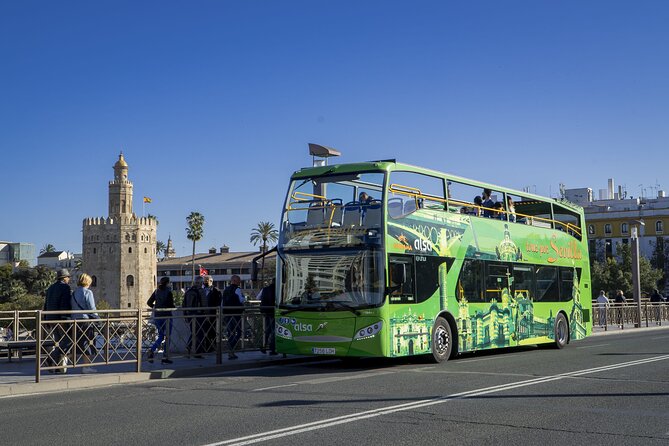
Seville’s grandest sights line up neatly on this 48-hour hop-on hop-off bus tour, from the Torre del Oro and Plaza de España to Triana, Cartuja, Macarena, and the city center. The route gives you a quick city orientation without asking you to solve Seville’s maze of streets on your first morning.
I like the freedom to ride the full circuit in about 1 hour 35 minutes, then return to places that catch your eye. I also like the useful extras: a drink at Taberna el Papelón, cava at Casa Carmen Platillos, and discounts for the Plaza de Toros and Hospital de la Caridad.
The main drawback is the limited guiding detail. The audio commentary is available in eight languages, but you should treat this as transport and orientation rather than a full history tour. A little planning before you board will make each stop far more rewarding.
In This Review
- Key points to know before boarding
- Why this bus route works in Seville
- Starting beside the Torre del Oro
- Seville Aquarium and the riverfront route
- Plaza de España and María Luisa Park
- Los Remedios, Plaza de Cuba, and the crossing to Triana
- Cartuja, the monastery, and Isla Mágica
- Macarena’s old walls and Alameda de Hércules
- Plaza del Duque and Plaza de Armas
- What the audio guide actually adds
- The 48-hour value at $29.52
- Practical advice for using the ticket well
- Who should book this Seville bus tour
- Should you book it?
- FAQ
- Where does the Seville hop-on hop-off bus tour start?
- How long does one complete bus circuit take?
- How long is the hop-on hop-off ticket valid?
- Which languages are available for the audio guide?
- What discounts and drinks are included?
- Does the tour return to its starting point?
Key points to know before boarding
- The route begins at the Torre del Oro, a landmark watchtower beside the Guadalquivir River.
- The full circuit takes about 1 hour 35 minutes, making it useful for a first look at Seville.
- You can use the bus for 48 hours, so you are not forced to see everything in one ride.
- The route links major sights and separate neighborhoods, including Triana, Cartuja, Macarena, and Alameda de Hércules.
- Audio commentary comes in eight languages, including English, Spanish, French, German, Italian, Dutch, Portuguese, and Russian.
- The extras have real use, with a free drink and discounts at several attractions and restaurants.
Why this bus route works in Seville
Seville is easy to explore on foot once you know where you are going. The trouble is that its sights are spread across several districts, and the most interesting routes between them are not always obvious on a first visit.
This bus gives you a practical first look. You can ride from the Torre del Oro past the riverfront, María Luisa Park, the old Tobacco Factory, Triana, Cartuja, the Macarena walls, Alameda de Hércules, and the central shopping area. That is a lot of ground in one circuit.
I would use the first ride as a city orientation. Keep your ticket ready, listen to the audio guide, and note the places you want to revisit. On the second day, use the bus more selectively, getting off where you want a closer look.
The full ride lasts roughly 95 minutes. That timing matters because you can fit it into a morning or afternoon without giving up an entire day. The route is also capped at 30 participants for the activity, though the bus itself may have its own seating flow and capacity arrangements.
A few more Seville tours worth comparing
- Seville: Royal Alcázar Entry Ticket
★ 4.6 · 28,378 reviews - Seville: Cathedral and La Giralda Entry Ticket
★ 4.5 · 24,592 reviews - Seville: Live Flamenco Dancing Show Ticket at the Theater
★ 4.7 · 16,396 reviews
Starting beside the Torre del Oro
The starting point is on Paseo de Cristóbal Colón, near the Torre del Oro in Seville’s old center. This is a strong place to begin because the tower gives you an immediate sense of Seville’s riverfront history.
The Torre del Oro is a former watchtower connected with the Guadalquivir River and the wealth that passed through Seville from the Americas. You do not need to visit the tower to appreciate the setting. From here, the bus places you close to the river, the old center, and several major walking routes.
If you have just arrived in Seville, this is a useful orientation point. You can see how the river separates the historic center from Triana and the Los Remedios district. That geography becomes much clearer from the moving bus than from a street map.
The tour returns to the same general starting point at the end. Keep the departure and return location in mind when planning your day, especially if you get off in a different part of town.
Seville Aquarium and the riverfront route
One early stop is the Seville Aquarium, which contains 35 aquariums and animals from more than 400 species. This is a practical stop for families or for anyone who wants an indoor break from Seville’s heat.
The aquarium is not the central reason to buy the bus ticket, but its position near the river makes it easy to combine with the opening section of the route. You can decide on the day if it fits your interests and schedule.
The bus ride itself is useful here. You get a broad look at the riverfront before moving toward the city’s grand public spaces. The audio guide adds basic context, but do not expect detailed explanations about every building or street.
That lighter commentary is one of the tour’s limits. You will see plenty, but you may need to read more on your own if you want a fuller understanding of Seville’s architecture and history.
Plaza de España and María Luisa Park
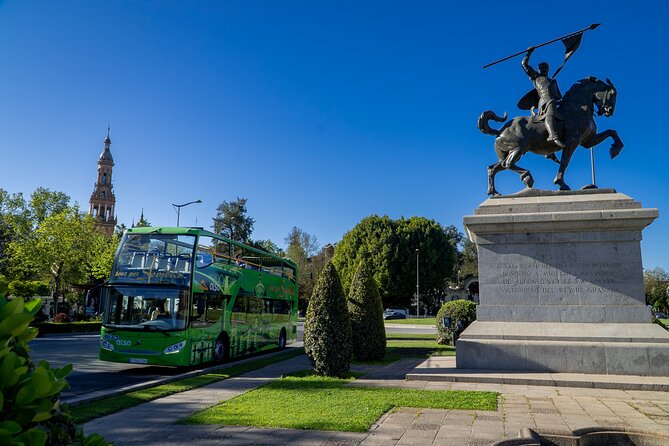
The most important stop on this route is the area around María Luisa Park and Plaza de España. Plaza de España is one of Seville’s most recognizable spaces, built as part of the Ibero-American Exposition and designed as a sweeping half-circle of towers, tiled walls, bridges, and water.
The plaza sits inside María Luisa Park, a landscaped public park in the city. Here, the bus does something a walking route cannot do as quickly: it gets you from the riverfront to the park without using up your best sightseeing energy.
You should get off here if you have not seen the plaza before. Allow enough time to walk through the arcades and look at the tiled provincial alcoves. The stop is more valuable as a base for exploring than as a quick photo pause.
The nearby Tobacco Factory is another major sight. Today it houses the University of Seville, but its scale recalls the era when tobacco production was a major part of the city’s economy. The building is especially useful for showing how Seville’s grand civic spaces often began with practical, working purposes.
The bus cannot replace a close look at the plaza or the university building. It can, however, save you the walk between them and other districts.
A completely different day out from Seville:
- Seville: Casa de la Memoria Flamenco Show
★ 4.8 · 12,964 reviews - Seville: 1-Hour Guadalquivir River Sightseeing Eco Cruise
★ 4.2 · 10,281 reviews - Córdoba: Skip-the-Ticket-Line Mosque-Cathedral Guided Tour
★ 4.6 · 9,634 reviews - Seville: Cathedral, Giralda, and Royal Alcázar Guided Tour
★ 4.7 · 9,165 reviews
Los Remedios, Plaza de Cuba, and the crossing to Triana
The route continues through Los Remedios, with a stop at Plaza de Cuba. This section gives you a view of a more modern part of Seville before the bus reaches Triana.
Triana is one of the city’s best-known neighborhoods, associated with flamenco and handicrafts. Its character differs from the monumental center. This is the place to get off if you want to explore a district rather than tick off a single landmark.
You might find the bus particularly useful here because Triana is connected to the center by bridges, but it is also easy to treat as a separate outing. The ride gives you a sense of its position across the river, while the stop lets you continue on foot at your own speed.
The information provided does not specify how long the bus waits at each stop, so do not assume you can wander indefinitely and catch the next bus at a precise time. If a stop matters to you, confirm the operating schedule locally when you board.
Cartuja, the monastery, and Isla Mágica
The route then crosses toward La Cartuja, an island area linked with Expo 92. Here you can see the Monastery of Santa María de las Cuevas, also called the Cartuja de Sevilla. It is one of four Carthusian monasteries in Andalusia.
This is a less obvious stop than Plaza de España, which makes it useful for repeat visitors or for anyone who wants to see another side of Seville. The monastery offers a change from tiled plazas and riverfront views, with a religious and architectural setting tied to the city’s wider past.
La Cartuja is also home to Isla Mágica, a theme park built around the story of the discovery of America. Families may find this stop especially practical, since the bus can handle the cross-city connection and leave you with more energy for the park.
For most adults on a short city break, the value here is transport and orientation rather than a full guided visit. Check admission arrangements separately if you plan to enter either the monastery or Isla Mágica, since entry is not included in the bus ticket.
Macarena’s old walls and Alameda de Hércules
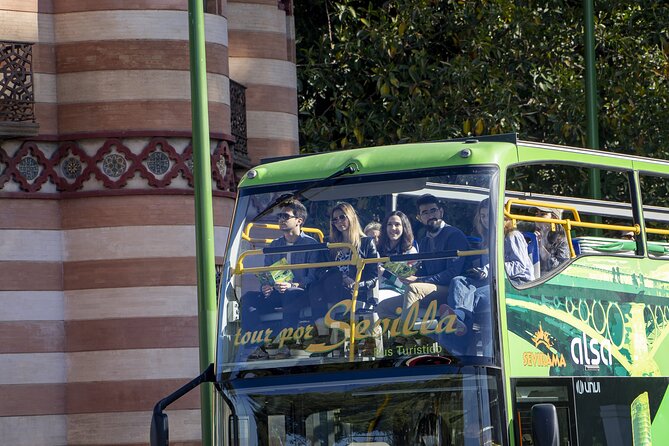
After Cartuja, the bus heads toward the thousand-year-old walls of the Macarena area. These surviving defenses offer a different view of Seville, one that is less polished than the ceremonial spaces around Plaza de España.
The route then enters Alameda de Hércules, a broad square and neighborhood known for its student and creative crowd. This is a good place to stop for a change of pace. Instead of another single monument, you get a district with cafés, public space, and a more everyday feel.
The Alameda is also a helpful base for exploring on foot. The bus brings you close without requiring you to cross the city from the river or the park. If you are using the tour over two days, this is the kind of stop that benefits from an unhurried visit.
The commentary may tell you where you are, but it is unlikely to give you the same detailed sense of local life that you gain by walking the square yourself. Use the recording as a prompt, then look around rather than keeping your attention fixed on the headphones.
Plaza del Duque and Plaza de Armas
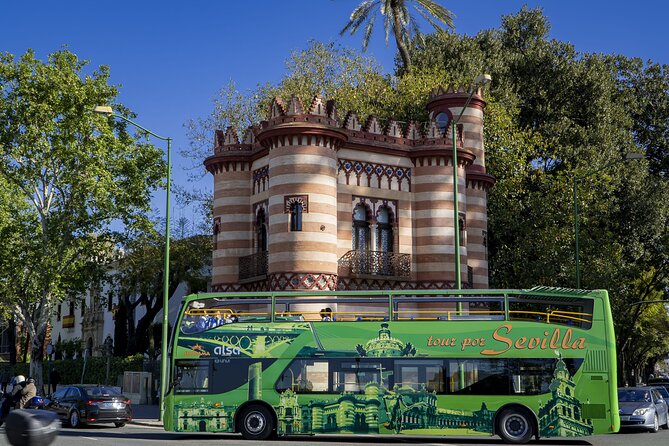
The route continues to Plaza del Duque, in the heart of Seville. This is a central urban stop, useful for shopping streets and access to the old center.
From here, you are near the parts of Seville where wandering becomes the main activity. The bus is less important once you are deep in the center, but it can save time when you want to move from the central area to another district.
The final listed stop is Plaza de Armas bus station, before the route returns to the Torre del Oro. This makes the circuit practical for combining with onward transport, although the tour itself ends back at its starting point.
The bus station stop is not a sightseeing highlight. Its value is functional. If you are planning your day around the old center, this stop helps you understand how the route links central Seville with the riverfront and the outer districts.
What the audio guide actually adds
The audio guide is available in Spanish, English, French, Russian, German, Italian, Dutch, and Portuguese. That wide language choice makes the tour accessible to many visitors, and it gives you basic information as the bus moves between stops.
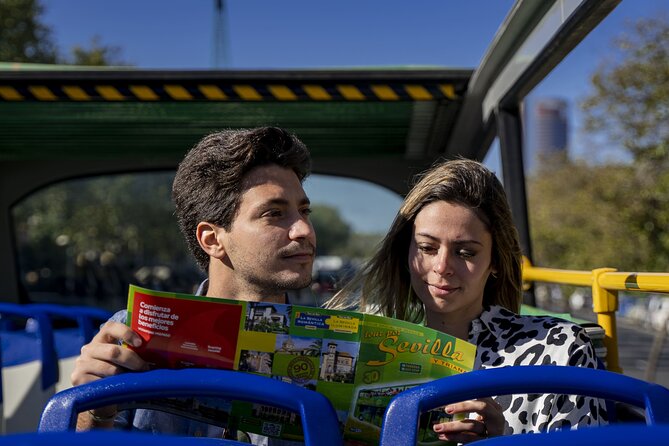
Still, keep your expectations sensible. The available feedback points to guiding that can feel limited in detail. You will learn what you are passing and gain useful context, but this is not the same as walking beside a specialist guide who can answer questions or adjust the explanation to your interests.
I would use the audio guide for orientation, not as your only source of information. Before boarding, choose two or three stops you want to explore properly. Then the commentary can help you decide where to get off, while your own visit supplies the detail.
The bus itself can also be part of the experience. Seville has narrow streets, and watching the driver maneuver through them gives you a close look at the city’s layout. The ride is not only about transportation. It shows how the historic center fits together, even when the commentary stays brief.
The 48-hour value at $29.52
At $29.52 per person, the ticket makes the most sense if you use it for more than one ride. A single circuit can be worthwhile for orientation, but the stronger value comes from combining the route with several stop-offs over the full 48 hours.
You are paying for access across a wide area, not entry to the sights themselves. The aquarium, monastery, Isla Mágica, Plaza de España, and other attractions may require their own admission if you go inside. Think of the ticket as a moving connection between them.
The included extras improve the calculation:
- A free chato of red or white wine at Taberna el Papelón
- A glass of cava at Casa Carmen Platillos Restaurant
- A 20 percent discount at the Plaza de Toros
- A 20 percent discount on admission to Hospital de la Caridad
These benefits are useful only if they fit your plans. Do not choose the tour solely for the drinks or discounts. They are pleasant additions, but the real value is the 48-hour flexibility and the coverage of districts that are spread across Seville.
The tour is often booked well in advance, with an average booking lead time of 41 days. That does not guarantee you must book far ahead, but it suggests that planning early can be sensible during busy periods.
Practical advice for using the ticket well
I would ride the complete circuit early in your first day. That gives you a map in your head and lets you decide which stops deserve more time.
Use Plaza de España and María Luisa Park as one combined visit. Treat Triana as its own neighborhood stop, and consider Alameda de Hércules separately rather than trying to rush through both in a single afternoon.
Keep the ticket available when visiting the included restaurants and discounts. The benefits require you to present it, and the tour information does not say that they can be claimed without proof of participation.
A mobile ticket makes the experience easy to carry. Confirmation is provided at booking, and the tour operates near public transportation. Service animals are allowed, and most people can participate.
The cancellation terms are friendly if your plans may change: you can cancel for a full refund up to 24 hours before the start time. Changes or cancellations inside that 24-hour window are not accepted for a refund. The activity also requires a minimum number of participants, so if the operator cancels for that reason, you are offered another option or a full refund.
Who should book this Seville bus tour
I would recommend it to first-time visitors who want a broad look at Seville before choosing where to spend their walking time. It is also a good fit if you want to connect the riverfront, Plaza de España, Triana, Cartuja, Macarena, and the central districts without making several long walks.
Families may appreciate the easy access to the aquarium and Isla Mágica. Older visitors or anyone managing limited walking may also find the bus useful, though the supplied information does not describe specific vehicle accessibility features, so ask the provider if that matters to you.
Independent visitors who want detailed history may find the commentary too light. The same applies if you prefer a guide who leads you inside monuments and answers questions. This tour takes you to the sights, but it does not include food, drink, or attraction admission as part of the basic price.
Should you book it?
Book this tour if you want coverage and flexibility more than deep interpretation. The route reaches nearly every major area named in the program, the full circuit is short enough to fit into a busy day, and the 48-hour ticket gives you room to return to favorite stops.
Skip it if you plan to stay almost entirely in Seville’s walkable center or if detailed guiding is your top priority. For the best value, ride the full circuit once, get off at Plaza de España, Triana, Cartuja, or Alameda de Hércules, and use the included drink and discounts only when they naturally fit your plans.
FAQ
Where does the Seville hop-on hop-off bus tour start?
The tour starts at Paseo de Cristóbal Colón, near the Torre del Oro in Seville, Spain.
How long does one complete bus circuit take?
The full route takes approximately 1 hour and 35 minutes.
How long is the hop-on hop-off ticket valid?
The ticket is valid for 48 hours.
Which languages are available for the audio guide?
The audio guide is available in Spanish, English, French, Russian, German, Italian, Dutch, and Portuguese.
What discounts and drinks are included?
You can receive a free chato of red or white wine at Taberna el Papelón, a glass of cava at Casa Carmen Platillos Restaurant, 20 percent off at the Plaza de Toros, and 20 percent off admission to Hospital de la Caridad.
Does the tour return to its starting point?
Yes. The activity ends back at the meeting point near the Torre del Oro.
Just added around Seville
- Seville: Wine and Gourmet Tapas Tour★ 5.0 · 3 reviews
- Tapas Tour Cordoba & Wine Experience with chef and sommelier★ 4.8 · 3 reviews
- The most complete tour of Seville: All the highlights included★ 5.0 · 3 reviews
- Seville: Spritz Tasting Experience★ 4.8 · 3 reviews
- Ronda and White Villages Private Day Trip from Seville★ 5.0 · 3 reviews
- Jerez: Historic center of Jerez and horse show★ 5.0 · 3 reviews
- SEVILLE: REAL ALCÁZAR TOUR★ 5.0 · 3 reviews
- Royal Alcazar of Seville Guided Tour★ 5.0 · 3 reviews
Tours, compared.
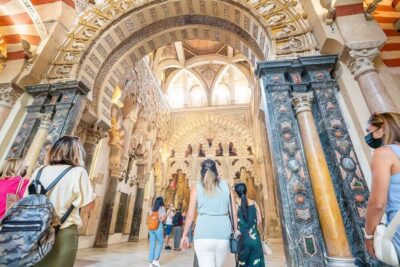
Skip-the-Ticket-Line Mosque-Cathedral Guided Tour
Read our review →
Cathedral, Giralda, and Royal Alcázar Guided Tour
Read our review →
Cathedral, Giralda & Alcazar Entry With Guided Tour
Read our review →
Priority Access Cathedral, Giralda & Alcázar Tour
Read our review →
Cordoba Mosque-Cathedral: Skip-the-Line Guided Tour
Read our review →
Alcázar and Cathedral Entry Ticket and Guided Tour
Read our review →