Reviewed · SEVILLE TOURS
The Seville of the 3 Cultures
Seville’s past comes into focus on this brisk walk from the old city hall to the Torre del Oro. In about two hours, you move through the former Jewish Quarter, Santa Cruz, the Alcázar area, Arenal, and the Puente de Triana, with stories about Roman Seville, Al-Andalus, the Reconquest, and the city’s Jewish community.
I like the 21-stop route, which gives you a broad first look rather than parking you at one monument. I also like the storytelling angle: the collapse of the Giralda, the legend of Susona, old superstitions, pirates, kings, and the oddities of Seville’s streets make the walk more memorable than a simple list of dates.
The main consideration is pace. Each listed stop is roughly five minutes, so this is a fast-moving orientation walk, not a slow architectural study. Admission is not included at several sites, and the tour does not replace a proper visit inside the Cathedral, Alcázar, or Archive of the Indies.
In This Review
- Key points to know before you book
- From Plaza de San Francisco into Seville’s layered past
- The Archbishop’s Palace and the Jewish Quarter
- Calle Susona, Calle Vida, and the stories behind the lanes
- Around the Alcázar, the Archivo, and Seville’s public image
- The Giraldillo and Arenal’s old walls
- Plaza del Cabildo and the route toward Triana
- Finishing at the Torre del Oro
- What the $13.88 price really buys you
- Guide style and the strongest praise
- Who should book this Seville walk?
- Should you book The Seville of the 3 Cultures?
- FAQ
- How long does The Seville of the 3 Cultures last?
- Where does the tour begin?
- Where does the tour end?
- What is the price?
- How many people can join the tour?
- Are monument admission fees included?
- Is the tour available with a mobile ticket?
- Can I cancel for a full refund?
- Are service animals allowed, and can most people participate?
Key points to know before you book
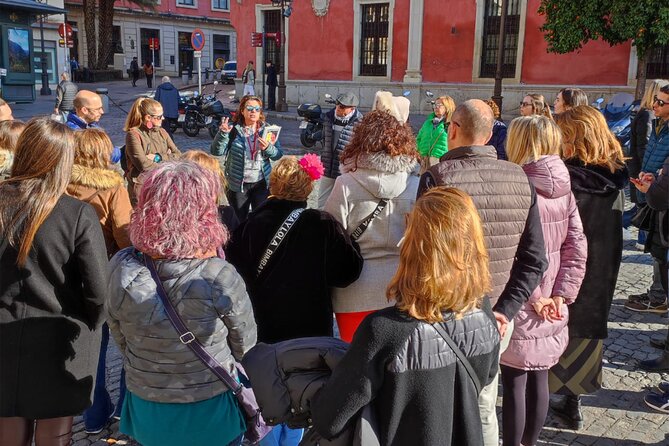
- Twenty-one stops in two hours: You cover a wide section of central Seville, from Plaza de San Francisco to the Torre del Oro.
- Four cultures in one walk: Roman, Muslim, Christian, and Jewish influences shape the route and the stories.
- Strong focus on legends: Calle Susona, the Giralda, old Jewish Seville, pirates, kings, and local superstitions keep the history lively.
- Small maximum group of 20: The group is limited, which should make it easier to hear the guide in narrow streets and small squares.
- A walking tour with outside views: Entry fees are not included at the Palacio Arzobispal, Puerta del León, Archivo General de Indias, and Torre del Oro.
- Useful first-day timing: With an average booking time of 27 days ahead, reserve early if your Seville dates are fixed.
From Plaza de San Francisco into Seville’s layered past
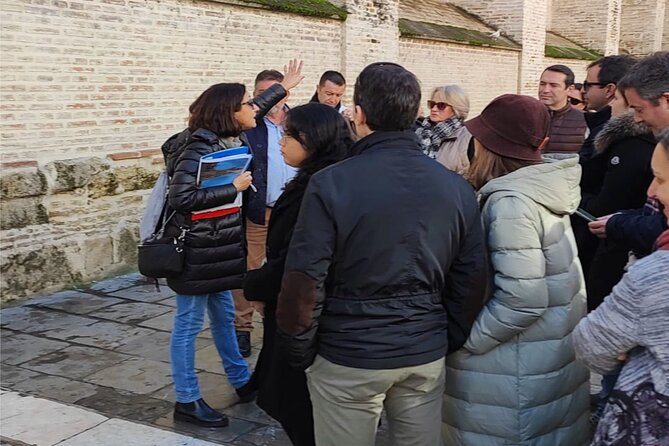
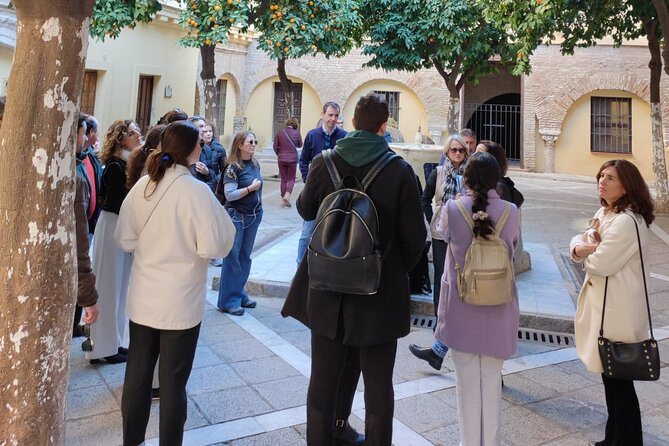
The walk begins at Plaza de San Francisco, at number 17, in the old town. This is a practical starting point because the square marks a shift between Seville’s former commercial center, around Calle Sierpes, and the grand monumental district.
The first stop is the Ayuntamiento de Sevilla, or city hall. You spend only about five minutes here, so expect a story and a quick orientation rather than an architectural tour. It is a good place to understand how Seville’s working city and ceremonial city meet.
From there, you reach the Puerta del Perdón. The route uses this gateway and the surrounding streets to explain the Giralda and one of its dramatic episodes, the reported collapse of the tower. You also get a chance to frame a photograph of Seville.
At Plaza de la Virgen de los Reyes, the Cathedral and Giralda come into view. This is one of the most useful early stops because the guide connects the buildings to the people who lived there, how the complex was made, and how its role changed over time.
You should keep your expectations clear. The walk gives you context and exterior views, but it is not a Cathedral visit and does not include a climb up the Giralda. If you want the interior, plan that separately.
A few more Seville tours worth comparing
- Seville: Royal Alcázar Entry Ticket
★ 4.6 · 28,378 reviews - Seville: Cathedral and La Giralda Entry Ticket
★ 4.5 · 24,592 reviews - Seville: Live Flamenco Dancing Show Ticket at the Theater
★ 4.7 · 16,396 reviews
The Archbishop’s Palace and the Jewish Quarter
The Palacio Arzobispal is the next stop. Its elaborate decoration gives the guide a chance to discuss the building’s visual excess and the idea of horror vacui, the fear of leaving a surface undecorated.
The stop also carries a personal and political story about an archbishop who lost the affection of his community. The palace is listed with admission not included, so do not assume the walk takes you inside.
Plaza de Santa Marta changes the mood. This tucked-away square introduces Seville’s Jewish community and the scale of the city’s former Jewish population. The stop is brief, but it helps you see the Jewish Quarter as more than a collection of pretty lanes.
At Plaza de la Alianza, the guide links the old Jewish Quarter to the many peoples who passed through Seville. This is where the three-cultures theme becomes more than a slogan. The city’s streets reflect repeated change, with Roman, Muslim, Jewish, and Christian layers often occupying the same ground.
Plaza de Doña Elvira is one of the route’s photo-friendly corners. You pass through the Santa Cruz neighborhood, with its lanes, small squares, and turns that are easy to miss when you are walking alone toward the major sights.
The guide also points to minority communities and their unusual beliefs. That detail matters because it shifts the tour from grand rulers to ordinary fears, customs, and stories. I find that approach useful for understanding how a neighborhood was lived in, not just how it looks today.
Calle Susona, Calle Vida, and the stories behind the lanes
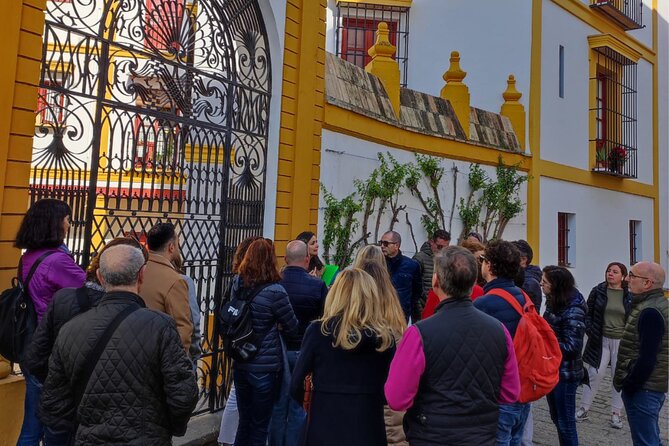
Calle Susona is the route’s main legend stop. The guide presents the events tied to this street and the character remembered in the neighborhood’s storytelling tradition.
This part will suit you if you like history with a little drama. It is not a document-based lecture, and the supplied description presents the story as a legend. Enjoy it as local folklore, while keeping a sensible line between a remembered tale and verified fact.
Next comes Calle Vida, or Life Street. The route points out that Seville also has a Death Street, then turns the choice of which one to cross into a small moment of suspense. It is a simple idea, but it gives the narrow streets some personality.
The Judería section brings together the mood of the former Jewish Quarter. You will encounter color, smells, flavors, and street patterns associated with Seville, though the tour’s short format means you will not stop for food or shopping as part of the experience.
This is a good reason to take the walk near the start of your stay. You can return later to the lanes that caught your eye, rather than trying to study every corner while keeping up with a group.
Around the Alcázar, the Archivo, and Seville’s public image
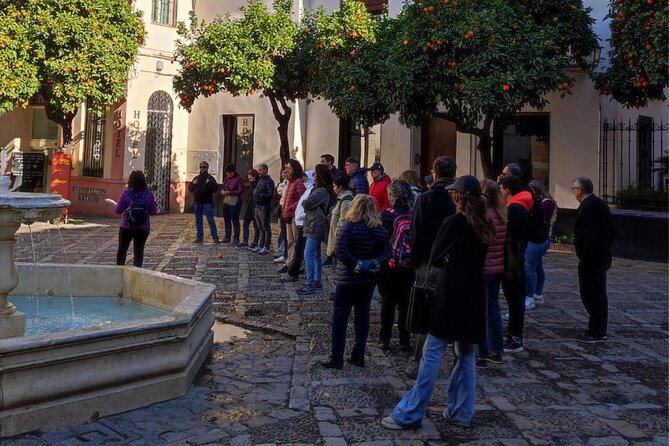
At the Plaza del Patio de Banderas, the route reaches the Royal Alcázars of Seville. The guide discusses the succession of rulers connected with the palace and what different eras left behind.
The square offers an important outside perspective on the Alcázar. It does not provide entry, and you should set aside separate time if you want the palace rooms and gardens. The walk helps you understand why the complex matters, but it cannot do the work of a full palace visit in a few minutes.
The Puerta del León follows. Here the subjects shift to symbols, defense, heraldry, customs, and the kings who passed through the walls. Admission is not included, so the experience remains an exterior stop unless you arrange your own visit.
The Archivo General de Indias gets a playful explanation involving pirates. The point is not that pirates occupy the archive, but that the documents kept inside have a connection to Seville’s age of overseas trade and the people who wanted to control its wealth.
Again, admission is not included. The building is important enough to merit a return visit if you want to see the collections properly. On this walk, the value lies in learning why the archive matters before you decide how much time to give it.
At the Monumento a la Inmaculada Concepción, the story widens to Seville’s artists, painters, Baroque culture, and an early form of marketing. The stop promises an unusual city detail rather than another standard monument description.
A completely different day out from Seville:
- Seville: Casa de la Memoria Flamenco Show
★ 4.8 · 12,964 reviews - Seville: 1-Hour Guadalquivir River Sightseeing Eco Cruise
★ 4.2 · 10,281 reviews - Córdoba: Skip-the-Ticket-Line Mosque-Cathedral Guided Tour
★ 4.6 · 9,634 reviews - Seville: Cathedral, Giralda, and Royal Alcázar Guided Tour
★ 4.7 · 9,165 reviews
The Giraldillo and Arenal’s old walls
The Giraldillo is one of Seville’s essential symbols, and the guide uses it to discuss how perspective can fool the eye. You get a close visual encounter with the figure, but not a tower visit.
From there, the route moves to Torre Abdel Aziz. This is one of the better photo stops because the guide directs your attention toward the city’s towers, walls, palaces, and grand houses. You will likely get more from this stop if you pause to look beyond the obvious landmark and compare the different defensive and civic structures around you.
At the Arco del Postigo del Aceite, the route enters the Arenal quarter. The old gate opens a path into stories of good and bad times, and the area’s past as a working part of the city.
The tour does not present Arenal as a polished monument district only. Its appeal comes from the mixture of major sights, old passageways, trade, defense, and local memory. That balance is useful if you want to understand how Seville functioned, not just how it photographs.
Plaza del Cabildo and the route toward Triana
Plaza del Cabildo is a short but worthwhile stop. The guide shows you how to find the square, where to look, and why its passageways matter. The advice is practical because the space can be easy to miss if you are following the main flow of the old center.
The Mercado Artesanía El Postigo continues the theme of Seville as a meeting place. The craft market reflects the city’s mix of cultural influences, with objects and traditions shaped by the communities that settled here.
Do not expect a long shopping session. The stop is part of a moving walk, so you will have time to look and hear the story, but not necessarily to browse every stall.
The route then crosses the Puente de Isabel II, better known as the Puente de Triana. This is a natural place for photographs and a change of viewpoint over the river and city.
The guide uses the bridge for comparisons, games, humorous observations, and stories about the pilgrims and other characters who crossed it. This lighter section gives the walk a needed change of rhythm after the dense material in Santa Cruz and around the Alcázar.
The bridge also makes the cultural theme easier to grasp. Seville is not only a set of old buildings. It is a city connected by movement, trade, belief, and daily crossings between neighborhoods.
Finishing at the Torre del Oro
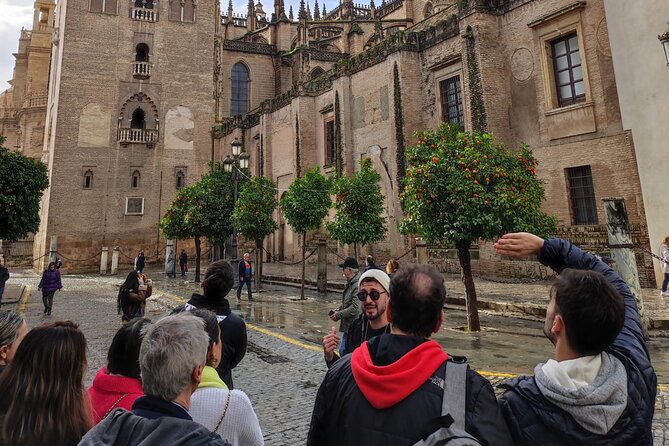
The walk ends at the Torre del Oro, on Paseo de Cristóbal Colón, about two hours after the start. This is a strong finishing point because the tower brings together defense, the river, Seville’s commercial past, and the city’s relationship with distant places.
The guide saves a final explanation for the tower, aiming to bring the earlier stories together. Admission is not included, so you should not count on entering the tower as part of the price.
Ending here also gives you useful choices. You can continue along the river, return toward the old town, or use the area as a marker for planning another Seville activity. The tour begins in the historic center and finishes in a different part of it, so wear shoes that are comfortable for steady walking and avoid carrying anything you do not want to manage for two hours.
What the $13.88 price really buys you
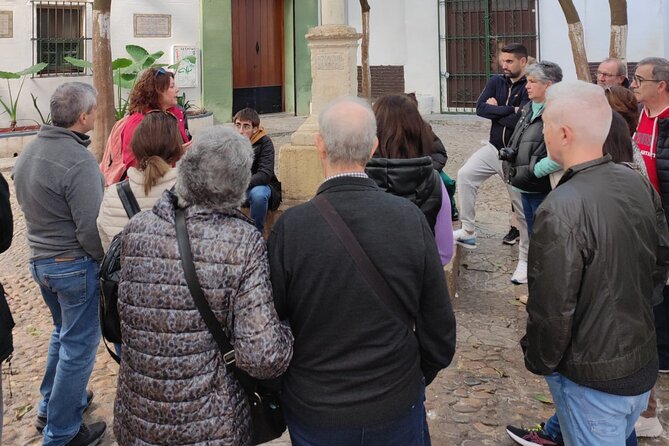
At $13.88 per person, this is inexpensive for a guided introduction to central Seville. The value is not in included admissions, food, or transport. It is in the guide’s ability to connect 21 places with stories and historical changes while you walk between them.
You get the most for your money if you use the tour as a first look. It can show you which areas deserve a second visit and give you enough context to make sense of the Cathedral, Alcázar, Jewish Quarter, Arenal, and riverfront.
The price is less compelling if you want long stops, interior access, or detailed art history. Five minutes at each location is enough for a sharp explanation and a photograph, but not for close study.
The group maximum is 20 people. That is not private, but it is smaller than a large coach group and better suited to Seville’s tight lanes. The experience is offered with a mobile ticket, and the confirmation arrives at booking.
The tour is usually booked about 27 days ahead. That does not prove every departure sells out, but it is a useful planning signal. If your schedule is fixed, reserve before you arrive rather than hoping to find a convenient place at the last minute.
The cancellation terms are simple: cancel at least 24 hours before the local start time for a full refund. Cancellations or changes within 24 hours are not refunded or accepted. The experience also requires a minimum number of participants, and if that minimum is not reached, you are offered another date or experience, or a full refund.
Guide style and the strongest praise
The best part of this experience depends on the guide’s delivery. The material is built around curiosities, legends, and short stories, so a flat recitation would weaken the whole walk.
Alfredo is associated with the provider’s tours and is described as putting neighborhoods into context while explaining curious details. José is also named in connection with a particularly enjoyable neighborhood walk, with praise for his knowledge of the stories and his way of narrating them.
Guide assignments can vary, so you should not book on the assumption that one specific person will lead this exact departure. Still, those names give you a sense of the approach to expect: local context, stories, and a lively presentation rather than a formal academic lecture.
The strongest praise centers on three things: the full route, the way the guide makes each corner engaging, and the mix of important sights with secrets and odd facts. That matches the design of this walk, which keeps moving but rarely lets the city feel anonymous.
Who should book this Seville walk?
I would choose this for a first or second day in Seville, especially if you want a map in your head before visiting the major monuments. It is also a good fit for anyone who prefers stories and local legends to a long lecture about dates and dynasties.
It suits couples, families, and small groups who can maintain a steady walking pace. Most people can participate, service animals are allowed, and the route is near public transportation.
I would be more cautious if you have limited walking stamina or want to spend a long time at each stop. The description does not provide a detailed accessibility assessment, and the route includes narrow historic streets, squares, and a bridge. Ask the provider for current route details if that affects your decision.
You should also book a separate Cathedral, Alcázar, Archivo General de Indias, or Torre del Oro visit if entering those sites matters to you. This experience explains their place in Seville, but the listed admissions are not included.
Should you book The Seville of the 3 Cultures?
Book it if you want an affordable, story-led introduction to Seville that links the old Jewish Quarter, Santa Cruz, Arenal, the river, and the city’s main monuments in one outing. The legends of Susona, Life Street and Death Street, the Giralda story, the pirate connection, and the bridge tales give the route more character than a basic sightseeing circuit.
Skip it if you prefer a slow, specialist tour with long interior visits. At $13.88, the walk offers good value as an orientation and storytelling experience, not as a substitute for paid monument entry. Reserve ahead if your dates are firm, meet at Plaza de San Francisco, and finish with enough time left in your day to return to the places you want to explore properly.
FAQ
How long does The Seville of the 3 Cultures last?
The experience lasts approximately two hours.
Where does the tour begin?
It begins at Pl. de S. Francisco, 17, in Seville’s Casco Antiguo.
Where does the tour end?
It ends at the Torre del Oro area, on Paseo de Cristóbal Colón.
What is the price?
The listed price is $13.88 per person.
How many people can join the tour?
The maximum group size is 20 people.
Are monument admission fees included?
Admission is not included at the Palacio Arzobispal, Puerta del León, Archivo General de Indias, and Torre del Oro. The other listed stops are marked as free admission.
Is the tour available with a mobile ticket?
Yes. The experience offers a mobile ticket, and confirmation is received at the time of booking.
Can I cancel for a full refund?
Yes, if you cancel at least 24 hours before the experience start time. Cancellations or changes made within 24 hours are not refunded or accepted.
Are service animals allowed, and can most people participate?
Service animals are allowed, the tour is near public transportation, and most people can participate.
Just added around Seville
- Seville: Wine and Gourmet Tapas Tour★ 5.0 · 3 reviews
- Tapas Tour Cordoba & Wine Experience with chef and sommelier★ 4.8 · 3 reviews
- The most complete tour of Seville: All the highlights included★ 5.0 · 3 reviews
- Ronda and White Villages Private Day Trip from Seville★ 5.0 · 3 reviews
- Seville: Spritz Tasting Experience★ 4.8 · 3 reviews
- Jerez: Historic center of Jerez and horse show★ 5.0 · 3 reviews
- SEVILLE: REAL ALCÁZAR TOUR★ 5.0 · 3 reviews
- Royal Alcazar of Seville Guided Tour★ 5.0 · 3 reviews
Seville Tours, compared.

Live Flamenco Dancing Show Ticket at the Theater
Read our review →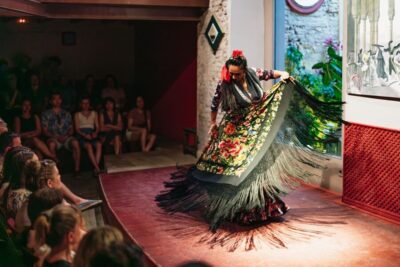

1-Hour Guadalquivir River Sightseeing Eco Cruise
Read our review →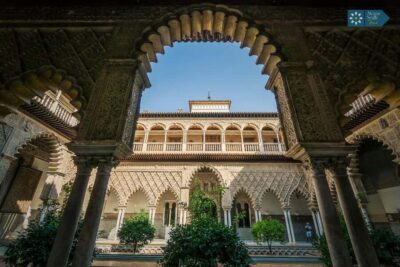
Cathedral, Giralda, and Royal Alcázar Guided Tour
Read our review →