Reviewed · TOURS
Tour Sevilla de las 3 Culturas
Seville’s past is not stored in one museum. It is written into crooked lanes, old walls, palace fronts, arches, churches, and the riverfront. This two-hour walking tour links the city’s Roman, Muslim, Jewish, Christian, and Gypsy stories in one easy route, from Plaza de San Francisco to Torre del Oro.
I like the price, just $7 per person, and I like the route’s flat shape, with no steep climbs. The guide-led format also helps you read places such as Santa Cruz and the Arenal instead of merely walking past them. The main drawback is that the tour is offered in Spanish, so you need a comfortable grasp of the language to get full value from the stories.
In This Review
- Key things to know before you go
- Start at Plaza de San Francisco with Seville’s layers in mind
- Banco de España and the civic center
- Giralda, Cathedral, and the Archbishop’s Palace
- Entering the Jewish Quarter through Santa Cruz
- Patio de Banderas and Puerta del León
- The General Archive of the Indies and Seville’s American role
- Arenal, Plaza del Cabildo, and the Postigo market
- The riverfront finish at Torre del Oro
- What $7 really gets you
- Heat, footwear, and language
- Who should choose this walk
- Should you book the Sevilla de las 3 Culturas tour?
- FAQ
- Where does the tour start?
- Where does the tour finish?
- How long is the tour?
- What language is the tour in?
- How much does the tour cost?
- Is the route wheelchair accessible?
- Is the route difficult?
- Can I cancel for a full refund?
Key things to know before you go
- The route connects several Seville eras: Roman and Visigoth remains, Al-Andalus, the Jewish Quarter, Christian Seville, and the city’s American trade.
- You walk from Plaza de San Francisco to Torre del Oro: Expect a central route through the Cathedral area, Santa Cruz, Arenal, and the riverfront.
- The route is flat: Comfortable shoes and water are still wise, especially in warm weather.
- The tour is in Spanish: Official guides are used, and José is one guide associated with the experience.
- The price is unusually low: At $7, this is a useful orientation walk if you want context before exploring major monuments on your own.
- The route includes stories and legends: Susona, Calle Vida, and the narrow lanes of Santa Cruz give the walk a more personal feel than a simple monument checklist.
Start at Plaza de San Francisco with Seville’s layers in mind
The meeting point is at Fuente de Mercurio in Plaza de San Francisco, at Plaza de San Francisco, 17. This is a sensible starting place because you begin in the city center, close to the old civic and religious core.
Your guide sets up the main idea here: Seville has changed hands, faiths, and roles many times. It was an administrative and trading center under Rome, a major city of Al-Andalus, a key Christian center after Ferdinand III took Seville, and later the European port linked to Spain’s trade with the Americas.
That broad frame matters. You are not simply looking at a Muslim arch, a Catholic church, or a Jewish quarter as separate attractions. You are being shown how each period reused and reshaped the city around it.
The tour has a live Spanish-speaking guide, and the company says its guides are official tourist guides with strong communication skills. One recorded experience specifically names José, who answered questions during the walk. Guide quality matters here because much of the value comes from explanation, not admission to an interior.
A few more Seville tours worth comparing
- Seville: Royal Alcázar Entry Ticket
★ 4.6 · 28,378 reviews - Seville: Cathedral and La Giralda Entry Ticket
★ 4.5 · 24,592 reviews - Seville: Live Flamenco Dancing Show Ticket at the Theater
★ 4.7 · 16,396 reviews
Banco de España and the civic center
From Plaza de San Francisco, the walk passes the Banco de España for sightseeing. This stop helps place modern institutional Seville beside its older streets and monuments.
You should not expect an extended visit inside the bank. It is a viewing stop, part of the larger route. The benefit is rhythm: the guide moves you through the city’s civic center while explaining how Seville’s functions changed over time.
This is also a good point to ask questions if you have them. The tour is short, and a clear question early on can help you follow the later connections among Roman Seville, Islamic Seville, Christian Seville, and the port.
Giralda, Cathedral, and the Archbishop’s Palace
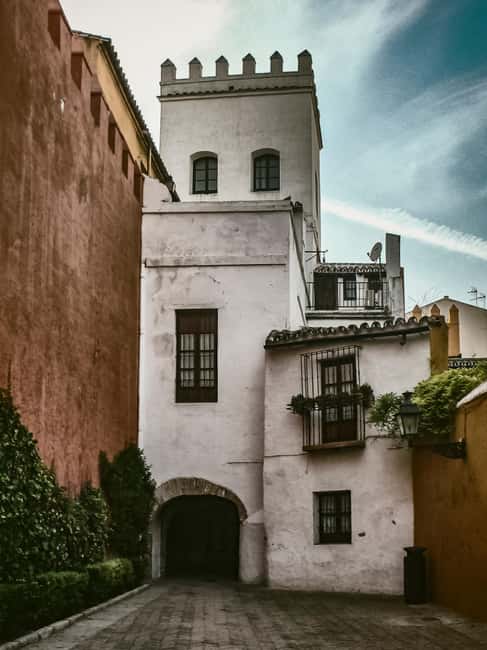
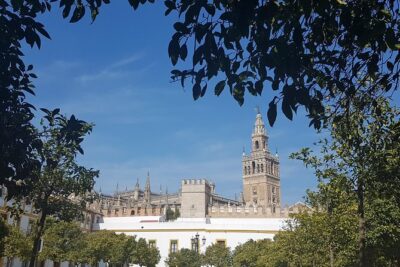
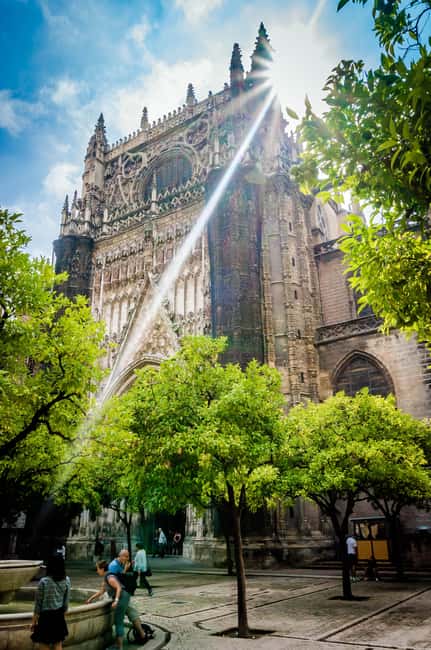
The Giralda and Seville Cathedral form the most recognizable section of the walk. Here, Islamic and Christian Seville meet in plain sight.
The Giralda began as an Almohad-era minaret and later became the bell tower of the Cathedral. The tour uses this landmark to explain Seville’s period under Almohad rule, when the city reached a high point of power and importance. After the Christian conquest, the same urban center took on a new religious role.
The nearby Cathedral is a visit stop, while the Palacio Arzobispal is a sightseeing stop. This distinction is useful: the experience is mainly an exterior walking tour, not a series of long indoor visits. You should not book it expecting a full Cathedral tour or an extended look inside every building.
Still, the pairing works well. The Giralda and Cathedral show how a city can retain earlier forms while changing their purpose. You get the visual evidence first, then the guide’s explanation supplies the missing context.
The Immaculate Conception Monument and El Giraldillo appear later on the route, adding more detail to the Cathedral area. El Giraldillo, the figure atop the Giralda, is especially useful as a visual marker. The guide can help you distinguish the tower’s older Islamic origins from its later Christian identity.
Entering the Jewish Quarter through Santa Cruz
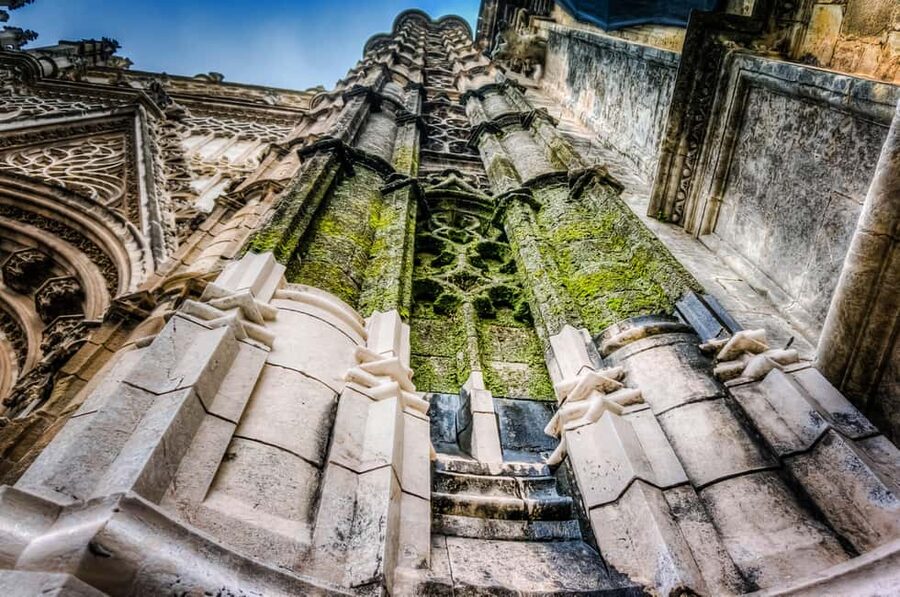
The walk then turns toward the Judería, or old Jewish Quarter, including Plaza de la Alianza, Plaza Doña Elvira, Calle Susona, Calle Vida, Santa Cruz, and Patio de Banderas.
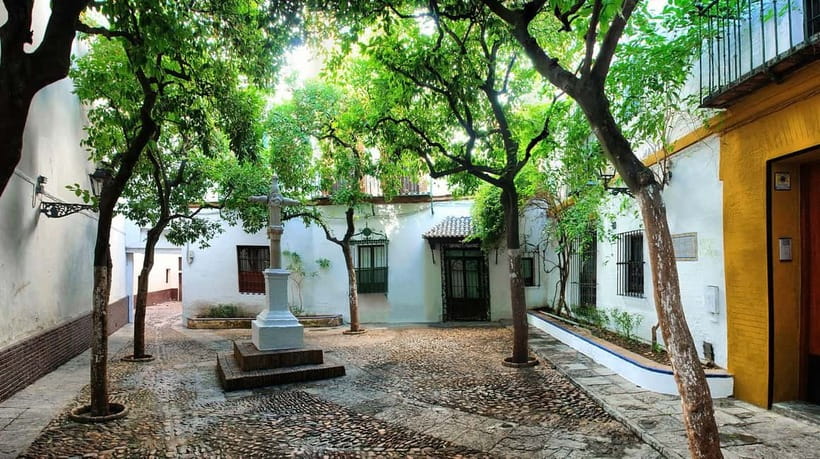
This is where the route becomes less about big monuments and more about the shape of the city. Santa Cruz is known for narrow, winding streets, small squares, walls, arches, and palace fronts. The layout can feel confusing if you walk alone, but that confusion is part of the point. The streets reflect an older Medina pattern rather than a modern grid.
Plaza de la Alianza and Plaza Doña Elvira offer open spaces within the tight lanes. They are good places to pause, look up, and notice how the quarter is arranged. Calle Susona and Calle Vida bring in the legends and characters that give the neighborhood a human scale.
You should treat the stories as local tradition and storytelling, not as a replacement for academic history. That is not a weakness. On a short walking tour, legends help you remember the places, provided you keep them alongside the larger historical facts.
Santa Cruz is also the section most likely to feel crowded at popular times, though no group-size information is provided. The route’s narrow streets can make it harder to hear, so stay close to the guide and arrive ready to listen.
A completely different day out from Seville:
- Seville: Casa de la Memoria Flamenco Show
★ 4.8 · 12,964 reviews - Seville: 1-Hour Guadalquivir River Sightseeing Eco Cruise
★ 4.2 · 10,281 reviews - Córdoba: Skip-the-Ticket-Line Mosque-Cathedral Guided Tour
★ 4.6 · 9,634 reviews - Seville: Cathedral, Giralda, and Royal Alcázar Guided Tour
★ 4.7 · 9,165 reviews
Patio de Banderas and Puerta del León
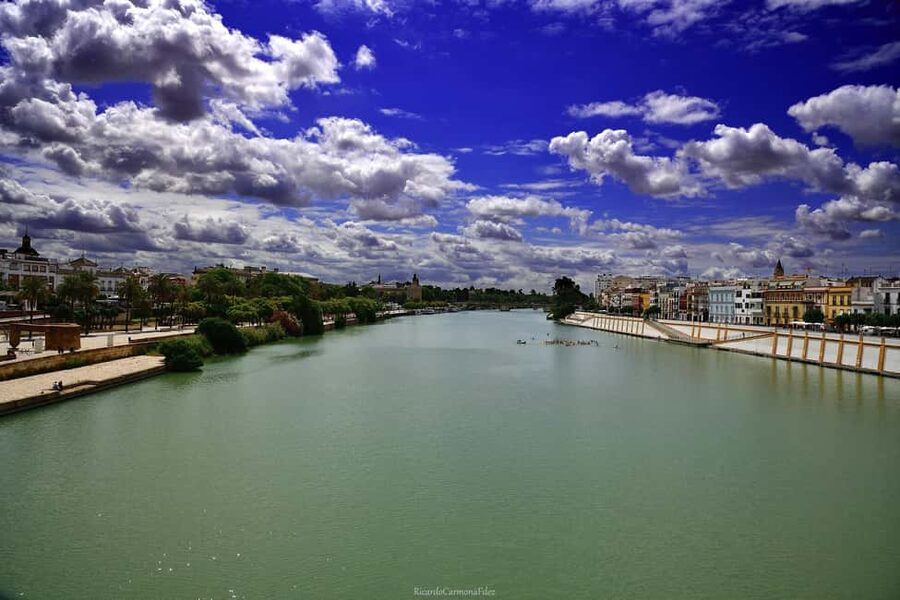
Patio de Banderas leads you toward Puerta del León, the entrance associated with the Real Alcázar. These stops show the close relationship between Seville’s royal, Islamic, and Christian past.
The Alcázar is one of the city’s major monuments, but this experience does not list an interior visit to the palace. You see the approach and discuss the setting from the walking route. If the Alcázar is on your must-see list, plan a separate visit and allow time for it.
This is one of the tour’s practical strengths. It gives you a map of the historic center before you spend time and money inside major monuments. You can learn where the Cathedral, Alcázar, Jewish Quarter, and riverfront sit in relation to one another, then return later with a better sense of direction.
The General Archive of the Indies and Seville’s American role
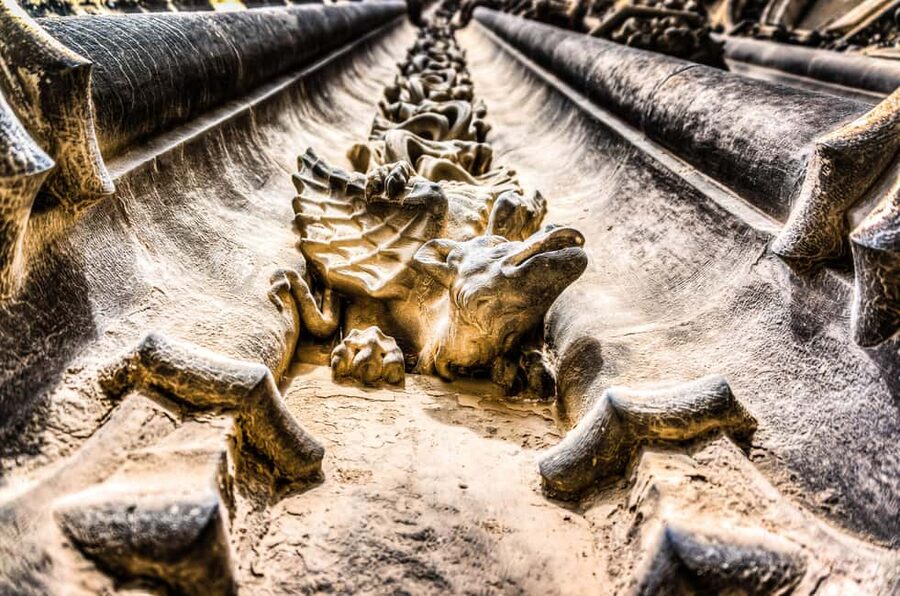
The General Archive of the Indies is a guided stop, and it introduces a different chapter: Seville as Europe’s port for Spain’s American empire.
After the Atlantic voyages, Seville became a key center for administration and trade with the Americas. That story has both achievement and exploitation in it. A useful guide should not reduce the subject to treasure and adventure. The city’s wealth and status were tied to a system that brought major benefits to Spain while causing immense harm across the Atlantic.
The archive’s location near the Cathedral and Alcázar makes the point physically. Religion, royal authority, trade, and overseas power were concentrated in the same part of town.
Because the tour is only two hours, expect an introduction rather than a full examination of Spain’s American empire. If this subject interests you, note the building and return for a more focused visit.
Arenal, Plaza del Cabildo, and the Postigo market
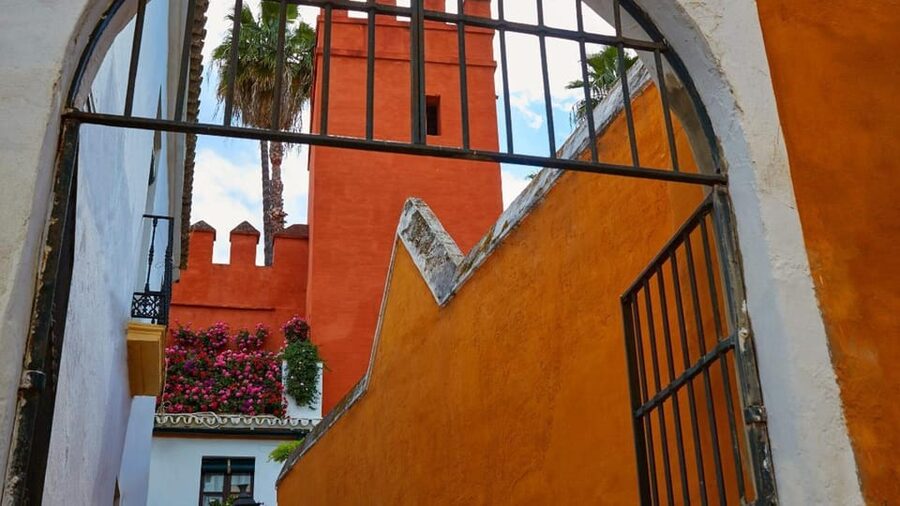
The route continues into El Arenal, Seville’s historic riverfront district. The Arenal connects the city center with its port activity, military role, commerce, and public life.
Plaza del Cabildo is a sightseeing stop, while Mercado Artesanía El Postigo is a visit stop. The craft market adds a present-day layer to the walk. It gives you a chance to see how the old center still functions as a place for local commerce, not just a backdrop for monuments.
Do not expect a long shopping session. The market is one part of a moving route, and the tour keeps its focus on culture and history. Still, it is a useful change of pace after the concentrated monument area around the Cathedral and Santa Cruz.
The Arenal also helps connect Seville’s past to its geography. The river was not decorative. It shaped the city’s trade, its contact with the wider world, and its importance during the period of Spanish expansion.
The riverfront finish at Torre del Oro
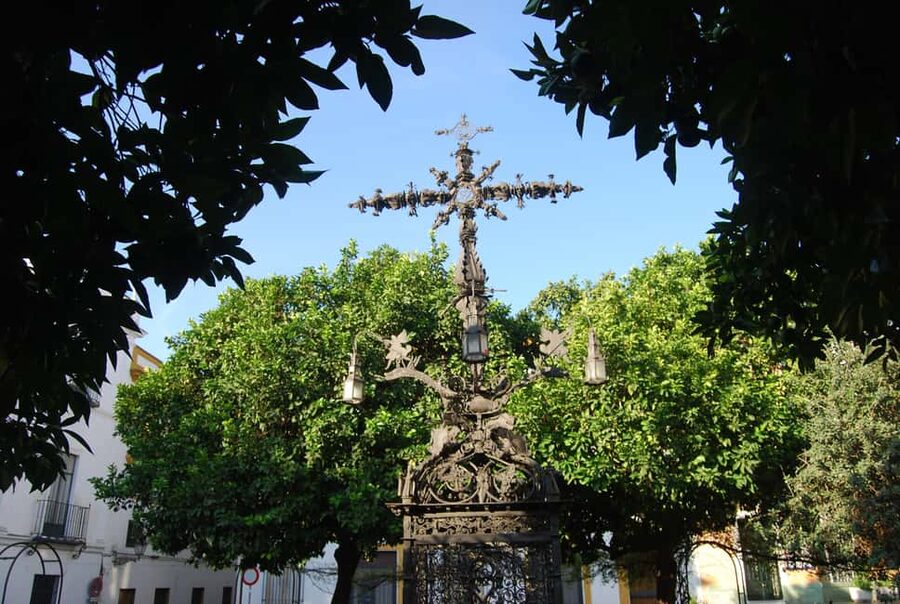
The walk ends at Torre del Oro, one of Seville’s best-known riverside landmarks. The tower’s position beside the Guadalquivir gives the final stop a clear sense of place.
Here, the route’s different stories come together. The tower belongs to the defensive and commercial world of the river, while nearby areas point toward the port and the city’s links with the Americas. Across the water, the direction of Triana recalls Seville’s long Gypsy history and the neighborhood’s role in flamenco culture and craft traditions.
The tour presents Gypsy Seville as another part of the city’s story, with a settled community in Triana from the 15th century and a large Gypsy population there. Since the route finishes at Torre del Oro rather than crossing the bridge, you receive an introduction to this subject rather than a full tour of Triana.
One practical point deserves attention. The activity details identify Torre del Oro as the finish, while the meeting information also says the activity ends back at the meeting point. Ask for clarification if you need to return to Plaza de San Francisco, especially if you have a timed reservation afterward.
What $7 really gets you
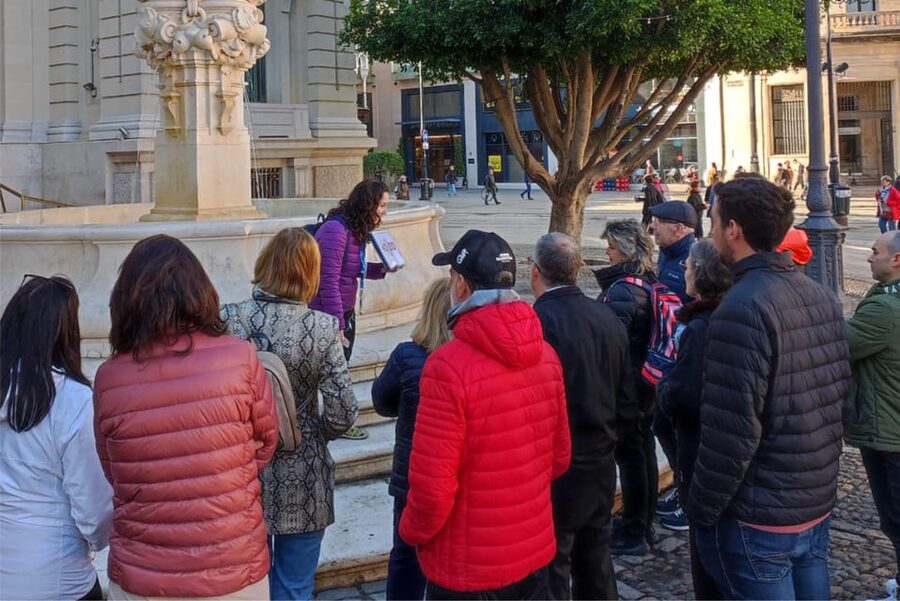
At $7, this is less expensive than most guided city walks, so the value is strong if you want a quick historical orientation. You are paying for an official guide, a carefully connected route, and explanations of places that can otherwise blur together.
The price does not include entry to the Cathedral, Alcázar, or other paid monuments. The advertised skip-the-ticket-line feature should not be mistaken for a full ticketed visit. It is best understood as a way to keep the walking activity moving at the stated sights.
I would book this early in a Seville stay. The route covers enough ground to help you choose what deserves a second visit. It can also save you from spending your first day wandering without understanding the city’s layout.
The tour accepts free cancellation up to 24 hours before the start time, and you can reserve while paying later. Those terms help if your schedule is still shifting, but check the available starting times before booking.
Heat, footwear, and language
The route is described as comfortable and flat, with no slopes. Even so, you will be on your feet for two hours, so wear shoes that suit stone streets and bring water.
The company notes that stops are in shade during summer and sun during winter. That is helpful, but Seville can still be hot, and shade is not the same as air-conditioning. A morning or later-day start may be more comfortable if the available time suits your plans.
The tour is in Spanish only. If you understand Spanish well enough to follow historical explanations, you may get a lot from it. If you do not, the low price will not solve the language problem. Confirm the language before reserving.
The route is wheelchair accessible according to the activity details. Since the walk passes through narrow historic streets, it is still sensible to confirm any personal mobility needs with the provider before arrival.
You are asked to include a phone number with WhatsApp so the company can send the meeting point. The listed meeting place is Fuente de Mercurio in Plaza de San Francisco, so keep your phone available before the start.
Who should choose this walk
I would choose this tour for a first day in Seville, especially if you want the city’s major historical chapters explained in one sitting. It also suits repeat visitors who have seen the Cathedral or Santa Cruz but want to understand how the pieces connect.
It is a good match for:
- You want a low-cost introduction before booking longer monument visits.
- You enjoy legends, local characters, and small street details.
- You can follow a Spanish-speaking guide.
- You prefer a flat walking route with no steep sections.
- You want to see the center, Jewish Quarter, Arenal, and riverfront in one outing.
I would think twice if you want detailed interior access to the Cathedral, Alcázar, or Archive of the Indies. This is a city walk, not a full museum or palace tour. I would also avoid relying on it as your only Seville experience if your main interest is Triana, flamenco, or the American trade system.
The recorded rating is 5 out of 5 from four reviews, including comments describing the tour as interesting and noting that José answered questions. That is a small sample, so I would not treat it as final proof of every guide’s performance. Still, it supports the main reason to book: the experience depends on clear explanations, and the available feedback points to that strength.
Should you book the Sevilla de las 3 Culturas tour?
Yes, if you want a cheap, Spanish-language introduction to Seville’s many pasts. The route is broad, the walking is manageable, and the $7 price makes it a practical way to get your bearings before returning to the Cathedral, Alcázar, Santa Cruz, or the riverfront on your own.
Book something else, or add a second tour, if you need English, long indoor visits, or a detailed focus on one period. For the right reader, this walk offers something useful: not just famous sights, but a way to read Seville’s streets as the result of centuries of change.
FAQ
Where does the tour start?
It starts at Plaza de San Francisco, 17, at the Fuente de Mercurio meeting point.
Where does the tour finish?
The route lists Torre del Oro as the finish. The meeting information also refers to returning to the meeting point, so confirm the ending location if it affects your plans.
How long is the tour?
The tour lasts two hours.
What language is the tour in?
The live tour guide speaks Spanish.
How much does the tour cost?
The listed price is $7 per person.
Is the route wheelchair accessible?
Yes, the activity details state that the tour is wheelchair accessible.
Is the route difficult?
The route is described as comfortable and flat, with no slopes. Comfortable shoes and water are recommended.
Can I cancel for a full refund?
Yes. You can cancel up to 24 hours in advance for a full refund.
Just added around Seville
- Seville: Wine and Gourmet Tapas Tour★ 5.0 · 3 reviews
- Tapas Tour Cordoba & Wine Experience with chef and sommelier★ 4.8 · 3 reviews
- The most complete tour of Seville: All the highlights included★ 5.0 · 3 reviews
- Seville: Spritz Tasting Experience★ 4.8 · 3 reviews
- Ronda and White Villages Private Day Trip from Seville★ 5.0 · 3 reviews
- Jerez: Historic center of Jerez and horse show★ 5.0 · 3 reviews
- SEVILLE: REAL ALCÁZAR TOUR★ 5.0 · 3 reviews
- Royal Alcazar of Seville Guided Tour★ 5.0 · 3 reviews
Tours, compared.
Skip-the-Ticket-Line Mosque-Cathedral Guided Tour
Read our review →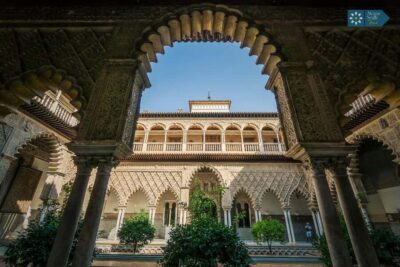
Cathedral, Giralda, and Royal Alcázar Guided Tour
Read our review →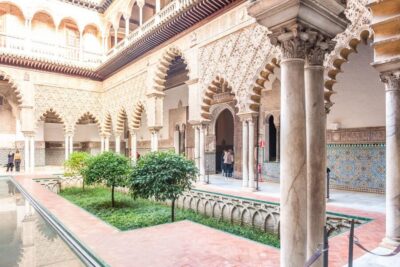
Cathedral, Giralda & Alcazar Entry With Guided Tour
Read our review →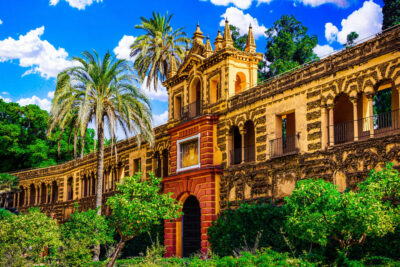
Priority Access Cathedral, Giralda & Alcázar Tour
Read our review →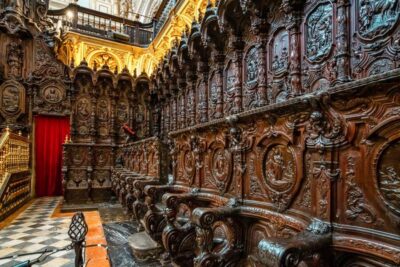
Cordoba Mosque-Cathedral: Skip-the-Line Guided Tour
Read our review →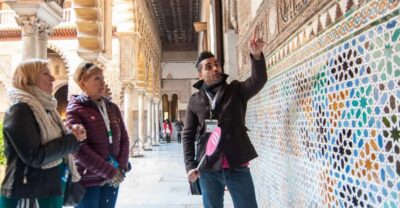
Alcázar and Cathedral Entry Ticket and Guided Tour
Read our review →