
Reviewed · ALCAZAR TOURS
Alcázar de los Reyes Cristianos
The most fascinating part of Córdoba’s Alcázar is how many lives this fortress has had. Catholic monarchs planned the Granada campaign here, met Christopher Columbus here, and later the building served as a headquarters for the Spanish Inquisition and a prison. In one short visit, you move from royal power to Roman remains, Moorish bathing rooms, and peaceful gardens.
I like the included admission and skip-the-line access, which matter when your Córdoba day is packed. I also like the one-hour format: long enough for the key rooms and gardens, short enough to fit beside the Mezquita and other sights. The main concern is guide language. English has been spoken very well on at least one tour, but another guide delivered the talk in Spanish, so ask about language before booking if that will affect your visit.
In This Review
- Key points to know before booking
- Why the Alcázar deserves a guided hour
- Meeting at Campo Santo de los Mártires
- Towers that explain the fortress
- The Roman sarcophagus and older Córdoba
- Roman mosaics in the mosaics room
- Hammam Doña Leonor and the private side of court life
- Patio Morisco and the change from defense to beauty
- The gardens are the tour’s calm finish
- What the guide adds, and the language question
- Is $19.68 a fair price?
- Who will get the most from this visit?
- Should you book the Alcázar guided tour?
- FAQ
- Where does the Alcázar tour start?
- Where does the activity finish?
- How long does the tour last?
- Is admission to the Alcázar included?
- Does the tour include skip-the-line access?
- Is hotel pickup included?
- Can I cancel for a full refund?
Key points to know before booking
- Roman, Moorish, royal, and Inquisition-era history: The Alcázar offers several layers of Córdoba’s past in one compact site.
- A one-hour guided visit: You see the towers, mosaics, bathhouse, courtyard, and gardens without giving up most of your afternoon.
- Admission and line-skipping are included: That makes the $19.68 price easier to justify than a bare entry ticket.
- A guide adds essential context: The first meeting with Columbus and the fortress’s later use as a prison are easy to miss without explanation.
- Language needs checking: An English-speaking guide has received strong praise, while another tour was conducted in Spanish.
- Moderate fitness is expected: You should be comfortable walking through the complex and its gardens.
Why the Alcázar deserves a guided hour
Córdoba is famous for the Mezquita, but the Alcázar de los Reyes Cristianos gives you a different view of the city. The Mezquita shows religious and architectural change on a grand scale. The Alcázar puts you inside the machinery of royal government, military planning, court life, punishment, and display.
I find the site most rewarding when you pay attention to its changes in purpose. It was not built for just one chapter of history. Its walls saw the Catholic Monarchs prepare the War of Granada and receive Christopher Columbus. Later, the same fortress became associated with the Spanish Inquisition and prison life.
That range is a good reason to choose a guided visit rather than simply walking through with a ticket. You can see a tower, a mosaic, and a garden on your own. A guide helps connect those pieces and explains why the building mattered at different times.
The tour lasts about one hour. That is a sensible length for Córdoba, where you may also want time for the Mezquita, the Roman Bridge, the old Jewish quarter, and a long meal. You get a focused introduction rather than a full historical seminar.
More ways into the Alcazar:
- Córdoba: Jewish Quarter, Mosque, and Alcázar Tour
★ 4.7 · 4,279 reviews - Cordoba: Alcazar Guided Tour and Skip-the-Line Ticket
★ 4.2 · 1,792 reviews - Córdoba: Mosque-Cathedral, Jewish Quarter and Alcázar Tour
★ 4.7 · 1,426 reviews
Meeting at Campo Santo de los Mártires
The tour begins at Pl. Campo Santo de los Mártires, 2, in central Córdoba. The activity also ends back at the meeting point, so you should not expect a hotel transfer or a drop-off elsewhere.
A mobile ticket is provided, and confirmation comes when you book. Keep the ticket easy to open on your phone. You do not need to plan around food or drinks during the visit, since neither is included.
The group rules are worth noting. A booking can contain up to 10 people, while the overall activity can reach 30 participants. That means the experience may feel fairly personal, but you should not assume it will always be a tiny private walk. If you value a quiet, intimate guide talk, check the group arrangement when you reserve.
The meeting point is practical for a visit to the old center, but give yourself time to find it. Córdoba’s historic streets can be confusing, and arriving late to a timed guided entry is never a good start.
Towers that explain the fortress
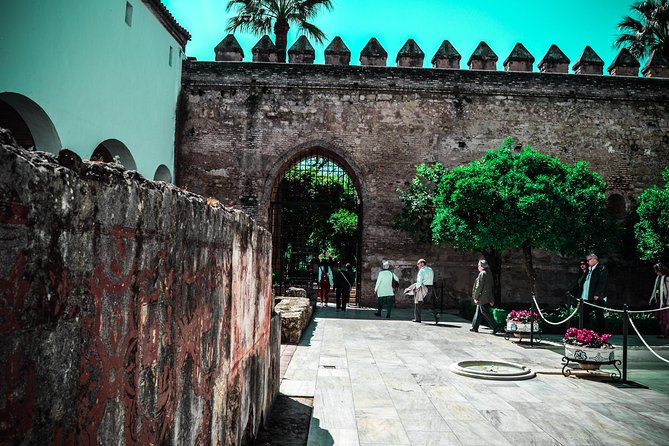
The towers are the natural opening to the Alcázar. They make the building’s defensive role clear before you move into rooms designed for ceremony and comfort.
From the outside, the fortress can seem stern and closed. Inside, the tour shows how military strength and royal presentation worked together. The towers and thick walls protected the people in power, while the interior spaces expressed authority in a more polished way.
Your physical condition matters here. The activity asks for a moderate level of fitness, so expect a fair amount of walking through the complex. If you are uncomfortable with stairs or uneven movement, you may want to ask the provider for more details before booking. The available information does not specify an elevator arrangement or a detailed accessibility plan.
The towers are also useful for orientation. Once you understand that the Alcázar was a working fortress, the mosaics, baths, courtyards, and gardens feel less like disconnected sights. They become parts of a royal compound that changed with the people who controlled it.
The Roman sarcophagus and older Córdoba
The Roman sarcophagus is one of the visit’s most useful reminders that Córdoba’s story began long before the medieval monarchs. It gives the tour an ancient starting point and places the Alcázar within the larger history of the city.
You might pass an object like this quickly on an unguided visit. With a professional art historian guide, you can expect more attention to its artistic and historical meaning. The sarcophagus is not simply another old stone object. It points to the Roman presence that shaped Córdoba before later rulers altered the city.
This stop also breaks up the royal narrative. The Alcázar is often associated with the Catholic Monarchs, but the Roman remains prevent the site from being reduced to one dynasty or one political event.
The guide’s role is especially useful here because the tour is short. You do not have time to read every panel or research every object. A clear explanation helps you spend your attention on what is most important.
More Cordoba trips:
- Córdoba: Skip-the-Ticket-Line Mosque-Cathedral Guided Tour
★ 4.6 · 9,634 reviews - Cordoba Mosque-Cathedral: Skip-the-Line Guided Tour
★ 4.7 · 6,610 reviews - Cordoba: Equestrian Show General Entry
★ 4.5 · 2,333 reviews - Cordoba: Mosque-Cathedral E-Ticket with Audio Guide
★ 4.1 · 2,124 reviews
Roman mosaics in the mosaics room
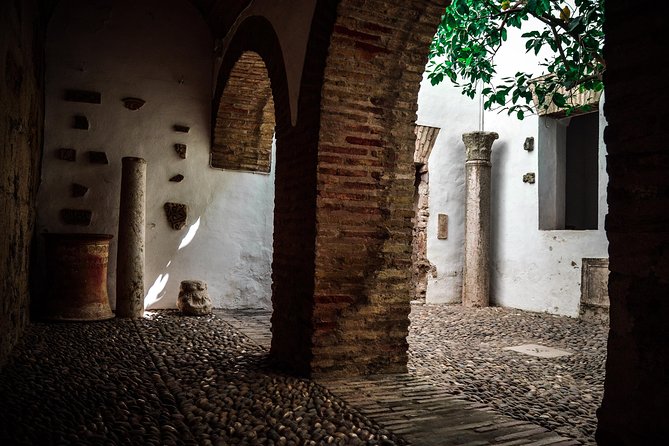
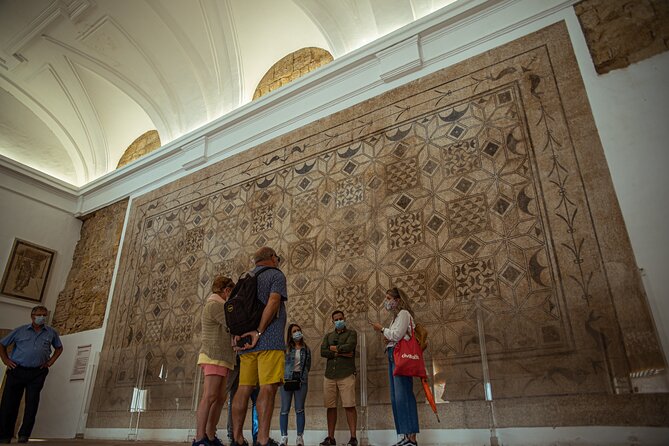
The mosaics room is one of the tour’s strongest visual stops. The large Roman mosaics bring color and pattern into a fortress otherwise defined by stone walls, towers, and formal rooms.
Mosaics reward a slower look. I would pay attention to the repeated designs, the workmanship, and the way the pieces show Roman taste and technical skill. They also help you picture how Roman decorative art continued to influence Córdoba long after the Roman period itself.
The guided format adds value because the room can be easy to treat as a quick photo stop. A professional guide can point out what you are looking at and place it within the city’s wider past. That context is a major part of the price.
Still, keep your expectations in check. This is a one-hour overview, not a museum-length study of Roman art. If Roman archaeology is your main interest, you may want to leave time for other sites in Córdoba. The Alcázar gives you an important glimpse, not a complete treatment.
Hammam Doña Leonor and the private side of court life
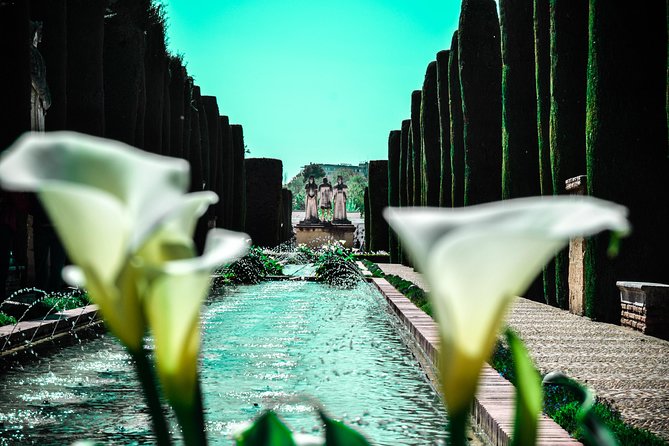
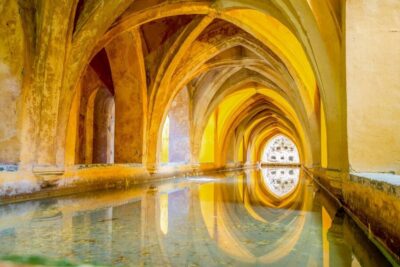
The Hammam Doña Leonor adds a more personal detail to the fortress. These Arab baths were built by Alfonso XI for his lover, Leonor de Guzmán. The story brings court life down from military campaigns and royal meetings to bathing, privacy, and relationships.
This is one of the most memorable details on the route because it changes the tone. You are no longer thinking only about kings, war, and official power. You are seeing how a ruler used the complex for private life as well.
The bathhouse also makes the Alcázar’s mixed character clear. Roman elements, Islamic design, and Christian royal history all appear in the same visit. The building does not fit neatly into a single label.
The available tour information does not give a detailed architectural description of the hammam, so you should think of it as a focused stop within the larger route. The guide’s explanation will likely be more useful than expecting a long period of independent study.
Patio Morisco and the change from defense to beauty
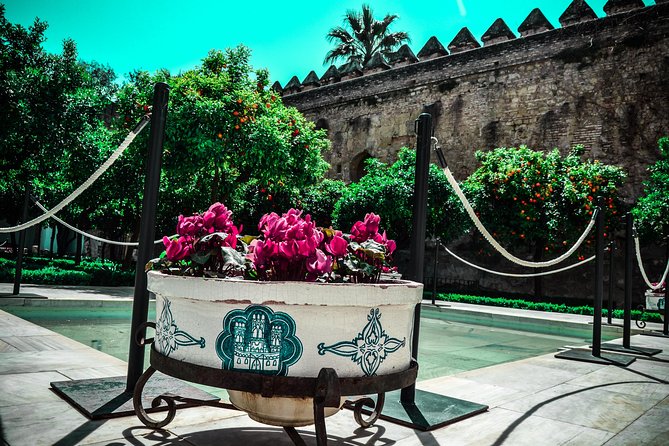
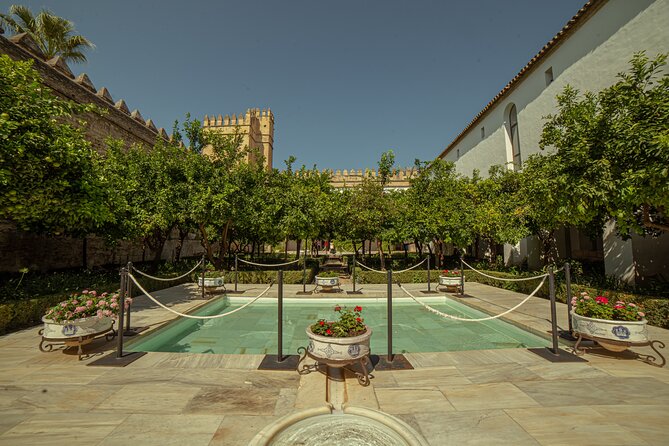
The Patio Morisco offers a quieter pause between the enclosed rooms and the gardens. Courtyards are central to the feel of historic Córdoba, and this one helps you see how water, open space, and controlled views softened the fortress environment.
I like this part of the route because it shows that the Alcázar was not only a place of walls and authority. Its courtyards made room for shade, air, and beauty. They also helped create the kind of setting that later visitors associate with Córdoba’s old quarters.
The Patio Morisco is best understood as part of the whole sequence. You begin with the strong defensive image of the towers, move through Roman and royal interiors, and then reach spaces designed for comfort and display.
Do not expect a long stop here. The entire visit is about an hour, so the guide must keep a steady pace. If you want time for careful photography or quiet reflection in every courtyard, a self-guided visit may give you more freedom, but it will not provide the same quick historical framework.
The gardens are the tour’s calm finish
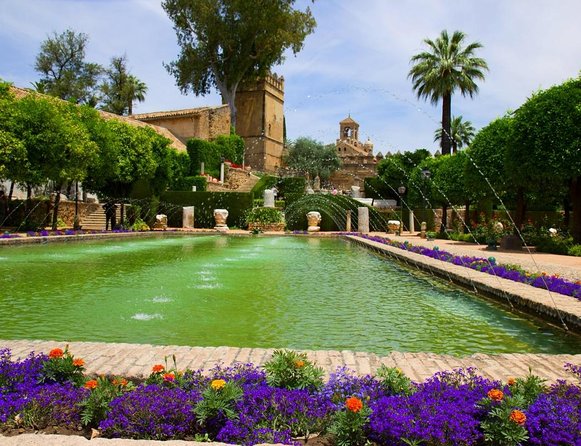
The gardens are likely to be the most relaxed part of the visit. Locals and visitors use them for civil weddings, which tells you something about their atmosphere. After the fortress rooms and stories of political power, the gardens provide an easy place to slow down.
I would save a little attention for this final section rather than treating it as a simple exit route. The gardens show how the Alcázar has been presented as a place of beauty as well as authority. They are also a useful contrast to the building’s years as an Inquisition headquarters and prison.
At the same time, a garden visit depends on pacing and crowd conditions. The tour description promises the gardens as part of the route, but it does not state how long you will remain there. A one-hour schedule means you should not count on a long, unhurried garden walk.
If your ideal Córdoba experience includes flowers, courtyards, and water features, this section may be the emotional high point. If your main interest is military history or Roman archaeology, the towers and mosaics may matter more.
What the guide adds, and the language question
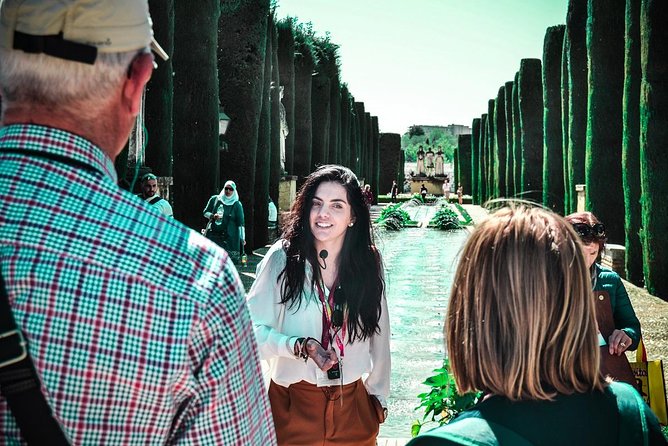
The tour includes a professional guide and a professional art historian guide. In practical terms, that means you are paying for interpretation, not only access. The guide should help explain the connections among Roman remains, Islamic baths, Christian monarchy, Columbus, the Inquisition, and the prison.
One English-language guide was praised for speaking very well and presenting Spanish history in an entertaining way. That is encouraging if you want a lively introduction rather than a dry list of dates.
Language is still the point I would clarify before paying. Another guide was described as friendly, interesting, and humorous, but the French-speaking customer found the Spanish presentation difficult to follow. The information does not promise one fixed language for every departure.
If you need English, contact Córdoba a Pie, the provider, before booking and confirm the language for your date. This simple check could make the difference between a useful guided visit and an expensive hour of partial understanding.
Is $19.68 a fair price?
At $19.68 per person, this tour sits in a reasonable range for a one-hour historic-site visit because admission, a guide, and skip-the-line access are included. The price is not just for walking through the gate. You are also paying for a structured explanation and the convenience of avoiding long entry lines.
The value depends on how you normally visit monuments. If you enjoy reading on your own and already know the Alcázar’s history, a bare admission ticket may be enough. If you want the major stories explained quickly, the guide makes the extra cost easier to defend.
The short duration improves the value for a busy itinerary. You can place the Alcázar beside other Córdoba sights without losing half a day. On the other hand, the price may feel high if the language is not suitable or if you expected a long, highly detailed tour.
The rating attached to this experience is 3.4 out of 5 from 18 ratings. That mixed result deserves attention. Several elements are clearly strong, including the guide’s manner, clear English on one departure, and the amount of history packed into the visit. But at least one serious booking problem was reported: a customer said the ticket was not accepted, had to pay again, and was still waiting for a refund after making a complaint.
That does not prove every booking will have trouble, but it is a sensible reason to keep your confirmation and mobile ticket available. If there is any issue at the entrance, ask for help immediately rather than leaving the site and trying to solve it later.
Who will get the most from this visit?
I would choose this tour if you want a short historical introduction to one of Córdoba’s main monuments. It suits first-time visitors who want a guide to explain the major events without committing to a long walking tour.
It also fits people with a full sightseeing schedule. The one-hour route covers the most important named areas, including the towers, sarcophagus, mosaics room, Hammam Doña Leonor, Patio Morisco, and gardens.
The tour may suit you less if you need a guaranteed language, prefer to linger in each room, or want an in-depth architectural lecture. The group can reach 30 people, and the schedule requires a fairly steady pace.
You should also be comfortable with moderate physical activity. The experience does not describe special accessibility arrangements, so ask the provider directly if you have mobility concerns.
Free cancellation is available if you cancel at least 24 hours before the local start time. Cancellations or changes made less than 24 hours ahead are not accepted for a refund.
Should you book the Alcázar guided tour?
Book it if you want the Alcázar’s main stories put into order, value skipping the long lines, and prefer a one-hour visit that leaves room for the rest of Córdoba. The Roman mosaics, the unusual story behind the Hammam Doña Leonor, and the royal connection to Columbus make this more than a quick walk through a pretty fortress.
Before booking, confirm the guide’s language and keep your mobile ticket ready. If those two points are clear, the $19.68 cost is fair for a compact guided visit with admission included.
If you prefer to explore alone or need a very detailed tour, buy entry independently instead. For most first-time visitors, though, this experience offers a practical way to understand why the Alcázar matters without letting it take over your day.
FAQ
Where does the Alcázar tour start?
The meeting point is Pl. Campo Santo de los Mártires, 2, Centro, 14004 Córdoba, Spain.
Where does the activity finish?
The tour ends back at the meeting point.
How long does the tour last?
The guided visit lasts approximately one hour.
Is admission to the Alcázar included?
Yes. Admission is included in the tour price.
Does the tour include skip-the-line access?
Yes. The experience includes guaranteed access intended to skip long lines.
Is hotel pickup included?
Hotel pickup and drop-off are not included unless you select an option that specifically includes them.
Can I cancel for a full refund?
Yes. You can cancel at least 24 hours before the experience start time for a full refund. Cancellations or changes made less than 24 hours before the local start time are not accepted for a refund.
Just added around Cordoba
- Tapas Tour Cordoba & Wine Experience with chef and sommelier★ 4.8 · 3 reviews
- O75 . The Oliva experience that you deserve★ 5.0 · 3 reviews
- Private Tour of Cordoba Week Days 2 Hours Tickets included★ 5.0 · 3 reviews
- Córdoba: Private Mosque-Cathedral and City Tour★ 5.0 · 3 reviews
- Private Tour: Mezquita-Catedral from Cordoba★ 5.0 · 3 reviews
- Cordoba: Jewish History Private Tour★ 4.0 · 3 reviews
- Cordoba private tour from Seville including the great Mosque for up to 8 persons★ 4.0 · 3 reviews
- Cordoba Highlights: Guided Day Tour from Seville★ 4.5 · 3 reviews
Alcazar Tours, compared.
Cathedral, Giralda, and Royal Alcázar Guided Tour
Read our review →
Cathedral, Giralda & Alcazar Entry With Guided Tour
Read our review →
Priority Access Cathedral, Giralda & Alcázar Tour
Read our review →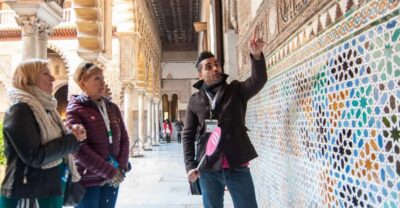
Alcázar and Cathedral Entry Ticket and Guided Tour
Read our review →
Alcazar and Cathedral of Seville Tour with Skip the Line Tickets
Read our review →
Alcázar of Seville Skip-the-Line Tickets and Guided Tour
Read our review →Browse the lists this tour appears in