
Reviewed · CADIZ TOURS
Carthusian Stud private – Yeguada de la Cartuja
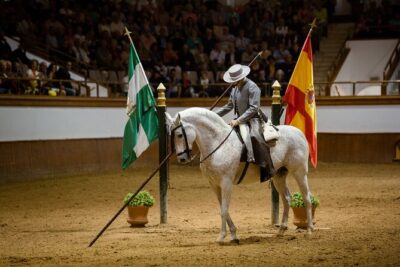
The most unusual part of this Cádiz-area experience is that you visit a working Carthusian stud, not simply a stable arranged for tourists. You see the farm in its daily rhythm and learn why this horse breed has been protected so carefully over generations.
I like the small maximum of 10 people and the chance to visit outside general hours. I also like that the official stud guide focuses on the horses, the breeding program, and the work behind the scenes. The main drawback is that the horse show is not included, and the rural meeting point requires you to arrange your own transport unless you pay extra for a limited pickup.
In This Review
- Key points to know
- Why Carthusian horses matter in Jerez
- Entering Yeguada de La Cartuja at 11 a.m.
- A private route through a working stud
- Meeting the Carthusian breed up close
- What the guide adds to the visit
- Why visiting outside regular hours helps
- What the $67.49 price includes
- The monastery connection and what not to expect
- Who will enjoy this two-hour visit
- Practical planning before you go
- How this compares with a horse show
- Should you book Yeguada de La Cartuja?
- FAQ
- Where does the Carthusian stud tour begin?
- What time does the tour start?
- How long does the experience last?
- Where does the activity end?
- Is hotel pickup included?
- Is a horse show included?
- How many people can join the tour?
- Are service animals allowed?
- Can I cancel for a full refund?
Key points to know
- A private visit to an active stud: See the installations where Carthusian horses are bred and cared for.
- A small group of up to 10 people: The size should make it easier to hear the guide and ask questions.
- An English-language option may be available: A recent visit was conducted in English by a passionate, well-informed guide.
- The focus is on the horses and farm work: This is not the full horse-show program.
- The meeting point is outside Jerez: You must reach Yeguada de La Cartuja at Carretera Medina, El Portal, CA-3109, kilometer 6.5.
- Plan for about two hours: The tour begins at 11:00 a.m. and finishes back at the stud.
Why Carthusian horses matter in Jerez
Jerez is closely tied to Andalusian horse culture, and the Carthusian horse is one of its most distinctive breeds. The stud is connected with the Monastery of the Cartuja, formerly home to Carthusian monks and described as a cornerstone of the Jerezano thoroughbred tradition.
That background gives the visit more purpose than a standard stable tour. You are not only looking at handsome horses. You are learning about a breeding line and the careful work used to preserve it.
The supplied information does not promise a full visit inside every part of the monastery, so you should think of the monastery as the historical setting for the stud rather than a separate sightseeing stop. The main activity takes place at Yeguada de La Cartuja, where the guide explains the running of the farm.
I find this useful for anyone who wants to understand the connection between Jerez and its horses. A horse show can be thrilling, but it often tells you little about the day-to-day work that keeps a breed going. This tour puts that work first.
More Cadiz trips:
- Cadiz: City Sightseeing Hop-On Hop-Off Bus Tour
★ 4.1 · 753 reviews - From Seville: Cadiz and Jerez de la Frontera Day Trip
★ 4.2 · 595 reviews - Walking Tour through Cádiz: Stories from the hand of a local guide
★ 5.0 · 532 reviews
Entering Yeguada de La Cartuja at 11 a.m.
You meet at Yeguada de La Cartuja Hierro del Bocado, at Carretera Medina, El Portal CA-3109, kilometer 6.5, in Jerez de la Frontera. The listed start time is 11:00 a.m., and the activity returns to this same point when it ends.
That location matters. This is not a central Jerez walking tour, and hotel pickup is not part of the standard price. Pickup is limited to four people and carries an extra charge, so you should sort out transport before booking.
The benefit of the out-of-town setting is that you reach a real stud rather than a city-center presentation. The drawback is simple: you have less flexibility if you are relying on public transport or trying to fit several Jerez sights into one morning.
The visit lasts roughly two hours. That is long enough for a proper introduction to the farm without taking over your entire day. You can pair it with other Jerez plans, but allow enough time for the drive to and from the stud.
A private route through a working stud
The official guide leads you through the installations rather than giving you a talk from one fixed viewing area. That distinction is important. You are introduced to the places and routines involved in caring for the horses, and the guide explains how the farm operates.
The exact order of the visit can vary because this is an active agricultural site. You might see different parts of the operation depending on the day, the horses’ routine, and the conditions. The information provided does not promise a fixed list of barns, paddocks, or breeding areas, so it is best to expect an informed orientation to the stud rather than a scripted checklist.
A private tour also gives you a better chance to ask direct questions. You can ask about the breed, breeding decisions, care, and the work required to maintain the line. In a group capped at 10 people, you should not have to compete with a large crowd to hear the answers.
This is where the tour earns its price. You are paying for access, an official guide, and a more personal explanation of the farm. You are not paying only to look at horses from a distance.
Meeting the Carthusian breed up close
The central subject is the Carthusian horse, often called Chartreux in French descriptions. The guide explains the breed’s background and how it has been preserved with care.
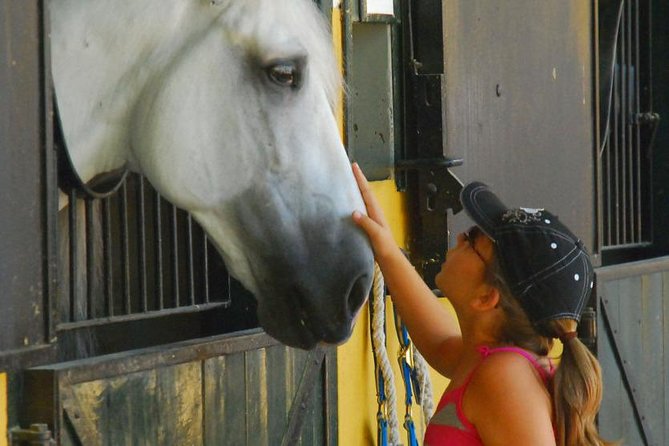
The information supplied does not guarantee that every booking includes touching or grooming a horse, so do not assume this is an animal-handling session. The phrase first-hand experience with the horses points to a closer understanding of the animals and their care, but the exact contact depends on the farm’s rules and the conditions that day.
That said, the setting should help you notice details that a performance can hide. You learn about the horses as living animals within a breeding program, not only as trained performers. For anyone interested in equestrian culture, that is the more useful angle.
Families and horse lovers will likely find the subject easy to enjoy. People with no special interest in horses can still appreciate the visit if they want a look at a traditional working farm. If your main goal is a choreographed display of riding, this may feel incomplete because the show is separate.
A few more Cadiz tours worth comparing
- Marimantas. Private guided and sung tour. Vejer of Legends.
★ 5.0 · 90 reviews - Cadiz : Private Custom Walking Tour With A Local Guide
★ 5.0 · 90 reviews - Cadiz: Private custom tour with a local guide
★ 4.7 · 76 reviews - Cadiz Private Tour
★ 5.0 · 58 reviews
What the guide adds to the visit
The guide is an official representative of the stud, which gives the tour a direct link to the people responsible for explaining its work. One recent private visit was conducted in English, and the guide was described as passionate and well informed about the breed’s careful preservation.
That detail is especially helpful for international visitors. You should still confirm the language available at the time of booking if English matters to you, since the general information does not list a guaranteed language schedule or a specific guide’s name.
A good guide can make a working site much easier to understand. Without context, stables and farm buildings can look like a collection of ordinary rooms. With an explanation of breeding, care, and daily duties, each part has a reason.
I would use the private format to ask practical questions. How is the Carthusian line maintained? What does the daily routine involve? How does the stud balance tradition with the needs of the horses? The tour is designed for that kind of conversation.
Why visiting outside regular hours helps
The tour is offered outside general visiting hours, which gives it a quieter feel than a standard public program. That does not mean you will have the entire property to yourself in every sense, but it does mean the booking is built around a more private visit.
This timing suits you if you prefer explanation over spectacle. You can focus on the farm and the guide rather than trying to follow a large public group.
The small group limit also matters. With no more than 10 people, you should have a clearer view and a better chance to participate. It is still a group activity, so do not interpret private as necessarily one household only. The supplied details call it a private guided tour, while the maximum allows up to 10 participants.
The quieter format may be less exciting for someone who wants a lively show. It is a better match for a visitor who values access, background, and the working side of horse culture.
What the $67.49 price includes
The listed price is $67.49 per person. It includes entrance to the stud, a private guided tour throughout the installations, and an official guide from the stud.
For a roughly two-hour visit, that is a midrange price rather than a simple admission ticket. The value comes from the guided access and the small group format. You are getting interpretation from the stud itself, not just permission to walk around a public viewing area.
The price does not include transport. If you need hotel pickup, an additional charge applies, and pickup is limited to four people. The horse show is also excluded, so add that cost if you want both the working-stud visit and a performance.
I would compare this experience with your interests rather than with the cost of a general attraction. If you want a private look at breeding and care, the price is easier to justify. If you only want to see horses perform, paying separately for a tour that does not include the show may not be the best use of your budget.
The monastery connection and what not to expect
The Monastery of the Cartuja is presented as the former home of the Carthusian monks and the foundation of the local thoroughbred tradition. This gives the stud a strong sense of place and helps explain why the breed is tied so closely to Jerez.
Still, the stated route centers on the stud installations. You should not book this as a full monastery sightseeing visit unless the provider confirms that additional access is included. The activity description names the monastery as the historical point of the itinerary, but the included services specify entry to the stud and a guided tour throughout the installations.
That distinction can prevent disappointment. You are visiting an important horse-breeding site with a monastic connection, not necessarily buying a combined religious-history and horse-culture tour.
Who will enjoy this two-hour visit
I would recommend this experience to:
- Horse lovers who want to understand breeding and care
- Visitors interested in Jerez’s equestrian traditions
- Couples or small groups who prefer a quieter, personal tour
- Families looking for an educational farm visit
- Anyone who wants to avoid the regular visiting-hour crowds
- People who have already seen a horse show and want the working side of the story
It may not suit you if you need hotel transportation included, want a guaranteed performance, or prefer a central attraction that you can reach on foot. The remote meeting point is the biggest practical issue.
Because most bookings are made well in advance, around 238 days on average, you should plan ahead if this is important to your Jerez schedule. That long lead time may reflect limited availability for the private format rather than a need to book every Spanish activity months ahead.
Practical planning before you go
Confirmation is provided at booking. The tour is scheduled to begin at 11:00 a.m., and you should arrive at the specified stud meeting point rather than assuming a pickup from your accommodation.
Service animals are allowed, and most people can participate. The maximum group size is 10, but no special fitness requirement is stated. Since the visit takes place throughout a working stud, wear practical clothing and shoes suitable for a farm setting.
The activity depends on good weather. If poor weather forces cancellation, you are offered another date or a full refund. A minimum number of participants is also required, and if that condition causes cancellation, you are offered another date or experience, or a full refund.
You can cancel without penalty up to 24 hours before the start time for a full refund. Changes or cancellations inside that 24-hour window are not accepted for a refund, and all cut-off times use local time in Spain.
How this compares with a horse show
This experience and a horse show serve different purposes. A show is built around trained movement, presentation, and entertainment. The stud tour is built around the animals, the breeding program, and the work that supports them.
The show is not included here. That is a limitation if you have only one chance to see Jerez’s horse culture and specifically want a performance. It is also a useful separation if you have already seen a show and now want to understand where the horses come from and how they are cared for.
You can ask the provider whether a show can be added to your day, but the supplied details do not confirm a package or combined ticket. Treat the two activities as separate unless your booking clearly says otherwise.
Should you book Yeguada de La Cartuja?
Book it if you want a small, guided look at an active Carthusian stud and value the background behind the horses more than a staged performance. The official guide, private format, and visit outside regular hours give the experience a personal focus that a large public program cannot match.
Skip it if you need included hotel pickup, want a horse show in the same ticket, or have little interest in breeding and farm operations. The $67.49 price is fair for guided access and a two-hour private visit, but the extra transport and show costs can change the overall value.
For a horse enthusiast, this is the stronger choice. For a first-time visitor seeking pure spectacle, pair it with a separate show or choose a performance-based activity instead.
FAQ
Where does the Carthusian stud tour begin?
It begins at Yeguada de La Cartuja Hierro del Bocado, Jerez de la Frontera, Carretera Medina, El Portal CA-3109, kilometer 6.5, Cádiz, Spain.
What time does the tour start?
The scheduled start time is 11:00 a.m.
How long does the experience last?
The tour lasts approximately two hours.
Where does the activity end?
It ends back at the same meeting point at the stud.
Is hotel pickup included?
No. Hotel pickup is limited to four people and requires an additional charge.
Is a horse show included?
No. The horse show is not included in this experience.
How many people can join the tour?
The activity has a maximum of 10 participants.
Are service animals allowed?
Yes. Service animals are allowed.
Can I cancel for a full refund?
Yes. You can cancel at least 24 hours before the local start time for a full refund. If poor weather or an unmet minimum number of participants causes cancellation, you are offered another date, another experience, or a full refund.
Just added around Cadiz
- From Cadiz: Private Seville Day Trip, Cathedral & Alcazar★ 5.0 · 3 reviews
- Cadiz Full-Day Guided Excursion from Seville★ 5.0 · 3 reviews
- Visit Cádiz as if You Lived There★ 5.0 · 3 reviews
- Vejer de la Frontera & Bolonia Beach Private Tour from Cadiz★ 5.0 · 3 reviews
- Spend a day in the White Villages from Cadiz★ 5.0 · 3 reviews
- From Seville: Private Day Trip to Cádiz with Guide★ 5.0 · 3 reviews
- Cadiz capital:Catamarán Experience paseo con baño y almuerzo★ 4.0 · 3 reviews
- *Private Day Trip* Gibraltar & Bolonia from Cádiz★ 4.5 · 3 reviews
Cadiz Tours, compared.
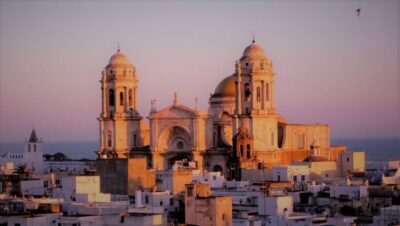
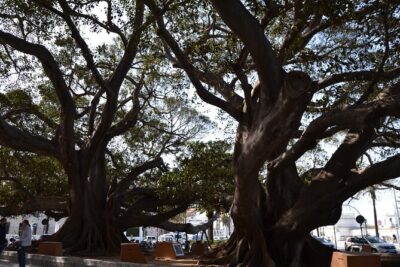
Walking Tour through Cádiz: Stories from the hand of a local guide
Read our review →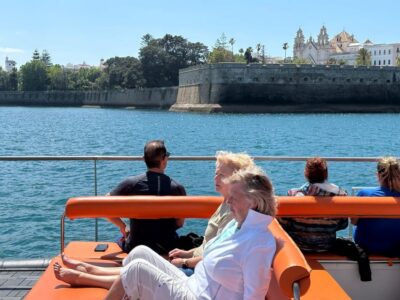
English Cádiz Tour: Walking Tour with Local Guide
Read our review →

Seville & Alcazar Skip the Line from Cadiz Port (Cruisers Only)
Read our review →
Browse the lists this tour appears in