

Reviewed · CORDOBA PATIOS TOURS
Cordoba : Patios Private Walking Tour
Córdoba’s patios are more than pretty courtyards. They are family spaces, social meeting places, and carefully tended gardens tied to one of the city’s most beloved traditions. I like that this private walk takes you through Santa Marina, San Agustín, and San Lorenzo, neighborhoods many visitors skip while hurrying toward the Mezquita.
I also like the chance to see 10 to 15 patios, including past competition winners, and to shape the walk around your interests. Guides such as Carmen and Belén add a personal touch, with useful city advice along the way. The main catch is that food and drink are not included, so budget extra if you want the planned Fino wine and tapa stop.
In This Review
- Key points about Córdoba’s patio walk
- Why Córdoba’s patios matter
- Starting at Calle Isabel Losa, 8
- Santa Marina, where the walk finds its rhythm
- San Agustín and San Lorenzo, the quieter side of Córdoba
- Patios de San Basilio and the role of comparison
- A Montilla-Moriles pause on Calle Montilla Moriles
- What the private format is worth at $82
- Guides Carmen, Belén, and the human side of the tour
- Who should book this walk?
- Practical details before you book
- Should you book the Córdoba patios tour?
- FAQ
- Where does the Córdoba patios walking tour begin?
- How long does the tour last?
- Which Córdoba neighborhoods does the tour visit?
- How many patios can I expect to see?
- Is the tour private?
- Are food and drinks included?
- What languages are available, and is the tour wheelchair accessible?
Key points about Córdoba’s patio walk
- See 10 to 15 patios in May: Spring is the best time for flowers, jasmine, geraniums, roses, and climbing plants.
- Walk beyond the central sights: Santa Marina, San Agustín, and San Lorenzo show you a quieter side of Córdoba.
- Enjoy a private guide: Your group has the guide to itself, with room to ask questions and adjust the focus.
- Look for competition-winning courtyards: Many patios on the route have earned recognition in Córdoba’s annual contest.
- Pair flowers with local wine: The walk includes a stop at a traditional tavern, though food and drink cost extra.
- Use the guide for the rest of your stay: Carmen and Belén have been praised for making the city’s stories clear and enjoyable.
Why Córdoba’s patios matter
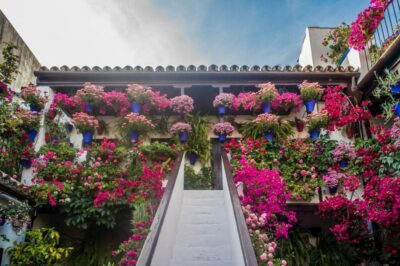
A Córdoba patio is not simply an outdoor room with a few pots. These courtyards reflect the city’s climate, architecture, and daily life. Families care for them over many years, often sharing responsibility for watering, pruning, and keeping the space ready for visitors.
The tradition also has a competitive side. Every May, Córdoba holds its famous patio competition, when owners open their courtyards and vie for recognition. The result is a citywide celebration of plants, shade, tilework, and careful design.
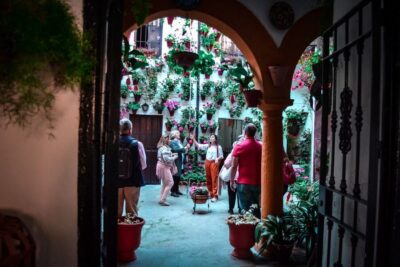
This tour gives you a way to understand that tradition at close range. Instead of seeing one famous courtyard and moving on, you visit a large selection. Some may be tiny and intimate. Others may have more elaborate planting and decoration. The appeal is in comparing them.
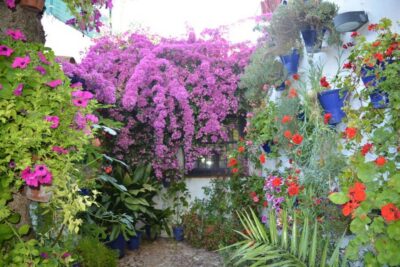
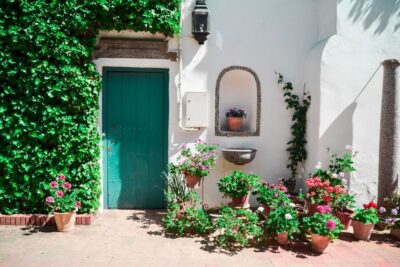
You might notice how each space uses shade differently. One patio may rely on tall plants and walls of flowers, while another may feel spare and cool, with a fountain or tiled floor doing much of the work. The guide helps connect those details to local customs and the lives of the families who maintain the courtyards.
May is the key month if flowers are your main reason for booking. The description points to jasmine, geraniums, roses, and climbing plants at their best during this period. Outside May, the patio tradition still matters, but the number of open courtyards and the strength of the display may vary.
More Walking Tours in Cordoba
- Cordoba: Monuments Walking Tour
★ 4.8 · 479 reviews - Patios of Cordoba Walking Tour
★ 4.4 · 199 reviews - Cordoba: Jewish Quarter Walking Tour
★ 3.7 · 37 reviews
Starting at Calle Isabel Losa, 8
The walk begins and ends at Calle Isabel Losa, 8, giving the experience a simple out-and-back shape. You do not need to arrange a separate return transfer, and the activity is built around walking with public transport available when needed, except for options that specify otherwise.
A private start point is useful in Córdoba because the old neighborhoods can feel confusing on a first visit. Your guide can get you oriented and explain how the route fits into the wider city. You can also use the opening minutes to say what interests you most, such as flowers, local customs, architecture, food, or city history.
The activity lasts two hours. That is long enough for a good introduction, but not enough for a slow, detailed examination of every courtyard. The pace will likely be purposeful, especially if you visit 10 to 15 patios. If you want extended time in each one, ask your guide at the start how many stops are realistic for your preferred pace.
The tour is private and exclusive. No one else is added to your group, which matters more here than it might on a standard city walk. Courtyards can be small, and a private group gives you space to pause, ask questions, or move along when a particular patio does not hold your interest.
Santa Marina, where the walk finds its rhythm

The first main area is Santa Marina, one of the historic neighborhoods included in the route. This is a good place to begin because the tour can move quickly from ordinary streets into the intimate world of Córdoba’s courtyards.
The value of Santa Marina is not only the individual patios. It is the contrast between the quiet residential setting and the careful floral displays behind the doors. You begin to see how Córdoba’s patio culture belongs to working neighborhoods, not just to attractions arranged for sightseeing.
Your guide can explain how the courtyards are classified by their use and history. That context helps you look beyond color. You start asking who uses the space, how it is maintained, and how its design suits the hot Andalusian climate.
Several patios may be past winners of the annual competition. That does not mean every courtyard looks formal or grand. Competition winners can be impressive because of the total effect: plants, proportions, tile, shade, and upkeep working together.
The drawback is that access can vary. Some patios may require a separate entrance payment, and the price of this tour does not cover food or drink. One visitor arrived unprepared for paid entrances and could not enter some patios. Ask your guide which courtyards require payment before you commit to the route, and carry a little extra money if you want the best chance of seeing the full selection.
San Agustín and San Lorenzo, the quieter side of Córdoba
The route continues through San Agustín and San Lorenzo, two areas that receive less attention than Córdoba’s major monuments. This is one of the tour’s strongest features. You are not spending the entire two hours around the city’s most photographed buildings.
Calle San Agustín forms one of the named stops. Here, the tour continues its focus on courtyards and the people who care for them. The guide’s role becomes especially useful as you move between patios. Without explanation, you might see a series of attractive gardens. With local context, the walk becomes a lesson in neighborhood life and a long-running civic tradition.
San Lorenzo brings another chance to see how patio design changes from one home to the next. The courtyards are not presented as identical examples. Their differences are part of the experience. Look for the way plants climb walls, how pots are arranged, and how each space creates shade and air movement.
This section should suit you if you prefer local streets to a tightly packed sightseeing circuit. It also works well for repeat visitors who have already seen the Mezquita, Roman Bridge, and central lanes. The tour does not replace Córdoba’s major monuments, but it adds a human scale that those grand sights cannot provide.
The route may not suit you if you want a museum-style presentation or a long sit-down visit. You spend the time walking, entering courtyards, listening, and moving on. The attraction is the variety and the access to residential areas, not a single monumental stop.
More Cordoba patio tours:
- Cordoba & Carmona with Mezquita, Synagoge & Patios from Seville
★ 4.5 · 1,126 reviews - Cordoba’s Authentic Patios: 2-Hour Tour with Tickets
★ 4.4 · 896 reviews - Córdoba: Viana Palace Gardens and Patios Entry Ticket
★ 4.5 · 880 reviews - Córdoba: Guided Tour of the Patios
★ 4.4 · 833 reviews
Patios de San Basilio and the role of comparison
Patios de San Basilio appears on the itinerary as another guided stop. San Basilio is closely linked with Córdoba’s patio tradition, so this part gives you a useful point of comparison with Santa Marina, San Agustín, and San Lorenzo.
By this stage, you can judge the patios with a more practiced eye. Instead of simply noticing flowers, you can compare the planting schemes, layout, decoration, and atmosphere. The guide can help you understand why one courtyard may have won a competition while another is valued for its age, family connection, or daily use.
The tour’s ability to visit 10 to 15 patios is important here. One courtyard can be lovely, but a larger group of examples tells you more about the tradition. You get a sense of the range, from spaces with generous planting to smaller courtyards where every pot has a job.
Keep your expectations practical. The exact number of patios may depend on opening arrangements, entrance rules, timing, and your pace. The supplied information promises a range rather than a fixed list, so ask at the beginning which courtyards are available that day.
A Montilla-Moriles pause on Calle Montilla Moriles
The route includes Calle Montilla Moriles and a planned stop at a traditional tavern. The idea is to pair the floral side of Córdoba with a taste of Andalusian food and drink.
The drink mentioned is Fino wine from the Montilla-Moriles designation, served with a savory tapa. This is a useful local touch because the wine belongs to the wider Córdoba area rather than being a generic refreshment added to a walking tour.
There is an important price detail here. Food and drink are listed as not included. Treat the tavern stop as an opportunity to purchase the wine and tapa, not as part of the $82 package. If you do not want the extra expense, confirm with your guide whether you can simply pause at the tavern or continue the walk.
This stop also gives the tour a natural break. Two hours of walking through compact courtyards can feel full, especially in warm weather. A drink and small plate can make the experience more relaxed, but you should decide how much time you want to spend there so the patio visits do not get shortened.
What the private format is worth at $82

At $82 per person, this is not the cheapest way to stroll through Córdoba. Its value depends heavily on group size. For one person or a couple, you are paying a premium for personal attention. For a family or small group, the private format can make more financial sense because the experience is shared without strangers joining you.
The strongest part of the price is the guide’s time. You can ask about other parts of Córdoba, request advice for meals or sightseeing, and adjust the balance between plants, local customs, and city history. The tour also includes help booking tickets for desired visits, which may be useful if you want to connect the patio walk with other paid attractions.
The price does not include food or drink, and some patios may charge their own admission. Factor those costs into your budget. You should also confirm exactly which visits are planned and which require an additional ticket.
I would see the tour as a good-value introduction if you have limited time in Córdoba and want more than the standard monument circuit. It is less compelling if you are already comfortable finding patios alone, speak with local residents regularly, or plan to spend a full day visiting courtyards at your own pace.
Guides Carmen, Belén, and the human side of the tour
The guide can make or break a short private walk. Two guides associated with this experience, Carmen and Belén, have received especially warm praise for their approach.
Carmen has been described as a pleasant guide who fills the walk with interesting information. Belén is noted for her strong grasp of Córdoba and its history, with a style that makes two hours pass quickly. Those comments point to the qualities that matter here: clear stories, a friendly manner, and enough local knowledge to answer questions beyond the patios themselves.
The activity is offered in English or Spanish. You should select the language that lets you ask follow-up questions comfortably. Since the tour is private, tell the guide early if you want practical advice for the rest of your visit, rather than only a presentation about the courtyards.
A private guide can also help when plans change. If a patio is closed, requires payment, or does not suit your group, customization gives you more flexibility than a fixed group tour. Still, customization does not guarantee access to every courtyard. Opening rules and entrance costs remain practical limits.
Who should book this walk?
I would recommend this experience to you if you like residential neighborhoods, local traditions, flowers, and short walking tours with room for conversation. It is particularly appealing in May, when the plants are at their best and the annual competition gives the patios extra energy.
It also suits first-time visitors who want help getting oriented. The guide can point out other things to do in Córdoba, and the route introduces neighborhoods that may not appear on a rushed first-day plan.
Families and small groups may appreciate the private setup. You can ask for a gentler pace or focus on details that interest everyone. The activity is wheelchair accessible, which makes it a practical option for many visitors, though you should still discuss the exact route and individual courtyard access with the provider.
You may want a different activity if your main goal is Córdoba’s major monuments. The patios are the focus here, and the tour does not promise entry to the Mezquita or other headline sights. You may also prefer an independent visit if you do not want to pay for a guide or additional patio entrances.
Practical details before you book
The walk lasts two hours and begins and ends at Calle Isabel Losa, 8. English and Spanish are available, and public transport is part of the general arrangement unless you select an option that says otherwise.
You can cancel up to 24 hours before the activity for a full refund, and you can reserve now while paying later. Those terms are useful if your Córdoba schedule is still shifting.
Before setting out, ask three direct questions:
- Which patios are open on the day of my visit?
- Which ones require an entrance fee?
- Is the tavern tasting included, or should I pay separately?
The third answer should be clear from the price terms: food and drink are not included. Asking anyway helps avoid confusion at the stop.
Should you book the Córdoba patios tour?
Book it if you want a private, flower-focused look at Córdoba and prefer local streets to another standard monument walk. The combination of 10 to 15 courtyards, three historic neighborhoods, a possible Montilla-Moriles tasting, and personal city advice gives the two hours a clear purpose.
I would book in May if your schedule allows. That is when the patios should offer their fullest displays. Bring extra money for paid entrances and the tavern, and ask about access before the walk begins.
Skip it if you need an all-inclusive price, dislike walking, or want a tour centered on Córdoba’s major monuments. At $82 per person, the best value comes from using the private guide well: ask questions, request neighborhood advice, and shape the visit around the parts of patio life you find most interesting.
FAQ
Where does the Córdoba patios walking tour begin?
The tour begins at C. Isabel Losa, 8, and returns to the same location.
How long does the tour last?
The walking tour lasts two hours.
Which Córdoba neighborhoods does the tour visit?
The route includes Santa Marina, San Agustín, and San Lorenzo. It also includes Patios de San Basilio and Calle Montilla Moriles.
How many patios can I expect to see?
The experience is planned to visit about 10 to 15 patios, especially during May when they are at their best.
Is the tour private?
Yes. The tour is private and exclusive, so no one else is added to your group.
Are food and drinks included?
No. Food and drinks are not included. The route includes a stop at a traditional tavern where you can purchase Fino wine from Montilla-Moriles and a tapa.
What languages are available, and is the tour wheelchair accessible?
The live guide is available in English or Spanish, and the activity is listed as wheelchair accessible.
Just added around Cordoba
- Tapas Tour Cordoba & Wine Experience with chef and sommelier★ 4.8 · 3 reviews
- O75 . The Oliva experience that you deserve★ 5.0 · 3 reviews
- Private Tour of Cordoba Week Days 2 Hours Tickets included★ 5.0 · 3 reviews
- Private Tour: Mezquita-Catedral from Cordoba★ 5.0 · 3 reviews
- Córdoba: Private Mosque-Cathedral and City Tour★ 5.0 · 3 reviews
- Cordoba: Jewish History Private Tour★ 4.0 · 3 reviews
- Cordoba private tour from Seville including the great Mosque for up to 8 persons★ 4.0 · 3 reviews
- Cordoba Highlights: Guided Day Tour from Seville★ 4.5 · 3 reviews
Cordoba Patios Tours, compared.

Cordoba & Carmona with Mezquita, Synagoge & Patios from Seville
Read our review →
Cordoba’s Authentic Patios: 2-Hour Tour with Tickets
Read our review →
Browse the lists this tour appears in