
Reviewed · CYCLING TOURS
Electric Bike Tour in Seville
Seville reveals itself beautifully from a bicycle seat. This private electric bike tour links María Luisa Park, the river, Triana, and the old center in one efficient ride, giving you a useful first look at a city that can feel spread out on foot. The motor helps when you want it, though Seville is mostly flat and several riders found the boost unnecessary.
I especially like two things here. First, you cover far more ground than on a walking tour, from tiled pavilions to the Torre del Oro and the cathedral quarter. Second, the guide can turn a quick sightseeing ride into a compact history lesson. Guides including Daniel, Elena, Juan, Veronica, and Alejandro have been singled out for clear explanations, safety help, and friendly service.
The main caution is bike fit. The e-bikes are fairly large, and one 10-year-old, about 58 inches tall, was too small for the electric model and received a standard bicycle instead. Ask about height and bike availability before you arrive, and expect the tour to operate in rain or shine.
In This Review
- Key points to know before booking
- Why a bicycle works so well in Seville
- María Luisa Park: the ride’s most pleasant stretch
- Plaza de España: grand architecture in a short stop
- Along the river to the Torre del Oro
- Crossing to Triana on Isabel II Bridge
- The Giralda, cathedral, and Alcázar from the outside
- What the guides add to the ride
- Electric power, bike size, and riding comfort
- Price, private format, and practical value
- Who should book this Seville ride?
- Should you book the Electric Bike Tour in Seville?
- FAQ
- How long does the Electric Bike Tour in Seville last?
- Where does the tour start and finish?
- Is the tour private?
- What is included in the price?
- Is the electric bike suitable for children?
- Can I cancel for a full refund?
Key points to know before booking
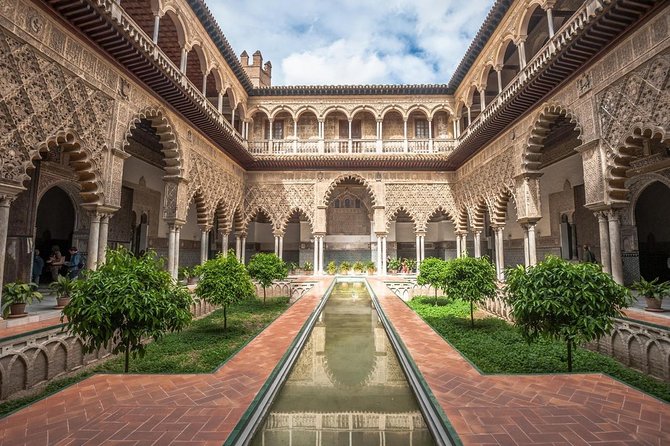
- A private route through Seville’s biggest sights: Only your group participates, so the pace can be more personal than a large city tour.
- María Luisa Park is the scenic centerpiece: Shady avenues, fountains, ponds, palms, orange trees, and 1929 exposition buildings give the ride variety.
- The electric motor is helpful but not essential: Seville is flat, and some riders preferred the feel of a regular bicycle.
- Guides add real value: Daniel, Elena, Juan, Veronica, and Alejandro are among the guides praised for history, directions, and flexible stops.
- Check bicycle size for children and shorter adults: The bikes may feel large at first, and a standard bike may be substituted.
- The price includes the practical basics: At $48.06 per person, you get the bicycle, helmet, bottled water, and a local guide, but not food or hotel transfers.
Why a bicycle works so well in Seville
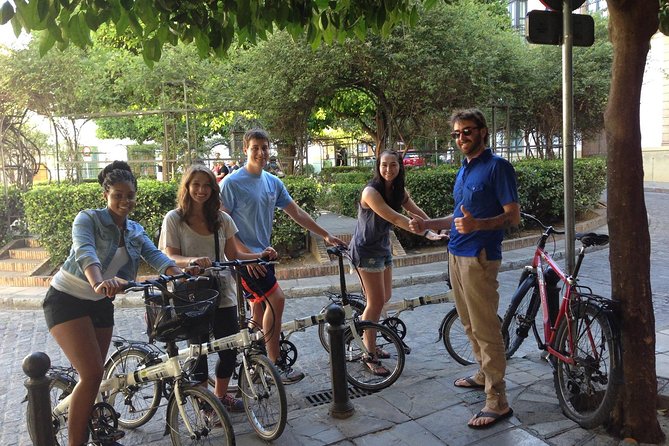
Seville’s main sights are close enough to connect, yet far enough apart to make a walking day tiring. María Luisa Park sits south of the old center, the Torre del Oro watches the Guadalquivir, Triana lies across the water, and the Giralda, cathedral, and Alcázar fill the historic core.
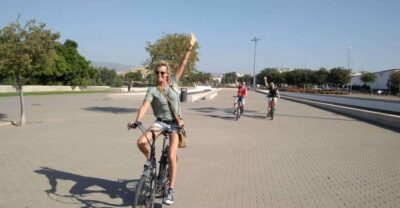
A bicycle gives you a changing view between those landmarks. You are not simply moving from one monument entrance to another. You pass through parks, open spaces, historic streets, and riverfront areas, with time to stop for explanations and photographs.
This is also a good orientation tour. I would consider taking it early in a Seville stay, since the route introduces several areas you may want to revisit later. The private format helps here. Your group can ask questions and, depending on the guide and timing, make small choices about where to spend more time.
The tour lasts about two and a half to three hours. That is long enough for a broad overview, but not long enough for full interior visits to the cathedral, Alcázar, or Torre del Oro. Think of this as a city introduction from outside, not a substitute for timed admission tickets.
More bike days around Seville:
- Seville Highlights Bike Tour (English)
★ 5.0 · 2,225 reviews - Seville: Highlights City Bike Tour
★ 4.8 · 2,168 reviews - Seville: Relaxing City Bike Tour with a Tour Guide
★ 4.8 · 1,588 reviews
María Luisa Park: the ride’s most pleasant stretch
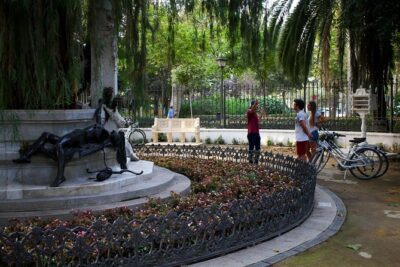
The tour begins at Plaza de Santa Cruz, then heads toward Parque de María Luisa. The park was formed from the former gardens of the Palace of San Telmo, donated to Seville in 1893 by Infanta Luisa Fernanda, Duchess of Montpensier.
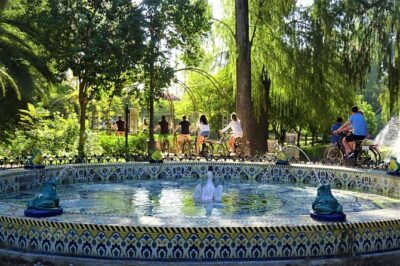
Much of the park’s present character comes from preparations for the 1929 Ibero-American Exposition. Architect Aníbal González began work in 1914, and the park became a grand public setting filled with pavilions, tiled fountains, walls, ponds, benches, and planted walkways.
This is where the electric bicycle makes the most sense as a relaxed transport tool. You can cover the park without treating the ride like exercise, and the broad setting offers a calmer contrast to the city streets. The park also functions as a botanical garden, with native and imported plant species identified on educational panels.
Look for palms, orange trees, Mediterranean pines, climbing vines, and formal flower beds. Birds, especially the park’s large dove population, add to the easygoing feel. If you are visiting in warm weather, this section may be the most comfortable part of the outing because of the shade and greenery.
The guide’s commentary matters here. Without context, you might see a pretty park and move on. With a good explanation, you understand why the park looks different from an ordinary city garden and how the 1929 exposition shaped Seville’s public spaces.
Plaza de España: grand architecture in a short stop
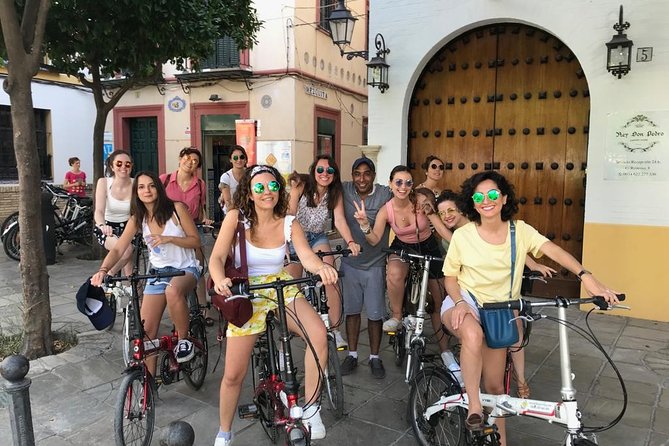
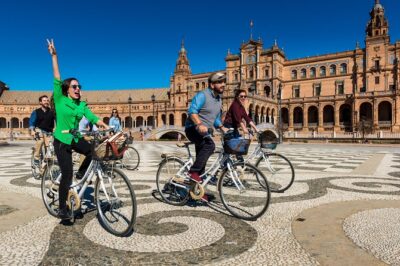
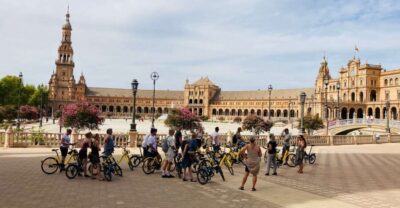
Inside María Luisa Park, you reach Plaza de España, built in 1928 for the Ibero-American Exposition. Its design mixes Baroque Revival, Renaissance Revival, and Neo-Mudéjar elements, creating one of Seville’s most recognizable public spaces.
The scheduled stop is about 10 minutes. That is enough for an introduction, photographs, and a quick look at the tiled details, but it is not a leisurely architectural visit. If this plaza is a priority for you, return later on foot and give it more time.
The short stop is understandable. A bicycle tour has several major areas to cover, and lingering too long at one monument would reduce the rest of the route. Still, this is one place where you may wish the schedule allowed extra minutes, especially if you enjoy design and photography.
Along the river to the Torre del Oro
The route continues toward the Guadalquivir and the Torre del Oro. This dodecagonal watchtower was built by the Almohad Caliphate in the first part of the 13th century to control access to Seville by river.
Its name refers to the golden reflection it cast on the water, produced by its building materials, a mixture that included mortar, lime, and pressed hay. The tower later served as a prison, and its upper sections changed over time. The second level was built in the 14th century under Peter of Castile, while the circular top was rebuilt after damage from the 1755 Lisbon earthquake.
From a bicycle, the tower works well as a riverfront landmark. You get the city’s medieval defenses and its relationship with the Guadalquivir in one stop. The guide can explain why this was not just a decorative tower, but part of Seville’s control of river traffic.
Do not expect a full museum visit as part of the tour. The stop is about seeing the tower in its setting and hearing its story. If you want to go inside, plan a separate visit.
A few more Seville tours worth comparing
- Seville Electric Bike Tour – Small Group
★ 5.0 · 841 reviews - Seville: Guided Tour by Electric Bike
★ 4.8 · 712 reviews - Seville: Electric Bike Tour in Small Group
★ 4.9 · 185 reviews - Seville: Electric Bike City Tour
★ 4.8 · 158 reviews
Crossing to Triana on Isabel II Bridge
Puente de Isabel II, better known as Triana Bridge, connects the Triana neighborhood with central Seville. The metal arch bridge was completed in 1852 during the reign of Isabella II, replacing the old pontoon bridge made from boats.
That earlier floating crossing had endured for centuries after being built by the Moors in the 12th century. The bridge you see today is a reminder that Seville has long depended on the river while also being divided by it.
This section gives the tour a different rhythm. You leave the formal gardens and monumental center for a crossing that connects Seville’s historic districts. The bridge itself is a practical piece of city infrastructure, but it also offers a useful view of how the river shapes the city.
The route crosses the Canal de Alfonso XIII, one of the arms of the Guadalquivir that makes Triana almost an island. Your guide may provide more detail about the neighborhood, but the supplied route information does not promise a long stop in Triana. Treat the bridge as a scenic link rather than a dedicated neighborhood tour.
The Giralda, cathedral, and Alcázar from the outside
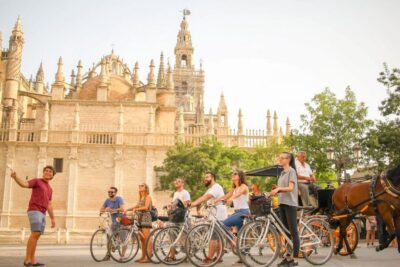
Back in the old center, the route brings you near Seville’s three great landmarks: the Giralda, Seville Cathedral, and the Royal Alcázar. This cluster is one reason the bicycle is useful. You can see the exteriors and their shared history without spending the entire day walking between them.
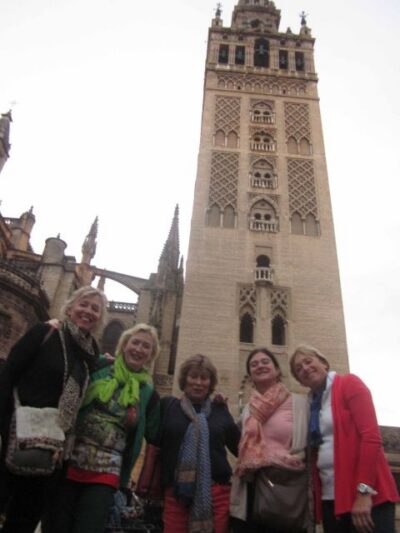
The Giralda began as the minaret of Seville’s Great Mosque under the Almohad dynasty. After the Christian reconquest, a Renaissance-style top was added. At 104.1 meters, it remains one of the city’s defining symbols and forms part of the UNESCO World Heritage listing that also includes the cathedral, Alcázar, and General Archive of the Indies.
Seville Cathedral is the fourth-largest church in the world and the largest Gothic church. Its 11,520-square-meter footprint is hard to grasp from a guidebook, but the scale becomes clear when you view the building from the surrounding streets.
The cathedral’s chapels and royal chapel hold important royal remains, including Ferdinand III of Castile, Alfonso the Wise, and Peter the Just. Christopher Columbus and his son Diego are also buried there. The building was also the site of the baptism of Juan of Aragon, the only son of Ferdinand II of Aragon and Isabella I of Castile.
The Royal Alcázar adds another layer. Built for the Christian king Peter of Castile on the site of an earlier Muslim fortress palace, it combines Mudéjar, Gothic, Renaissance, and Romanesque elements. The upper floors remain available to Spain’s royal family when they stay in Seville.
A bicycle tour cannot do justice to the interiors of these monuments in a few minutes. That is not a flaw, as long as you understand the purpose of the ride. I would use this tour to learn the layout and decide which sites deserve a separate ticket and several hours.
What the guides add to the ride
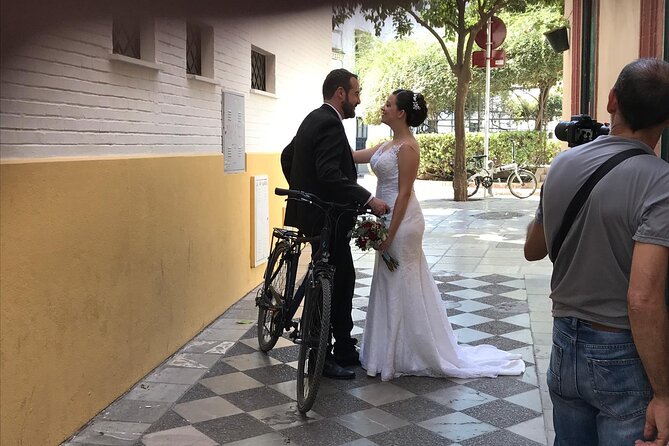
The strongest part of this experience is likely to be the guide. Daniel has been praised for safety, directions, and explanations about Seville. Elena has been described as accommodating when the group needed a break and open to choosing different places to ride.
Juan is noted for combining a broad route with detailed local explanations. Veronica was remembered for turning the ride into a compact history lesson, while Alejandro explained each stop in detail. Other guides, including Ben, Danny, Matis, Tristan, and Medhi, have also led tours in English or other languages.
The provider can use a multilingual guide, and English is offered. If you need the tour in English, confirm that preference when booking, particularly because the guide team may serve several language groups.
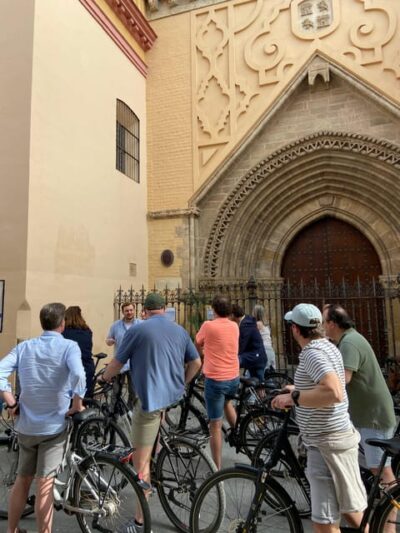
A good guide also makes the private format more useful. You can ask about a monument you pass, request a short pause, or tell the guide if you already know one part of Seville and would rather give another area more attention. One useful suggestion from the feedback is to discuss your priorities at the start instead of assuming every stop will receive equal time.
Electric power, bike size, and riding comfort
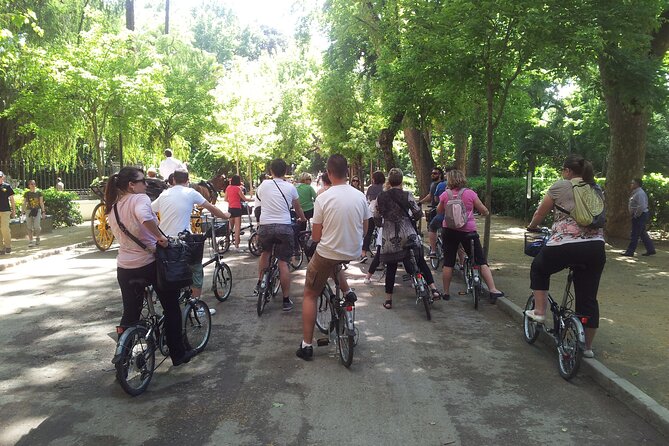
The motor provides assistance, but it is not the main reason to book this tour. Seville is relatively flat, and several riders found a regular bicycle perfectly adequate. The electric function can still be useful if you prefer a lighter effort, tire easily, or want to save energy for sightseeing afterward.
Ask the guide or shop staff to explain the controls before setting off. One rider specifically wished the workings of the electric bicycle had been demonstrated more clearly. That is a small point, but it matters if you have never used an e-bike.
Bike size deserves more attention. One family found the bicycles somewhat large, and a shorter child struggled at first. A 10-year-old measuring about 58 inches could not use the available e-bike and was given a standard bicycle instead.
If you are booking for children, include their heights in your questions before arrival. The child rate applies only when the child shares with two paying adults, and the provided information does not promise a specific e-bike size for every child.
Helmets and bicycles are included, along with bottled water. Food and other drinks are not included, so eat beforehand or plan a stop after the tour.
Price, private format, and practical value
At $48.06 per person, this is not the cheapest way to see Seville, but the value improves if you are traveling as a small group and want a private guide. You are paying for the bicycle, helmet, water, and two and a half to three hours of guided movement between several major areas.
The private setup is especially useful for families, couples, and friends who do not want to match the pace of a large group. It also allows more direct questions and possible adjustments to the route. Group discounts are available, which may make the cost more attractive for several people booking together.
You begin at Plaza de Santa Cruz in the old city and finish back at the same meeting point. The starting area is near public transportation, but hotel pickup and drop-off are not included.
The tour operates in all weather. Bring clothing suited to the forecast, and remember that rain can affect comfort even when the route itself continues. One ride took place in wet conditions and was still enjoyed, but rain makes the bike controls, streets, and camera handling less pleasant.
The activity has a 4.7 rating from 29 reviews, with 97 percent recommending it. That is a strong record, though the small number means I would still pay attention to the practical cautions about bike fit and e-bike instruction.
Who should book this Seville ride?
I would recommend it to first-time visitors who want a city overview without spending half a day on foot. It also suits families and mixed-age groups, provided you confirm bicycle sizes in advance.
You will get the most from it if you enjoy history but do not need to enter every monument immediately. The guide’s explanations provide a useful framework, then you can return to the cathedral or Alcázar with a better sense of what you are seeing.
It is less suitable if your main goal is extended time inside the Plaza de España, cathedral, or Alcázar. The tour visits those landmarks from the outside and connects them within a larger route.
The ride is also not ideal for anyone who expects a powerful cycling challenge. Seville’s mostly flat terrain means the e-bike is a comfort feature, not a necessity. If you already cycle easily, a standard bicycle may serve you just as well.
Should you book the Electric Bike Tour in Seville?
Book it if you want a private, efficient introduction to Seville and value a guide who can connect the city’s Moorish, Christian, royal, and modern stories. The route is broad, the sights are important, and the bicycle lets you see parks and riverfront areas that a tightly focused walking tour may skip.
Before paying, ask about bike size for every rider and request a short explanation of the electric controls. Tell the guide what you have already seen, and ask which stops can receive extra time.
For most visitors, this is a good first or second-day activity. It gives you the city’s shape, leaves you with a list of places to revisit, and adds the simple pleasure of moving through Seville under your own power, with a motor ready when you want it.
FAQ
How long does the Electric Bike Tour in Seville last?
The tour lasts approximately two hours and 30 minutes to three hours.
Where does the tour start and finish?
It starts at Plaza de Santa Cruz in Seville’s old city and ends back at the same meeting point.
Is the tour private?
Yes. Only your group participates in the activity.
What is included in the price?
The price includes a local guide, bicycle use, a helmet, and bottled water.
Is the electric bike suitable for children?
The child rate applies when sharing with two paying adults. Bike sizes can vary, and one 10-year-old who was about 58 inches tall was too small for the available e-bike and used a standard bicycle instead. Ask about children’s bike availability before booking.
Can I cancel for a full refund?
Yes, if you cancel at least 24 hours before the experience start time. Cancellations made less than 24 hours in advance are not refunded, and late changes are not accepted.
Just added around Seville
- Seville: Wine and Gourmet Tapas Tour★ 5.0 · 3 reviews
- Tapas Tour Cordoba & Wine Experience with chef and sommelier★ 4.8 · 3 reviews
- The most complete tour of Seville: All the highlights included★ 5.0 · 3 reviews
- Seville: Spritz Tasting Experience★ 4.8 · 3 reviews
- Ronda and White Villages Private Day Trip from Seville★ 5.0 · 3 reviews
- Jerez: Historic center of Jerez and horse show★ 5.0 · 3 reviews
- SEVILLE: REAL ALCÁZAR TOUR★ 5.0 · 3 reviews
- Royal Alcazar of Seville Guided Tour★ 5.0 · 3 reviews
Cycling Tours, compared.
Browse the lists this tour appears in