
Reviewed · JEWISH QUARTER TOURS
Private Tour Jewish Quarter, center and Plaza de España
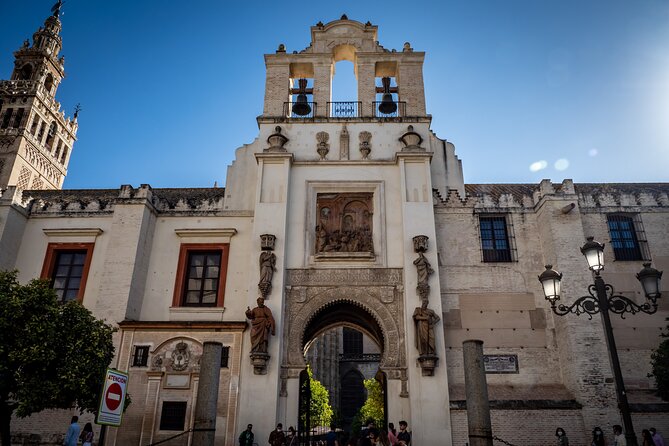
Seville’s story is not confined to one monument. It unfolds in the short walk from Santa Cruz to Plaza de España, where Jewish, Muslim, Christian, French, and Spanish influences meet in streets, churches, gardens, and grand civic buildings. This tour gives you that wider picture in about two hours, with Víctor Fernández guiding the way in English.
I like the private format, which lets your group of up to 12 set the pace, and I like the unusual blend of subjects: synagogue history, Murillo, Don Juan, Carmen, the old tobacco trade, and the Ibero-American Exhibition. The main consideration is time. Two hours is enough for an excellent introduction, but not for extended visits inside major monuments.
In This Review
- Key points to know before booking
- Starting in Santa Cruz, where three faiths shared one square
- Walls, city gates, and the world of Don Juan
- Santa Maria la Blanca and Murillo’s Seville
- Narrow lanes, courtyards, and the Barber of Seville
- Susona, the pogrom, and the painful turning point
- Seville as a city of opera and European imagination
- Views of the Cathedral, Giralda, Alcázar, and Archivo de Indias
- From the Torre del Oro to the Royal Tobacco Factory
- Maria Luisa Park and the final approach to Plaza de España
- What the $189.87 group price gets you
- Timing, meeting point, and practical details
- Who will get the most from this walk
- Should you book the Jewish Quarter to Plaza de España tour?
- FAQ
- Where does the tour begin?
- Where does the tour end?
- How long does the experience last?
- Is the tour private?
- What language is offered?
- Is admission included at the listed stops?
- What is the cancellation policy?
Key points to know before booking
- Santa Cruz is the historical starting point: Begin where a mosque, synagogue, and church once stood in the same square.
- The tour connects Jewish history with living Seville: Hear about the Sephardic quarter, the 14th and 15th centuries, the pogrom, expulsion, and the legend of Susona.
- Santa Maria la Blanca adds art to the story: Enter this former synagogue, now a church, and see works associated with Murillo.
- The route ends at Plaza de España: Walk through Maria Luisa Park and finish beside one of Seville’s most recognizable monuments.
- Víctor Fernández brings a literary angle: Expect stories linked to Don Juan, Carmen, Rosina, Figaro, and the city’s reputation as an opera setting.
- Private groups get a more personal walk: The price is $189.87 for up to 12 people, not a per-person charge.
Starting in Santa Cruz, where three faiths shared one square
Meet at Plaza de Santa Cruz in Seville’s old quarter. This is a useful place to begin because the opening talk sets up the whole route rather than treating each sight as an isolated stop.
Here you learn about Jewish life in Seville and the changing relationship between the city’s religious communities. The square is presented as a compact picture of Seville’s past, with a mosque, synagogue, and church connected to the same urban setting. That approach gives you a clearer sense of how the city changed over time.
The introduction also touches on Bartolomé Esteban Murillo, one of Spain’s best-known painters. His connection to Seville appears again later, so the opening is not just background. It prepares you to notice how art, religion, and civic identity overlap in the city.
This first explanation matters because the Jewish Quarter can otherwise seem like a pretty maze of white walls and flower-filled courtyards. The guide adds the human story behind those streets. You are not simply taking photographs of attractive lanes. You are learning who lived there, how the district was organized, and what happened when political and religious power shifted.
More Jewish Quarter Tours in Seville
- Seville: Small-Group Jewish Quarter Discovery Walking Tour
★ 4.9 · 499 reviews - Seville: 1-Hour Walking Tour Barrio de Santa Cruz
★ 4.5 · 131 reviews - Seville: Small Group Jewish Quarter Tour with Tapas & Drinks
★ 5.0 · 119 reviews
Walls, city gates, and the world of Don Juan
The walk then turns toward Seville’s old walls and gates. You learn about the enclosure where the Sephardic population lived and where the Jewish cemetery, or necropolis, was located.
The subject can be difficult. The tour moves into the 14th and 15th centuries, including the persecution of Jewish people, the pogrom, and the final expulsion ordered by the Catholic Monarchs. A good guide needs to explain this plainly without reducing it to a few dates. Víctor’s style, based on his work with history-focused tours, includes storytelling and links between political events and everyday life.
The route also reaches Spain’s Golden Age through the figure of Don Juan and his statue. This is a nice change of tone after the darker account of persecution and expulsion. Don Juan is not merely a literary character here. He becomes a way to discuss how Seville was imagined in Spanish drama and later in European writing.
You should expect short stops rather than a long lecture at one location. That keeps the walk moving, but anyone wanting a full academic account of Sephardic history will need more time elsewhere.
Santa Maria la Blanca and Murillo’s Seville
The first named interior stop is Iglesia de Santa Maria la Blanca. The church occupies the site of an old synagogue, making it one of the clearest places to see how Seville’s religious buildings were transformed.
The visit includes information about the Caminos de Sefarad network, which links places associated with Jewish heritage across Spain. This gives the local story a national setting. Seville’s former Jewish Quarter was part of a much wider Sephardic world, not an isolated neighborhood.
Inside the current church, you see displayed works by Murillo. The admission listed for this stop is free. At roughly 10 minutes, the visit is brief, so think of it as a focused introduction to the building and its art rather than a full museum visit.
I especially like this pairing of architecture and painting. The site lets you consider several layers at once: synagogue, church, Jewish heritage, and the art of a major Sevillian painter. The shift from one use to another also explains why Seville can feel visually dazzling while carrying a complicated past.
Narrow lanes, courtyards, and the Barber of Seville
From Santa Maria la Blanca, the route winds through the small lanes of Santa Cruz. The guide points out the neighborhood’s courtyards and one of the city’s narrowest streets.
These details are easy to miss on your own. A map can lead you through the quarter, but it will not necessarily explain why the lanes are shaped as they are or how the courtyards fit the older style of urban life. The tour’s private format is useful here because you can pause for photographs or ask about a detail without a large group blocking the passage.
You also look toward Rosina’s balcony and hear the literary and operatic associations of Seville. Rosina and Figaro connect the neighborhood to The Barber of Seville. This is one of the tour’s more playful moments, especially if you know the opera, but it also shows how strongly Seville has been used as a setting by novelists and dramatists.
The old Seville aqueduct appears along the way. It is another reminder that the city’s story includes practical systems as well as palaces and churches. The walk works best when you enjoy this mix of small physical details and broad historical themes.
More Plaza de Espana visits:
- Seville: Professional Photoshoot at Plaza de España
★ 4.9 · 211 reviews - Make Seville unforgettable: Private Photoshoot at Plaza de España
★ 5.0 · 45 reviews - Secretos del Parque María Luisa & Plaza de España Tour en Español
★ 5.0 · 36 reviews - Secrets of Maria Luisa Park and Plaza de Espana
★ 4.5 · 9 reviews
Susona, the pogrom, and the painful turning point
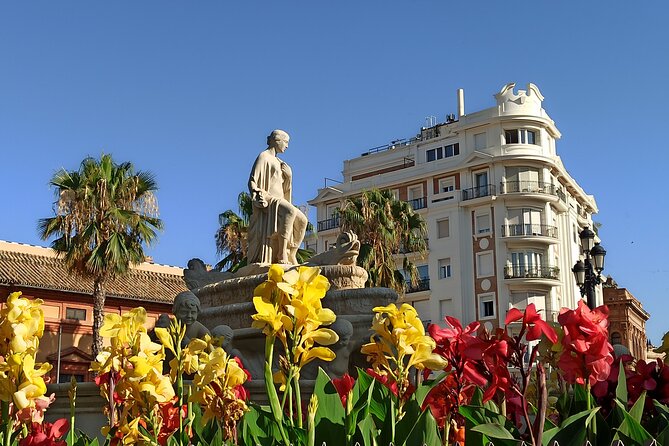
The route returns to the fate of Seville’s Jewish community. You hear more about the 14th and 15th centuries, including the pogrom and the definitive expulsion of the Jews by the Catholic Monarchs.
The story of Susona adds a personal and legendary dimension. Her tale is tied to the old Jewish Quarter and gives the guide a way to move from general history to a named figure and a memorable local story. As with many city legends, it should be understood as part of Seville’s cultural memory rather than treated as a simple historical record.
This section is valuable because it prevents the neighborhood from becoming a romantic backdrop. The lanes may look gentle and picturesque today, but the community that once lived here faced fear, violence, and forced departure. I appreciate tours that keep the beauty and the hard facts in the same frame.
If you prefer only light sightseeing, this part may feel serious. That is also its purpose. Seville’s charm is stronger when you understand the loss and conflict beneath it.
Seville as a city of opera and European imagination
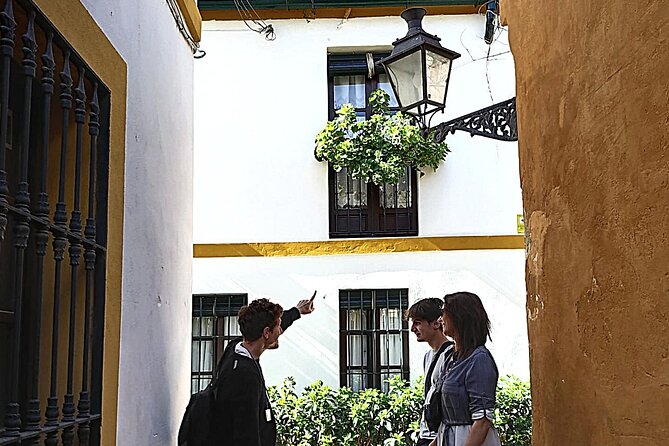
Santa Cruz later became one of the settings that attracted European artists. The walk uses the streets of the former Jewish Quarter to explain Seville’s image as the UNESCO City of Opera.
The literary links are not limited to Don Juan and The Barber of Seville. The route also prepares you for the later discussion of Carmen at the Royal Tobacco Factory. These stories help explain why Seville appears so often in novels, plays, and operas as a place of passion, danger, music, and spectacle.
This is a good choice for you if you enjoy connecting buildings with stories. It is less useful if you want a checklist of every major sight. The tour does not attempt to cover every corner of the center. Instead, it follows a clear theme from Sephardic history to the city’s artistic image.
Views of the Cathedral, Giralda, Alcázar, and Archivo de Indias
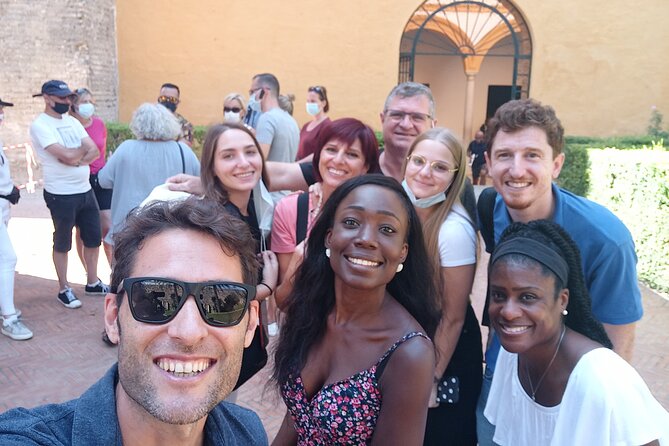
At one point, the route opens onto one of the best views in the historic center. The Cathedral, Giralda, Real Alcázar, and Archivo de Indias appear together, all part of Seville’s UNESCO World Heritage setting.
This is a strong moment for orientation. You can see the principal monuments in relation to one another rather than visiting them as separate attractions. The view also reflects the city’s layers: Islamic origins in the Giralda, Christian power in the Cathedral and Alcázar, and the global administrative role represented by the Archivo de Indias.
The tour does not list admission to these monuments as part of this experience. You see them from the route and learn how they fit the city’s story. If you plan to visit the Cathedral or Alcázar inside, schedule separate time. A two-hour walk cannot do justice to those vast sites.
From the Torre del Oro to the Royal Tobacco Factory
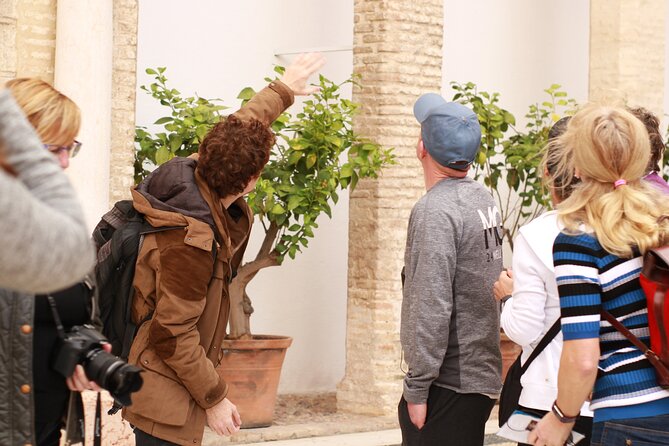
The route leaves the historic center and turns toward the Torre del Oro. The tower helps explain Seville’s position beside the river and its role in the city’s changing shape.
The walk then shifts to a later period, when Seville was being redesigned for the Ibero-American Exhibition. You hear about the Alfonso XIII hotel and important avenues such as Avenida de la Constitución. This is a useful contrast with Santa Cruz. The narrow medieval quarter gives way to a more formal, modern plan shaped by civic ambition and international display.
The next major stop is the University of Seville, housed in the former Royal Tobacco Factory. The building connects trade, industry, politics, French influence, and literature.
The factory was tied to the growth of tobacco manufacturing in Spain under the Bourbons. The tour explains how French politics and administration influenced the spread of these factories across the country. You also hear how the building inspired Prosper Mérimée’s creation of Carmen.
Allow about 15 minutes here, with free admission listed. The stop is less about exploring every room than about understanding what the factory represented. Tobacco was an important trade, and the building tells a different story from the religious sites in Santa Cruz.
The Carmen connection adds a memorable human angle. You see how a real industrial setting became the basis for one of the most famous fictional figures associated with Seville. If you like literature and opera, this may be one of the most satisfying stops.
Maria Luisa Park and the final approach to Plaza de España
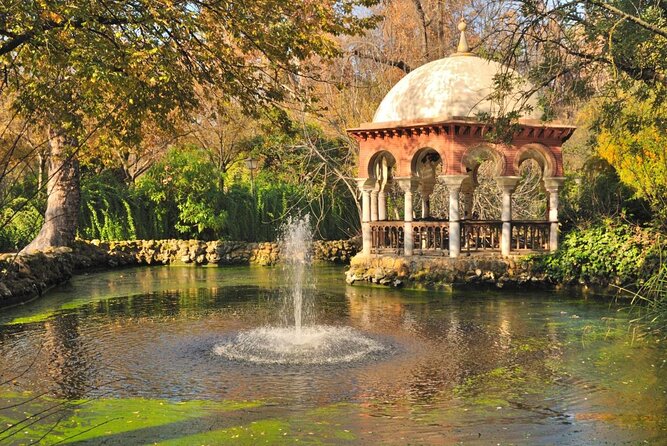
The final section enters Parque de Maria Luisa. The park’s design is linked to the French garden architect Forestier, whose work helped shape the setting you see today.
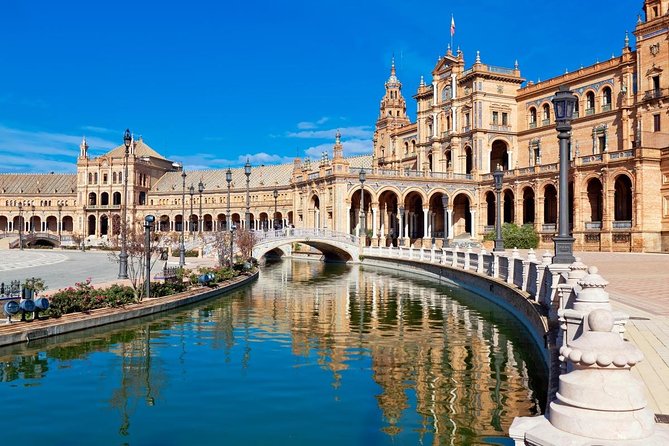
The park also became the site of the Ibero-American Exhibition. Its pavilions remain part of Seville’s identity, with the Spanish pavilion giving its name to Plaza de España. The route ends there, in the gardens of Maria Luisa.
You are given about 15 minutes at this final named stop. That is enough to take in the broad design and enjoy the setting, but you should not expect a detailed architectural tour of every tile, bridge, or alcove. The value is in reaching the plaza with the full story in mind.
Plaza de España works well as an ending because it gathers several themes from the tour: regional identity, Spanish history, architecture, gardens, and the city’s desire to present itself to the wider world. It also gives you a practical place to continue sightseeing after the walk.
What the $189.87 group price gets you
The price is $189.87 per group, for as many as 12 people. For one or two people, that is a sizable outlay. For a full group, the per-person cost becomes much more reasonable, especially when compared with booking several separate private walks.
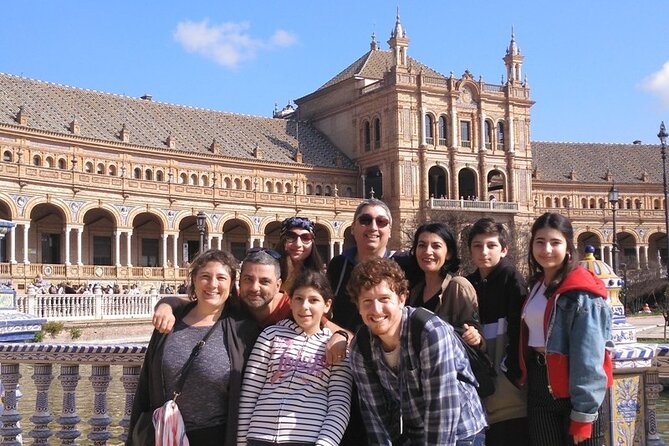
You are paying for a private English-language experience, not simply a route between attractions. Víctor Fernández’s tours are known for clear communication, an easy manner, humor, and detailed explanations of Seville’s history and culture. He also gives practical food and bar advice, which can be useful after the walk.
The value is strongest for a family or group of friends who want to ask questions and keep their own pace. A group of 10 or 12 can get especially good value. Solo visitors and couples may find a small-group tour more economical if one is available.
The experience is listed at about two hours, with most stops outside and short interior visits. If you want extensive time inside Santa Maria la Blanca or a full tour of the Cathedral, Alcázar, or Tobacco Factory, budget for separate visits.
Timing, meeting point, and practical details
The listed operating window is Monday through Sunday from 10:00 AM to 12:00 PM, for dates shown through August 12, 2026. The meeting point is Plaza de Santa Cruz, in Seville’s Casco Antiguo. The end point is Plaza de España in the gardens of Maria Luisa.
Because this is a one-way walk, you finish in a different part of the city. That is helpful if Plaza de España is already on your sightseeing plan. It also means you should not arrange a tight appointment back near Santa Cruz immediately afterward.
A mobile ticket is provided, and the tour is offered in English. It is near public transportation, service animals are allowed, and most people can take part. The activity is private, so only your group joins the guide.
Confirmation normally arrives at booking. If you book within seven days of the date, confirmation may take up to 48 hours and depends on availability. You can cancel for a full refund up to 24 hours before the start time. Changes or cancellations inside that window are not accepted for a refund.
Who will get the most from this walk
I would choose this tour if you want a clear first look at Seville and care about the connections between places. It suits history lovers, opera fans, readers interested in Spanish literature, and anyone who prefers a guide to explain the meaning behind attractive streets.
It is also a good fit for groups with mixed interests. One person can follow the Jewish history, another can enjoy Murillo and architecture, and another can focus on Carmen, Don Juan, and the opera links.
You may want a different format if you mainly want interior access to monuments. This route gives you context and exterior views, with short visits to Santa Maria la Blanca, the former tobacco factory, and Maria Luisa Park. It is an introduction, not a full monument tour.
Should you book the Jewish Quarter to Plaza de España tour?
Book it if you want Seville’s historic center explained as one connected story. The route covers Jewish heritage, religious change, painting, literature, opera, trade, gardens, and the 1929 exhibition without requiring a full day.
The best reason to choose it is the combination of private guiding and strong storytelling. Víctor Fernández brings together subjects that are often split into separate tours, and the final walk through Maria Luisa Park gives you a satisfying finish at Plaza de España.
Think twice if you have only one goal, such as spending hours inside the Alcázar or studying the Cathedral in detail. For everyone else, especially a group of several people, this is a smart way to get your bearings, understand Seville’s past, and leave with a better idea of where to explore next.
FAQ
Where does the tour begin?
It begins at Plaza de Santa Cruz in Seville’s historic Casco Antiguo.
Where does the tour end?
It ends at Plaza de España, in the gardens of Maria Luisa.
How long does the experience last?
The tour lasts approximately two hours.
Is the tour private?
Yes. Only your group participates, with a maximum group size of 12 people.
What language is offered?
The tour is offered in English.
Is admission included at the listed stops?
Admission is listed as free for Iglesia de Santa Maria la Blanca, Universidad de Sevilla, and Parque de Maria Luisa.
What is the cancellation policy?
You can cancel up to 24 hours before the start time for a full refund. Cancellations or changes made less than 24 hours before the start time are not accepted for a refund.
More Jewish Quarter Walks
- Córdoba: Jewish Quarter, Mosque, and Alcázar Tour
★ 4.7 · 4,279 reviews - Cordoba Mosque & Jewish Quarter Tour with Tickets
★ 4.6 · 1,996 reviews - Córdoba: Mosque-Cathedral, Jewish Quarter and Alcázar Tour
★ 4.7 · 1,426 reviews - Cordoba: Jewish Quarter and Mosque-Cathedral Guided Tour
★ 4.6 · 996 reviews
Just added around Seville
- Seville: Wine and Gourmet Tapas Tour★ 5.0 · 3 reviews
- Tapas Tour Cordoba & Wine Experience with chef and sommelier★ 4.8 · 3 reviews
- The most complete tour of Seville: All the highlights included★ 5.0 · 3 reviews
- Seville: Spritz Tasting Experience★ 4.8 · 3 reviews
- Ronda and White Villages Private Day Trip from Seville★ 5.0 · 3 reviews
- Jerez: Historic center of Jerez and horse show★ 5.0 · 3 reviews
- SEVILLE: REAL ALCÁZAR TOUR★ 5.0 · 3 reviews
- Royal Alcazar of Seville Guided Tour★ 5.0 · 3 reviews
Jewish Quarter Tours, compared.
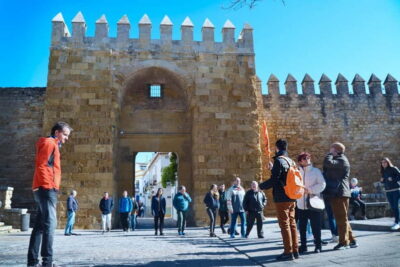
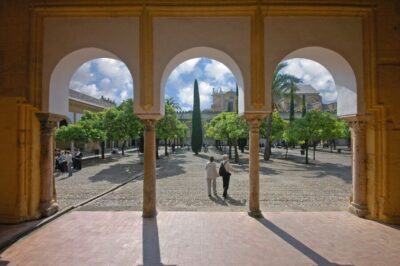
Cordoba Mosque & Jewish Quarter Tour with Tickets
Read our review →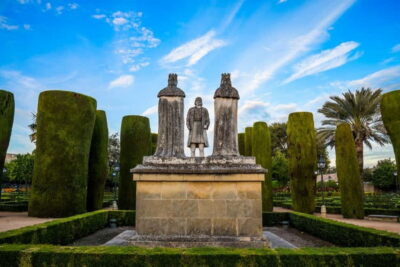
Mosque-Cathedral, Jewish Quarter and Alcázar Tour
Read our review →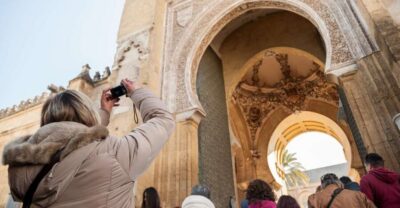
Jewish Quarter and Mosque-Cathedral Guided Tour
Read our review →
Mosque-Cathedral, Alcazar & Jewish Quarter with Tickets
Read our review →
Mosque-Cathedral of Cordoba and Jewish Quarter Tour
Read our review →
Small-Group Jewish Quarter Discovery Walking Tour
Read our review →Browse the lists this tour appears in