
Reviewed · PLAZA DE ESPANA TOURS
Secrets of Maria Luisa Park and Plaza de Espana
The most interesting part of this walk is that Plaza de España becomes part of a much larger story. Instead of treating Seville’s famous tiled square as a quick photo stop, you follow the park’s paths, monuments, fountains, and garden spaces to see how Forestier and Aníbal González shaped the setting for the 1929 Ibero-American Exposition. I like the focus on small details, and I like the chance to visit Plaza de América as well as the better-known square.
The main point to consider is the pace. The park includes many stops, and one recent outing lasted about two and a half hours, with only around five minutes at Plaza de España. If the great square is your priority, make sure you understand how the time is divided. The tour is in Spanish, and strong guides such as Julián, MariPaz, and Grecia have made the walk especially enjoyable.
In This Review
- Key points to know before walking
- Why Maria Luisa Park deserves more than a quick stroll
- Starting near La Raza or the San Diego fountain
- The first monuments: Bécquer and Infanta Maria Luisa
- Water, gardens, and the Estanque de los Lotos
- Glorieta de Juanita Reina and Monte Gurugú
- Plaza de América and the 1929 exhibition
- The Machado and Álvarez Quintero glorietas
- Arriving at Plaza de España
- What the guides add to the experience
- Is $14 good value for two hours?
- Who will enjoy this park walk most?
- Practical tips for getting the most from the walk
- Should you book Secrets of Maria Luisa Park and Plaza de España?
- FAQ
- Where does the tour start?
- Where does the tour finish?
- How long does the tour last?
- What language is the tour in?
- Is the tour wheelchair accessible?
- Can I book a private group?
- What sights are included?
- Is food or drink included?
- Can I cancel for a full refund?
Key points to know before walking
- The park comes first: You explore Maria Luisa Park through monuments, ponds, paths, and garden spaces before reaching Plaza de España.
- Plaza de América gets real attention: The tour gives this graceful 1929 exhibition space about 20 minutes, not just a passing glance.
- Aníbal González is central to the story: You learn how his architecture helped define Seville’s presentation during the Ibero-American Exposition.
- Small details are the main reward: Fountains, statues, symbols, and lesser-known corners receive more attention than they usually get from a casual walk.
- Spanish is the tour language: The official guide leads the experience in Spanish, with private-group availability.
- The price is modest: At $14 per person, the tour offers useful context at a low cost, though the value depends on how much time you want at Plaza de España itself.
Why Maria Luisa Park deserves more than a quick stroll
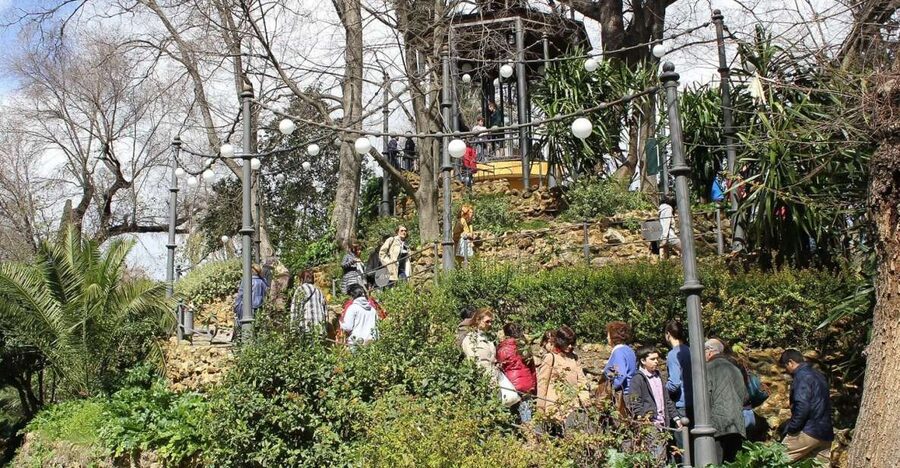
Maria Luisa Park was Seville’s first urban park. Before becoming a public green space, it formed part of the private gardens of Infanta Maria Luisa Fernanda, who donated the park to Seville in 1914. That change gave the city a broad public garden where architecture, water, shaded paths, monuments, and planted areas could work together.
I like this setting for a guided walk because the park can be easy to admire without really understanding. You see fountains and tiled benches, but it is not always clear why they are there, who they honor, or how they relate to Seville’s place in 20th-century history. A guide gives those features a purpose.
The walk also connects the park with the Ibero-American Exposition of 1929. That event shaped much of what you see here, especially Plaza de España and Plaza de América. The result is not a museum tour with walls and labels. You learn outdoors, while moving through the spaces that were designed to make an impression.
Bring comfortable shoes. The activity is a walking tour through a historic park, and the route includes several stops spread between two possible starting points and two possible finishing points. In spring and summer, sunglasses, a hat, sunscreen, and light, comfortable clothing are sensible choices.
More Plaza de Espana visits:
- Seville: Professional Photoshoot at Plaza de España
★ 4.9 · 211 reviews - Private Tour Jewish Quarter, center and Plaza de España
★ 5.0 · 127 reviews - Make Seville unforgettable: Private Photoshoot at Plaza de España
★ 5.0 · 45 reviews
Starting near La Raza or the San Diego fountain
You may begin at Avenida María Luisa, near La Raza, or at the fountain by the Glorieta de San Diego. The exact meeting point depends on the option you book, so check that detail before setting out.
Both starting areas place you inside the park zone rather than at a distant transport hub. That matters because the tour is built around a gradual walk from one feature to the next. You are not simply being taken to Plaza de España and returned.
The walk finishes at either the Fuente de la Glorieta de San Diego or Avenida María Luisa near La Raza. This makes the experience easier to fit into a day of sightseeing, especially if you plan another visit nearby. Still, the tour does not include food or drinks, so carry water if you need it.
The first monuments: Bécquer and Infanta Maria Luisa
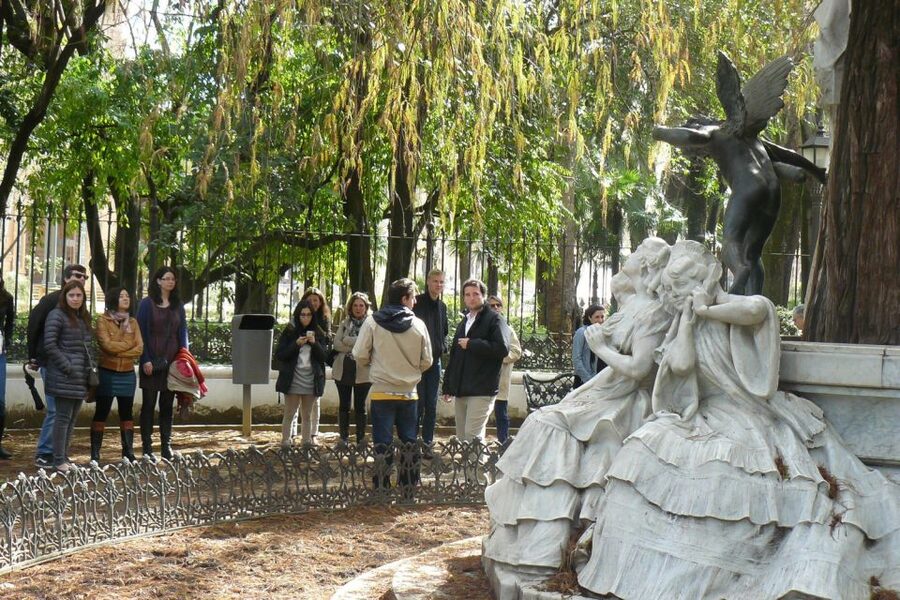
The Gustavo Adolfo Bécquer Monument is scheduled for about 15 minutes. You have time for a photo, a short visit, and an explanation from the guide. This is one of the more personal stops because it brings the story of an admired Sevillian literary figure into the park itself.
The next stop is the Monument to Infanta Maria Luisa, with about 10 minutes set aside. Her connection to the park is especially important: she donated the former private gardens to Seville in 1914. That act helps explain why the park is not just an ornamental setting but a public part of the city’s identity.
These early stops help establish the human side of the park. You hear about people connected with Seville, rather than only dates and building styles. The guides also point out details that can go unnoticed when you are walking on your own.
Water, gardens, and the Estanque de los Lotos
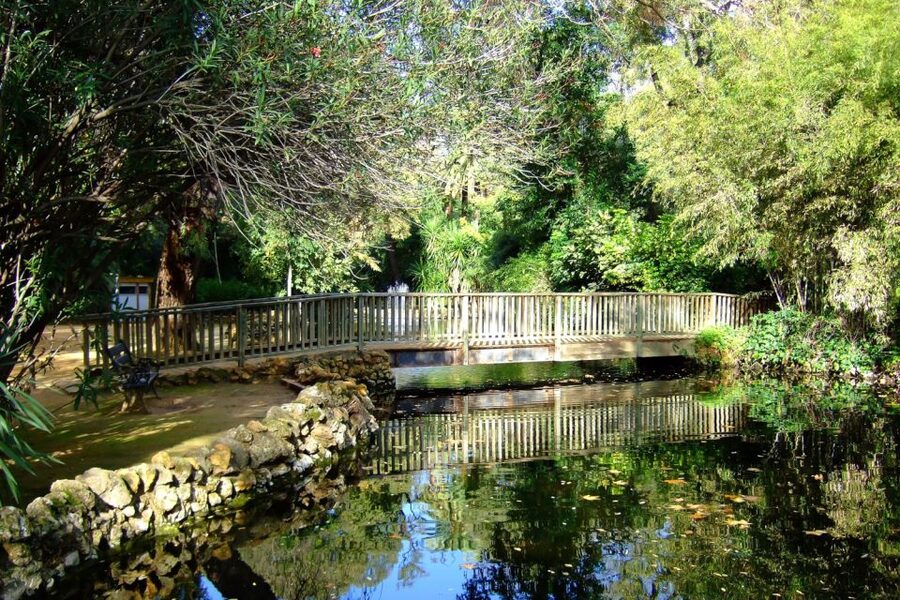
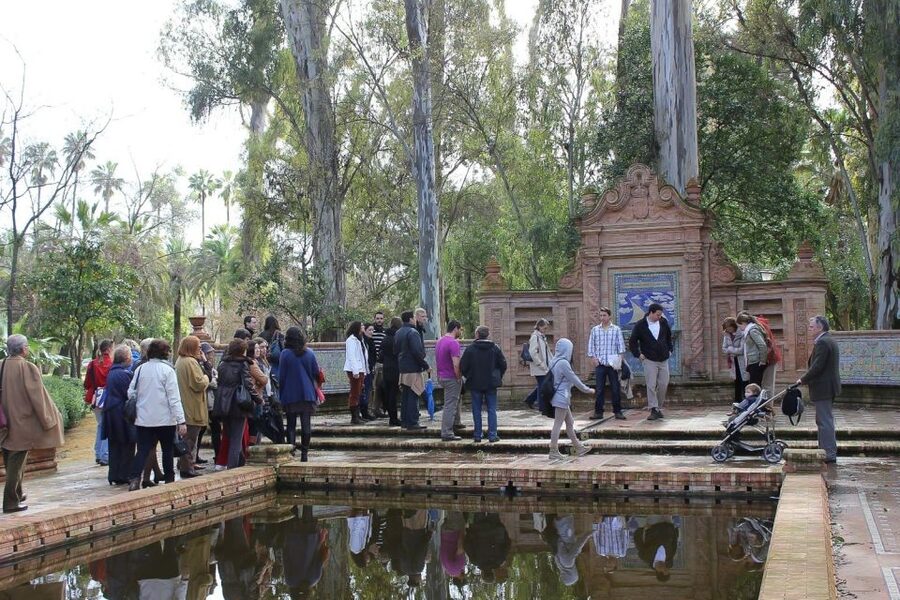
The Estanque de los Lotos, or Lotos Pond, receives a shorter five-minute stop. It is a small part of the overall route, but it helps you notice how water shapes the park’s design.
The tour uses ponds and fountains to explain the natural meaning of the garden spaces. You might otherwise pass the pond, take a picture, and keep walking. Here, it becomes part of the park’s larger plan, linking plant life, water, shade, and movement through the grounds.
The five-minute timing is enough for a focused explanation and photographs, but not for lingering. If you enjoy quiet garden details more than monuments, you may wish the schedule allowed longer at these smaller features.
A few more Seville tours worth comparing
- Seville: Royal Alcázar Entry Ticket
★ 4.6 · 28,378 reviews - Seville: Cathedral and La Giralda Entry Ticket
★ 4.5 · 24,592 reviews - Seville: Live Flamenco Dancing Show Ticket at the Theater
★ 4.7 · 16,396 reviews - Seville: Casa de la Memoria Flamenco Show
★ 4.8 · 12,964 reviews
Glorieta de Juanita Reina and Monte Gurugú
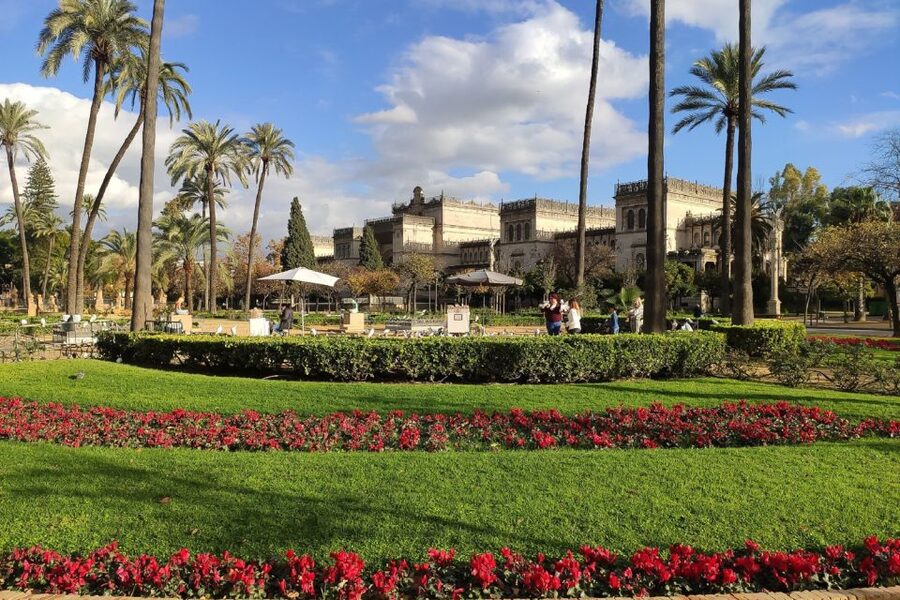
The Glorieta de Juanita Reina is another brief stop, listed at about five minutes. The route continues to Monte Gurugú, where the guide spends around 10 minutes.
Monte Gurugú is one of the route’s more unusual names and helps break up the better-known sights. The tour presents it as part of the park’s garden design, not merely as a point on the way to Plaza de América. The guide explains how the different spaces fit together and draws attention to curiosities you might miss while walking independently.
The park works best when you allow yourself to notice transitions. A monument gives way to a path, a path opens toward a pond, and a garden feature leads toward a more formal exhibition space. The walk is useful because it encourages you to see the park as a planned sequence, not a collection of unrelated photo spots.
Plaza de América and the 1929 exhibition
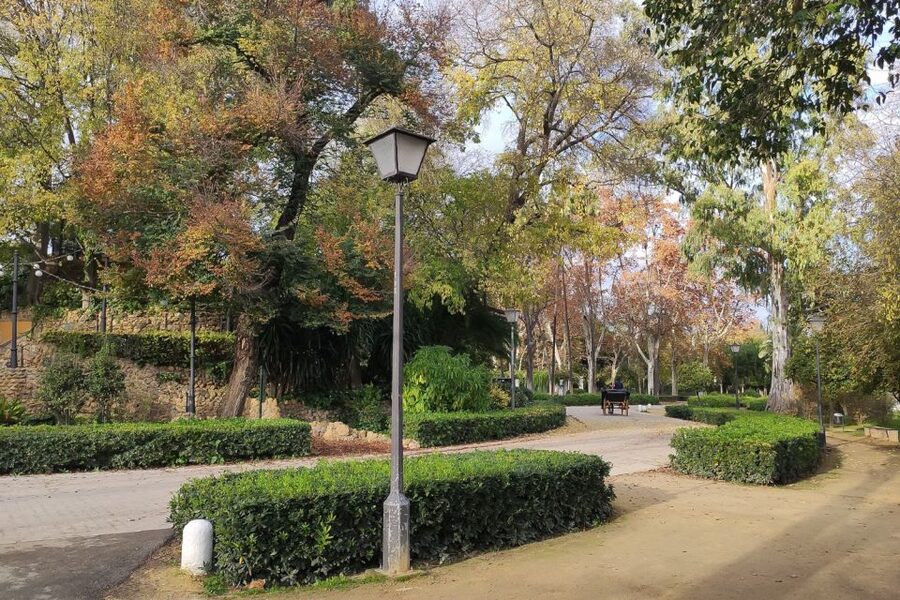
Plaza de América receives about 20 minutes, making it one of the better-developed stops. It was created as part of the preparations for the Ibero-American Exposition of 1929, the same event that produced Plaza de España.
I like this portion of the tour because Plaza de América is often overshadowed by its famous neighbor. The longer stop gives you room to look at its architecture and surroundings while the guide explains its role in the exhibition. You get a better sense of how Seville used the park to present Andalusian and Spanish identity to an international audience.
This is also a good place to pay attention to the mix of buildings, open space, and decorative work. The value is not only in taking a picture. You begin to see how the 1929 project used grand public spaces to stage an image of Seville.
For visitors interested in architecture, this stop may be as rewarding as Plaza de España. For families or anyone taking the tour mainly for the famous square, it can feel like a detour unless the guide’s historical explanation is your kind of sightseeing.
The Machado and Álvarez Quintero glorietas
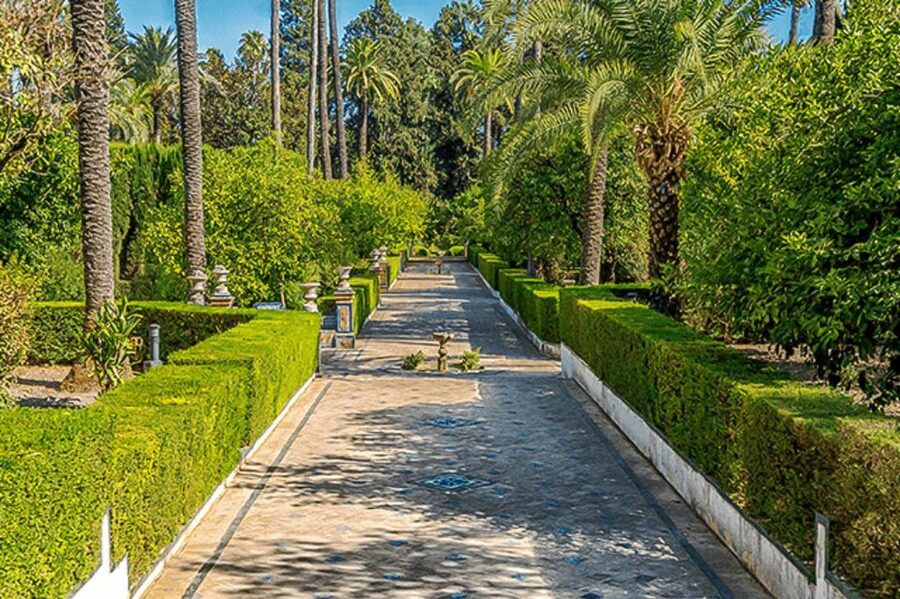
The Glorieta de los Hermanos Machado and the Glorieta de los Hermanos Álvarez Quintero each receive about 10 minutes. These stops continue the theme of honoring writers and notable Sevillians within the park.
The two glorietas give the guide room to discuss the lives of important cultural figures and the way Seville remembers them. This adds a local layer to the walk. You are not only seeing spaces built for a world exposition. You are also moving through a park filled with references to the city’s writers and artists.
The route’s strength is this combination of public history and small-scale detail. Its possible weakness is also clear: if you prefer a fast route to the major architecture, these stops may seem slow. The tour is designed for people who want context, not just a greatest-hits stroll.
Arriving at Plaza de España
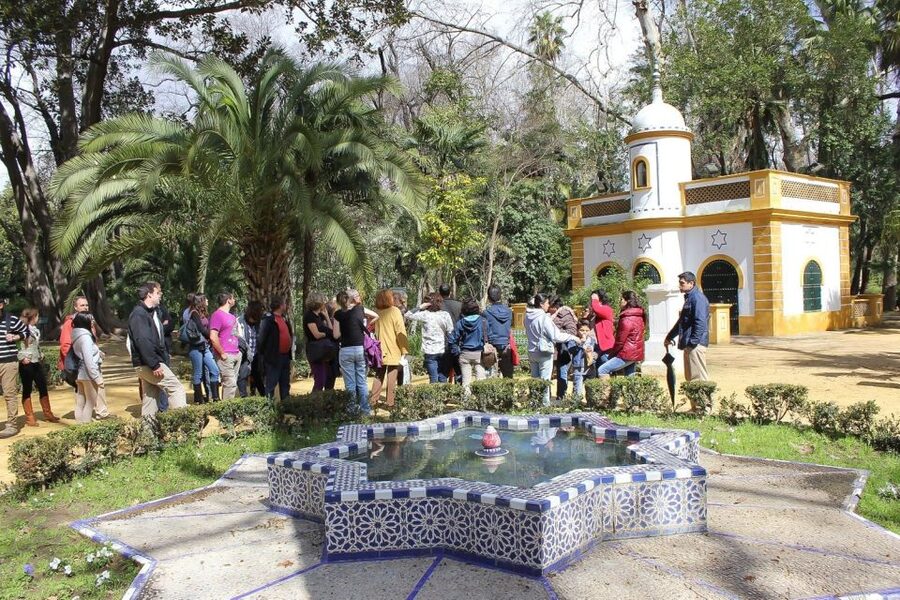
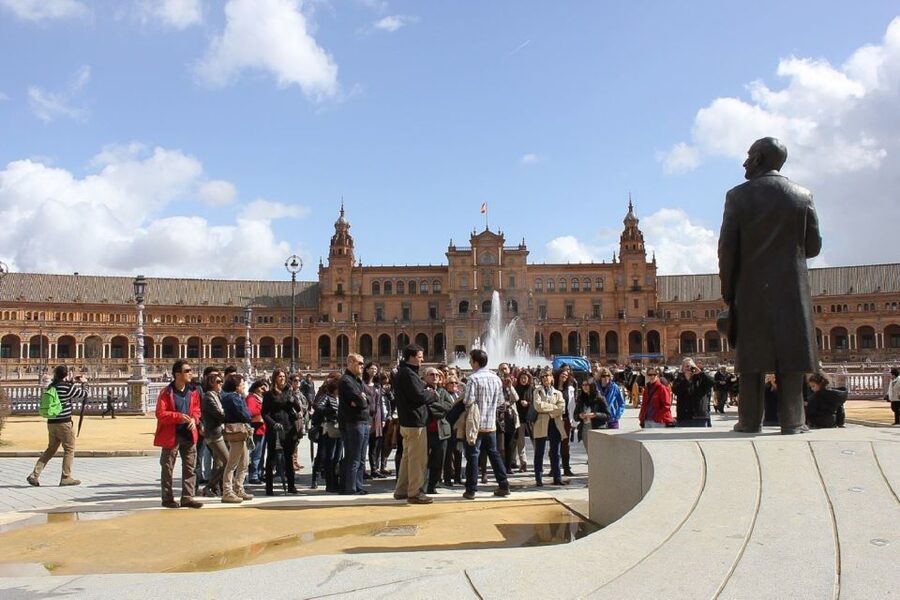
Plaza de España is the final major stop and receives about 25 minutes in the planned schedule. Aníbal González designed it for the Ibero-American Exposition of 1929, and it was the largest architectural element built for that event.
The square is the visual payoff of the walk. Its scale, curved form, tiled surfaces, water, and towers make it easy to understand why it draws so much attention. Reaching it after walking through the park also gives you useful context. You have seen the gardens and exhibition areas that frame it, so the square feels like part of a larger project rather than an isolated monument.
Use the time to look beyond the central view. The guide can explain the architectural and natural meaning of the space, along with details that pedestrians often overlook. You should also allow time for photographs, since this is likely to be the place you most want to remember.
The schedule calls for about 25 minutes here, but the actual balance can vary. One reported outing spent only about five minutes at Plaza de España while taking roughly two and a half hours overall. That is the single most important practical caution for booking. If your main goal is an unhurried visit to the square, ask at the start how much time will be reserved for it.
What the guides add to the experience
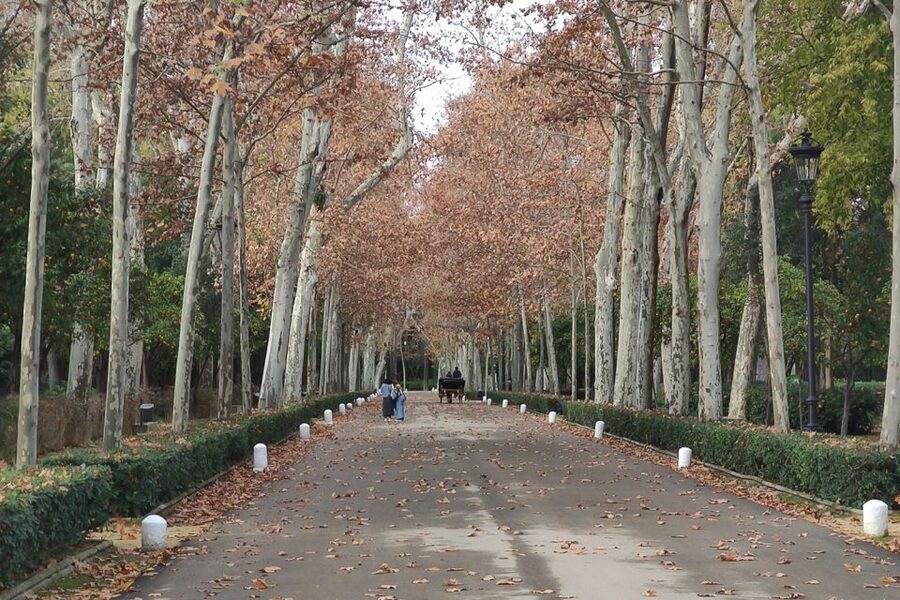
The guide is the heart of this activity. The strongest descriptions of the walk point to a friendly, lively style and close attention to fountains, secrets, and small park details.
Julián is specifically noted for explaining the fountains and lesser-known features in detail. MariPaz is described as keeping the route pleasant and engaging, while Grecia is remembered for her warmth and easy manner. Since the assigned guide can vary, you should not book on the assumption that one particular person will lead your tour.
The official language is Spanish. That is important for your decision. If you understand Spanish well, the explanations about Sevillian figures, 1929, architecture, and garden design should add a great deal. If you do not, the visual setting remains enjoyable, but you may miss much of what makes the guided version different from a self-guided walk.
The tour can be booked as a group or private experience, depending on the option selected. A private group may suit families or friends who want to control the pace, though the available price and exact arrangement should be checked when booking.
Is $14 good value for two hours?
At $14 per person, this is a low-cost way to add structure and local explanation to a visit to Maria Luisa Park. You are paying for an official guide, a guided route through several historic spaces, and all taxes. There is no separate charge for the park sights described here.
The value is strongest if you would otherwise walk through the park without knowing what you were seeing. A guide can connect Infanta Maria Luisa Fernanda, Gustavo Adolfo Bécquer, the Machado brothers, the Álvarez Quintero brothers, Forestier, Aníbal González, and the 1929 exposition in one continuous story.
The price is less compelling if you only want Plaza de España. You can see the square without committing two hours to a park route, and the schedule may devote more time to monuments and garden features than you expect. The tour earns its price through interpretation, not through exclusive access or included refreshments.
The experience has a 4.5 rating based on nine ratings, but the practical lesson is more useful than the number itself: the guide quality and time allocation matter. Friendly, detail-focused guides have been a clear strength. A cancellation with less than 24 hours’ notice has also occurred, so flexibility is worth keeping in mind even though cancellation up to 24 hours ahead is offered for a full refund.
Who will enjoy this park walk most?
I would choose this tour for you if you like city history, public gardens, monuments, and architecture explained in Spanish. It suits first-time visitors who want an introduction to Maria Luisa Park before exploring Seville on their own.
It is also a good choice if you have already seen photographs of Plaza de España and want to understand the setting around it. Plaza de América, Monte Gurugú, the ponds, and the writer’s glorietas give you a wider view of the park’s design.
Families may appreciate the short stops and changing scenery, though younger children may find a two-hour history walk long. The route is wheelchair accessible, which makes it a practical option for many visitors, but the exact meeting point and route details should still be confirmed for your needs.
I would skip it if your only goal is extended photography at Plaza de España, if you prefer exploring at your own speed, or if Spanish is not comfortable for you. In those cases, a self-guided visit may be simpler.
Practical tips for getting the most from the walk
Wear shoes you can walk in for two hours. The park is pleasant, but the route includes several stops and paths, and comfort will affect how much attention you can give the guide.
Protect yourself from the sun. Sunglasses, a sun hat, sunscreen, and comfortable clothing are specifically recommended, especially in spring and summer. The open spaces around the major plazas can feel more exposed than the shaded parts of the park.
Arrive knowing your meeting point. There are two possible starting locations, and the booking option determines which one applies. The same is true at the end, where you may finish near the San Diego fountain or Avenida María Luisa at La Raza.
Think about your priorities before you begin. If you want every stop explained, let the guide set the rhythm. If Plaza de España is your main target, politely clarify the planned time there early in the walk.
Should you book Secrets of Maria Luisa Park and Plaza de España?
Book it if you want a Spanish-language introduction to Seville’s historic park, especially at a modest $14 price. The best parts are the attention to fountains, monuments, writers, and the 1929 exhibition, along with the chance to see Plaza de América before reaching Plaza de España.
Do not book it expecting a short, square-only visit. The route is broader and more detailed, and the actual time at Plaza de España can vary. For a curious visitor who enjoys context, the walk gives a lot for the money. For a photographer chasing a long, quiet session at the famous square, plan a separate visit.
FAQ
Where does the tour start?
The tour has two possible starting locations: Avenida María Luisa near La Raza, or the fountain at the Glorieta de San Diego. The meeting point may vary according to the option booked.
Where does the tour finish?
The tour finishes at either the Fuente de la Glorieta de San Diego or Avenida María Luisa near La Raza.
How long does the tour last?
The stated duration is two hours. One outing lasted approximately two and a half hours, so you should allow some flexibility.
What language is the tour in?
The live guided tour is in Spanish.
Is the tour wheelchair accessible?
Yes, the activity is listed as wheelchair accessible.
Can I book a private group?
Yes, a private-group option is available, depending on the booking choice.
What sights are included?
The route includes the Gustavo Adolfo Bécquer Monument, Monument to Infanta Maria Luisa, Estanque de los Lotos, Glorieta de Juanita Reina, Monte Gurugú, Plaza de América, the Machado brothers’ glorieta, the Álvarez Quintero brothers’ glorieta, and Plaza de España.
Is food or drink included?
No. Food and drinks are not included.
Can I cancel for a full refund?
Yes. You can cancel up to 24 hours in advance for a full refund.
Just added around Seville
- Tapas Tour Cordoba & Wine Experience with chef and sommelier★ 4.8 · 3 reviews
- The most complete tour of Seville: All the highlights included★ 5.0 · 3 reviews
- Seville: Wine and Gourmet Tapas Tour★ 5.0 · 3 reviews
- Seville: Spritz Tasting Experience★ 4.8 · 3 reviews
- Ronda and White Villages Private Day Trip from Seville★ 5.0 · 3 reviews
- Jerez: Historic center of Jerez and horse show★ 5.0 · 3 reviews
- SEVILLE: REAL ALCÁZAR TOUR★ 5.0 · 3 reviews
- Royal Alcazar of Seville Guided Tour★ 5.0 · 3 reviews
Plaza de Espana Tours, compared.

Make Seville unforgettable: Private Photoshoot at Plaza de España
Read our review →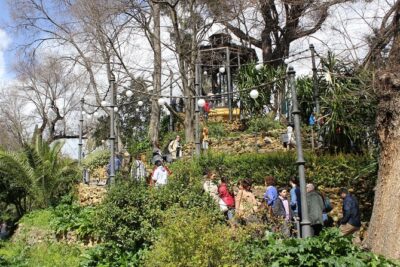
Secretos del Parque María Luisa & Plaza de España Tour en Español
Read our review →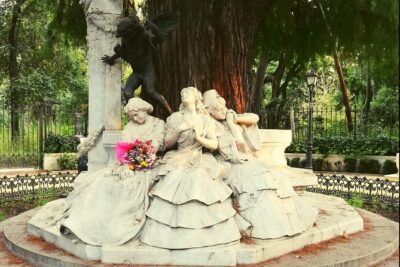
Alcazar, Cathedral, Plaza De España And Maria Luisa Park Private Tour
Read our review →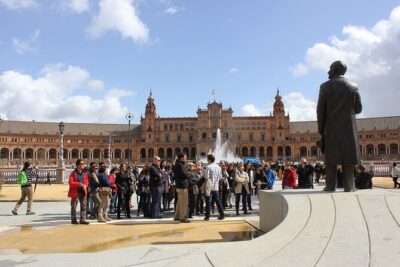
Secrets of Maria Luisa Park and Plaza de España Private Tour
Read our review →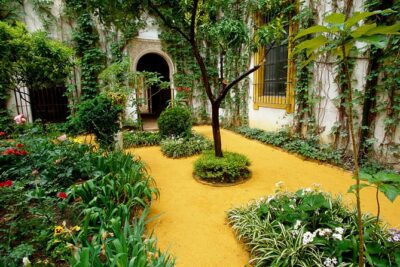
Browse the lists this tour appears in