Reviewed · TICKETS
Sevilla: Ramón Sánchez Pizjuán Stadium Entry Ticket
The best part of this Ramón Sánchez-Pizjuán Stadium tour is the walk from the players’ locker room through the tunnel and onto the pitch. An audio recording supplies the crowd noise and Sevilla FC anthem, turning an empty stadium into a brief match-day scene. You also get the club museum, trophy displays, VIP areas, and media room.
I like the freedom to explore without a guide pushing you along, and I like the range of stops. You can look closely at shirts and photographs, then take your time in the stadium itself. The $16 price is fair for 90 minutes of access, especially if you enjoy football or want an indoor activity in Seville.
The main drawback is that this is self-guided rather than a detailed, staff-led tour. It is also not suitable for wheelchair users, and you need your own charged smartphone and headphones for the audio guide.
In This Review
- Key points at a glance
- Why the pitch entrance is the tour’s highlight
- The museum tells Sevilla FC’s story from 1890
- Trophies, shirts, and the club’s biggest wins
- Ramón Sánchez-Pizjuán and the 1982 World Cup
- The VIP box and media room
- The locker room and tunnel route
- A self-guided format that gives you control
- Is $16 a good value?
- Practical details before you go
- Who should book the stadium visit?
- Should you book Ramón Sánchez-Pizjuán Stadium?
- FAQ
- How long does the Ramón Sánchez-Pizjuán Stadium tour last?
- How much does the stadium entry ticket cost?
- Is an audio guide included?
- Which languages are available for the audio guide?
- Do I need to bring anything?
- Where does the tour start?
- Where does the activity end?
- Can I visit the players’ locker room and walk onto the pitch?
- Is the tour suitable for wheelchair users?
Key points at a glance
- Pitch entrance with crowd sound: Walk from the locker room tunnel toward the field while hearing the atmosphere of Sevilla supporters.
- Museum dating back to 1890: Follow Sevilla FC from its beginnings through its major players, coaches, presidents, and titles.
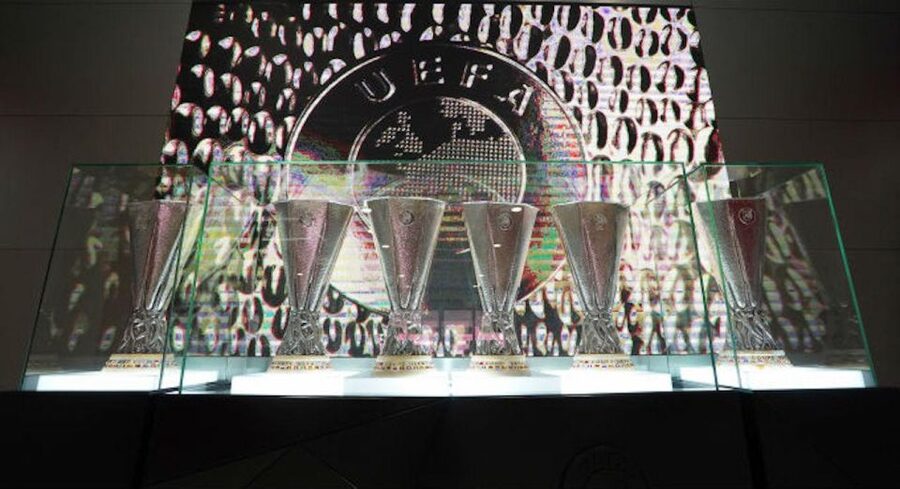
- Five Copa del Rey trophies: See displays connected with La Liga, the Copa del Rey, the Spanish Super Cup, and the European Super Cup.
- Behind-the-scenes rooms: Visit the players’ locker room, media room, VIP box, and the route used to reach the pitch.
- Self-paced audio tour: Listen in English, Spanish, Arabic, Chinese, Japanese, German, Italian, Portuguese, or French.
- About 90 minutes for $16: A reasonable choice for football fans and a solid short activity for a Seville itinerary.
Why the pitch entrance is the tour’s highlight
A stadium can feel strangely ordinary when no match is being played. Empty seats are still impressive, but the emotional charge is missing. This tour solves that problem with an audio sequence built around the walk onto the pitch.
You begin in the players’ area and follow the tunnel toward the field. As you move, you hear the sound of enthusiastic supporters and the Sevilla anthem. It is a simple touch, but it gives the route a purpose. You are not just looking at a corridor. You are following the same basic path players use before a game.
The effect is strongest if you pause and look back toward the tunnel, then out toward the bowl of the stadium. The Ramón Sánchez-Pizjuán is a large, famous football venue, and the scale becomes clearer from field level than from a seat in the stands.
I would not expect a full match-day simulation. There is no live crowd, and the sound comes through the audio guide. Still, for a self-guided visit, this is one of the more memorable sections because it links the museum displays with the actual business of football: dressing, waiting, walking out, and facing the crowd.
A few more Seville tours worth comparing
- Seville: Royal Alcázar Entry Ticket
★ 4.6 · 28,378 reviews - Seville: Cathedral and La Giralda Entry Ticket
★ 4.5 · 24,592 reviews - Seville: Live Flamenco Dancing Show Ticket at the Theater
★ 4.7 · 16,396 reviews
The museum tells Sevilla FC’s story from 1890
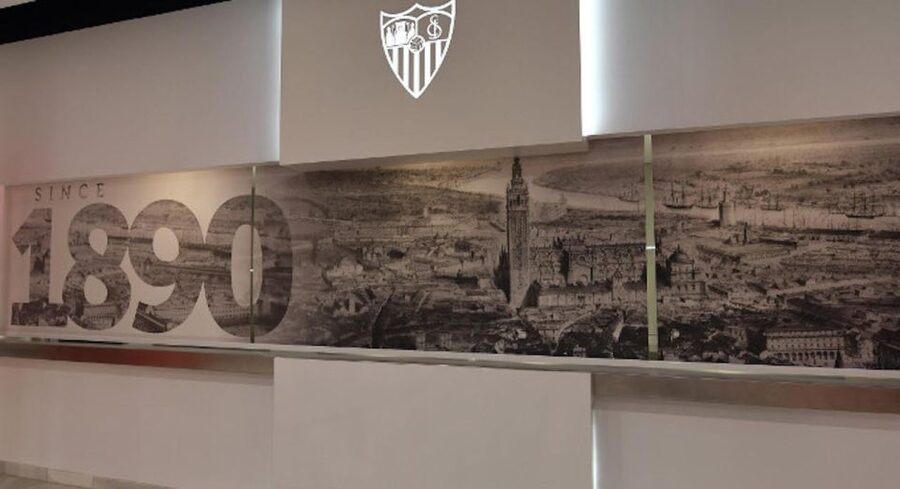
The visit begins with the museum, which gives you the basic club story before you enter the stadium’s working areas. Sevilla FC traces its origins to 1890, and the displays cover the club’s players, coaches, and presidents across its long existence.
One especially interesting point is the reference to the first documented football match in Spain. That gives the club’s early story a wider setting. You are not only looking at old shirts and team photographs. You are also seeing how football took root in Seville and how the club developed within that early Spanish football scene.
The museum is useful even if you are not a committed supporter. Football clubs often preserve their identity through objects, faces, and small moments, and the shirts and photographs help put names to the story. You can move at your own speed, replay audio sections, and spend more time on displays that catch your attention.
The audio guide is available in nine languages: English, Spanish, Arabic, Chinese, Japanese, German, Italian, Portuguese, and French. That makes the museum easier to follow than a display made up only of captions. Bring headphones, since they are not included, and make sure your phone is charged before you arrive.
Trophies, shirts, and the club’s biggest wins
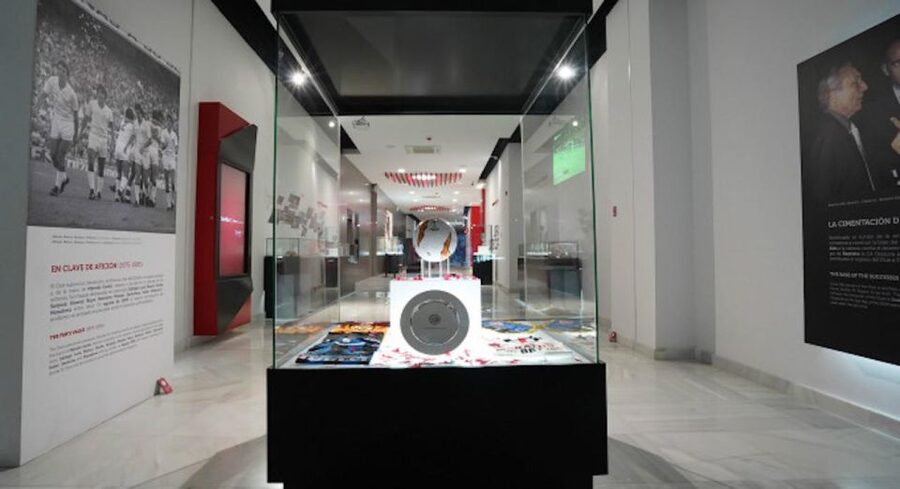
The trophy displays give the museum its visual punch. You can see reminders of Sevilla FC’s La Liga success, five Copa del Rey titles, the Supercopa de España, and the Supercopa de Europa.
The value here is not simply the number of cups in glass cases. Trophies show how the club measures its progress. Shirts and photographs add the human side, connecting silverware with the players who wore those colors and the teams that won it.
If you already know Sevilla FC, you will likely spend time matching the displays with the club’s key eras. If you do not follow Spanish football closely, the audio guide helps explain why certain victories matter. Either way, the museum gives you a compact introduction before the tour moves into the stadium.
The collection is not presented as a full football museum covering every part of the sport. Its focus is Sevilla FC. That is good news for supporters, but someone looking for a broad history of Spanish football may find the scope narrower than expected.
Ramón Sánchez-Pizjuán and the 1982 World Cup
The stadium was built in 1958 and has hosted major football events. Its most notable international connection is the 1982 World Cup semifinal.
That fact changes how you look at the building. This is not only Sevilla FC’s home ground. It is also a venue connected with one of football’s major global tournaments. The audio guide helps place the stadium within that larger story while you move through its spaces.
I like this part because it adds context without requiring a long lecture. The building becomes more than a collection of rooms and seats. You get a sense of the events that have passed through it and the way a club stadium can become part of football history beyond its home team.
The tour does not promise access to every part of the venue, nor does it offer a match-day view. You should think of it as a focused stadium visit, with selected public and behind-the-scenes areas rather than a complete architectural inspection.
A completely different day out from Seville:
- Seville: Casa de la Memoria Flamenco Show
★ 4.8 · 12,964 reviews - Seville: 1-Hour Guadalquivir River Sightseeing Eco Cruise
★ 4.2 · 10,281 reviews - Córdoba: Skip-the-Ticket-Line Mosque-Cathedral Guided Tour
★ 4.6 · 9,634 reviews - Seville: Cathedral, Giralda, and Royal Alcázar Guided Tour
★ 4.7 · 9,165 reviews
The VIP box and media room
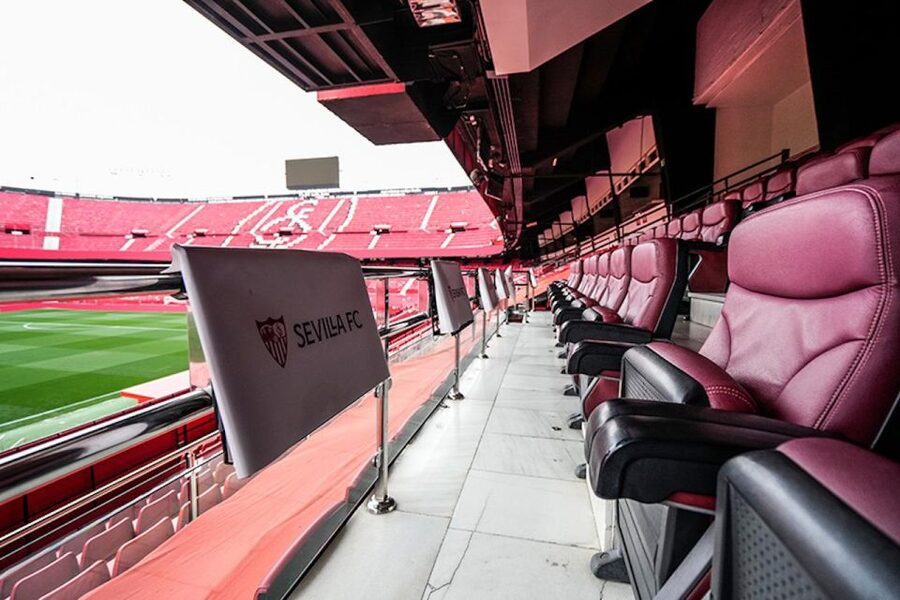
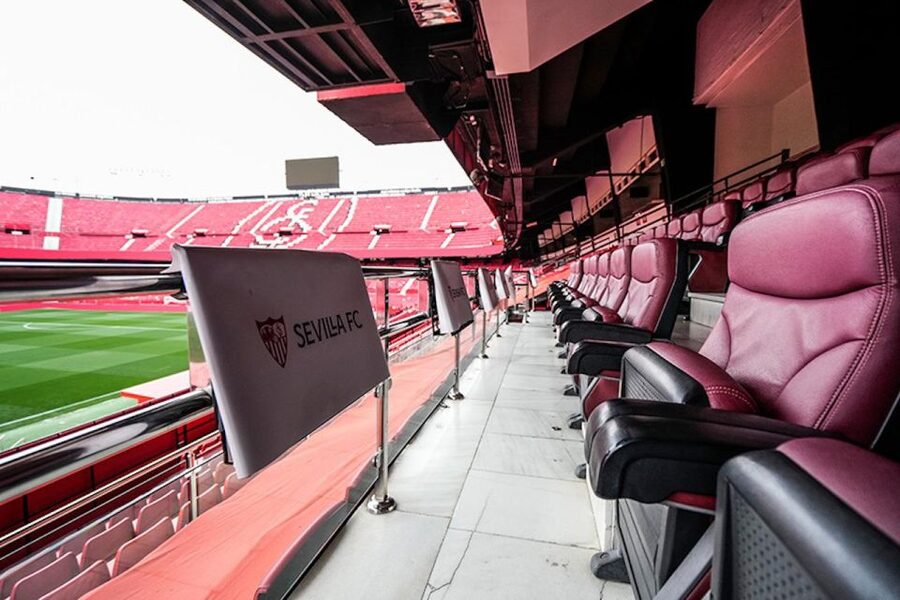
After the museum and pitch areas, the route takes you into spaces connected with the club’s public life. The VIP box lets you imagine the view from the club president’s position, with the stadium arranged below you.
This is a fun change of perspective. From the pitch, you feel close to the action. From the VIP area, you get the viewpoint of officials and important club guests. The contrast helps you understand how the same stadium serves different people on match day.
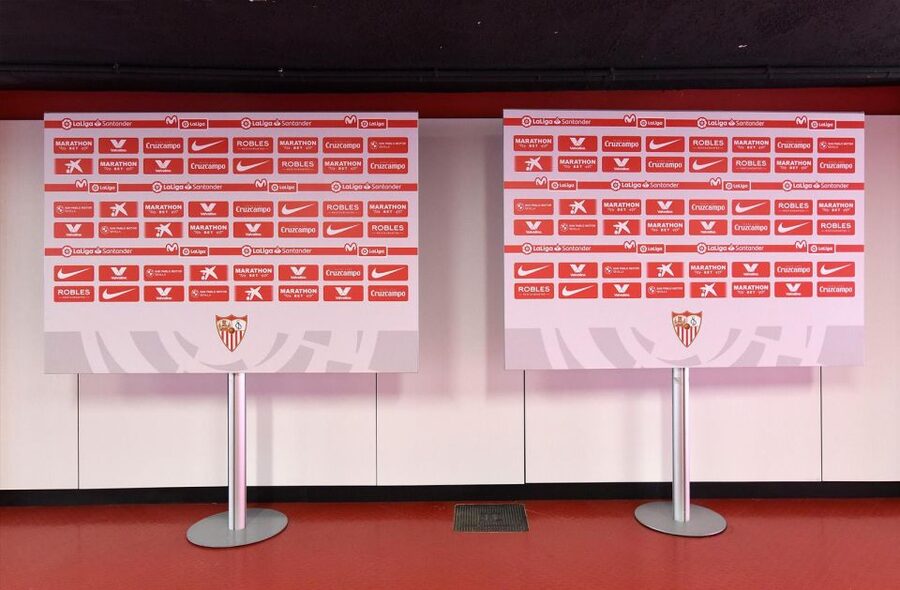
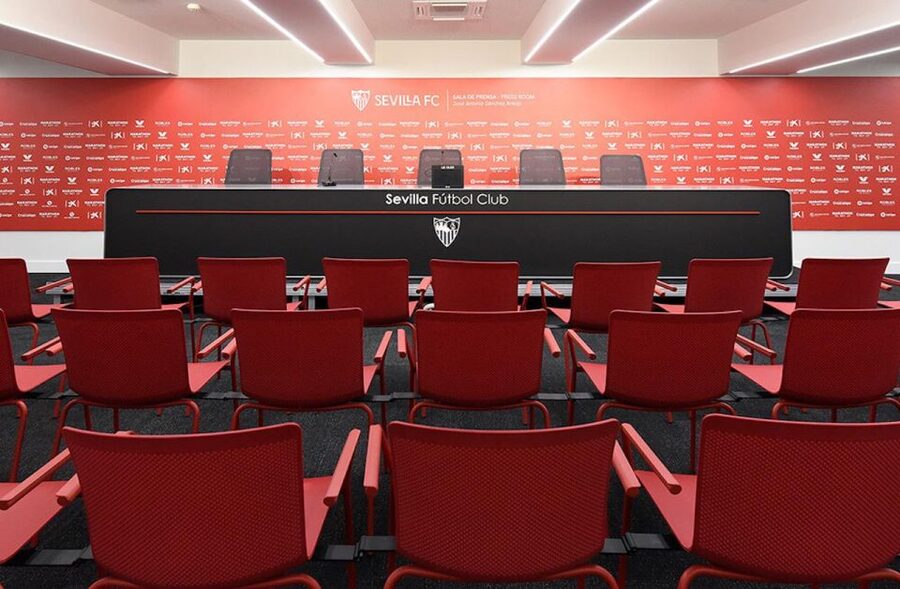
The media room offers another small role-playing moment. You can picture yourself answering questions at a press conference as if you were a Sevilla player. It is not a formal interview or live activity, but it gives the tour a playful touch and breaks up the museum-style displays.
These rooms will matter most if you enjoy the theatre around football as much as the game itself. If you only want to see the field, they may feel like short stops. For many people, though, they add variety and make the tour feel more complete.
The locker room and tunnel route
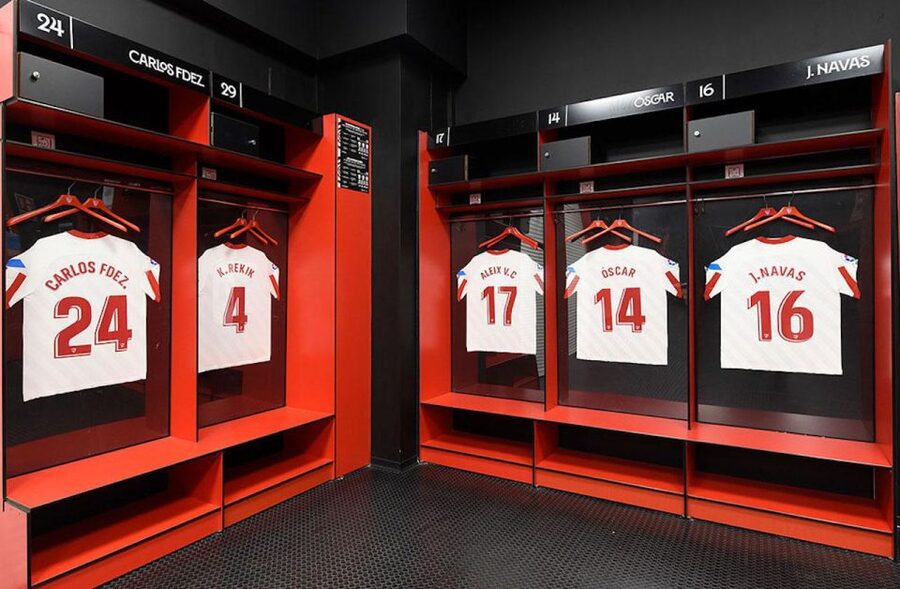
The players’ locker room is one of the most requested stops on any football stadium visit, and this tour includes it. You can see where Sevilla FC players hang their jerseys before heading out for a match.
The room gives you a more personal view of the club. A trophy cabinet tells you what a team has won. A locker room suggests the routine behind the result: preparation, team talks, nerves, and the few minutes before players enter the field.
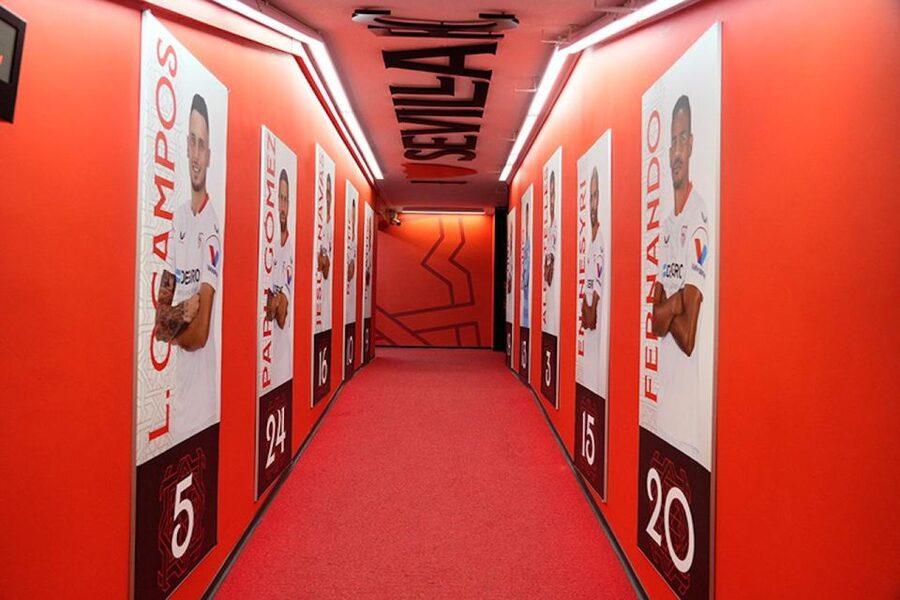
From there, you continue toward the pitch through the locker room tunnel. This is where the visit reaches its most atmospheric point. The audio guide supplies the supporters’ noise and the club anthem, creating a stronger sense of occasion than a quiet walk across an empty floor.
I would plan to slow down here. You are free to explore at your own pace, so there is no reason to rush through the tunnel just because another part of the tour is waiting. Take a moment to look at the transition from the enclosed player area to the open stadium bowl.
A self-guided format that gives you control
The tour lasts about 1.5 hours, and the self-guided format is one of its main strengths. You are not tied to a guide’s pace or a fixed speech. You can stop for photographs, replay an audio section, or move on when a display does not interest you.
This setup works especially well for mixed groups. A serious football fan can linger over shirts, trophies, and club details, while someone less interested in football can keep the visit moving and focus on the stadium architecture, pitch, and behind-the-scenes rooms.
Several people have enjoyed the activity specifically because it works for non-fans. I agree with that assessment, within limits. You do not need to know Sevilla FC’s full story to appreciate the scale of the ground or the unusual chance to see the locker room and tunnel. But the more you care about football, the more meaning you will find in the historical displays.
The tradeoff is the lack of a live guide. An audio guide can explain the official story, but it cannot answer follow-up questions or adjust its explanation to your interests. If you want personal stories, detailed football analysis, or a conversation with a local expert, this is not that kind of visit.
Is $16 a good value?
At $16 per person, the tour offers a reasonable amount for the time and access included. You get the museum, stadium, VIP area, media room, locker room, tunnel, and pitch route, plus audio in nine languages.
For a 90-minute activity, the price compares well with other short sightseeing stops in Seville. It is also a useful choice when the heat is tiring, when you want a break from historic buildings, or when your group has a football fan who needs something beyond the usual city sights.
The value is strongest for Sevilla FC supporters. You are paying for access to the club’s own home, not just a general sports venue. The trophy displays, historic shirts, and player areas give the ticket a clear purpose.
For someone with only a passing interest in football, I would still consider it if you enjoy unusual city experiences. The tour is not an all-day commitment, and the stadium itself provides a change of scene. If your Seville schedule is already packed with major monuments and you have no interest in sport, you may prefer to spend the same money elsewhere.
There is also a separate photo opportunity available for an additional €10, according to the activity details. That is not part of the ticket price, so treat it as an optional extra rather than part of the value calculation.
Practical details before you go
You start at the stadium entrance turnstiles. Show the ticket sent in a separate email, then follow the route through the venue. The tour ends back at the same meeting point.
You need two things: headphones and a charged smartphone. The audio guide is provided through an app, so a low battery could make the visit less enjoyable. Downloading or opening the app before you arrive may also help you avoid wasting time at the entrance, though the supplied information does not specify a separate download procedure.
The ticket lets you skip the ticket line, which is useful when you have a tight Seville schedule. Starting times vary, so check availability when booking rather than assuming you can arrive at any hour.
The activity is non-refundable. That matters more here because your ticket is tied to your plans and the visit has a set duration. Check your day carefully before paying.
The tour is not suitable for wheelchair users. If accessibility is important for your group, confirm the current conditions before booking, since the supplied information does not describe alternative access arrangements.
Who should book the stadium visit?
I would recommend this tour first to Sevilla FC supporters, football fans, and anyone who likes seeing working spaces that ordinary city tours do not cover. The locker room, tunnel, pitch, and media room give you access to the club’s daily world, while the museum explains how the team reached its current place.
It also suits families and mixed-interest groups because the route is easy to adjust. One person can listen closely to every audio stop, while another can focus on the photographs, trophies, or the stadium itself.
It is less suitable if you want a personal guide, a long architectural tour, or wheelchair access. You should also skip it if your schedule allows no room for a 90-minute activity.
Should you book Ramón Sánchez-Pizjuán Stadium?
Book it if you want a concise, well-organized look at Sevilla FC with the freedom to move at your own pace. The strongest moments are the locker room to pitch route, the crowd audio, the museum displays, and the view into VIP and media spaces.
At $16, it is a sensible add-on to a Seville visit, especially for football fans. Non-fans can still enjoy it, but the club-focused museum will determine how much you get from the ticket. Bring headphones, charge your phone, and give yourself the full 90 minutes so the experience does not feel hurried.
FAQ
How long does the Ramón Sánchez-Pizjuán Stadium tour last?
The activity lasts about 1.5 hours, or roughly 90 minutes.
How much does the stadium entry ticket cost?
The listed price is $16 per person.
Is an audio guide included?
Yes. An audio guide app is included with the stadium entry ticket.
Which languages are available for the audio guide?
The audio guide is available in Spanish, English, Arabic, Chinese, Japanese, German, Italian, Portuguese, and French.
Do I need to bring anything?
Bring headphones and a charged smartphone so you can use the audio guide app.
Where does the tour start?
Start at the entrance turnstiles at Ramón Sánchez-Pizjuán Stadium and show the ticket sent to you in a separate email.
Where does the activity end?
The tour ends back at the meeting point.
Can I visit the players’ locker room and walk onto the pitch?
Yes. The route includes the Sevilla FC players’ locker room and the tunnel leading onto the pitch.
Is the tour suitable for wheelchair users?
No. The activity is listed as not suitable for wheelchair users.
Just added around Seville
- Seville: Wine and Gourmet Tapas Tour★ 5.0 · 3 reviews
- Tapas Tour Cordoba & Wine Experience with chef and sommelier★ 4.8 · 3 reviews
- The most complete tour of Seville: All the highlights included★ 5.0 · 3 reviews
- Seville: Spritz Tasting Experience★ 4.8 · 3 reviews
- Ronda and White Villages Private Day Trip from Seville★ 5.0 · 3 reviews
- Jerez: Historic center of Jerez and horse show★ 5.0 · 3 reviews
- SEVILLE: REAL ALCÁZAR TOUR★ 5.0 · 3 reviews
- Royal Alcazar of Seville Guided Tour★ 5.0 · 3 reviews
Tickets, compared.



Live Flamenco Dancing Show Ticket at the Theater
Read our review →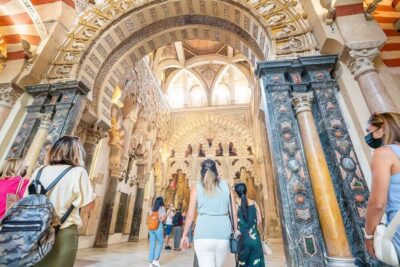
Skip-the-Ticket-Line Mosque-Cathedral Guided Tour
Read our review →
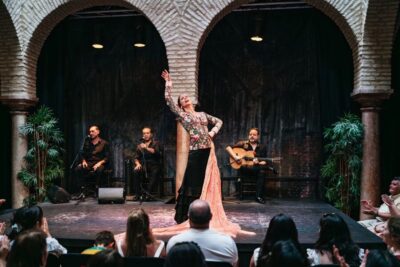
Puro Flamenco Show with Optional Museum Ticket
Read our review →