
Reviewed · SEVILLE PALACES
Seville: Casa de Pilatos Ground Floor Entry Ticket
Casa de Pilatos is one of Seville’s most rewarding smaller sights, especially if you want grand architecture without the pressure of the city’s biggest monuments. The palace brings Mudejar-Gothic design and Renaissance style together in courtyards, chapels, tiled rooms, and gardens that feel made for slow looking.
I like the Roman sculpture collection, especially the busts arranged around the main courtyard, and I like how easily the visit moves from cool interior rooms to peaceful garden paths. The main drawback is simple: this ticket covers only the ground floor, and the audio guide can feel too detailed if you prefer a quick visit.
In This Review
- Key things to know before you go
- Why Casa de Pilatos belongs on your Seville list
- Entering through the Renaissance marble gate
- The main courtyard and its Roman sculpture
- Tiles that turn walls and floors into artwork
- The Chapel of Flagellation and the oldest part of the palace
- Pallas Pacifera and the palace’s symbolic decoration
- The Salón del Pretorio and its coffered ceiling
- The gardens: a calm change of pace
- How the audio guide works in practice
- Ground floor only, or add the upper floor?
- Best timing and practical planning
- Who will enjoy Casa de Pilatos most?
- Should you book the ground-floor ticket?
- FAQ
- What does the Casa de Pilatos ticket include?
- Is the upper floor included?
- In which languages is the audio guide available?
- Is there a live guide?
- What are the last entry times?
- Can I visit for free on Monday?
- Can I cancel the booking?
Key things to know before you go
- The marble entrance sets the tone: You enter through an elaborate Renaissance-style gate into a palace built by the Enríquez de Ribera family.
- The main courtyard is the visual center: Roman busts, fountains, tiles, and arches show the meeting of Classical, Islamic, Gothic, and Renaissance ideas.
- The Chapel of Flagellation is the oldest section: Its basket-handle arch offers one of the clearest looks at the palace’s changing architectural styles.
- The audio guide is thorough: It is available in Spanish, French, English, Portuguese, German, Japanese, and Italian, though some sections may feel overlong.
- The gardens reward unhurried visitors: You can wander from palace rooms into Renaissance-style outdoor spaces without the crowds found at Seville’s Royal Alcázar.
- The upper floor is not included: If you want to see more of the family residence and its private rooms, ask about adding the upstairs tour on arrival.
Why Casa de Pilatos belongs on your Seville list
Seville has no shortage of major sights. The Royal Alcázar, Cathedral, and Giralda naturally take the first spots on many itineraries. Casa de Pilatos is smaller, but that is part of its appeal. You can take in a remarkable amount of art and architecture without committing most of your day.
The palace was developed in the 15th century by the Enríquez de Ribera family and became the largest private residence in Seville at the time. Its design reflects the city’s changing fortunes and tastes. Islamic-influenced Mudejar work sits beside Gothic details, while Renaissance elements show the family’s connection with wider European artistic currents.
I find the building most interesting when it is treated as a lived-in home rather than a collection of empty rooms. You are not simply moving through a set of grand halls. You are tracing how a powerful Seville family added new styles, artworks, courtyards, and gardens over time.
The current ticket is about $14 per person. That is a fair price if you enjoy decorative art, historic homes, sculpture, or photography. It is less compelling if you want a long guided tour or expect access to the complete palace. For the ground floor alone, the value depends on your pace. A quick circuit may feel expensive, while a slow visit with time for the tiles, ceilings, sculptures, and gardens feels much better.
More palace visits in Seville:
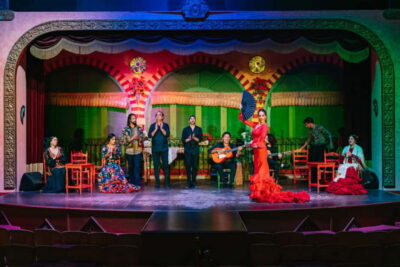
- Seville: Flamenco at El Palacio Andaluz with Optional Dinner
★ 4.5 · 1,119 reviews - Flamenco Show at El Palacio Andaluz Admission Ticket in Seville
★ 4.5 · 136 reviews - Jerez de la Frontera: Palacio Domecq Entrance Ticket
★ 4.2 · 123 reviews
Entering through the Renaissance marble gate
The visit begins at the palace entrance, where a detailed marble gate introduces the building’s Renaissance influence. It is an appropriate opening because Casa de Pilatos is famous for the way Renaissance ideas were brought into Seville and blended with local traditions.
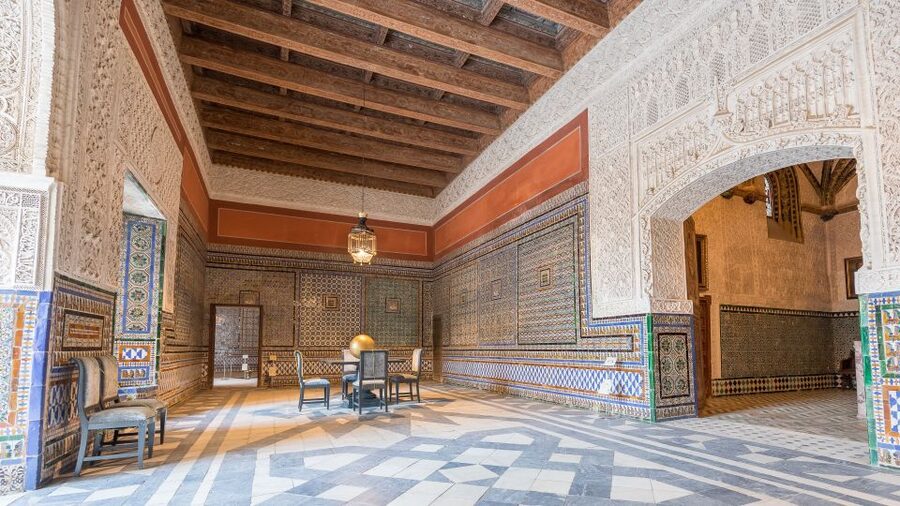
As you move inside, look for the contrast between the clean, classical feel of the marble and the warmer, more intricate decoration farther into the palace. The building does not present one style in isolation. Arches, tiles, sculpture, woodwork, and painted ceilings keep changing the visual language from room to room.
I suggest taking a moment at the entrance before following the audio guide. The first explanations can be information-heavy, and it is easier to appreciate the palace if you first get a general sense of its layout.
The route leads through drawing rooms, courtyards, and adjoining spaces. Signs and audio-guide references make it fairly easy to know which explanation belongs to each area. You can pause the guide, skip sections, or simply look around when the detail begins to pile up.
The main courtyard and its Roman sculpture
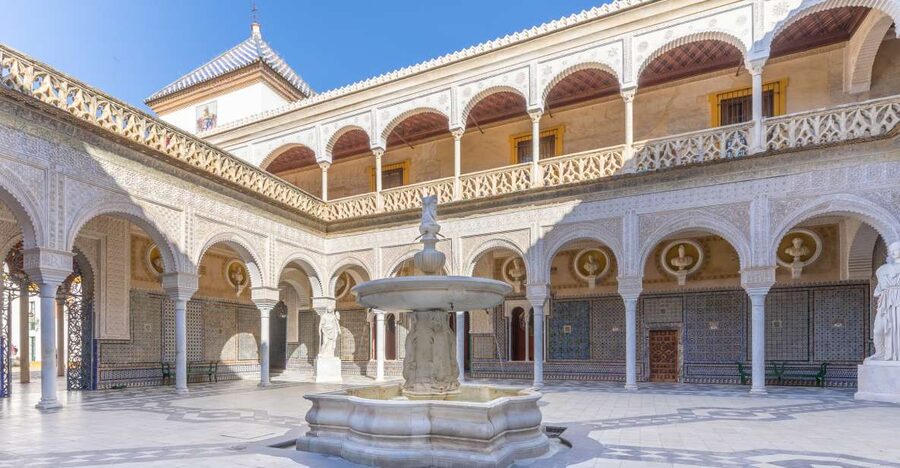
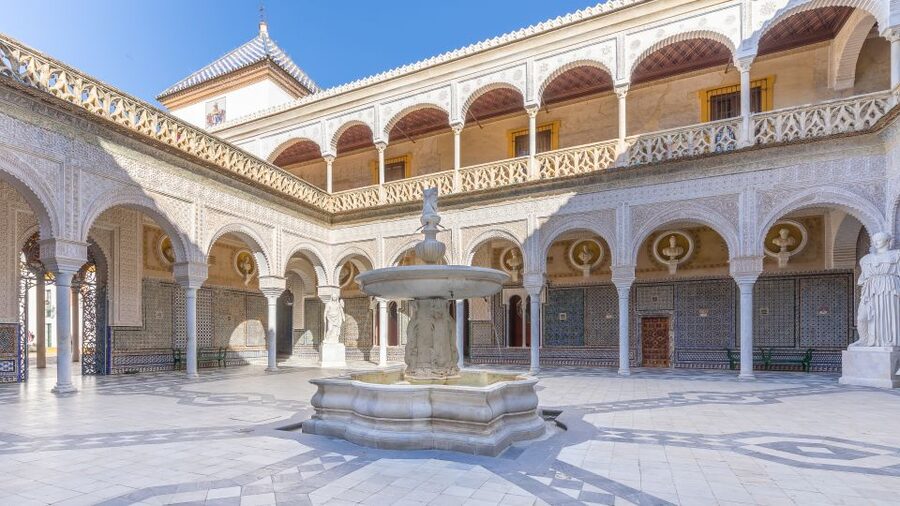
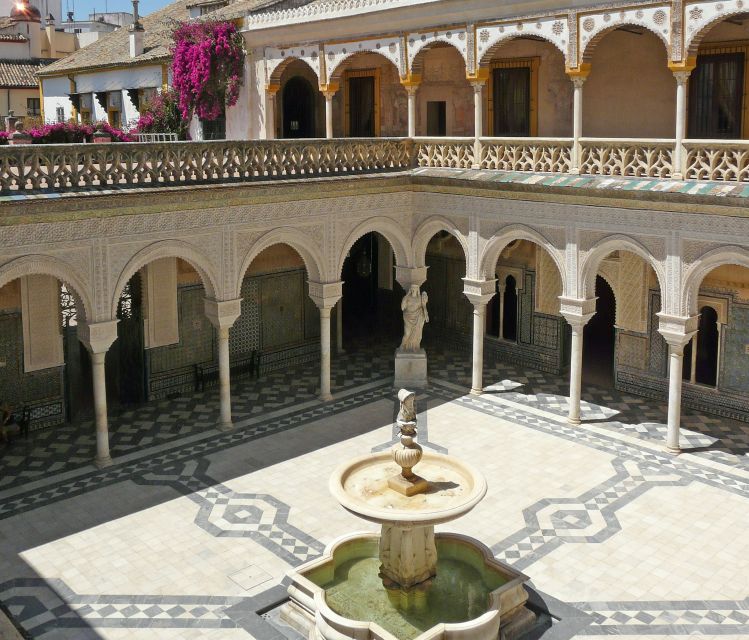
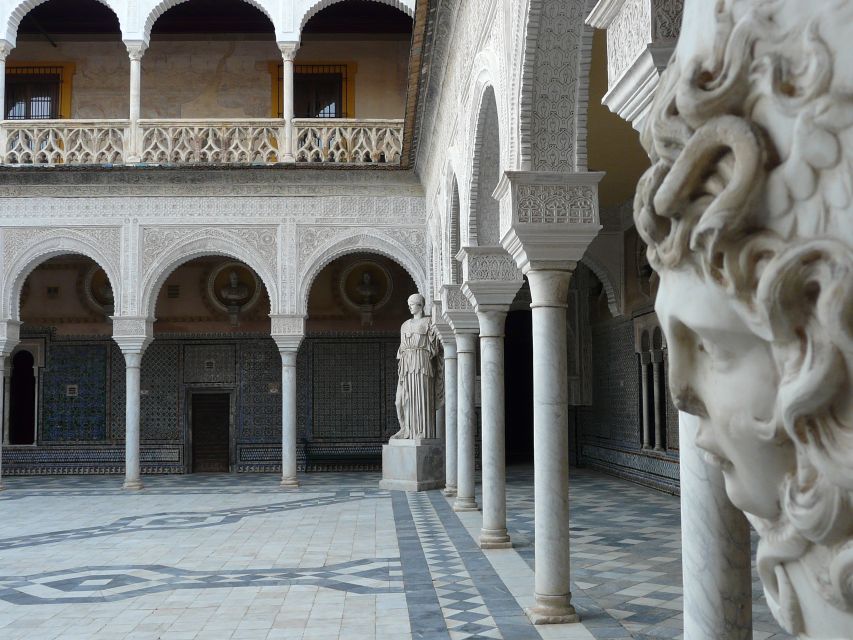
The central Andalusian courtyard is the palace’s great showpiece. Fountains and glazed tiles frame an open space filled with Classical references, including 24 busts of Roman emperors.
This courtyard works because the elements do not compete. The sculptures give it a museum-like quality, but the fountains, columns, arches, and tilework keep it connected to Seville’s architectural traditions. The result is formal but not stiff.
Look closely at the sculptural details named in the audio guide, including busts of Emperor Hadrian, Aphrodite, and Apollo. Apollo, associated with music, poetry, and art, fits neatly into a palace built around status, learning, and display.
The sculpture collection is valuable even if you are not an ancient-art specialist. You can simply compare the faces, poses, and weathered surfaces as you walk around the courtyard. The palace gives the statues an active role in the design rather than placing them in a separate gallery.
The courtyard is also a good place to slow down. The open space helps you understand how the rooms connect, and it gives you a break from the audio guide. I would look first, then listen, rather than keeping your attention on the commentary from the moment you enter.
Tiles that turn walls and floors into artwork
Casa de Pilatos is especially strong on traditional glazed tiles. They cover walls and floors in patterns that can be easy to rush past because they appear throughout the building. You should not rush them.
The tiles are not just decoration added around the edges of the architecture. They shape the rooms. Their color and geometry create a steady visual rhythm around courtyards, doorways, and interior walls.
You will see a wide range of mosaic and ceramic work as the route continues. Some areas feel restrained and orderly, while others are more intricate. This variety helps explain why the palace is so popular with photographers, though a camera can distract you from the small details that make the rooms special.
I recommend looking at the junctions between tilework and arches. These transition points often show how the building’s Islamic-influenced traditions were adapted alongside Gothic and Renaissance forms. The palace is at its best when you notice those combinations instead of treating each room as a separate photo stop.
A few more Seville tours worth comparing
- Seville: Royal Alcázar Entry Ticket
★ 4.6 · 28,378 reviews - Seville: Cathedral and La Giralda Entry Ticket
★ 4.5 · 24,592 reviews - Seville: Live Flamenco Dancing Show Ticket at the Theater
★ 4.7 · 16,396 reviews - Seville: Casa de la Memoria Flamenco Show
★ 4.8 · 12,964 reviews
The Chapel of Flagellation and the oldest part of the palace
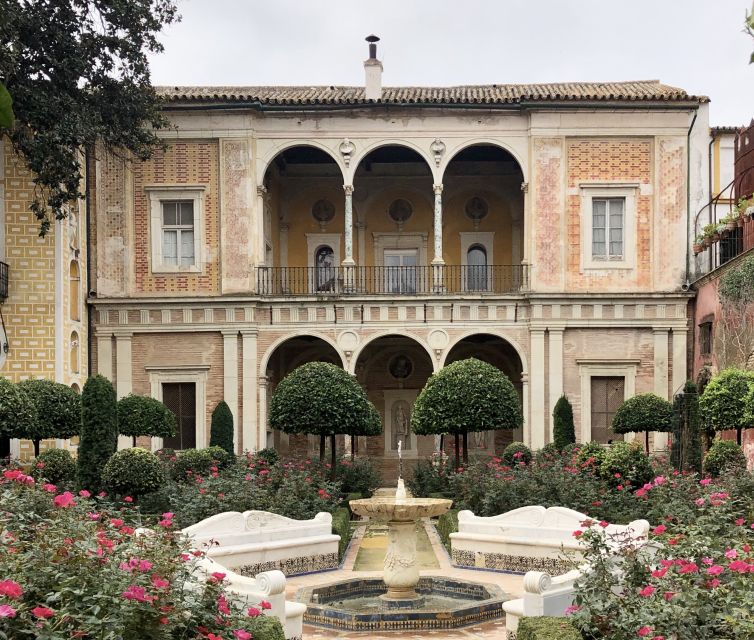
The Chapel of Flagellation is the oldest section of Casa de Pilatos. Its ornate basket-handle arch makes it one of the most useful rooms for understanding the building’s mixed design.
Here, Christian and Islamic-influenced forms meet in a compact space. The Mudejar-Gothic character feels particularly clear, while Renaissance additions elsewhere in the palace show how the residence changed over time.
The chapel is not necessarily the largest or most visually crowded room, but it carries unusual weight. It helps place the later decoration in context. Without it, the palace might seem like a beautiful collection of tiles and sculptures. With it, you can see the building as a record of successive periods in Seville.
The audio guide gives useful background here, but you do not need to absorb every date and architectural term. I would focus on the shape of the arch, the relationship between the chapel and the surrounding rooms, and the way older forms survive beside newer ones.
Pallas Pacifera and the palace’s symbolic decoration
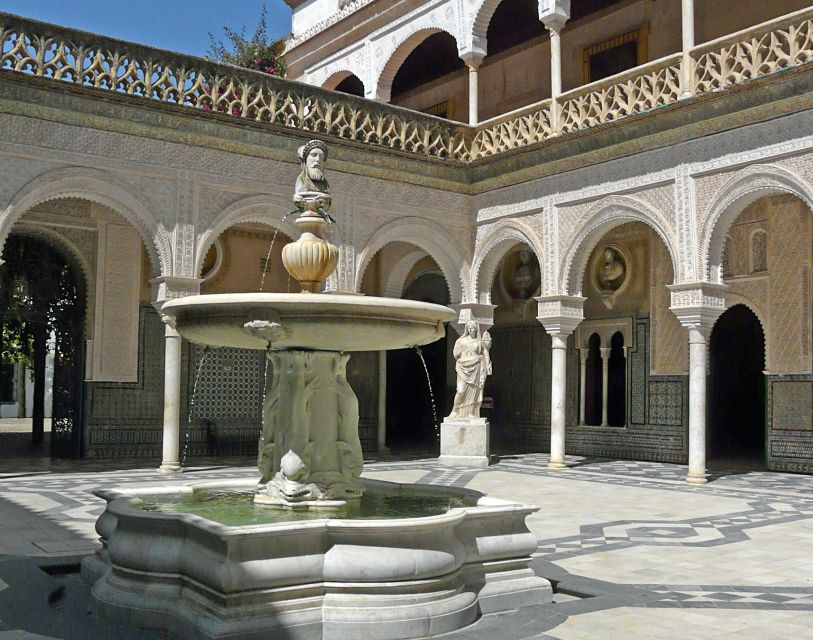
The palace also presents war ornaments connected with Pallas Pacifera, including a stone-carved shield and helmet. These pieces add another layer to the building’s message.
A residence such as Casa de Pilatos was designed to show education, taste, power, and family standing. Classical figures and military symbols were not random ornaments. They helped create an image of the household and its place in society.
The audio guide explains those connections, which is useful because symbolic decoration can otherwise look like a series of attractive objects without a clear purpose. At the same time, the commentary can be more detailed than some people want. If you are visiting with children or have a short schedule, select the main points and keep moving.
I like this section because it turns the palace from a pretty building into a place where art was used to make arguments about identity and status.
The Salón del Pretorio and its coffered ceiling
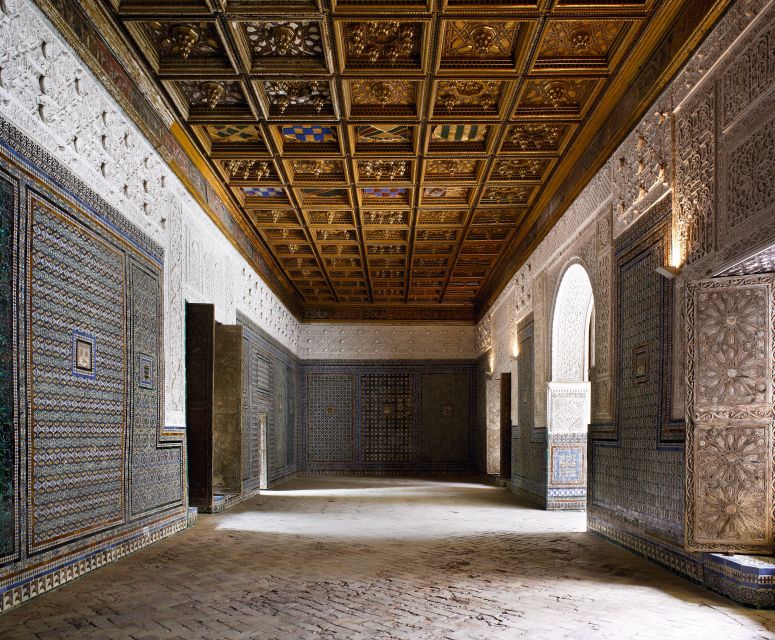
The Salón del Pretorio is one of the rooms where you should look up before doing anything else. Its coffered ceiling is decorated with ornamental bows and detailed painted work.
Coffered ceilings can be easy to miss in Seville, where tiled walls and courtyards pull your eyes lower. Here, the ceiling completes the room. The decoration shows the care that went into every surface of the palace, not just the areas at eye level.
I suggest standing near the doorway first. From there, you can see the ceiling’s overall pattern before moving closer to inspect individual details. The audio guide gives more information about the room, but the visual impression comes first.
This is also where a slow visit pays off. People who move quickly may remember the courtyard and tiles but miss the ceilings that give the interior rooms their sense of finish.
The gardens: a calm change of pace
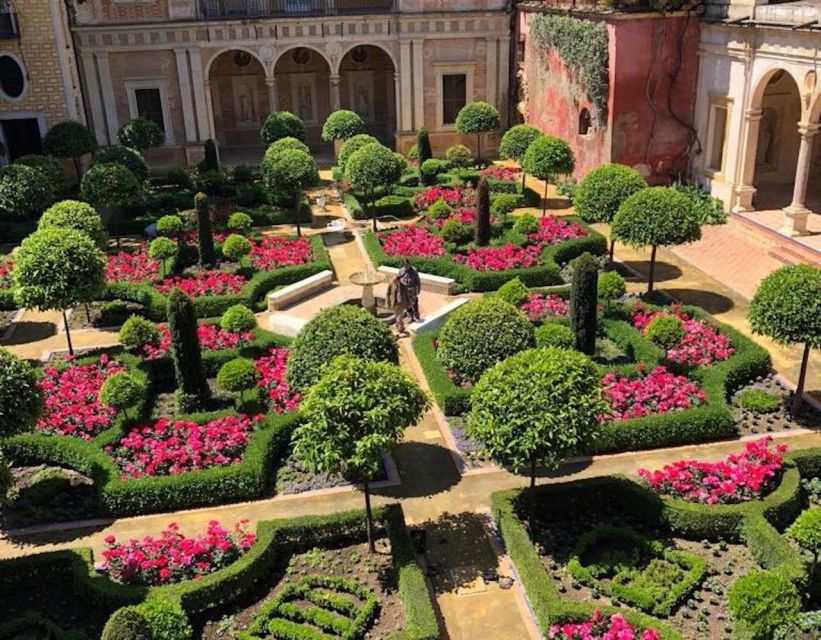
The palace gardens are smaller and more intimate than the great gardens of the Royal Alcázar, but they are a real part of the experience rather than a short afterthought. Renaissance-style design, sculptures, planted areas, and shaded corners create a calmer ending to the indoor route.
I would save enough time to walk the gardens without the audio guide constantly running. The rooms reward close inspection, while the gardens reward a slower stroll. You can pause, take photographs, and let the building’s details settle.
The gardens also help explain the palace’s appeal. You move from public-looking display spaces to more private outdoor areas, where the scale feels gentler. The change is welcome after the dense patterns and heavy decoration inside.
The time of day matters. Midday visits in summer can be very hot, but the palace may be quiet then. Morning visits are also useful if you want a peaceful walk and better chances of seeing the rooms without a large crowd. Around mid-afternoon, the site can become busier as organized groups arrive, so plan for an earlier start if photographs and quiet matter to you.
How the audio guide works in practice
The included audio guide is one of the ticket’s main benefits. It covers the palace’s construction, family story, rooms, artworks, and architectural details. The available languages are Spanish, French, English, Portuguese, German, Japanese, and Italian.
The route is self-guided, so you set the pace. That is ideal if you like to stop at a ceiling or courtyard for several minutes, or if you prefer to skip long explanations. The system is easy to follow, with clear signs showing which part of the guide matches each space.
The tradeoff is length. Some explanations are so detailed that they can become confusing, especially when the guide describes precise features of a room or ceiling. I would not feel obliged to listen to every track from beginning to end. Use the audio for context, then put it down and look.
Some people prefer a live guide because it is easier to ask questions and keep the story flowing. That is not what this ticket provides. The host or greeter information lists Spanish, while the audio guide supplies the multilingual support. If you want a personal guided visit, confirm the arrangement before booking rather than assuming a guide will accompany you.
Ground floor only, or add the upper floor?
The standard ticket gives you access to the ground floor. That includes the courtyards, drawing rooms, chapel, sculpture displays, coffered ceilings, and gardens described here. It is enough for a satisfying visit, especially if you are fitting Casa de Pilatos between larger Seville sights.
The upper floor is not included. One person who visited the ground floor added an upstairs tour on arrival and considered it worthwhile, even though the additional tour was in Spanish. The upper level offers more insight into the family and the palace as a residence, but you should treat it as an optional addition, not part of the advertised ground-floor ticket.
I would choose the ground floor alone if you have limited time or mainly want architecture, tilework, sculpture, and gardens. I would ask about the upper floor if you are interested in the household, private rooms, and a fuller picture of how the residence functioned.
Best timing and practical planning
The ticket is valid for one day, with starting times based on availability. The last entry from Tuesday through Sunday is 5:30 PM, so do not plan to arrive at the last minute if you want time for the gardens.
Monday has a useful money-saving window: entry is free between 3 PM and 5:30 PM. Check the current schedule before relying on that option, and remember that a free Monday visit may still be more crowded or less flexible than a quieter paid visit at another time.
An e-ticket makes entry straightforward. The palace is compact enough to fit into a day of sightseeing, but I would not treat it as a rushed 20-minute stop. The architecture rewards attention, and several people found themselves staying much longer than expected.
For a relaxed visit, allow around one to two hours, though the exact time depends on how closely you follow the audio guide and how long you spend in the gardens. The ticket itself is valid for one day, not a fixed one-day-long tour.
Free cancellation is available up to 24 hours in advance, and the reserve-now, pay-later option can help if your Seville schedule is still changing.
Who will enjoy Casa de Pilatos most?
I would recommend this palace to you if you enjoy:
- Historic houses rather than only famous public monuments
- Tilework, courtyards, sculpture, and decorative ceilings
- Self-guided visits where you control the pace
- Quiet places for photography
- Architecture that mixes Islamic-influenced, Gothic, and Renaissance forms
- A shorter cultural stop that still has plenty to examine
It is also a good companion to the Royal Alcázar. Casa de Pilatos gives you a smaller, more personal setting, while the Alcázar offers a larger royal complex. Seeing both helps you compare private aristocratic display with royal architecture.
I would hesitate only if your main goal is a live guide, extensive access to private rooms, or a short and simple explanation. The audio guide is useful, but it can be overfull. And at $14, ground-floor access is not a bargain for someone who plans to hurry through.
Should you book the ground-floor ticket?
Yes, if you want a beautiful and peaceful Seville sight with strong architectural detail and fewer crowds than the Royal Alcázar. I especially recommend it for people who will pause over the tiled courtyard, Roman busts, Chapel of Flagellation, and garden paths rather than simply collect another entrance ticket.
Book the ground floor when you want flexibility and a self-guided visit. Ask about the upper-floor addition if the family story matters as much to you as the palace decoration.
My best advice is to go early or around the quieter part of the afternoon, leave time for the gardens, and use the audio guide selectively. At $14, Casa de Pilatos earns its place in a Seville itinerary, provided you understand exactly what the ticket includes.
FAQ
What does the Casa de Pilatos ticket include?
The ticket includes entry to the ground floor and an audio guide. It covers the palace rooms, courtyards, sculpture displays, Chapel of Flagellation, coffered ceilings, and gardens.
Is the upper floor included?
No. The ticket provides access to the ground floor only. An upstairs tour may be added on arrival, subject to the arrangements available at the palace.
In which languages is the audio guide available?
The audio guide is available in Spanish, French, English, Portuguese, German, Japanese, and Italian.
Is there a live guide?
This ticket includes an audio guide rather than a standard live guided tour. The host or greeter information lists Spanish.
What are the last entry times?
From Tuesday through Sunday, the last entry is at 5:30 PM.
Can I visit for free on Monday?
Entry is free on Mondays from 3 PM to 5:30 PM. Check availability and the current schedule before planning around this time.
Can I cancel the booking?
You can cancel up to 24 hours in advance for a full refund. A reserve-now, pay-later option is also available.
Just added around Seville
- Seville: Wine and Gourmet Tapas Tour★ 5.0 · 3 reviews
- Tapas Tour Cordoba & Wine Experience with chef and sommelier★ 4.8 · 3 reviews
- The most complete tour of Seville: All the highlights included★ 5.0 · 3 reviews
- Ronda and White Villages Private Day Trip from Seville★ 5.0 · 3 reviews
- Seville: Spritz Tasting Experience★ 4.8 · 3 reviews
- Jerez: Historic center of Jerez and horse show★ 5.0 · 3 reviews
- SEVILLE: REAL ALCÁZAR TOUR★ 5.0 · 3 reviews
- Royal Alcazar of Seville Guided Tour★ 5.0 · 3 reviews
Seville Palaces, compared.
Flamenco at El Palacio Andaluz with Optional Dinner
Read our review →
Flamenco Show at El Palacio Andaluz Admission Ticket in Seville
Read our review →
Palacio de Las Dueñas Entry Ticket and Guided Tour
Read our review →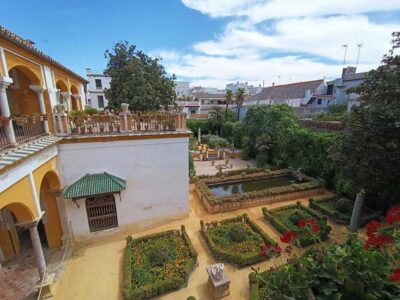
Guided visit of the Casa de Pilatos with entrance tickets
Read our review →
Palacio de Las Dueñas, La Macarena & Las Setas Tour
Read our review →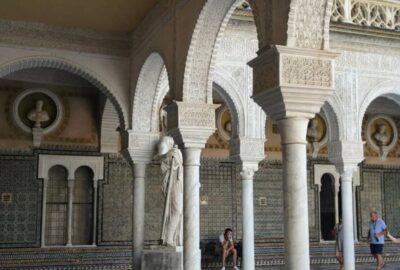
Seville Private Tour with Alcazar, Cathedral, Casa de Pilatos
Read our review →Browse the lists this tour appears in