
Reviewed · CITY TOURS
Seville: City of Queens, Nuns, Sex Work & Witches
Seville’s grand monuments look different when you ask who built, worked in, lived around, or was pushed aside by them. This female-focused walking tour links queens, cigar girls, literary lovers, and less powerful women across the city, giving familiar sights a more human angle.
I like the small group of no more than eight, which gives guides such as Abby and Nico room to answer questions and adjust the pace. I also like the route itself: Maria Luisa Park, Plaza de España, the old tobacco factory, and the narrow lanes of Santa Cruz make a good mix of famous Seville and quieter corners. The possible drawback is the price, $105 per person for two hours, which is high for a walking tour unless you value the specialist theme and personal attention.
In This Review
- Key points to know before you book
- Why Seville looks different through women’s stories
- Starting at the Costurero de la Reina
- The 1929 Exposition and its female connections
- Maria Luisa Park and the Queen’s Sewing Box
- Plaza de España, with more than postcard value
- The Portuguese pavilion and the work behind public displays
- The old tobacco factory and the cigar girls
- Susona Street and the narrow lanes of Santa Cruz
- Ending with Don Juan and Doña Inés
- What the $105 price really buys you
- Guides, language, and the tone of the walk
- Who will get the most from this Seville walk
- Should you book this tour?
- FAQ
- How long does the tour last?
- How much does the tour cost?
- Where does the tour start?
- Where does the tour finish?
- Which languages are available?
- How large is the group?
- Which Seville sights are included?
- What is included in the price?
- Can I cancel or pay later?
Key points to know before you book
- The route begins at the Costurero de la Reina, a small landmark near the Guadalquivir and Maria Luisa Park.
- Women’s stories shape the entire walk, including cigar girls, queens, Doña Inés, and women whose lives rarely receive much space in standard city tours.
- You visit major Seville sights without treating them as a checklist, with stops at Plaza de España, the 1929 Exposition buildings, and Santa Cruz.
- The group is limited to eight people, making it easier to hear the guide and ask for a more personal explanation.
- Guides speak English and Spanish, and Abby and Nico are named guides praised for humor, clear English, and involving younger participants.
- The tour finishes in Plaza Nueva, in the center of Seville, after a short stop at a local bar.
Why Seville looks different through women’s stories
A standard first walk through Seville usually centers on kings, churches, explorers, and grand architecture. This route changes the questions. You hear about the women connected to those places, including women with power, women doing hard industrial work, and women remembered through fiction rather than official records.
That makes the tour useful even if you have already seen Plaza de España or walked through Santa Cruz. The buildings do not change, but the focus does. You are asked to notice who had control, who earned a living there, who was confined by social rules, and who survived through wit or reputation.
The title points to a wide range of subjects, including queens, nuns, sex work, and witches. The supplied route also brings in cigar girls, a literary Don Juan, Doña Inés, and women connected with Seville’s public spaces. This is not a general history lecture with a few female names added at the end. The women are the organizing idea.
The format suits you if you like social history and stories about ordinary work as much as royal drama. It may suit teenagers too. Abby was praised for holding a teenager’s attention, while Nico was described as funny, responsive, and willing to include a grumpy teenage son. That suggests the walk is conversational rather than stiff or academic.
A few more Seville tours worth comparing
- Seville: Royal Alcázar Entry Ticket
★ 4.6 · 28,378 reviews - Seville: Cathedral and La Giralda Entry Ticket
★ 4.5 · 24,592 reviews - Seville: Live Flamenco Dancing Show Ticket at the Theater
★ 4.7 · 16,396 reviews
Starting at the Costurero de la Reina
The meeting point is the Costurero de la Reina monument at Paseo de las Delicias, 3. This is a practical starting place because the tour quickly introduces the connection between women, public life, and Seville’s grand civic spaces.
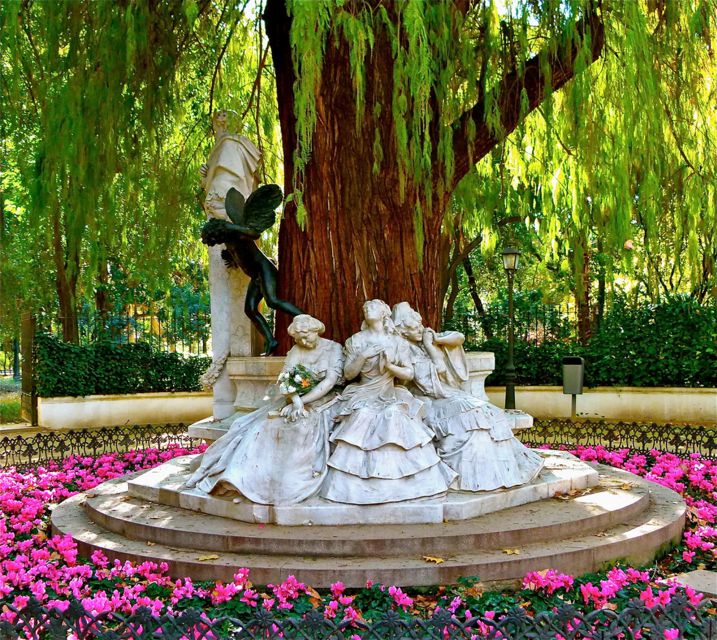
The Costurero de la Reina translates roughly as the Queen’s sewing box, and its unusual shape gives the guide an immediate visual hook. You hear about the role of women connected with this small structure before moving into the park and exhibition district.
Do not expect a long indoor visit here. The scheduled stop is about ten minutes, so the value comes from the explanation rather than from a lengthy monument visit. Arrive at the exact monument, not just somewhere along the broad avenue, and allow a little extra time to find it.
The 1929 Exposition and its female connections
The first formal stop is the former United States pavilion from the 1929 Ibero-American Exposition. You spend around ten minutes here, learning how Seville used international exhibitions to present itself to the world.
The pavilion gives the guide a chance to connect architecture and public spectacle with the women who worked around these events or were represented by them. Since the tour is built around overlooked female roles, you should expect the focus to be on people and social context rather than a technical account of the building’s design.
You then continue toward Maria Luisa Park, with brief walking stretches between stops. The route is not a rush from one major attraction to another. It uses the park and exhibition area as a setting for stories, so listen for the links between the places you see and the women associated with them.
Maria Luisa Park and the Queen’s Sewing Box
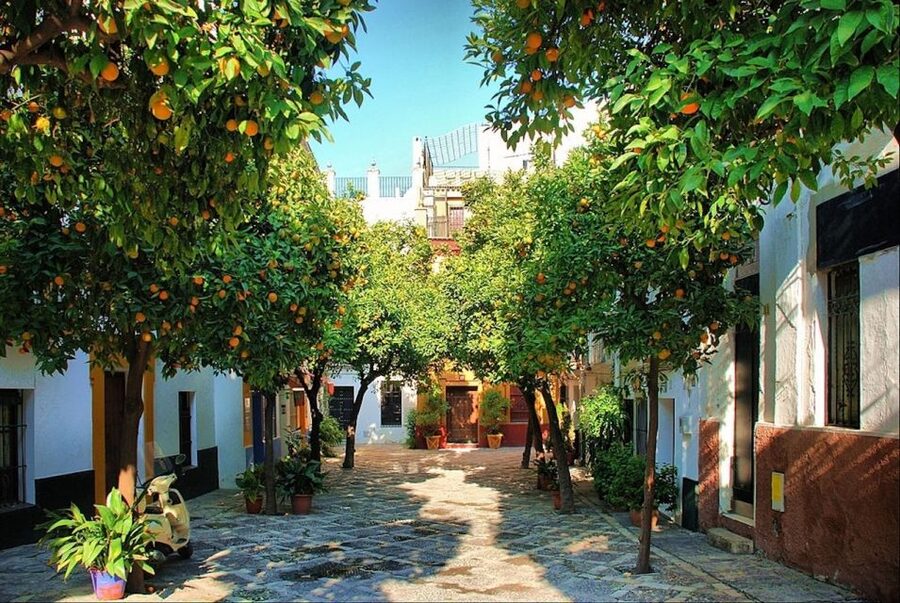
Maria Luisa Park is one of Seville’s most pleasant places for a walking tour. Its broad paths and shaded areas provide a break from the city’s harder surfaces, while the nearby exhibition buildings give the walk a strong sense of place.
The stop in the park lasts about ten minutes. You will hear more about women’s roles in the park and around the Costurero de la Reina. The subject is especially fitting here because the park is not only a pretty public garden. It is also a reminder that royal and civic decisions shaped spaces where people later worked, socialized, and made a living.
The tour then reaches the Glorieta de Doña Sol. This smaller stop lasts about five minutes. It is the sort of place that can be easy to pass without context, which is precisely why it belongs on a themed walk. A guide can turn a name on a map into a person, a character, or a clue to the way women have been represented in Seville.
A completely different day out from Seville:
- Seville: Casa de la Memoria Flamenco Show
★ 4.8 · 12,964 reviews - Seville: 1-Hour Guadalquivir River Sightseeing Eco Cruise
★ 4.2 · 10,281 reviews - Córdoba: Skip-the-Ticket-Line Mosque-Cathedral Guided Tour
★ 4.6 · 9,634 reviews - Seville: Cathedral, Giralda, and Royal Alcázar Guided Tour
★ 4.7 · 9,165 reviews
Plaza de España, with more than postcard value
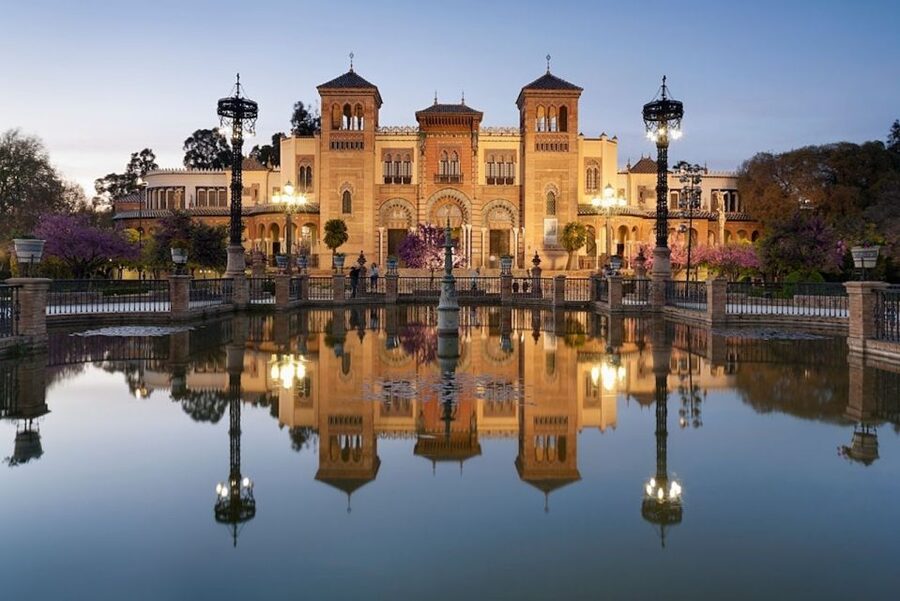
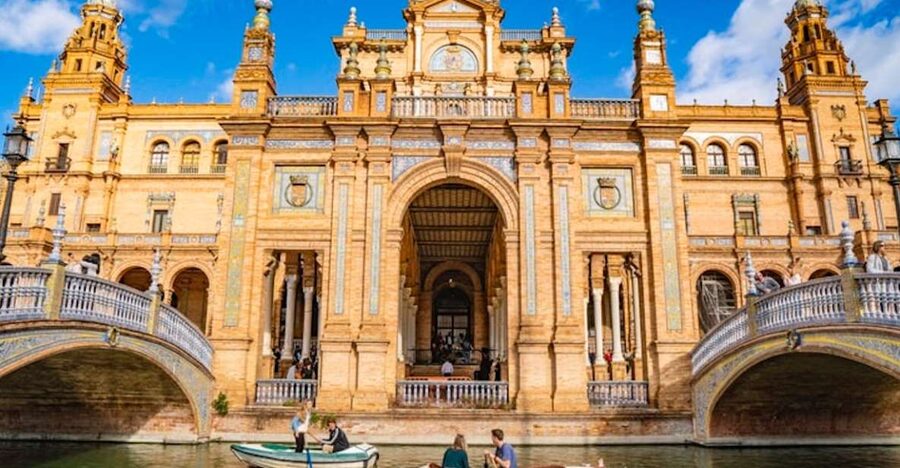
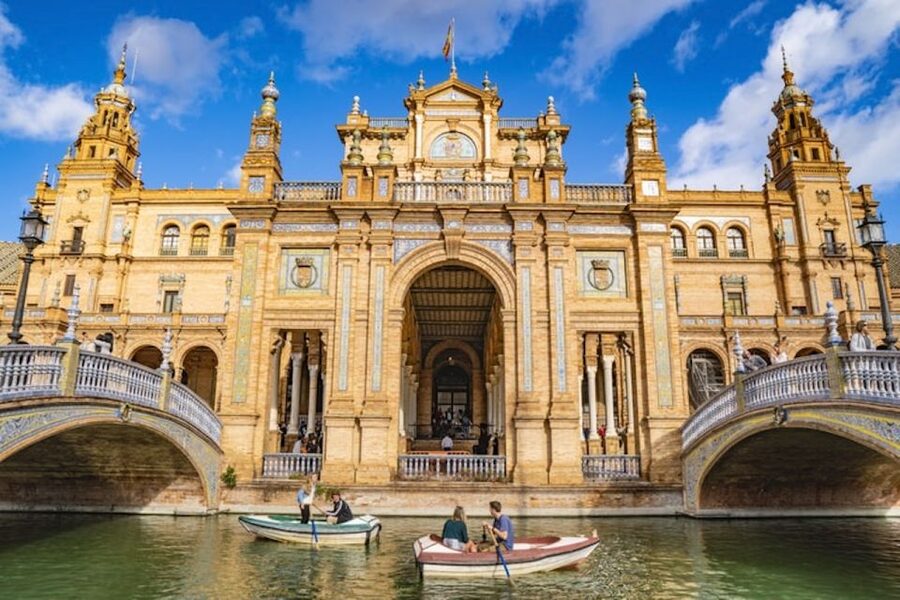
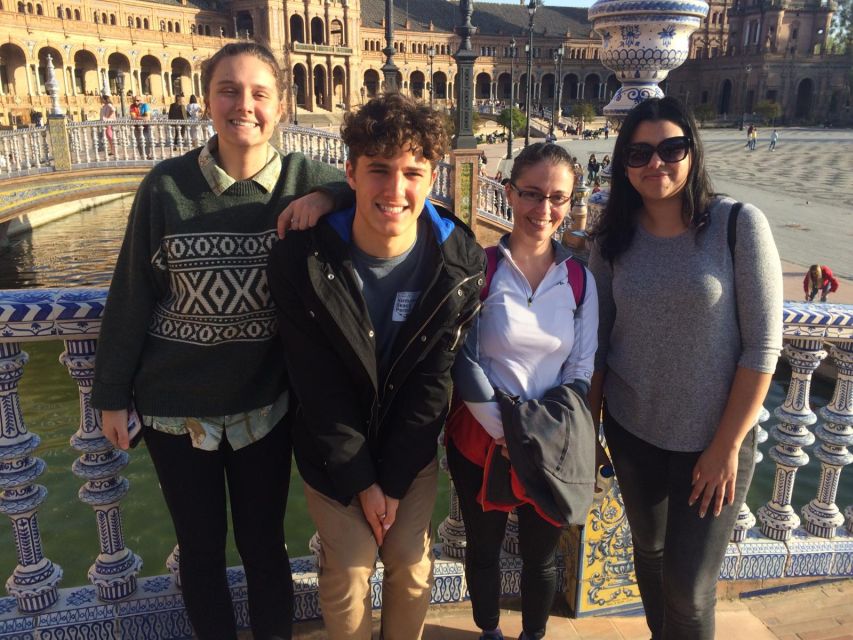
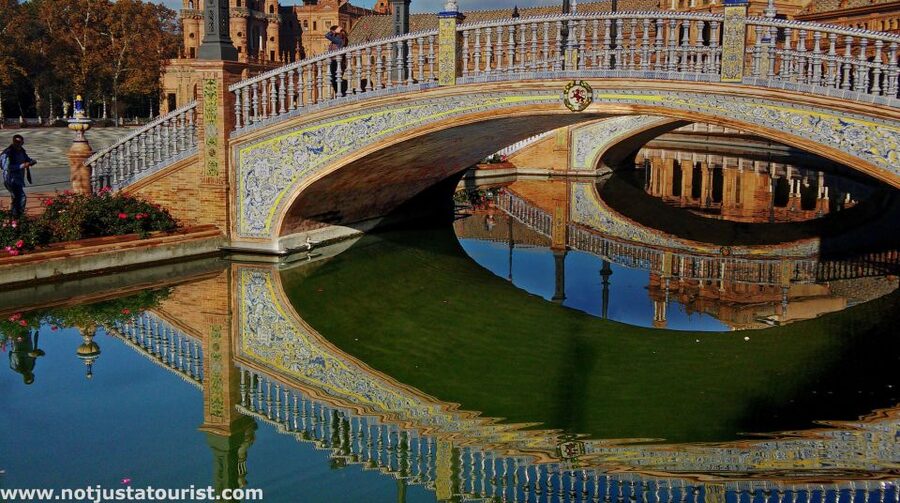
Plaza de España receives about ten minutes and a guided explanation. You may already know its sweeping semicircle, tiled alcoves, bridges, and canal from photographs. Here, the point is not simply to admire the setting.
The plaza was created for the 1929 exposition, so it connects naturally with the earlier pavilion stops. The guide places the architecture within the city’s public story, then turns attention toward women and the ways they fit into that story.
This is a good example of the tour’s main advantage. You still see one of Seville’s essential sights, but you do not spend the entire time hearing the usual list of dates and architectural labels. The female perspective gives the plaza a social edge.
The stop is short, though. If Plaza de España is a top priority for you, ten minutes will not allow much independent exploration or photography. You can return later on your own, perhaps when you have more time to study the tiles and bridges.
The Portuguese pavilion and the work behind public displays
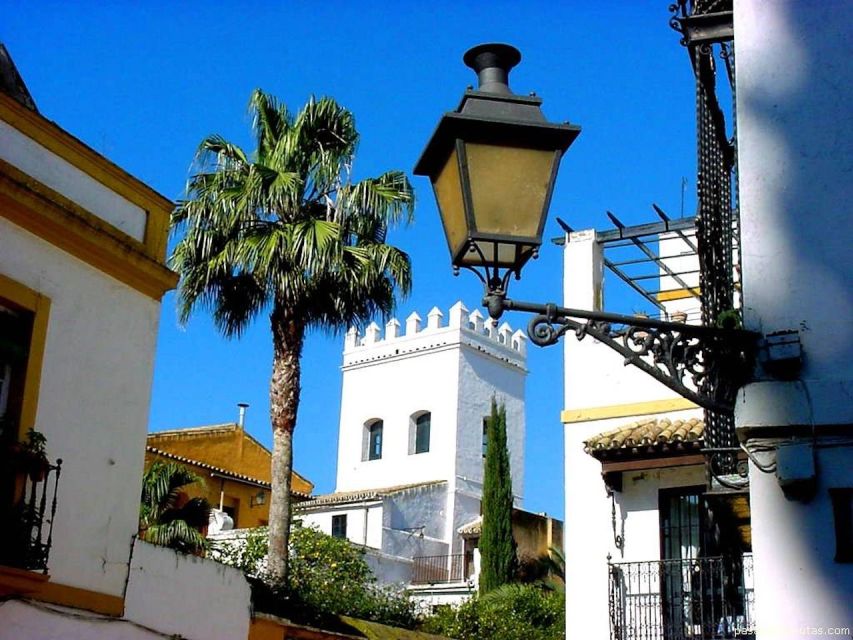
The former Portuguese pavilion is another ten-minute stop with guided commentary. Along with the United States pavilion and Plaza de España, it shows off the architectural setting created for the 1929 Exposition.
These buildings are often treated as decorative backdrops. This tour asks you to think about the people who made such grand displays possible. That approach is particularly useful when discussing women’s work, since public histories often celebrate architects, officials, and famous men while giving less attention to workers and service roles.
The pace here remains manageable. The walking segments between the exhibition sites are short, and the route does not require transport. Still, you are outdoors for the full tour, so comfortable shoes and water are sensible, especially on a hot Seville day.
The old tobacco factory and the cigar girls
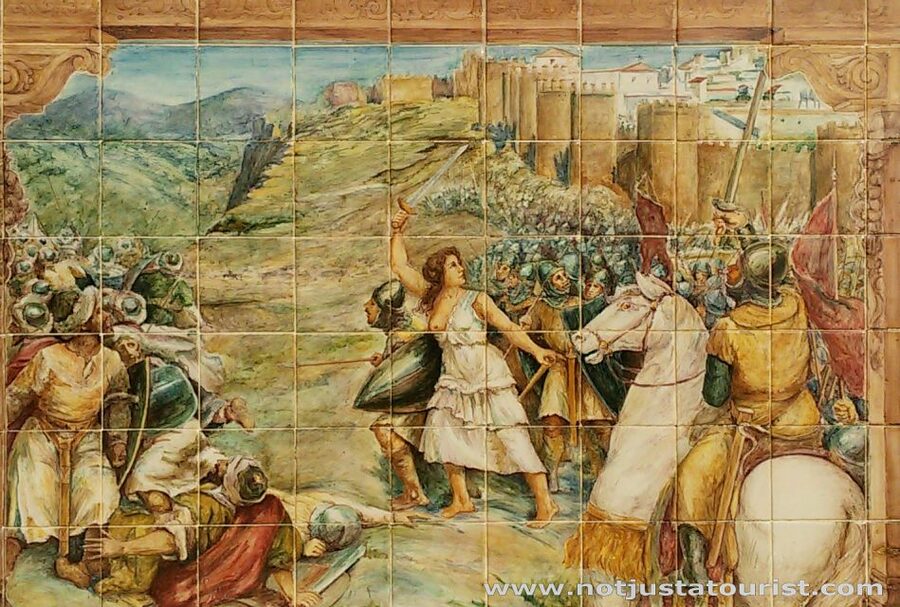
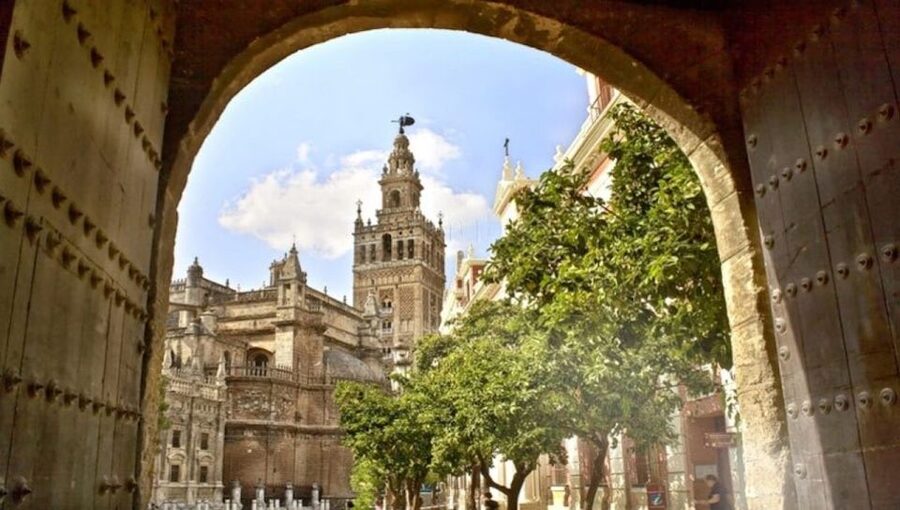
The Antigua Fábrica de Tabacos is one of the most important stops because it brings women’s labor directly into the story. The old tobacco factory is tied to Seville’s cigar girls, a group whose work has become part of the city’s cultural memory.
You spend about ten minutes at the factory. The guide explains the women’s role rather than treating the building only as a grand historic shell. This is the kind of stop that gives the tour its strongest purpose: it moves the subject away from queens and literary figures and toward women who worked for a living.
The factory also helps balance the tour. A female history of Seville should not be only a parade of exceptional women. It should include labor, class, and the daily realities behind a famous city. The cigar girls provide that grounding.
Susona Street and the narrow lanes of Santa Cruz
From the tobacco factory, the route heads into the old Jewish quarter of Santa Cruz. Calle Susona is a five-minute stop, followed by short walks toward Callejón del Agua and the wider Santa Cruz district.
These lanes are one of the tour’s best changes of mood. After the open spaces and formal buildings around the 1929 Exposition, you enter a tighter network of alleys where stories feel more personal and local. The route includes hidden corners of the old town, though the stops are brief rather than lengthy visits.
Calle Susona is especially important because it carries a woman’s name into the street map of Seville. The guide uses places like this to show how women survive in memory, sometimes through legend, romance, scandal, or tragedy rather than through official records.
At Callejón del Agua, you stop for about five minutes. The lane’s name and setting offer a good visual pause before the final walk through Santa Cruz. You should expect atmosphere and storytelling here, not an extended architectural tour.
The Santa Cruz stop itself lasts about five minutes. That is enough to orient you to the quarter and hear why its lanes matter, but not enough to cover every corner. The short timing is a drawback if you want detailed information about the Jewish quarter as a whole. It is useful if you want a focused introduction and plan to explore later.
Ending with Don Juan and Doña Inés
The walk finishes at Plaza Nueva, but the route’s final literary thread begins in Santa Cruz. You end near the square where the literary Don Juan laid hands on Doña Inés, bringing the tour back to women represented through Spanish drama and legend.
This ending fits the tour’s larger argument. Seville’s women appear in many forms: workers, queens, religious women, legendary figures, and women shaped by the stories men told about them. The Don Juan and Doña Inés reference gives you something memorable to carry away, even if you are not a specialist in Spanish literature.
Plaza Nueva is a convenient finish in central Seville. You can continue sightseeing, find food, or make your way to another part of town without needing a taxi or return transport.
What the $105 price really buys you
At $105 per person, this is not a budget walking tour. The two-hour length makes the price feel particularly steep if you compare it with broad city walks that cover more time and more standard sights.
The value depends on what you want. You are paying for a specialist theme, a small group capped at eight people, a professional guide, a city map, and local tips. You also get a route that combines well-known places with less obvious stops, rather than a basic march between the cathedral and Plaza de España.
A small group matters here. Stories about women, work, reputation, and power are better when you can ask questions and hear the answer clearly. The group size also lets the guide respond to your interests. The tour provider says you can request a more customized tour or combine it with other activities and workshops, though the details and any price changes should be confirmed before booking.
The strongest value comes if you are curious about social history and want a personal guide for your first hours in Seville. If you mainly want monuments, photographs, or long visits inside major attractions, the cost is harder to justify.
Guides, language, and the tone of the walk
The tour is offered in English and Spanish. Abby and Nico are named guides associated with the experience. Abby was praised for being informative, engaging, humorous, and able to explain Seville’s women in depth. Nico was noted for clear English, humor, and responding well to a family’s needs.
Those details matter because a themed tour can easily become too serious or too narrow. The strongest signs here point to an approachable style. Abby even inspired one family to book a private tour with her the following day, while Nico helped a family arrange a carriage ride after the walk and bought drinks on a hot day.
Do not treat those extra gestures as guaranteed inclusions. They are examples of personal service, not promises written into the tour. What is guaranteed is a live professional guide, the walking route, a map, and insider tips.
Who will get the most from this Seville walk
I would choose this tour for you if you have already seen some of Seville’s headline sights, or if you want your first introduction to the city to include more than royal and religious history.
It is particularly well suited to:
- People interested in women’s history and social change
- Families with older children or teenagers who need stories with humor and drama
- Solo visitors who value a small group and the chance to ask questions
- Repeat visitors looking for a different route through familiar parts of Seville
- Readers, writers, and anyone drawn to legends, literary characters, and local stories
You may want something else if you need a detailed architectural tour, an indoor itinerary, or long visits at each monument. The schedule gives most stops five to ten minutes, so this is an introduction with interpretation, not a full tour of every site.
Book ahead if the small group matters to you. With a minimum of two and a maximum of eight participants, the walk can feel personal, but it also may not run as expected if the minimum is not met.
Should you book this tour?
Book it if you want Seville explained through women’s lives rather than through a standard parade of monuments. Abby and Nico sound like the kind of guides who can make the subject lively, and the route gives you a useful blend of Maria Luisa Park, 1929 Exposition architecture, the old tobacco factory, and Santa Cruz.
The $105 cost is the main question. I would call it good value for a small group, specialist subject, and strong guide interaction, but poor value if you only want a quick orientation or more time at the major sights. For an open-minded visitor who likes history with a human voice, this is an unusual and worthwhile choice.
FAQ
How long does the tour last?
The walking tour lasts two hours.
How much does the tour cost?
The listed price is $105 per person.
Where does the tour start?
It starts at the Costurero de la Reina monument at Paseo de las Delicias, 3, 41001 Seville.
Where does the tour finish?
The tour finishes at Plaza Nueva, 41001 Seville.
Which languages are available?
The live guide is available in English and Spanish.
How large is the group?
The minimum group size is two participants, and the maximum is eight.
Which Seville sights are included?
The route includes the United States pavilion from the 1929 Exposition, Costurero de la Reina, Maria Luisa Park, Glorieta de Doña Sol, Plaza de España, the Portuguese pavilion, the old tobacco factory, Calle Susona, Callejón del Agua, and Santa Cruz.
What is included in the price?
The price includes the walking tour, a professional guide, a city map, and insider tips.
Can I cancel or pay later?
You can cancel up to 24 hours in advance for a full refund. You can also reserve now and pay later.
Just added around Seville
- Seville: Wine and Gourmet Tapas Tour★ 5.0 · 3 reviews
- Tapas Tour Cordoba & Wine Experience with chef and sommelier★ 4.8 · 3 reviews
- The most complete tour of Seville: All the highlights included★ 5.0 · 3 reviews
- Seville: Spritz Tasting Experience★ 4.8 · 3 reviews
- Ronda and White Villages Private Day Trip from Seville★ 5.0 · 3 reviews
- Jerez: Historic center of Jerez and horse show★ 5.0 · 3 reviews
- SEVILLE: REAL ALCÁZAR TOUR★ 5.0 · 3 reviews
- Royal Alcazar of Seville Guided Tour★ 5.0 · 3 reviews
City Tours, compared.

City Sightseeing Seville Hop-On Hop-Off Bus Tour
Read our review →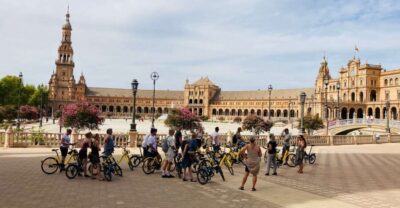
Browse the lists this tour appears in