
Reviewed · JEWISH QUARTER TOURS
Seville Former Jewish Quarter Walking Tour: Santa Cruz
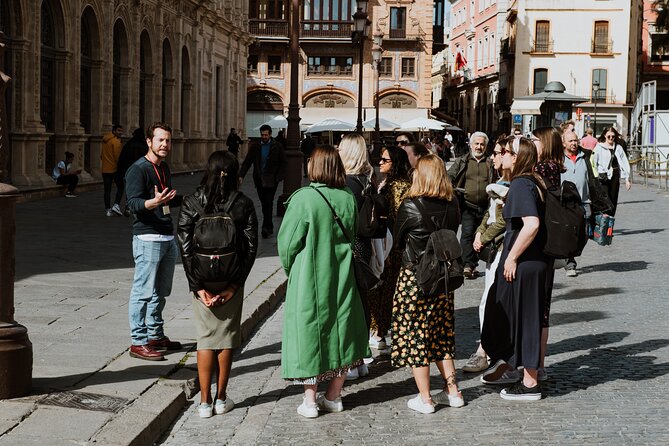
Seville’s old Jewish quarter is easy to walk through and easy to misunderstand. The streets remain, but much of the Jewish community’s physical record has vanished. This tour helps you read the clues in Santa Cruz, linking narrow lanes and quiet plazas with the lives, losses, legends, and forced changes that shaped the neighborhood.
I like the storytelling, especially the way guides such as Julio have paired local legends with the historical version behind them. I also like the small maximum group of 15, which gives you a better chance to ask about Jewish life, the Alcázar, opera, or Seville’s layered past.
The main limitation is that two hours can only sketch a difficult subject. A few visitors felt the tour needed more detail about Jewish families and their contribution to Seville, so you should book this as an engaging introduction, not a full academic study.
In This Review
- Key points to know before you book
- Why Santa Cruz needs a guide
- Plaza del Triunfo begins the story
- Plaza de la Alianza and the feel of old Santa Cruz
- Plaza de Doña Elvira and the romantic side of the quarter
- Calle Susona and the cost of legend
- Hospital de los Venerables shows a later Seville
- Casa de Murillo brings art into the walk
- Calle Sierpes and the city’s urban legends
- Rosina’s Balcony connects Santa Cruz with opera
- Callejón del Agua beside the Alcázar
- Patio de Banderas completes the route
- The guides make or break this experience
- Is $18.02 good value?
- Who should book this walk?
- Should you book the Santa Cruz walk?
- FAQ
- Where does the Seville Jewish Quarter walking tour begin?
- Where does the tour end?
- How long does the tour last?
- What languages are available?
- How much does the tour cost?
- Is hotel pickup included?
- Are admission tickets included?
- How large is the group?
- Can I cancel for a full refund?
Key points to know before you book
- Santa Cruz is more about traces than surviving monuments: You will learn to interpret streets and spaces where little visible Jewish architecture remains.
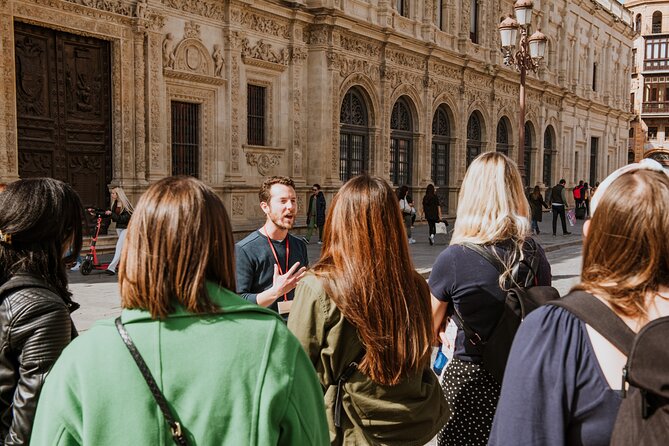
- Julio, Lara, Anna, and Maria have all led this walk: The strongest feedback centers on guides who explain clearly, answer questions, and keep the stories lively.
- The route mixes Jewish history with Seville’s wider culture: Expect tales of Susona, Murillo, The Barber of Seville, the Royal Alcázar, and local legends.
- The walk begins at Plaza del Triunfo: It ends at Plaza de Santa Cruz, in the heart of the neighborhood.
- The price is modest for a guided city walk: At $18.02 per person, the value is strongest if you want context you would miss on your own.
- Allow the full two hours: One account described a shorter walk, but the advertised duration is approximately two hours.
Why Santa Cruz needs a guide
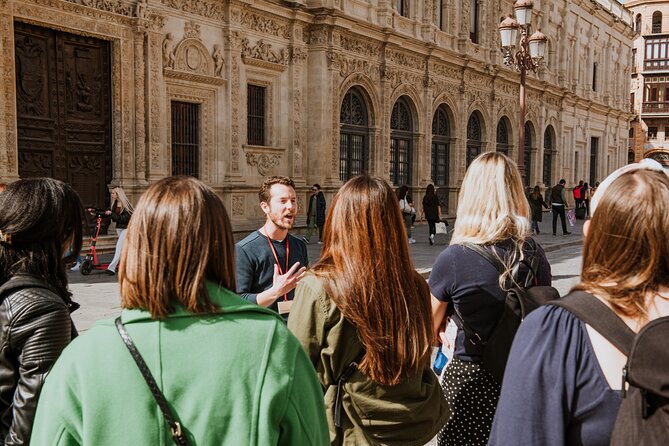
Santa Cruz does not present its Jewish past in one neat museum or a line of preserved buildings. Its story is scattered through streets, courtyards, names, legends, and the changing use of old spaces.
That makes a guide especially useful. You will walk through a neighborhood now associated with whitewashed lanes, flower-filled corners, romantic stories, and handsome historic buildings. Without explanation, it is easy to see only a pretty old quarter. With a good guide, you can begin to understand how the area changed over time and why the absence of Jewish buildings is itself part of the story.
The subject is not light. The tour covers periods when Seville’s Jewish population faced persecution, pogroms, forced movement, and the destruction or loss of community life. At its best, the walk does not reduce this history to dates. It shows how political power, religion, neighborhood life, and personal choices affected real people.
The route also reaches beyond the Jewish quarter. That is useful because Seville’s past is not divided into tidy chapters. Royal power, Catholic institutions, artists, literature, opera, and local folklore all overlap here.
More Jewish Quarter Tours in Seville
- Seville: Small-Group Jewish Quarter Discovery Walking Tour
★ 4.9 · 499 reviews - Seville: 1-Hour Walking Tour Barrio de Santa Cruz
★ 4.5 · 131 reviews - Private Tour Jewish Quarter, center and Plaza de España
★ 5.0 · 127 reviews
Plaza del Triunfo begins the story
The meeting point is Plaza del Triunfo, a practical place to start because it sits beside some of Seville’s most important landmarks. The square has witnessed royal ceremonies, conquests, and major changes in the city’s history.
You will not pay an admission fee for this stop. The value comes from orientation and explanation. Here, your guide can place the former Jewish quarter within the old city and explain how close it was to royal power and the Alcázar.
That relationship matters. One especially useful historical theme on this walk is the connection between the Jewish community and the king. Jewish residents did not live apart from the city’s political and economic life. Their position could bring opportunity, but it could also leave them exposed when rulers, religious movements, or public opinion shifted.
Plaza del Triunfo is also easy to find near public transportation. Look for the guide under or near the statue described as the meeting landmark, and arrive with enough time to get settled before the group moves into the narrow streets.
Plaza de la Alianza and the feel of old Santa Cruz
From the starting square, the route reaches Fuente de la Plaza de la Alianza. This quieter space is tucked into Santa Cruz and is associated with nobles and medieval court intrigue.
For you, the interest is less about a single surviving Jewish artifact and more about the texture of the neighborhood. The lanes are tight, the plazas appear suddenly, and the scale changes from grand civic spaces to intimate corners.
A guide can help you notice how the old quarter works as a place. You will hear about the people who used these spaces, not just the buildings that remain. This is also where the walk begins to balance documented history with storytelling. That balance is one of the tour’s strengths, provided your guide makes clear what belongs to local legend and what belongs to the historical record.
Plaza de Doña Elvira and the romantic side of the quarter
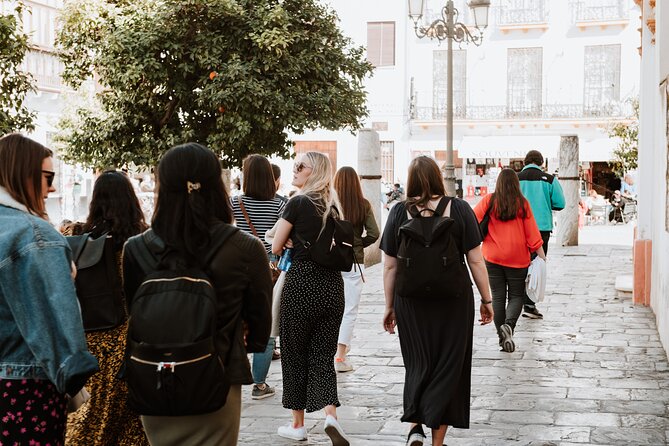
Plaza de Doña Elvira is one of Santa Cruz’s most picturesque stops. Its charm can pull attention toward romance and nostalgia, but the setting also helps explain why this neighborhood has attracted so many stories.
You will likely pause here for about 12 minutes, according to the planned route. That is enough time for a short explanation and questions, but not enough for a long lecture.
This stop works well for visitors who want a pleasant walk as well as history. It is also a good reminder that Santa Cruz’s modern image can hide the more painful events that shaped it. The neighborhood looks calm today. Its past was not always calm.
More Walking Tours in Seville
- Seville: Small-Group City Highlights Walking Tour
★ 5.0 · 1,204 reviews - Cultural Walking Tour of Seville Monumental
★ 5.0 · 861 reviews - Seville: Tapas, Taverns, and History Walking Tour
★ 4.9 · 676 reviews - Seville: Tapas, Taverns and History Guided Walking Tour
★ 4.9 · 515 reviews
Calle Susona and the cost of legend

Calle Susona recalls the tale of Susona, a Jewish woman caught between love and betrayal. Her story has remained in local memory and is one of the route’s most memorable narrative stops.
The story gives the walk a human focus. Instead of hearing only about communities as large historical groups, you encounter a personal tale shaped by trust, fear, family, and political danger.
You should listen for the distinction between the traditional story and the evidence behind it. Julio has been praised for giving both the legend and the historical explanation, a useful habit on a route where romantic tales can easily take over.
This is also a point where the tour’s limits become clear. Susona’s story is memorable, but it cannot substitute for a fuller account of Jewish family life, work, customs, and social contribution. If those questions matter most to you, ask directly. Guides such as Lara and Anna have been described as patient with questions, and the small group format should make that possible.
Hospital de los Venerables shows a later Seville
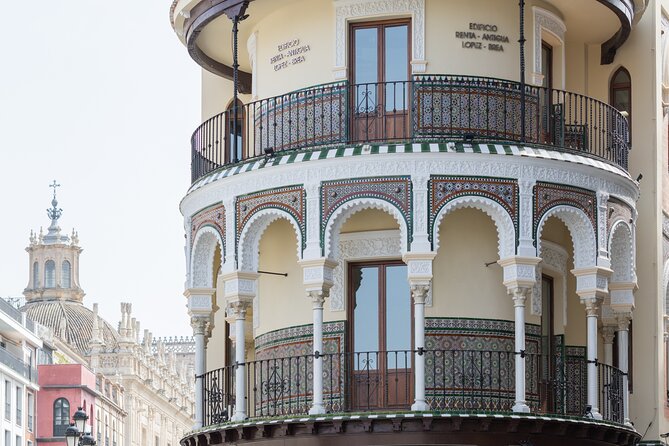
The Hospital de los Venerables changes the subject and the mood. This Baroque building once housed retired priests and now contains sacred art connected with Seville’s Golden Age.
The stop helps you see how the neighborhood continued to change after the period of Jewish residence. It also shows the city’s strong Catholic identity and the artistic world that developed around it.
Admission to the site is not included as part of this walking tour. The itinerary lists the stop with no admission ticket included, so treat it as an exterior visit unless your guide says otherwise. If you want to see the art inside, plan that as a separate activity.
That distinction matters when comparing the tour with a museum visit. You are paying for interpretation while walking through the city, not for entry into every landmark along the route.
Casa de Murillo brings art into the walk
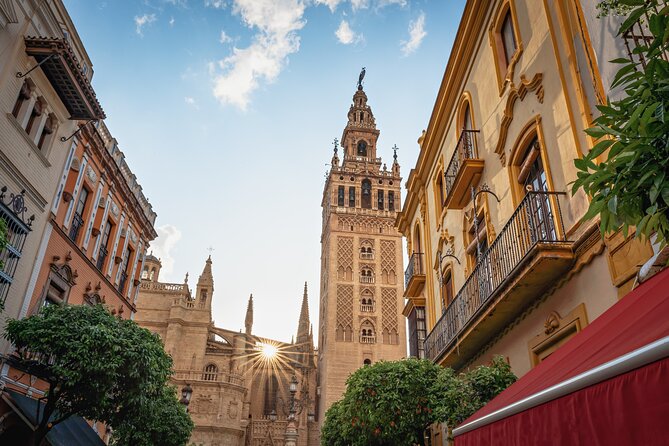
Casa de Murillo is linked with Bartolomé Esteban Murillo, the celebrated 17th-century painter associated with Seville. His work captured the city’s light and religious life, and his former home adds an artistic layer to the route.
This stop is not a replacement for visiting a museum with Murillo paintings. Its value is in connecting an important artist with the streets and society around him.
I like this broader approach. A neighborhood’s identity comes from more than one community or century. By bringing in Murillo, the guide can show how Seville’s Jewish past sits within a much larger sequence of cultural changes.
Again, expect a stop from the outside rather than included entry. The walk remains a street-level experience.
Calle Sierpes and the city’s urban legends
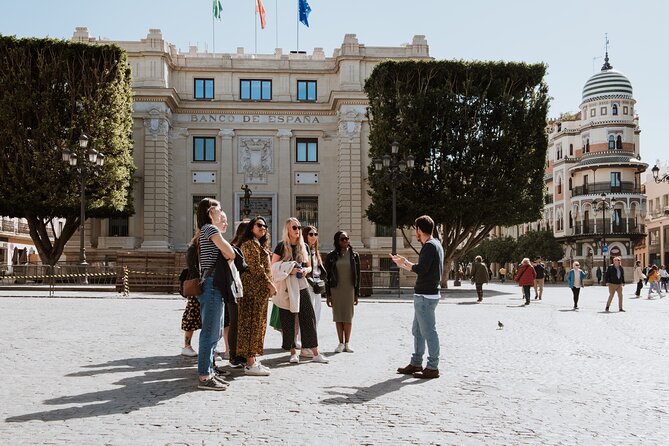
Calle Sierpes is one of Seville’s best-known streets, with a reputation for strange disappearances and old urban legends. It adds a lighter, more playful turn to the route.
This stop may not be central to Jewish history, but it helps explain how Seville preserves its past through stories. Local folklore gives the walk variety, especially after more serious discussion of persecution and forced change.
The drawback is focus. If you want every minute devoted to Jewish history, this section may feel like a detour. If you enjoy seeing how history, rumor, and popular storytelling overlap, it makes the tour more entertaining.
Rosina’s Balcony connects Santa Cruz with opera
Rosina’s Balcony links the neighborhood with The Barber of Seville. Rosina is clever, lively, and independent, and the character reflects the playful spirit often associated with the city’s old quarter.
You will not be attending an opera performance, and the balcony is a story point rather than a ticketed attraction. Its appeal is the connection between Seville’s streets and the way writers and composers have imagined them.
This is another reason the tour suits first-time visitors who want more than a narrow history lesson. You move from Jewish community history to legend, painting, literature, music, and royal power without leaving the same compact area.
Callejón del Agua beside the Alcázar
Callejón del Agua is a narrow passage where water once flowed from the Royal Alcázar. Its cool, enclosed feel is very different from the open spaces near the start of the tour.
This is one of the places where a guide’s voice makes a real difference. The lane is visually striking, but its meaning comes from knowing how water, palace life, poetry, and neighborhood stories connect.
The route is mostly on foot through narrow streets, so wear comfortable shoes and expect uneven or tight walking space typical of an old quarter. No special fitness level is listed, and most people can participate, but you should still be ready to walk continuously for roughly two hours.
Patio de Banderas completes the route
The final stop is Plaza Patio de Banderas, behind the Alcázar walls. This broad courtyard recalls royal ceremonies, empires, and the many stages of Seville’s development.
It is a fitting place to finish because the tour began by placing Santa Cruz near royal authority. By the end, you have seen how the quarter’s story connects to the palace, the city’s rulers, and the institutions that shaped daily life.
The walk ends at Plaza de Santa Cruz, not back at Plaza del Triunfo. That makes the tour easy to pair with dinner, another walk through Santa Cruz, or a visit to nearby sights. Dinner is not included, and there is no hotel pickup, so plan your own onward arrangements.
The guides make or break this experience
The most praised guides are Julio, Lara, Anna, and Maria. The descriptions of their work point to a clear pattern: the best guides speak plainly, answer questions, use humor carefully, and adjust the conversation to the group.
Julio is especially associated with storytelling, local details, opera references, and the habit of separating legend from historical fact. Lara has been appreciated for taking time with questions and explaining difficult parts of Jewish history in a clear way. Anna has been described as warm, passionate, and able to keep the walk engaging even in damp weather. Maria is linked with friendly explanations and good anecdotes.
The experience may vary with the individual guide. That is normal for a walking tour, but it matters here because the physical remains are limited. A strong guide can make a nearly invisible past easier to understand. A weaker presentation may leave you with pleasant stories but too little information about Jewish families, daily life, or the community’s lasting contribution to Seville.
If you have a particular interest, ask about it early. Good questions might include how the Jewish population interacted with the monarchy, what happened during the pogroms, how residents were forced to move, or what evidence remains today.
Is $18.02 good value?
At $18.02 per person, I consider this a reasonably priced introduction to Santa Cruz. You get an English or Spanish guided walk, roughly two hours, and a route through ten meaningful locations. There are no separate admission fees built into the experience, but that also means you should not expect interior visits to the Hospital de los Venerables or Casa de Murillo.
The value comes from interpretation. You can walk these streets for free, but you may miss why Calle Susona matters, how the Alcázar relates to the old Jewish quarter, or how local legends grew around the neighborhood.
The tour is less valuable if you want a specialist lecture, extensive archival detail, or a long visit inside historic buildings. It is better suited to someone who wants a clear first look at Seville’s Jewish past and the stories attached to Santa Cruz.
Who should book this walk?
I would recommend it to first-time visitors, families, couples, and anyone who enjoys learning a city through its streets. Children may respond well to the tales of Susona, Rosina, and mysterious disappearances, while adults can focus on the difficult history behind the stories.
It is also useful if you have already seen Seville’s major sights but feel you have missed the city’s Jewish past. The walk supplies context that is hard to gain from sightseeing alone.
You may want to skip it if your priority is a museum-style presentation with surviving artifacts and detailed discussion of individual Jewish families. The quarter has lost much of its visible Jewish material, and at least some guides may give more attention to legends and general Seville history than you expect.
The tour is offered in English and Spanish, with a maximum of 15 people. Confirmation arrives when you book, service animals are allowed, and the meeting point is near public transportation. You can cancel without charge up to 24 hours before the start time. If the minimum number is not reached and the operator cancels, you are offered another date or experience, or a full refund.
Should you book the Santa Cruz walk?
Book it if you want a well-told introduction to Jewish Seville, a gentle orientation to Santa Cruz, and a mix of documented history, legends, opera, art, and local color. The low price and central route make it an easy addition to a Seville stay.
Go in with the right expectations. You are not touring a preserved medieval Jewish museum. You are walking through a changed neighborhood and learning how to notice what remains, what disappeared, and what later generations remembered through stories.
Ask questions, allow the full two hours, and treat the guide as your key to the details. With Julio, Lara, Anna, Maria, or another strong guide, this can give you a much sharper sense of Seville than a pleasant stroll alone.
FAQ
Where does the Seville Jewish Quarter walking tour begin?
The tour begins at Plaza del Triunfo, in Casco Antiguo, Seville.
Where does the tour end?
The walk ends at Plaza de Santa Cruz, also in Casco Antiguo.
How long does the tour last?
The advertised duration is approximately two hours. One account described a walk of a little over an hour, so allow two hours in your schedule.
What languages are available?
The guided tour is available in English and Spanish.
How much does the tour cost?
The listed price is $18.02 per person.
Is hotel pickup included?
No. Hotel pickup is not included, so you need to reach Plaza del Triunfo independently.
Are admission tickets included?
The tour includes the guided walk, but admission tickets are not listed as included. The stops are presented as free itinerary points, so plan separately if you want to enter sites such as the Hospital de los Venerables or Casa de Murillo.
How large is the group?
The maximum group size is 15 people.
Can I cancel for a full refund?
Yes. You can cancel at least 24 hours before the experience start time for a full refund. Changes or cancellations made less than 24 hours before the start time are not accepted for a refund.
More Jewish Quarter Walks
- Córdoba: Jewish Quarter, Mosque, and Alcázar Tour
★ 4.7 · 4,279 reviews - Cordoba Mosque & Jewish Quarter Tour with Tickets
★ 4.6 · 1,996 reviews - Córdoba: Mosque-Cathedral, Jewish Quarter and Alcázar Tour
★ 4.7 · 1,426 reviews - Cordoba: Jewish Quarter and Mosque-Cathedral Guided Tour
★ 4.6 · 996 reviews
Just added around Seville
- Seville: Wine and Gourmet Tapas Tour★ 5.0 · 3 reviews
- Tapas Tour Cordoba & Wine Experience with chef and sommelier★ 4.8 · 3 reviews
- The most complete tour of Seville: All the highlights included★ 5.0 · 3 reviews
- Seville: Spritz Tasting Experience★ 4.8 · 3 reviews
- Ronda and White Villages Private Day Trip from Seville★ 5.0 · 3 reviews
- Jerez: Historic center of Jerez and horse show★ 5.0 · 3 reviews
- SEVILLE: REAL ALCÁZAR TOUR★ 5.0 · 3 reviews
- Royal Alcazar of Seville Guided Tour★ 5.0 · 3 reviews
Jewish Quarter Tours, compared.
Cordoba Mosque & Jewish Quarter Tour with Tickets
Read our review →
Mosque-Cathedral, Jewish Quarter and Alcázar Tour
Read our review →
Jewish Quarter and Mosque-Cathedral Guided Tour
Read our review →
Mosque-Cathedral, Alcazar & Jewish Quarter with Tickets
Read our review →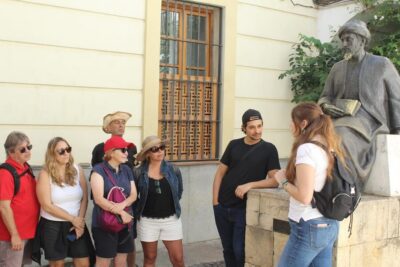
Mosque-Cathedral of Cordoba and Jewish Quarter Tour
Read our review →
Small-Group Jewish Quarter Discovery Walking Tour
Read our review →Browse the lists this tour appears in