
Reviewed · CITY TOURS
Seville In Season- City Highlight Tour
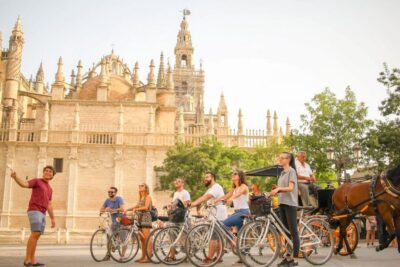
Seville’s big sights are spread across both sides of the Guadalquivir, and this three-hour bicycle tour links them in one brisk ride. You cross into Triana, follow the river, pass the Alcázar and old tobacco factory, then finish at Plaza de España and Plaza de América.
I like the wide range of sights for $36.20, and I like the local angle: guides such as Pablo, Veronica, and Antonio add stories about flamenco, ceramics, opera, shipping, and Seville’s changing neighborhoods. The main catch is that most stops last only 10 to 20 minutes, so you see many places from the outside rather than touring their interiors.
In This Review
- Key points to know
- Seeing Seville by bicycle in three hours
- Beginning at Triana Bridge and the Guadalquivir
- Santa Ana and Triana’s local identity
- The Torre del Oro and Seville’s riverfront story
- San Telmo, the Alcázar, and royal Seville
- Plaza del Cabildo and the old tobacco factory
- Maria Luisa Park and the 1929 exhibition
- Plaza de España and Plaza de América
- What the guides add to the ride
- Ride comfort, timing, and value
- Who should book this Seville bike tour
- Should you book it?
- FAQ
- How long does the Seville In Season City Highlight Tour last?
- What language is the tour offered in?
- Where does the tour begin and end?
- What is included in the tour price?
- Does the tour include hotel pickup or monument admission?
- What happens if the tour is canceled because of weather?
Key points to know
- A citywide introduction: Cover Seville’s riverfront, Triana, royal palace district, historic center, and Maria Luisa Park in one outing.
- Bicycle travel: The route uses bikes, with helmets, baskets, water, insurance, and a map included.
- Small group size: The tour has a maximum of 12 people, which should allow for questions and a manageable ride.
- Strong guide element: Pablo, Veronica, and Antonio are praised for clear explanations, local stories, and useful tips for the rest of your stay.
- Best first-day use: Take it early in your visit to understand Seville’s layout and decide where to return on foot.
- Weather matters: Poor weather can cancel the outing, with a new date or full refund offered.
Seeing Seville by bicycle in three hours
At $36.20 per person, this is a reasonably priced way to get your bearings in Seville. You are not paying for admission to the Alcázar or other major monuments, since the stops are primarily exterior visits, but you are paying for a guided route, a bicycle, safety equipment, and a useful introduction to the city.
The route is broad rather than deep. In three hours, you cover 11 stops and cross several different parts of Seville. That makes the tour especially useful on your first day, when the city center can feel like a maze of lanes, squares, churches, gardens, and river crossings.
You should think of it as a moving orientation tour, not a series of full museum visits. The short stops give you time to hear the main story, take photographs, and note places to revisit later.
The group limit is 12 people. That is large enough to create a bit of company but small enough for a guide to keep the ride together and answer questions. The tour is offered in English, and confirmation arrives when you book.
A few more Seville tours worth comparing
- Seville: Royal Alcázar Entry Ticket
★ 4.6 · 28,378 reviews - Seville: Cathedral and La Giralda Entry Ticket
★ 4.5 · 24,592 reviews - Seville: Live Flamenco Dancing Show Ticket at the Theater
★ 4.7 · 16,396 reviews
Beginning at Triana Bridge and the Guadalquivir
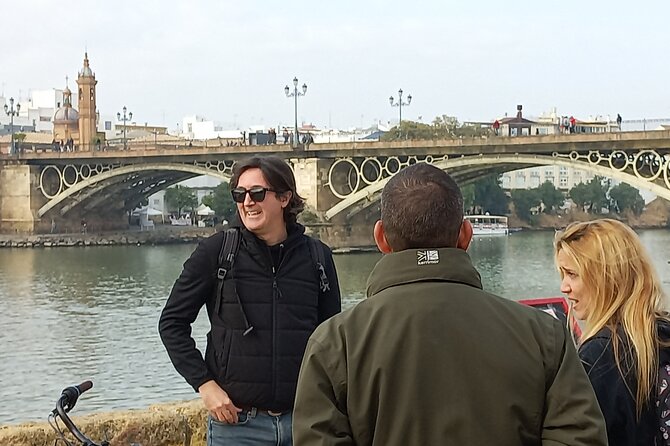
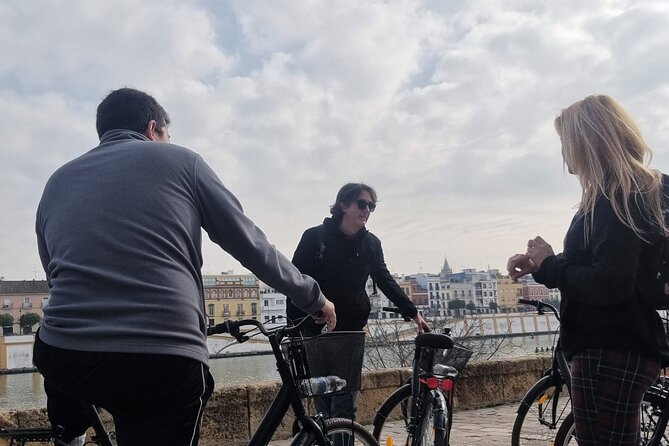
The meeting point is Segway Sevilla Tours on Calle Álvarez Quintero in the old town. From there, the route heads toward Puente de Isabel II, better known as Triana Bridge, for one of the first major views of the Guadalquivir River and the Triana neighborhood.
This is an excellent opening stop because the river explains much of Seville’s story. The waterfront once served as the Port of the Indies, linking the city with trade from the Americas. The bridge also gives you a clear sense of how the river separates, and connects, Seville’s central districts and Triana.
You get about 20 minutes here, enough for photos and a short explanation. The stop is free, as are all the listed stops, but keep your expectations practical: this is a viewpoint and history lesson, not a boat ride or a formal monument visit.
From the bridge, the ride continues into Triana. The neighborhood has a strong local identity and is associated with flamenco, bullfighting, and the old Moorish ceramic industry. The route gives you a taste of those connections without trying to turn the district into a staged performance.
I like this part because it adds character to a standard list of Seville sights. You see that Seville is not only palaces and grand squares. It also has working neighborhoods with their own traditions and pride.
Santa Ana and Triana’s local identity
The Iglesia de Santa Ana is described as the Cathedral of Triana, a popular nickname that tells you how important the church is to the neighborhood. It was built in Mudejar style after Muslim rule ended in Seville in 1248 and is regarded as the first Catholic church built in the city after that transition.
The stop lasts around 10 minutes. That is enough for the guide to explain its place in Triana, but not enough for a long interior visit. If religious art or medieval architecture is important to you, make a note to return on your own and check opening arrangements separately.
This is one of the tour’s useful habits: it connects a building to the people and district around it. You are not simply told that a church is old. You hear why it matters to Triana and how the neighborhood developed its own identity.
The Torre del Oro and Seville’s riverfront story
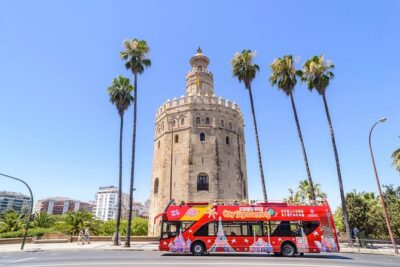
Back on the central side of the river, you reach the Torre del Oro, one of Seville’s most recognizable landmarks. The Arab watchtower once formed part of the city’s defenses, with a chain stretching across the river to another tower on the Triana side.
The guide also uses this stop to point out nearby landmarks such as the Real Maestranza bullring and the Maestranza Theater. The stop lasts about 15 minutes, so you should expect an exterior explanation and photographs rather than a visit inside the tower or bullring.
This is a good place to ask questions about Seville’s river traffic and military past. The river was not just a pretty backdrop. It shaped trade, defense, travel, and the city’s connection to distant parts of the world.
For a first visit, the riverfront sequence works well. You begin with the bridge and Triana, then return to the tower and the central bank. That back-and-forth gives you a clearer mental map than visiting these places separately.
A completely different day out from Seville:
- Seville: Casa de la Memoria Flamenco Show
★ 4.8 · 12,964 reviews - Seville: 1-Hour Guadalquivir River Sightseeing Eco Cruise
★ 4.2 · 10,281 reviews - Córdoba: Skip-the-Ticket-Line Mosque-Cathedral Guided Tour
★ 4.6 · 9,634 reviews - Seville: Cathedral, Giralda, and Royal Alcázar Guided Tour
★ 4.7 · 9,165 reviews
San Telmo, the Alcázar, and royal Seville
The Palau de San Telmo is a richly decorated Baroque building now used as the seat of the Presidency of the Junta de Andalucía. Its original purpose was different: it was built in 1682 as a marine academy for pilots, navigators, and senior naval officers.
That change of function is worth noting. Seville’s grand buildings often carry several layers of civic life, and San Telmo connects the city to seafaring and the Atlantic world. The guide allows about 15 minutes here.
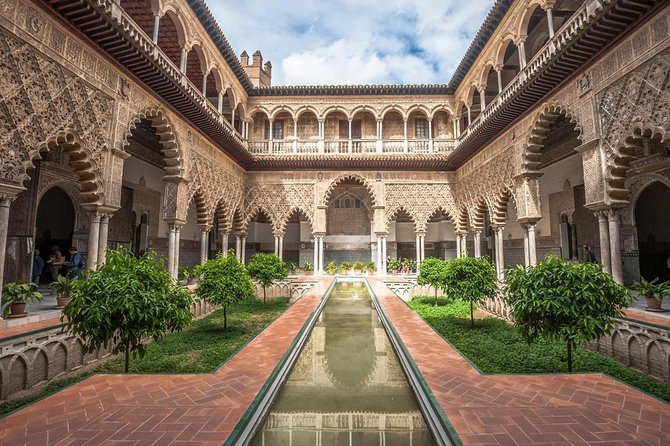
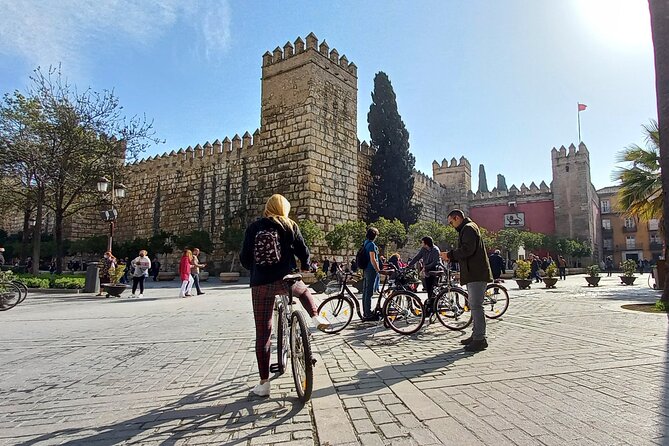
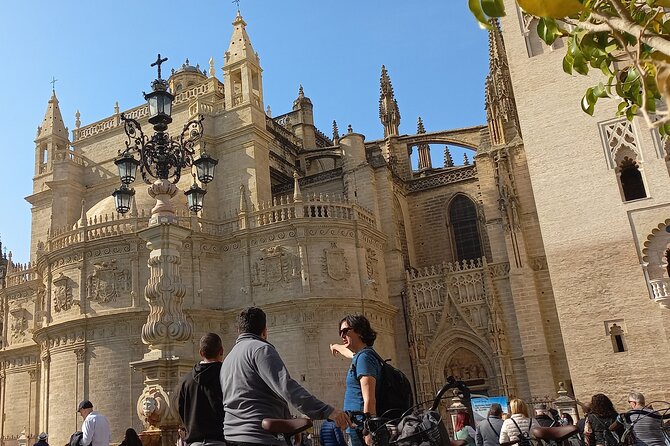
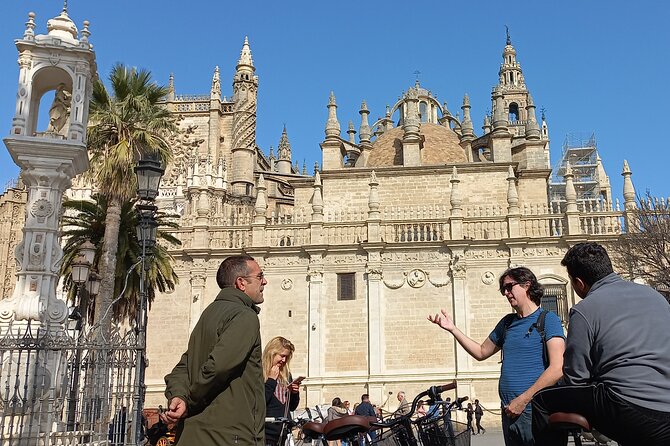
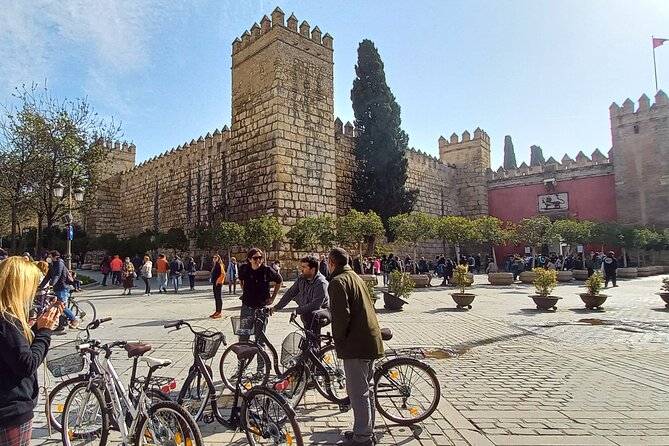
The next stop is the Real Alcázar de Sevilla, the fortified palace complex that has served as a royal residence since the medieval period. The name alcázar means fortified palace, and the site combines the legacy of Muslim rulers with later Christian royal use.
The Alcázar is one of Seville’s essential paid sights, but this bicycle tour does not include entry. You stop for about 15 minutes and learn the main facts from outside. The palace has also appeared in television filming, including Game of Thrones, which may interest fans but is less important than the building’s long role as a royal residence.
Here is where I would make a practical choice. If you have only one day in Seville, the bike tour lets you see the Alcázar and several other landmarks quickly. If you have two or more days, return later for a proper palace visit and allow much more time.
Plaza del Cabildo and the old tobacco factory
Plaza del Cabildo is a small, peaceful square tucked near the cathedral area. Its painted arches and white marble columns frame antique and philately shops, along with a candy shop selling sweets from Seville’s cloistered convents.
The square is scheduled for 15 minutes. It is a welcome pause after larger monuments and busy roads. You get a glimpse of Seville’s quieter side, with traditional shops and a setting that rewards close looking more than grand photography.
The route then reaches the Real Fabrica de Tabacos, the former tobacco factory. At its height, the building produced a major share of the cigars sold across Europe. It is also linked to the story of Carmen, the fictional cigar maker at the center of the famous opera.
The Carmen connection gives the stop an easy way into Seville’s artistic image, but the building itself deserves attention. Its scale reflects the importance of tobacco production and the commercial world that grew around it.
Again, plan on an exterior stop of about 15 minutes. The tour will not replace a dedicated visit to the building, but it helps you understand why it appears so often in accounts of Seville.
Maria Luisa Park and the 1929 exhibition
The route changes pace in Parque de Maria Luisa, Seville’s best-known public park. The grounds were once private gardens belonging to San Telmo Palace and later became part of preparations for the 1929 Hispano-American Exposition.
This is one of the most pleasant stretches of the ride. Instead of moving from one stone facade to another, you cycle through gardens and pause at places such as the Glorieta de Bécquer and Plaza de América.
The park stop is listed at about 15 minutes, followed by 20 minutes at Plaza de España. In practice, the amount of riding and explanation you receive at each point may vary with the group, traffic, and the guide’s pace.
I like having the park near the end of the route because it gives you room to breathe before the grand finale. You also see how Seville uses public gardens as part of its civic identity, not simply as decoration around monuments.
Plaza de España and Plaza de América
Plaza de España is the visual high point of the tour. Built for the 1929 Ibero-American Exposition, it was designed by Sevillian architect Aníbal González in a regionalist style that blends several architectural traditions associated with the city.
The space is large, highly decorative, and easy to appreciate even during a short stop. You can photograph the curved building, tiled details, bridges, and open central area while your guide explains the purpose of the exposition and the architect’s role.
The guide can also point out a statue of Aníbal González. That small detail helps connect the building to the person who designed it rather than treating the plaza as an anonymous postcard view.
The final stop is Plaza de América, where three buildings constructed by González between 1913 and 1916 represent different architectural styles. The buildings were intended for the future 1929 exhibition, so this square completes the story begun in Maria Luisa Park.
At 10 minutes, the stop is brief. You will get the key idea and a chance to take photographs, then return to the starting point. If Plaza de España is high on your list, you may want to come back at a slower hour after the tour.
What the guides add to the ride
The route is useful on its own, but the guide determines how much you get from it. Pablo is noted for being warm and accommodating, while Veronica is praised for local insight into Seville’s history and culture. Antonio is described as an enthusiastic guide who offers practical advice for making the most of the rest of your visit.
Those names are drawn from past guide assignments, so you should not assume a particular person will lead your departure. Still, they show the kind of service this local company aims to provide: clear explanations, a friendly manner, and tips that go beyond memorized dates.
One group finished with a glass of local orange wine arranged by owner Marco. That is not listed as a standard inclusion, so treat it as a possible personal touch rather than part of the promised tour. The dependable inclusions are bottled water, a bicycle, an approved helmet, liability insurance, a basket, a map, and information about points of interest and tapas.
The map and tapas information matter more than they may sound. After a fast city tour, you will have a better idea of which districts to explore on foot and where to look for food later.
Ride comfort, timing, and value
The tour lasts approximately three hours and includes free use of the bicycle. Seville is described as cycle-friendly, with many cycle paths, but this remains an active outing. You should be comfortable riding for the duration and following a guide through an urban setting.
The route’s biggest strength is efficiency. You cover Triana, the riverfront, the palace district, the old center, the tobacco factory, Maria Luisa Park, and the exhibition squares without arranging several separate walks.
Its biggest limitation is time. Eleven stops in three hours means the average visit is short, and the schedule does not include admission to the Alcázar, Torre del Oro, Santa Ana, or the tobacco factory. You are buying orientation and storytelling, not a substitute for full sightseeing.
At $36.20, I consider the tour good value if you use it as a starting point. It is less compelling if you already know Seville well or want long visits inside monuments. The included equipment and small maximum group help justify the price, especially for a first visit.
The tour begins and ends at C. Álvarez Quintero 44 in Seville’s old town. It is near public transportation, and hotel transfer is not included. Tips are also not included, so you can decide at the end based on the service you receive.
Free cancellation is available up to 24 hours before the start time for a full refund. Changes or cancellations inside that window are not accepted for a refund. Since the outing requires good weather and a minimum number of people, the provider may offer another date, another experience, or a full refund if it cannot operate.
Who should book this Seville bike tour
I would choose this tour for a first morning or afternoon in Seville, especially if you want to understand the city before committing time to the Alcázar, cathedral area, or Triana. It also suits people who enjoy hearing local stories while moving rather than spending three hours in one monument.
It is a good match for couples, families with riders who can manage the route, and small groups that want a simple way to see the major sights. The 12-person limit keeps it more personal than a large coach outing.
I would look elsewhere if you dislike cycling, need long indoor visits, or want a specialist tour devoted only to flamenco, ceramics, royal architecture, or the 1929 exhibition. This route gives you a little of each, but it does not offer a deep treatment of any single subject.
Should you book it?
Book it if you want a friendly, active introduction to Seville and value breadth over long monument visits. The route is especially useful early in your stay, and the combination of Triana, the Guadalquivir, the Alcázar exterior, Maria Luisa Park, and Plaza de España gives you a strong sense of the city’s shape.
Skip it if you already have a detailed Seville plan built around interior visits. For most first-time visitors, though, $36.20 is a fair price for three hours of transport, context, equipment, and local guidance. Just keep your expectations clear: this is a fast, well-planned city orientation, followed by your own slower return to the places that catch your eye.
FAQ
How long does the Seville In Season City Highlight Tour last?
The tour lasts approximately three hours and ends back at the starting point.
What language is the tour offered in?
The tour is offered in English.
Where does the tour begin and end?
It begins at Segway Sevilla Tours, C. Álvarez Quintero 44, Casco Antiguo, 41004 Seville, Spain, and returns to the same meeting point.
What is included in the tour price?
The price includes use of a bicycle, bottled water, an approved helmet, liability insurance, a basket, a map, and information about points of interest and tapas.
Does the tour include hotel pickup or monument admission?
Hotel transfer is not included. The listed stops have free admission, but the tour does not include paid interior admission to monuments such as the Alcázar.
What happens if the tour is canceled because of weather?
If poor weather prevents the tour from operating, you will be offered a different date or a full refund. If the minimum number of people is not met, you will be offered a different date or experience, or a full refund.
Just added around Seville
- Seville: Wine and Gourmet Tapas Tour★ 5.0 · 3 reviews
- Tapas Tour Cordoba & Wine Experience with chef and sommelier★ 4.8 · 3 reviews
- The most complete tour of Seville: All the highlights included★ 5.0 · 3 reviews
- Seville: Spritz Tasting Experience★ 4.8 · 3 reviews
- Ronda and White Villages Private Day Trip from Seville★ 5.0 · 3 reviews
- Jerez: Historic center of Jerez and horse show★ 5.0 · 3 reviews
- SEVILLE: REAL ALCÁZAR TOUR★ 5.0 · 3 reviews
- Royal Alcazar of Seville Guided Tour★ 5.0 · 3 reviews
City Tours, compared.

City Sightseeing Seville Hop-On Hop-Off Bus Tour
Read our review →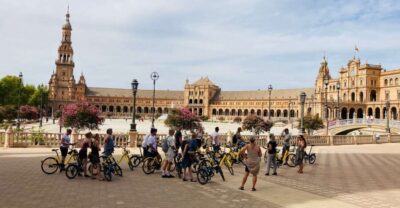
Browse the lists this tour appears in