
Reviewed · JEWISH QUARTER TOURS
Seville : Jewish Quarter & Santa Cruz Walking Tour
Seville’s Jewish past is easiest to understand on foot, where narrow lanes, former religious buildings, shaded courtyards, and grand plazas sit close together. This two-hour tour moves from Santa Cruz’s Jewish heritage to the Royal Tobacco Factory and María Luisa Park, linking small corners of the city with its larger story.
I like the way the route mixes famous sights with less obvious stops such as Calle Susona and Plaza Alfaro. I also like the chance to shape the experience around your interests, with guides including Francesco, Sarah, Pedro, Virginia, and Rossella praised for clear stories, humor, patience, and practical advice. The main consideration is the tour description’s conflicting group information: it refers to a small group, but also says a private group is available and describes the tour as exclusive. Confirm exactly what you are booking.
- Former synagogue: Visit Iglesia de Santa María la Blanca and see its connection to Seville’s Jewish past.
- Santa Cruz on foot: Explore Plaza de Santa Cruz, Plaza Alfaro, Calle Susona, and Plaza de Doña Elvira.
- Stories beyond monuments: Hear about Sephardic life, the Spanish Golden Age, Don Juan, and Seville’s changing communities.
- Big-city landmarks: Connect the old quarter with Plaza del Triunfo, Puerta de Jerez, and the Torre del Oro.
- Royal Tobacco Factory: See the University of Seville in a building tied to industry, literature, and the city’s later growth.
- Flexible guiding: English, Spanish, French, and Italian are available, with private options and tour customization.
In This Review
- What This Two-Hour Walk Is Really About
- Starting at Hotel Fernando III and Plaza de Santa Cruz
- Plaza de los Refinadores and the Sephardic Quarter
- Santa María la Blanca, a Former Synagogue
- Courtyards, Calle Susona, and Stories of Jewish Seville
- Plaza de Doña Elvira and the Route to Plaza del Triunfo
- Puerta de Jerez, the Torre del Oro, and a Changing City
- The University of Seville and Its Tobacco Factory Past
- Ending in María Luisa Park
- Guides, Languages, and Personal Attention
- Is $22 a Good Value?
- Who Will Get the Most From This Tour?
- Practical Details Before You Book
- Should You Book It?
- FAQ
- How long does the Seville Jewish Quarter and Santa Cruz Walking Tour last?
- Where does the tour meet?
- What places does the tour visit?
- Is the tour available in English?
- Is the tour wheelchair accessible?
- Is this a private tour or a group tour?
- Can I cancel the tour for a full refund?
What This Two-Hour Walk Is Really About
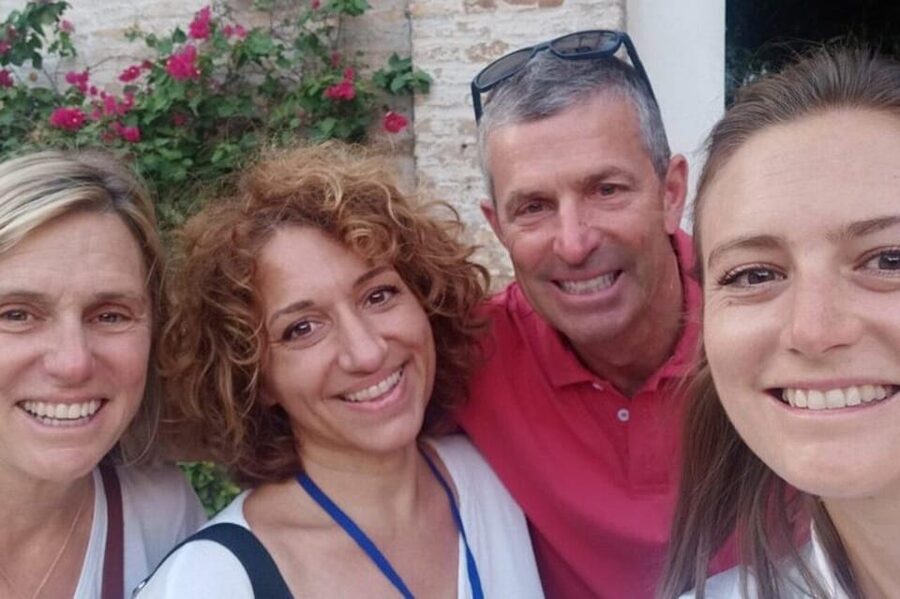
This is not only a Jewish Quarter tour. It is a compact introduction to how Seville changed over time.
You begin in the Santa Cruz area, once associated with the city’s Jewish community, then walk through plazas and lanes shaped by later Christian, literary, royal, and commercial life. By the end, the route has reached the university and María Luisa Park, two places that help explain Seville beyond its medieval center.
I find that approach useful because Seville can otherwise feel like a collection of beautiful but disconnected sights. The tour gives you a thread to follow. A former synagogue points toward religious change. A statue of Don Juan leads into the Spanish Golden Age. The Royal Tobacco Factory recalls Seville’s industrial and imperial ambitions. María Luisa Park brings the story into the era of the Ibero-American Exhibition.
The two-hour length is a good fit if you want orientation without giving up a full morning or afternoon. It is also short enough to add before a cathedral visit, tapas stop, or independent walk. The tradeoff is pace. You cover many locations, so some stops receive a brief explanation rather than a long visit.
Starting at Hotel Fernando III and Plaza de Santa Cruz
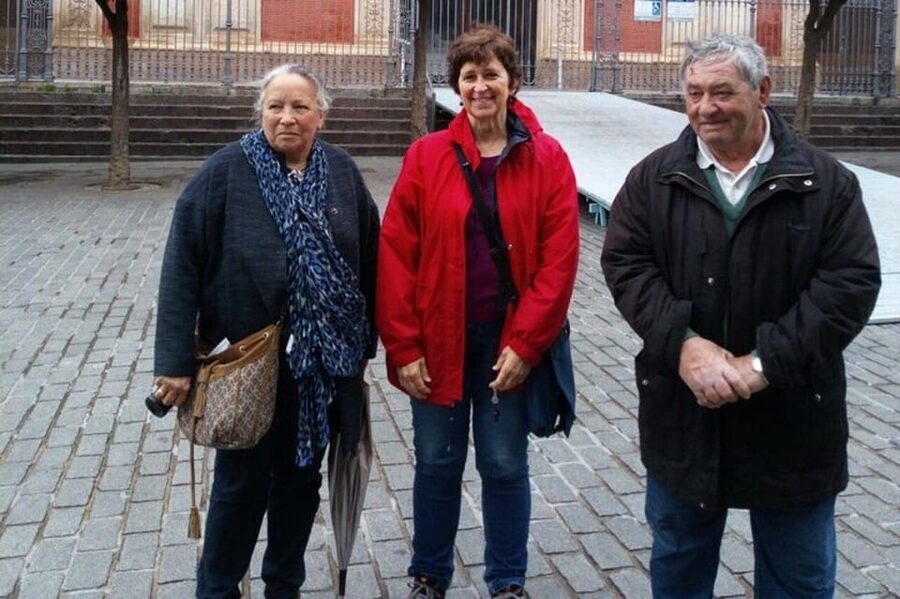
The meeting point is in front of Hotel Fernando III on Calle San José, 37. Make sure you have the exact meeting instructions before setting out, since the supplied details also describe this address as the start and return point.
Santa Cruz is the right place to begin. Its small plazas and winding streets make more sense when you know that different communities once lived and worshiped in close quarters here. At Plaza de Santa Cruz, your guide explains the coexistence of communities connected to Seville’s long religious and cultural story.
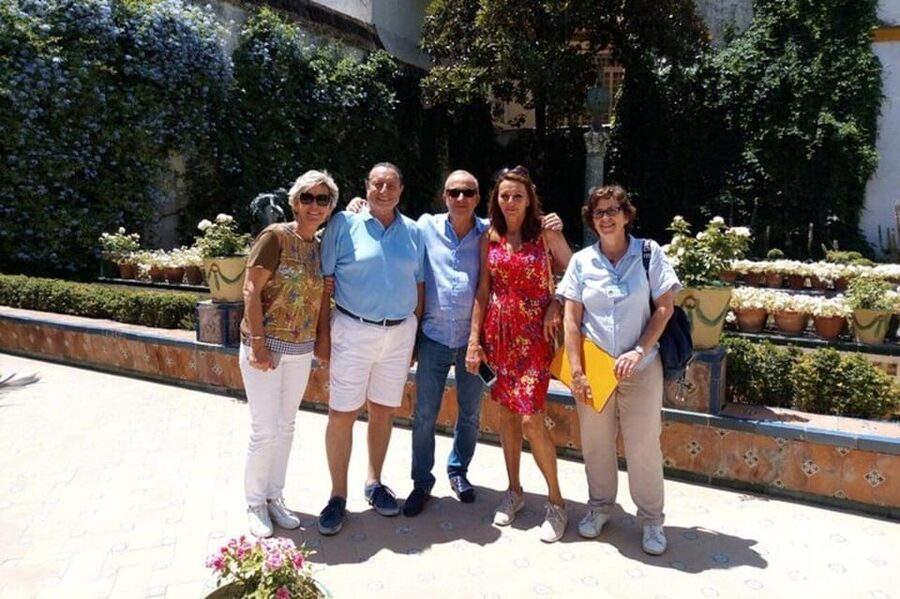
This opening is likely to be useful on your first day in the city. You get your bearings in one of Seville’s most visited districts while learning to look past the white walls, tiled details, and orange-tree courtyards. The area is attractive enough to distract you, so a guide helps turn scenery into context.
The practical point is simple: wear comfortable shoes. Even though the route is only two hours, it is a continuous walking tour through old streets and plazas. The tour is listed as wheelchair accessible, but the exact street conditions and route details are worth confirming in advance if you have mobility needs.
More Jewish Quarter Tours in Seville
- Seville: Small-Group Jewish Quarter Discovery Walking Tour
★ 4.9 · 499 reviews - Seville: 1-Hour Walking Tour Barrio de Santa Cruz
★ 4.5 · 131 reviews - Private Tour Jewish Quarter, center and Plaza de España
★ 5.0 · 127 reviews
Plaza de los Refinadores and the Sephardic Quarter
At Plaza de los Refinadores, the focus shifts toward the walls and gates associated with Seville’s Sephardic quarter. This is one of the more useful stops for understanding that the Jewish Quarter was not just a modern label placed on a picturesque neighborhood.
You hear how boundaries, entrances, and streets shaped daily life. The square also contains a statue of Don Juan, giving the guide a chance to connect the setting with the Spanish Golden Age and one of Spain’s best-known literary figures.
That combination is a strength of the tour. Instead of treating Jewish heritage as an isolated subject, the route shows how it sits within Seville’s wider cultural story. You move from community history to literature without leaving the same small area.
Do not expect an archaeological visit or a museum presentation here. The value is in the explanation and the setting. Without a guide, you might simply pass through the square, take a photograph, and move on.
Santa María la Blanca, a Former Synagogue
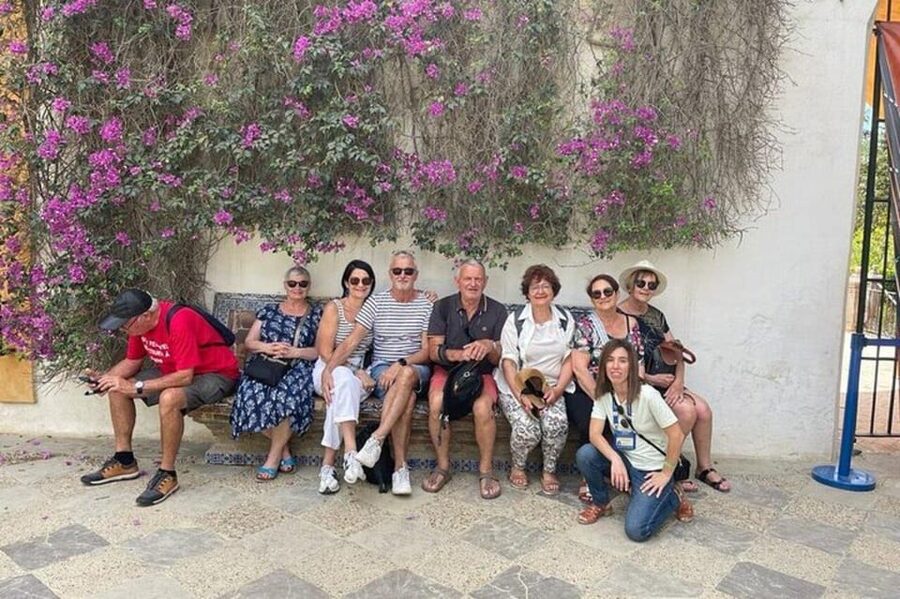
Iglesia de Santa María la Blanca is one of the most important stops on the route. The building was formerly a synagogue and now serves as a church, making it a direct reminder of Seville’s changes in religion, power, and public life.
Inside, you can admire works by Murillo. The combination of former synagogue and Christian church gives the visit added weight. You are not looking at a single-period monument, but at a place shaped by successive communities and uses.
Your guide’s explanation matters here. The building’s appearance alone cannot tell you how its role changed or why that matters. This is also a stop where time may feel tight. The route includes many locations, so ask your guide how much time is available inside and whether any admission arrangements are needed.
The tour provider offers help booking tickets for desired visits, but the basic activity information does not say that entrance tickets are included. Treat this as a walking tour with ticket assistance rather than a tour that automatically covers every admission fee.
Courtyards, Calle Susona, and Stories of Jewish Seville
The walk continues through Plaza Alfaro and the narrow streets of Calle Susona. These smaller places are important because they show the shape of the district at street level.
Plaza Alfaro offers a chance to appreciate Seville’s courtyards and intimate urban design. Calle Susona brings the Jewish community’s history closer to personal stories and local memory. The setting is quieter and more atmospheric than the city’s major monuments, though the lanes can feel close and busy at popular times.
I like this portion for travelers who have already seen Seville’s main sights. One recent booking involved a visitor who had spent several days in the city and wanted something beyond the standard attractions. A flexible guide such as Francesco can adjust the emphasis and point out details you might otherwise miss.
That flexibility has limits in a short tour. You should not expect a full lecture on every chapter of Seville’s Jewish past. Instead, you get a series of focused explanations tied to the streets in front of you. If one topic interests you, say so early. The tour is designed to be customized, and the guide can give more attention to the parts that matter most to you.
More Walking Tours in Seville
- Seville: Small-Group City Highlights Walking Tour
★ 5.0 · 1,204 reviews - Cultural Walking Tour of Seville Monumental
★ 5.0 · 861 reviews - Seville: Tapas, Taverns, and History Walking Tour
★ 4.9 · 676 reviews - Seville: Tapas, Taverns and History Guided Walking Tour
★ 4.9 · 515 reviews
Plaza de Doña Elvira and the Route to Plaza del Triunfo
Plaza de Doña Elvira is one of the prettiest pauses on the walk. Its compact scale and traditional character make it a natural place to slow down for a moment and take in the district’s atmosphere.
From there, the tour moves toward Plaza del Triunfo, where the setting becomes more open and grand. This change in scale helps you see how the lanes of Santa Cruz relate to Seville’s major civic and religious landmarks.
The panoramic views from Plaza del Triunfo are a useful reward after the tighter streets. The itinerary does not specify a particular monument visit here, so think of this as a viewpoint and storytelling stop rather than an interior tour.
This is also where the tour’s broad scope becomes clear. The experience began with Jewish heritage, but it does not remain inside one quarter. You are gradually connected to the city’s larger ceremonial core.
Puerta de Jerez, the Torre del Oro, and a Changing City
At Puerta de Jerez, your guide discusses the transformation of Seville during the Ibero-American Exposition. The subject helps explain why the city does not end with its medieval center.
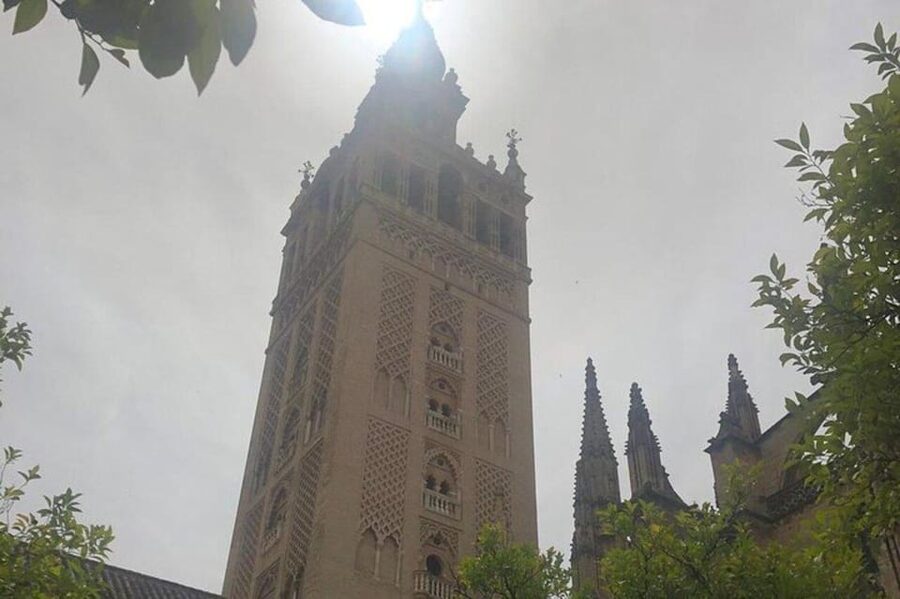
The route also includes information about the Torre del Oro. The itinerary does not promise entry to the tower, so you should expect to learn about its place in Seville’s story rather than climb inside it as part of the standard walk.
This section works best if you enjoy seeing how cities change. Seville’s identity includes medieval streets, religious buildings, literary myths, grand public spaces, and later exhibition projects. A guide can connect those periods in a way that a self-guided stroll may not.
The drawback is that the tour covers a lot of ground in two hours. If you want detailed architecture at every stop, or long visits inside individual monuments, choose a longer specialist tour. This experience is better for making connections quickly.
The University of Seville and Its Tobacco Factory Past
The University of Seville occupies the old Royal Tobacco Factory, one of the route’s most striking changes of subject and setting.
Here you learn about a building created for tobacco production and later used as a university. The stop also includes literary connections, adding another layer to the Don Juan and Spanish Golden Age themes introduced earlier.
This is a particularly good stop for first-time visitors who want Seville to feel like a living city rather than an outdoor museum. University life continues in a building linked to work, trade, and the city’s wider economic history.
Do not confuse this part of the walk with a full university tour. The supplied details promise a guided visit and historical explanation, but they do not specify access to every interior area or a dedicated literary performance. The experience depends on what your guide can show and explain during the time available.
Ending in María Luisa Park
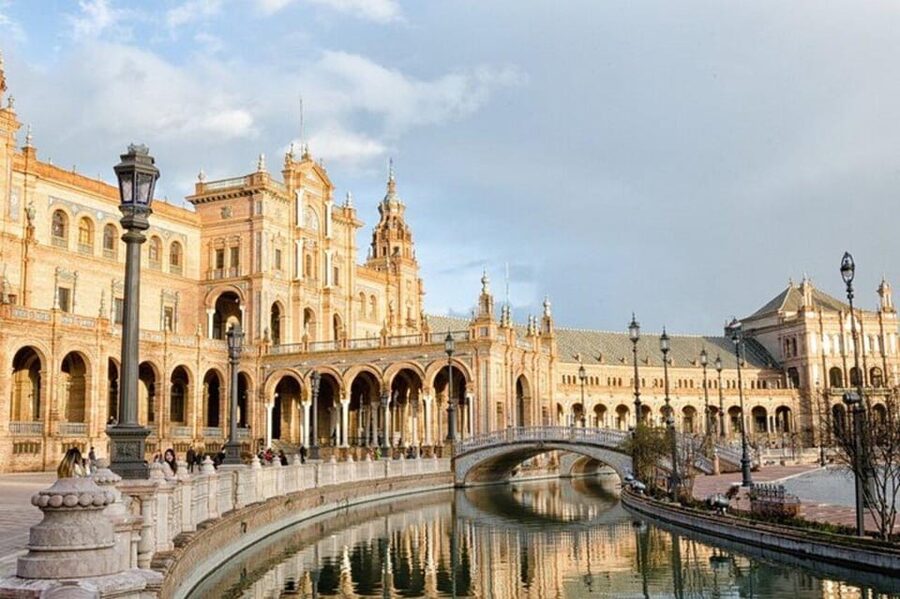
The tour concludes at Parque de María Luisa, designed by the French architect Forestier. The park provides a calmer final setting after the streets and plazas of Santa Cruz.
Your guide explains the park’s history and its connection to the Ibero-American Exhibition. This gives the route a clear ending: you begin with Seville’s old quarters and finish with a planned public space shaped by the city’s international ambitions.
The park is also a practical place to continue exploring on your own. Since the tour ends here, you can stay for a walk, plan another nearby visit, or use the guide’s recommendations for the rest of your day. The activity includes advice about other things to do in Seville, and that can be one of its most useful features.
Check the exact return arrangement. The itinerary lists arrival back at Calle San José, 37, while the final described stop is María Luisa Park. The information does not explain whether the guide returns with you, whether public transport is used, or whether the listed address is a general booking reference. Clarify this before booking if your next reservation is time-sensitive.
Guides, Languages, and Personal Attention
The tour is available in English, Spanish, French, and Italian. That broad language range is helpful in a city where historical terms and religious changes can be difficult to follow if the explanation moves too quickly.
The named guides connected with recent bookings include Virginia, Sarah, Francesco, Rossella, and Pedro. Their strengths differ in the details provided: Sarah is described as especially prepared and helpful, Francesco as attentive and good at adapting the walk, Pedro as funny and generous with his time, and Rossella as empathetic and well prepared.
You should not assume you will receive a particular guide unless the booking allows you to request one. Still, the pattern suggests that the guide’s personality is a major part of the experience. Ask questions, mention what you have already seen, and tell the guide whether you prefer architecture, Jewish heritage, literature, or practical city advice.
The activity information says private groups are available and that the tour can be customized. It also describes the experience as private and exclusive, while the headline calls it a group walking tour. Because those details do not match, confirm group size, exclusivity, and transport arrangements before paying.
Is $22 a Good Value?
At $22 per person, the tour is reasonably priced for a two-hour guided walk, especially if you want historical context and local orientation rather than a self-guided route.
The value depends on the final booking format. A shared small group at this price offers an affordable introduction to Santa Cruz and Seville’s Jewish heritage. A genuinely private tour at $22 per person would be unusually strong value, but the supplied information does not make clear how the private pricing works or whether the advertised price applies to that option.
You are paying mainly for the guide’s time and interpretation. Entrance tickets are not clearly included, although the provider can help arrange tickets for visits you want. Public transport may be part of the route unless you select an option that changes that arrangement, so ask what is covered before booking.
The high overall rating of 4.9 from 24 ratings is encouraging, and the praise focuses on useful qualities: prepared guides, personal attention, good anecdotes, humor, flexibility, and practical tips. Those are exactly the qualities that make a short walking tour worthwhile.
Who Will Get the Most From This Tour?
I would choose this experience if you want to understand Santa Cruz instead of simply photographing it. It suits first-time visitors who need an introduction, as well as people who have already seen the cathedral area and want a more focused look at the city’s Jewish and multicultural past.
It is also a good match for families and mixed-interest groups. The route includes history, stories, public spaces, literary links, and city advice, so not every minute depends on close study of religious architecture.
You may want something else if your main goal is a long visit to Santa María la Blanca, a specialist study of Sephardic history, or extended access to the Royal Tobacco Factory. Two hours and many stops require the guide to keep moving.
Book early enough to state your preferred language and interests. If Francesco, Sarah, Pedro, Virginia, or Rossella is available, you can ask whether a particular guide can lead your walk, but do not treat that as guaranteed.
Practical Details Before You Book
The tour lasts two hours and offers starting times based on availability. The meeting point is in front of Hotel Fernando III at Calle San José, 37.
Free cancellation is available up to 24 hours before the activity for a full refund. You can also reserve now and pay later, which helps if your Seville plans are still shifting.
The walk is listed as wheelchair accessible. Since the route uses older streets, plazas, and narrow lanes, confirm the precise path if accessibility is important to you.
Languages are English, Spanish, French, and Italian. Private groups are available, and customization is offered. The experience includes walking and public transport unless you select a different option, but the conflicting wording about private and shared groups means you should verify the final arrangement.
Should You Book It?
Book this tour if you want a well-priced orientation to Santa Cruz with Jewish heritage at its center, but also want Seville’s literature, public spaces, university, and exhibition history included. The strongest reason to choose it is the guide-led connection between places that can otherwise feel unrelated.
I would be especially happy with it early in a Seville stay, when local advice can shape the rest of your visit. It also works after you have seen the headline sights and want a different angle.
Skip it if you need a slow, specialist religious-history tour or guaranteed private treatment without confirming the booking details. For most visitors, though, the route offers a lot in two hours, provided you accept a brisk pace and clarify what private, group, transport, and ticket arrangements mean for your reservation.
FAQ
How long does the Seville Jewish Quarter and Santa Cruz Walking Tour last?
The tour lasts two hours.
Where does the tour meet?
The meeting point is in front of Hotel Fernando III at Calle San José, 37.
What places does the tour visit?
The route includes Santa Cruz, Plaza de los Refinadores, Iglesia de Santa María la Blanca, Plaza Alfaro, Calle Susona, Plaza de Doña Elvira, Plaza del Triunfo, Puerta de Jerez, the University of Seville, and Parque de María Luisa.
Is the tour available in English?
Yes. The listed languages are English, Spanish, French, and Italian.
Is the tour wheelchair accessible?
Yes, the activity is listed as wheelchair accessible.
Is this a private tour or a group tour?
The information describes a group walking tour, a private and exclusive tour, and a private group option. Because these details conflict, confirm the group format when booking.
Can I cancel the tour for a full refund?
Yes. You can cancel up to 24 hours in advance for a full refund.
More Jewish Quarter Walks
- Córdoba: Jewish Quarter, Mosque, and Alcázar Tour
★ 4.7 · 4,279 reviews - Cordoba Mosque & Jewish Quarter Tour with Tickets
★ 4.6 · 1,996 reviews - Córdoba: Mosque-Cathedral, Jewish Quarter and Alcázar Tour
★ 4.7 · 1,426 reviews - Cordoba: Jewish Quarter and Mosque-Cathedral Guided Tour
★ 4.6 · 996 reviews
Just added around Seville
- Seville: Wine and Gourmet Tapas Tour★ 5.0 · 3 reviews
- Tapas Tour Cordoba & Wine Experience with chef and sommelier★ 4.8 · 3 reviews
- The most complete tour of Seville: All the highlights included★ 5.0 · 3 reviews
- Seville: Spritz Tasting Experience★ 4.8 · 3 reviews
- Ronda and White Villages Private Day Trip from Seville★ 5.0 · 3 reviews
- Jerez: Historic center of Jerez and horse show★ 5.0 · 3 reviews
- SEVILLE: REAL ALCÁZAR TOUR★ 5.0 · 3 reviews
- Royal Alcazar of Seville Guided Tour★ 5.0 · 3 reviews
Jewish Quarter Tours, compared.
Cordoba Mosque & Jewish Quarter Tour with Tickets
Read our review →
Mosque-Cathedral, Jewish Quarter and Alcázar Tour
Read our review →
Jewish Quarter and Mosque-Cathedral Guided Tour
Read our review →
Mosque-Cathedral, Alcazar & Jewish Quarter with Tickets
Read our review →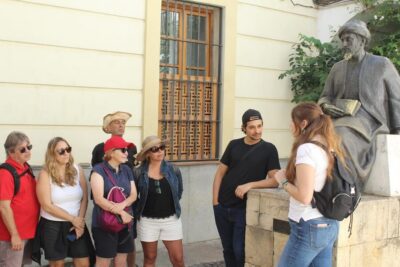
Mosque-Cathedral of Cordoba and Jewish Quarter Tour
Read our review →
Small-Group Jewish Quarter Discovery Walking Tour
Read our review →Browse the lists this tour appears in