
Reviewed · CYCLING TOURS
Seville: Relaxing Electric Bike tour with Tour Guide
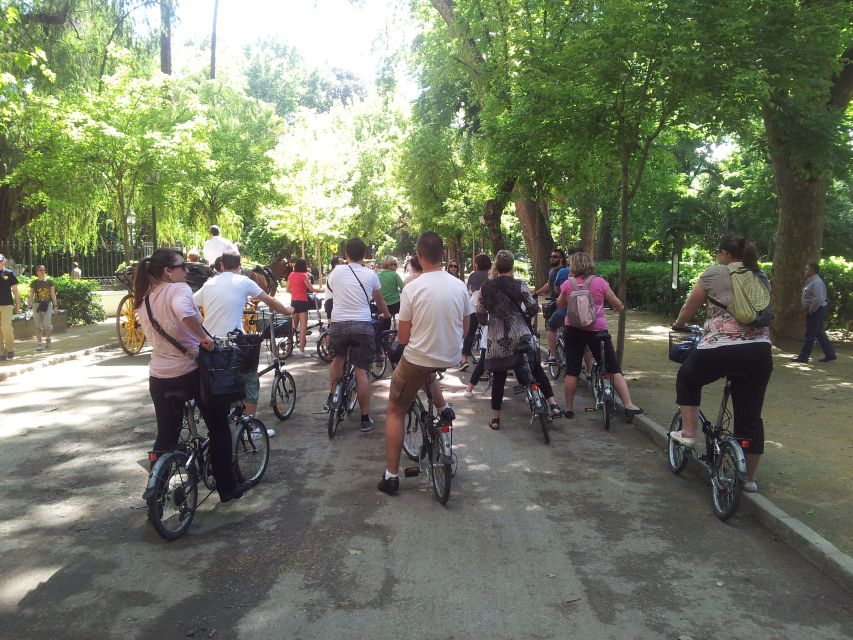
Seville opens up beautifully from an electric bike. In 2.5 hours, you can connect the old lanes of Barrio Santa Cruz, the grand Plaza de España, the Guadalquivir waterfront, Triana, and Las Setas without spending the whole morning on foot. The pedal assistance matters in a spread-out city, especially when you want to see more than one central quarter.
I like the route’s mix of quiet garden paths and major sights. I also like the human touch: guides such as Daniel, Pablo, and Dany have been praised for clear explanations, local facts, and adapting the route to personal needs. The main caution is simple: one customer found the bikes old, so if bike condition matters greatly to you, check yours carefully before setting off.
In This Review
- Key points to know before you book
- Why an electric bike works well in Seville
- Starting among the lanes of Barrio Santa Cruz
- A quiet turn through the Jardines de Murillo
- The grand scale of María Luisa Park and Plaza de España
- Following the Guadalquivir to the Torre del Oro
- Crossing into Triana for a different side of the city
- Cathedral, Giralda, and the central city
- Ending at Metropol Parasol and Las Setas
- Guides, languages, and the human side of the ride
- Is $47 good value for 2.5 hours?
- Who should book this Seville e-bike tour?
- Should you book it?
- FAQ
- How long does the Seville electric bike tour last?
- What type of bicycle is provided?
- Which Seville sights are included?
- What languages are available for the live guide?
- Is the tour suitable for someone who cannot ride a bicycle?
- What should I bring?
- Can I cancel the booking?
Key points to know before you book
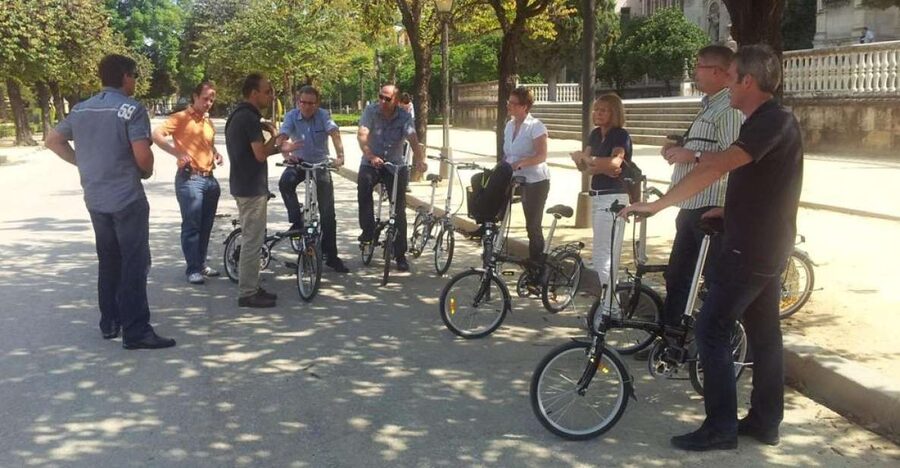
- A broad Seville introduction: Cover Santa Cruz, the cathedral, Plaza de España, the river, Triana, and Las Setas in one outing.
- Electric assistance included: Kalkhoff Pedelecs help you keep moving at a relaxed pace without treating the tour like a workout.
- Strong guide feedback: Daniel, Pablo, and Dany are singled out for history, local knowledge, friendliness, and flexible routing.
- A good first-day choice: The tour gives you a useful map of Seville’s main areas before you decide where to return on foot.
- Spanish and several other languages: Live guiding is listed in Spanish, English, French, Italian, and Dutch.
- Check the meeting point: It can change depending on the option you book, so read your confirmation carefully.
Why an electric bike works well in Seville
Seville’s sights are not all packed into one small square. Santa Cruz, the river, Triana, María Luisa Park, and the modern Metropol Parasol are close enough to connect, but walking between every stop takes time and energy. An electric bike gives you a wider view of the city while keeping the pace easy.
You still pedal, but the motor helps with the effort. That makes this a useful middle ground between a walking tour and a faster sightseeing vehicle. You get the street-level feel of cycling, yet you can cover more ground without arriving at each stop worn out.
The ride is intended to be relaxed rather than athletic. You should still be comfortable riding a bicycle, since the experience is not suitable for anyone who cannot ride. Wear comfortable clothes, and remember that the route includes historic streets, park paths, and city roads rather than one single type of surface.
The bikes are listed as good-quality Kalkhoff Pedelecs. A past customer found the bicycle old, while other feedback describes the bikes as being in good order. That mixed detail is worth keeping in mind. Before leaving, check the brakes, saddle height, gears, and electric assistance. It takes a minute and makes the ride more pleasant.
More bike days around Seville:
- Seville Highlights Bike Tour (English)
★ 5.0 · 2,225 reviews - Seville: Highlights City Bike Tour
★ 4.8 · 2,168 reviews - Seville: Relaxing City Bike Tour with a Tour Guide
★ 4.8 · 1,588 reviews
Starting among the lanes of Barrio Santa Cruz
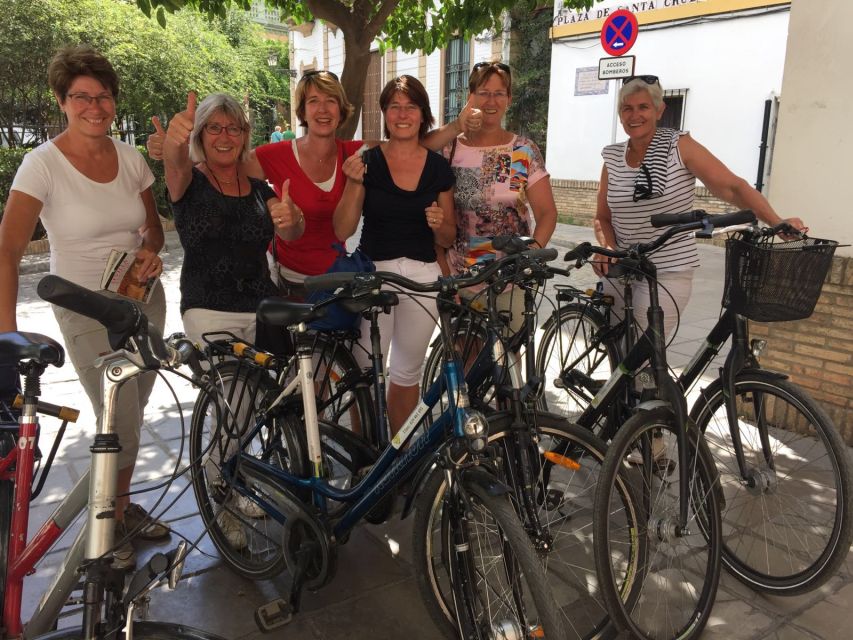
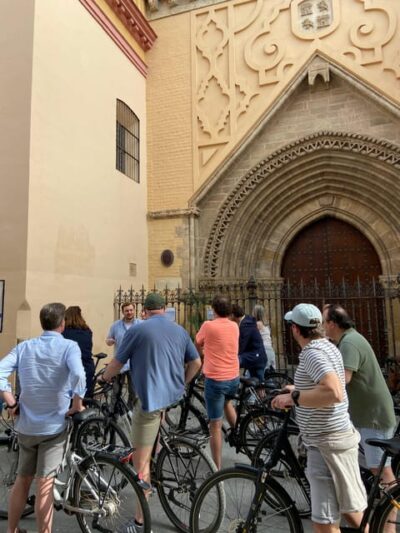
The route begins at or near Plaza de Santa Cruz, depending on the option you book. This puts you in one of Seville’s most atmospheric quarters from the first turn.
Barrio Santa Cruz was once the city’s Jewish quarter and is known for narrow, winding lanes, small squares, whitewashed buildings, and hidden corners. A bicycle gives you a quick sense of its shape, though you will not be able to ride every lane at speed. The streets are tight, and you should expect the guide to slow the group or ask you to walk the bike in especially crowded spots.
That is not a weakness of the tour. It is simply how Santa Cruz works. The point here is to get your bearings and notice how the old quarter connects with Seville’s larger streets. Your guide can also help you understand the city’s layout before the route moves into wider open spaces.
This is where a guide adds real value. Dany, described as a lifelong local with a history degree, has been praised for adding plenty of local facts. Pablo has also been singled out for adapting the route to personal needs. Those details suggest that the experience is more than following a bicycle through town. You can expect commentary as you move, with stops for the main sights.
A quiet turn through the Jardines de Murillo
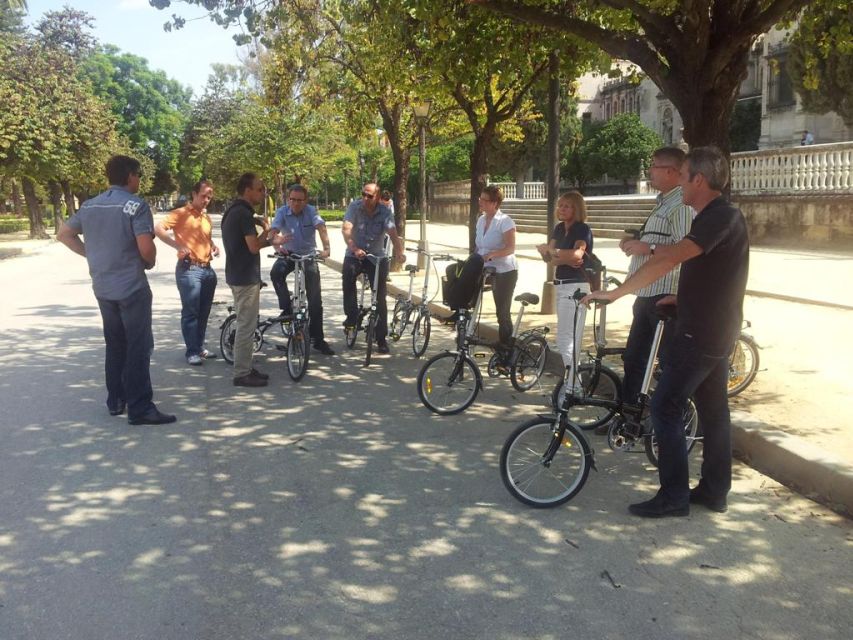
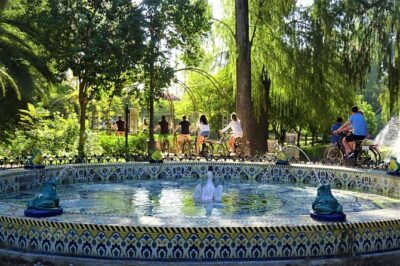
From Santa Cruz, the tour heads toward the Jardines de Murillo. These leafy gardens provide a welcome change after the close lanes of the old quarter.
The gardens are a good early stop because they let you settle into the bike without immediately facing a long city crossing. You can pedal at a gentle pace, look at the greenery, and hear the guide explain the area. The paths offer a calmer setting for getting used to the electric motor.
Do not expect a long garden visit or a formal botanical tour. The stop works more as part of the city route, showing you how Seville shifts quickly from historic streets to open public spaces. It also gives you a break from the hard surfaces and tight corners of Santa Cruz.
For a first look at Seville, this variety is useful. You see how the city’s public gardens soften the historic center, and you begin to understand why cycling can be more efficient here than walking from one major sight to the next.
The grand scale of María Luisa Park and Plaza de España
The route continues into Parque de María Luisa, Seville’s major park and one of the most attractive sections of the ride. The park gives the tour room to breathe, with wider paths and a slower sightseeing rhythm.
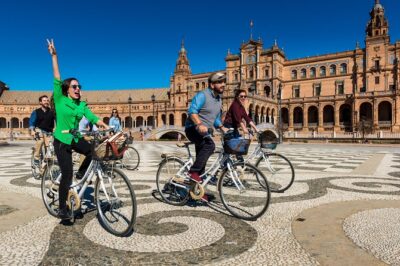
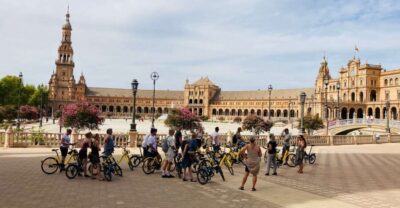
The main highlight is Plaza de España, built for the 1929 Ibero-American Exposition. Its curved brick buildings, towers, bridges, waterway, and colorful tile work make it one of Seville’s most recognizable places. The mosaic tile details represent Spain’s provinces and give the square a strong regional feel.
You stop here for photographs, and rightly so. Plaza de España is not a place to rush through. The bike helps you reach it without using up your energy, leaving you free to look around once you arrive.
The tradeoff is that a bike tour cannot provide the same long, detailed visit as a dedicated walking stop. You will see the site, hear commentary, and have time for photos, but you may want to return later if the tiles, architecture, or exhibition history interests you. That is one reason this tour works well on an early day in Seville. It shows you where you may want to spend more time later.
The park itself also adds balance to the route. Instead of stringing together only famous buildings, the tour includes trees, open space, and a calmer side of the city.
A few more Seville tours worth comparing
- Seville Electric Bike Tour – Small Group
★ 5.0 · 841 reviews - Seville: Guided Tour by Electric Bike
★ 4.8 · 712 reviews - Seville: Electric Bike Tour in Small Group
★ 4.9 · 185 reviews - Seville: Electric Bike City Tour
★ 4.8 · 158 reviews
Following the Guadalquivir to the Torre del Oro
The electric bike becomes especially useful as the route reaches the Guadalquivir River. The waterfront offers broader views than the old center, and the tour lets you see Seville from a different angle.
You can expect sweeping views along the river and a look at landmarks such as the Torre del Oro. This historic defensive tower is one of the city’s best-known riverfront markers. Its position helps explain Seville’s long connection with river traffic, trade, and movement between the inland city and the wider world.
The ride beside the river is also a chance to relax. You are no longer threading through the tight streets of Santa Cruz, and the open route makes it easier to keep a comfortable rhythm. The electric assistance helps you maintain that pace without turning the river section into a tiring transfer.
The exact riding conditions can vary, and the tour is still a guided city ride, not a private riverside cruise. Stay attentive to the guide and your surroundings. The benefit is that you see the river as part of Seville’s working urban fabric rather than as a separate attraction.
Crossing into Triana for a different side of the city
The tour crosses into Triana, a district on the other side of the Guadalquivir. Triana has its own identity, with strong flamenco traditions, ceramic workshops, and a lively local character.
This part of the route matters because Seville is not only its cathedral and palace quarter. Triana gives you a glimpse of a neighborhood with a distinct cultural feel. The ceramics connection is especially important. Tile work appears all over Seville, including at Plaza de España, and Triana helps put that craft into context.
You should not expect an in-depth flamenco performance or a pottery class. The value is the overview: your guide points out the character of the district while you ride through it. If you enjoy local neighborhoods more than a string of grand monuments, Triana may be one of your favorite sections.
Pablo’s route has been adjusted to suit personal needs, which is useful here. If the group has a particular interest in local culture, architecture, or the city’s major sights, a flexible guide can make the ride feel less like a fixed checklist.
Cathedral, Giralda, and the central city
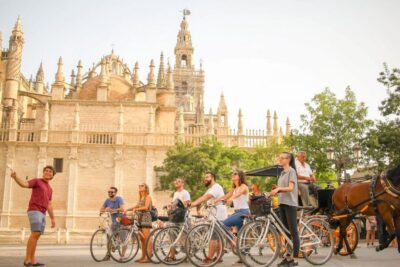
The route includes Seville Cathedral and the Giralda, the city’s famous bell tower. Even from the outside, these landmarks give you a strong sense of Seville’s scale and religious history.
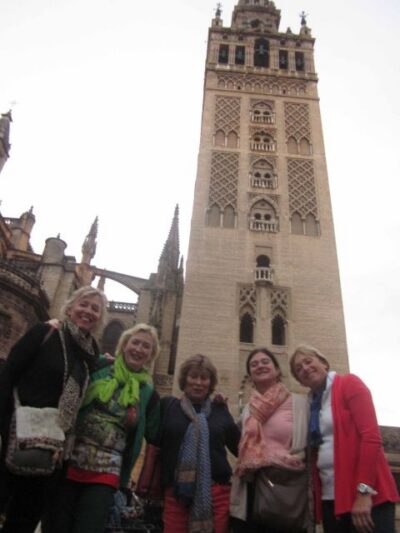
The Giralda began as a minaret and later became the cathedral’s bell tower. Its mix of Islamic and Christian architecture reflects the layers visible across Andalusia. The cathedral itself is one of the major monuments of the city, but this experience is a bicycle tour, not an interior visit.
That distinction matters. You will see the cathedral and Giralda as part of the city ride, with a guide’s explanation and time to take in the exterior. Admission to the monuments is not described as part of the experience, so plan a separate visit if you want to go inside.
The advantage is efficiency. You can locate these major sights without giving up the rest of your morning. Later, you can return on foot when you are ready for a slower look at the cathedral, the tower, or the surrounding streets.
Ending at Metropol Parasol and Las Setas
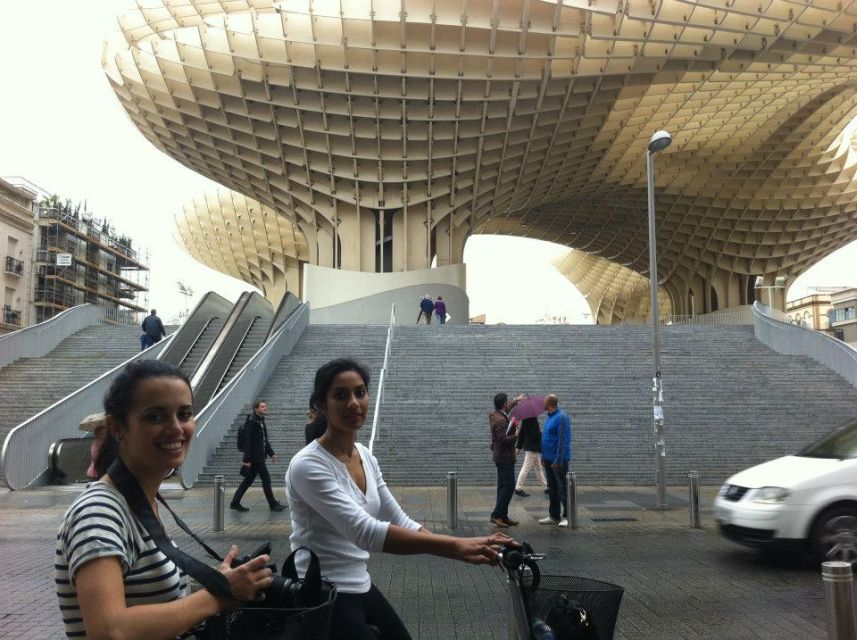
The modern Metropol Parasol, commonly called Las Setas, brings the route into a very different part of Seville. Its large wooden canopy rises above the Plaza de la Encarnación and creates a bold contrast with the city’s older buildings.
This is a useful final stop because it rounds out the picture. In one tour, you move from medieval lanes and historic gardens to a modern public structure. Las Setas also helps you understand that Seville is not frozen in its past. The city continues to add new architecture and public gathering spaces.
The tour returns to Plaza de Santa Cruz after this circuit. Finishing where you started makes the outing easy to fit into a day of sightseeing, though the exact meeting point and return details should be checked for your selected option.
At the end, you should have a mental map of several central districts. That is one of the strongest practical benefits of the experience. You can decide where to return for tapas, museums, shopping, flamenco, or a longer monument visit without guessing how the city fits together.
Guides, languages, and the human side of the ride
The guide can make or break a city tour, and this experience has several encouraging details. Daniel has been praised for knowing Seville well and for leading an enjoyable old-town ride. Pablo is described as friendly, informative, and willing to adapt the route. Dany has been praised for enthusiasm, local knowledge, and historical training.
You should expect live commentary rather than an audio recording. The listed guiding languages are Spanish, English, French, Italian, and Dutch. The wider description also refers to multilingual monitors, including German, so check the language available for your chosen departure when booking.
The overall rating is 4.8 from 31 reviews, which points to a consistently strong experience, though it does not erase the one complaint about older bicycles. The clearest pattern is the quality of the guides. If you value stories, orientation, and local context, that is a major reason to choose this ride.
Is $47 good value for 2.5 hours?
At $47 per person, the tour sits above a basic bicycle rental but includes the electric bike, guide commentary, water, and insurance. The real value comes from combining several parts of Seville in one organized route.
Renting a bicycle on your own might cost less, but you would need to plan the route, navigate the old center, find the best way to connect the park and river, and learn what you are looking at. The guide saves that planning time and adds context at the stops.
The tour is also good value if you have limited time. A walking tour would give you more detail in a smaller area, while this ride shows you more of the city. You are paying for coverage, orientation, and ease rather than extended interior visits.
I would choose it early in a Seville stay, especially if you want to return to Plaza de España, Triana, the cathedral, or the river later. It may be less useful if you already know the city well or prefer to spend a whole morning inside one monument.
Water and insurance are included. Bike delivery is not included, and the meeting point may vary by booking option. Cancellation is free up to 24 hours before the tour, and you can reserve now and pay later, which helps if your schedule is still taking shape.
Who should book this Seville e-bike tour?
I would recommend it to first-time visitors who want a broad introduction without a hard physical pace. It also suits couples, friends, and families with riders who are comfortable on bicycles and want to cover more ground than walking allows.
It is a particularly good fit for people who like a guide’s local explanations but do not want to spend hours indoors. The route mixes major sights, gardens, river views, neighborhood character, and modern architecture.
You may want another type of tour if you cannot ride a bike, want detailed monument interiors, or prefer a slow food and neighborhood experience. You should also think twice if you expect brand-new equipment every time, since one past participant found a bike old.
Should you book it?
Book this tour if you want to get your bearings quickly and see Seville’s main districts in a comfortable morning. The combination of electric assistance, a broad route, and guides such as Daniel, Pablo, and Dany gives you more than a simple rental.
Choose it with realistic expectations. You will see the cathedral, Giralda, Plaza de España, Torre del Oro, Triana, and Las Setas, but you will not have a full interior tour of every monument. Check the meeting point, confirm your language, wear comfortable clothes, and inspect the bicycle before setting off.
For a first visit, $47 is a fair price for the time and coverage. If you enjoy cycling and want both famous sights and everyday Seville, this is an efficient, friendly way to begin.
FAQ
How long does the Seville electric bike tour last?
The tour lasts 2.5 hours.
What type of bicycle is provided?
You ride a Kalkhoff Pedelecs electric bike.
Which Seville sights are included?
The route includes Barrio Santa Cruz, the Jardines de Murillo, Parque de María Luisa, Plaza de España, the Guadalquivir River, Torre del Oro, Triana, Seville Cathedral, the Giralda, and Metropol Parasol, also called Las Setas.
What languages are available for the live guide?
Live guiding is listed in Spanish, English, French, Italian, and Dutch. The wider description also refers to multilingual monitors, so check the language for your chosen option.
Is the tour suitable for someone who cannot ride a bicycle?
No. The experience is not suitable for people who cannot ride a bike.
What should I bring?
Wear comfortable clothes. Water is included, along with insurance.
Can I cancel the booking?
You can cancel up to 24 hours in advance for a full refund. A reserve-now, pay-later option is also available.
Just added around Seville
- Seville: Wine and Gourmet Tapas Tour★ 5.0 · 3 reviews
- Tapas Tour Cordoba & Wine Experience with chef and sommelier★ 4.8 · 3 reviews
- The most complete tour of Seville: All the highlights included★ 5.0 · 3 reviews
- Seville: Spritz Tasting Experience★ 4.8 · 3 reviews
- Ronda and White Villages Private Day Trip from Seville★ 5.0 · 3 reviews
- Jerez: Historic center of Jerez and horse show★ 5.0 · 3 reviews
- SEVILLE: REAL ALCÁZAR TOUR★ 5.0 · 3 reviews
- Royal Alcazar of Seville Guided Tour★ 5.0 · 3 reviews
Cycling Tours, compared.

Browse the lists this tour appears in