
Reviewed · ITALICA ROMAN RUINS
From Seville: Italica Roman City Tour
Italica gives you something Seville itself cannot: a walk through a Roman city where mosaic floors still mark the homes and the amphitheater’s underground passages remain open to explore. Founded in 206 B.C. by Scipio Africanus, it was the birthplace of emperors Trajan and Hadrian.
I like the easy 15-minute journey from Seville and the way a good guide, such as Alberto, Miguel, or José Luis, turns broken walls into a picture of daily Roman life. I also like that the ticket, transport, and guiding are bundled into one four-hour outing. The main drawback is time: three hours at the site can feel tight, especially in a large group where it may be hard to hear or find time to wander alone.
In This Review
- Key points to know before you go
- Why Italica is worth leaving Seville for
- The 30-minute ride from central Seville
- Walking Italica’s ancient streets
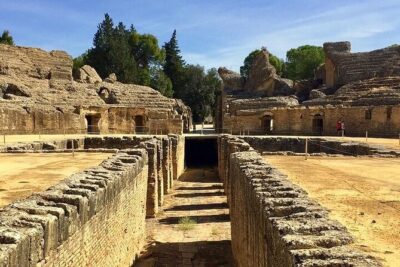
- Inside the 25,000-seat amphitheater
- The Roman theater at Santiponce
- The possible monastery addition
- How the guides affect the day
- Is $51 a fair price?
- Who will enjoy this tour most
- Practical tips for a better visit
- Should you book the Italica tour from Seville?
- FAQ
- How long does the Italica tour take?
- Where does pickup take place?
- What is included in the price?
- What languages are available?
- Is the Roman theater included?
- Is lunch included?
- Can I cancel the booking?
Key points to know before you go
- The amphitheater is the main event: Its 25,000-seat capacity and underground tunnels make it the clearest reminder that Italica was a major Roman city, not a small provincial outpost.
- The mosaics are remarkably memorable: Geometric patterns and mythological scenes in former homes help you imagine the people who lived here.
- Your guide shapes the experience: Past guides including Alberto, Miguel, Jesus, Miguel, Sergio, Nieves, and José Luis have been praised for clear history, humor, and good storytelling.
- The tour removes transport hassle: Round-trip coach travel leaves from central Seville and brings you back to one of three central drop-off points.
- Expect walking and sun: The ruins are spread across open ground, and the weather can make the visit more tiring than the four-hour duration suggests.
- A monastery stop may appear on some departures: It can be a pleasant extra, but confirm the day’s plan if you would rather have every available minute at Italica.
Why Italica is worth leaving Seville for
Italica was founded in 206 B.C., after Rome’s victory in the Second Punic War. Scipio Africanus established the settlement for Roman soldiers, and it later grew into an important city in Hispania.
That background matters when you arrive. You are not looking at a single temple or a lonely ruin. You are walking along the streets of a planned Roman town, with houses, public buildings, baths, religious spaces, and entertainment venues laid out around you.
The city is also tied to two Roman emperors. Trajan and Hadrian were born at Italica, and Hadrian later expanded the settlement. You can see traces of that ambition in the size of the public buildings and the quality of the decoration.
I find the site most rewarding when you stop trying to picture a complete city and instead focus on small clues. A mosaic tells you what a homeowner valued. A bath complex shows how much Romans treated public life as part of everyday life. The amphitheater reveals the scale of the crowds the city could attract.
More Roman Italica trips:
- From Seville: Italica Roman City & Medieval Monastery Tour
★ 4.5 · 1,051 reviews - Historical Italica: Half-Day Guided Tour from Seville
★ 4.5 · 416 reviews - Seville: Game of Thrones and Roman Empire Italica Tour
★ 4.3 · 372 reviews
The 30-minute ride from central Seville
The tour offers pickup at Calle Rastro 12A at 9:45, Hotel Don Paco at 9:50, and Calle Trajano 6 at 10:00. The three locations are central, but check the exact address on your booking confirmation. A few minutes saved in the morning prevents a rushed start.
The ride to Italica takes about 30 minutes by bus or coach. That is a useful part of the package. You do not need to work out the local connection to Santiponce, find the entrance, or arrange a taxi back to Seville.
Transport quality has generally been a strength, with comfortable buses and vans used on different departures. Still, pickup timing can vary. Give yourself a little extra time at the meeting point, especially if you are joining from a hotel or navigating Seville’s narrow central streets.
The guide may use both English and Spanish on a multilingual departure. The information says the tour can be offered in two languages when needed, and French, German, and Italian tours are available on request. If you need one of those languages, contact the operator before booking rather than assuming it will be available on the day.
Walking Italica’s ancient streets
The guided visit lasts about three hours. That is enough time for a clear tour of the principal ruins, but it is not the same as having an unlimited afternoon to investigate every corner.
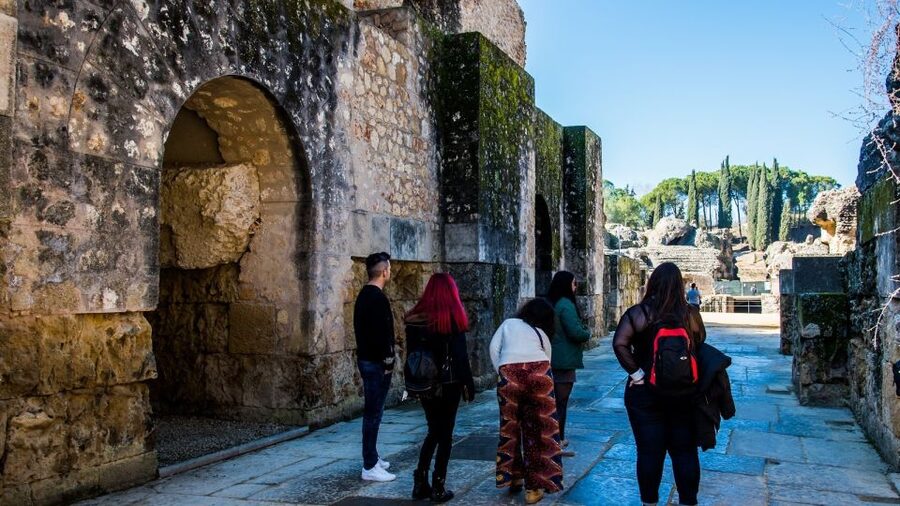
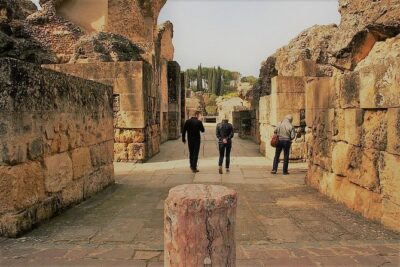
You will walk through the Archaeological Ensemble of Itálica, passing the remains of houses and public buildings. The guide provides the structure that bare ruins often lack. Without context, a wall is just a wall. With an explanation of its purpose and setting, it becomes part of a neighborhood, a civic space, or a working Roman facility.
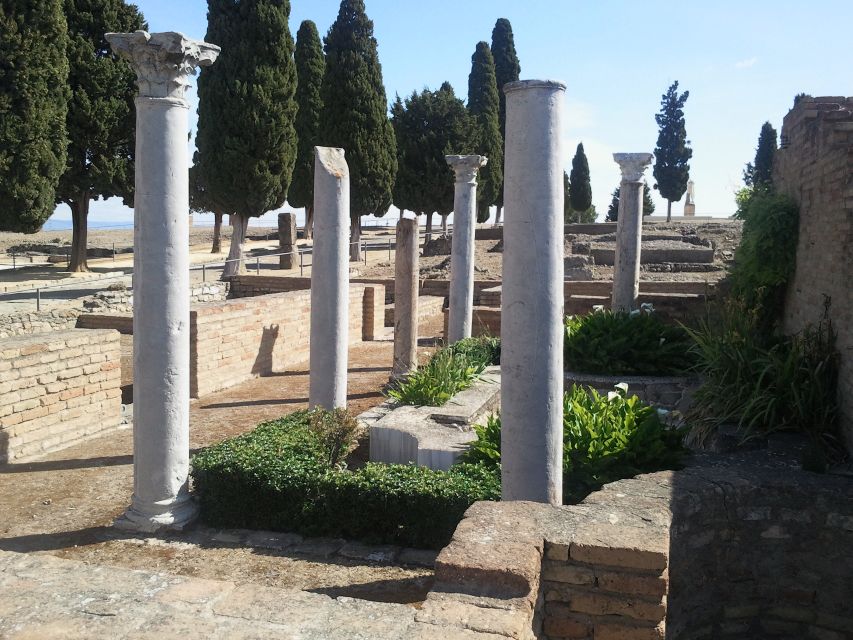
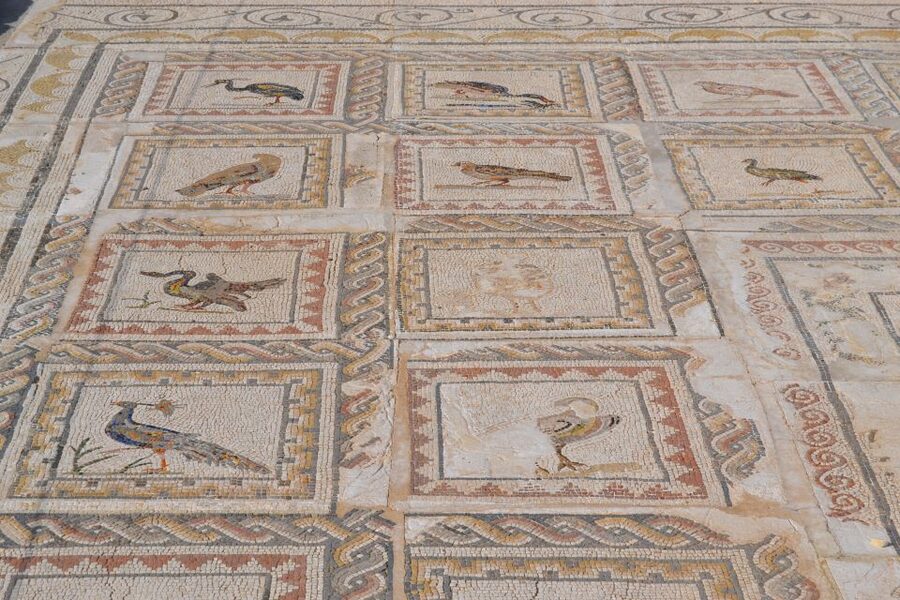
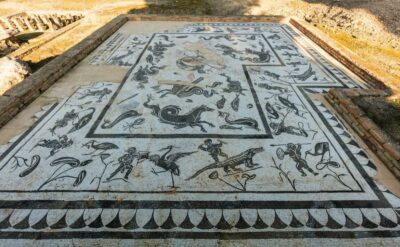
The residential areas are among the most appealing parts of the visit. The mosaics are not simply decorative leftovers. They show the care and expense put into private homes, and they offer some of the clearest visual evidence of the city’s former wealth.
Look closely at the patterns and images rather than rushing past them. Some floors use geometric designs, while others feature mythological subjects. The exact condition and access can vary, but the mosaics are a central reason to visit Italica.
You will also see the Traianeum, a monumental space associated with the worship of the emperor Trajan. Statues of Diana, Venus, and Trajan add human form to the site, even though the ruined setting can make it difficult to understand the original arrangement.
The public baths are another useful stop. They show that Italica was not only a collection of grand homes and political monuments. Roman baths were social centers, places for washing, exercise, conversation, and public life.
Inside the 25,000-seat amphitheater
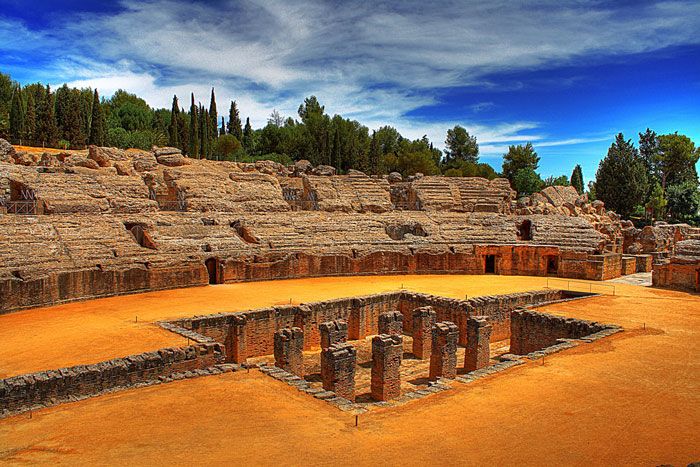
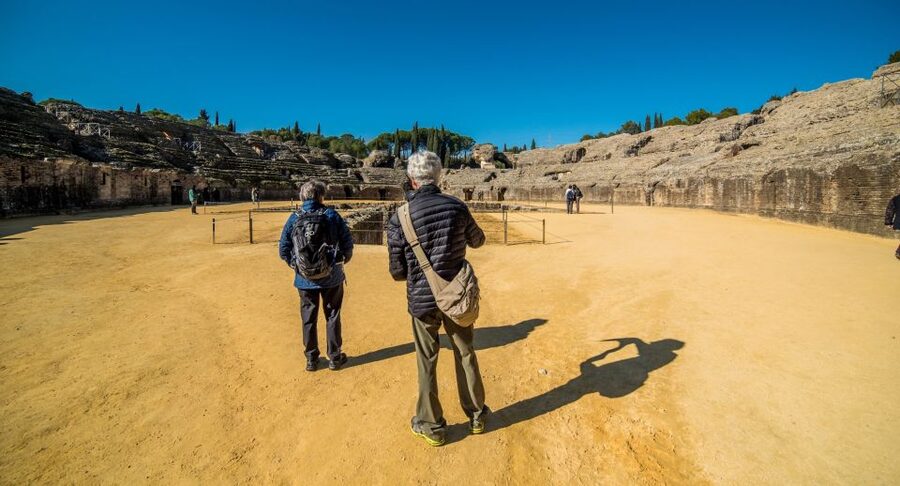
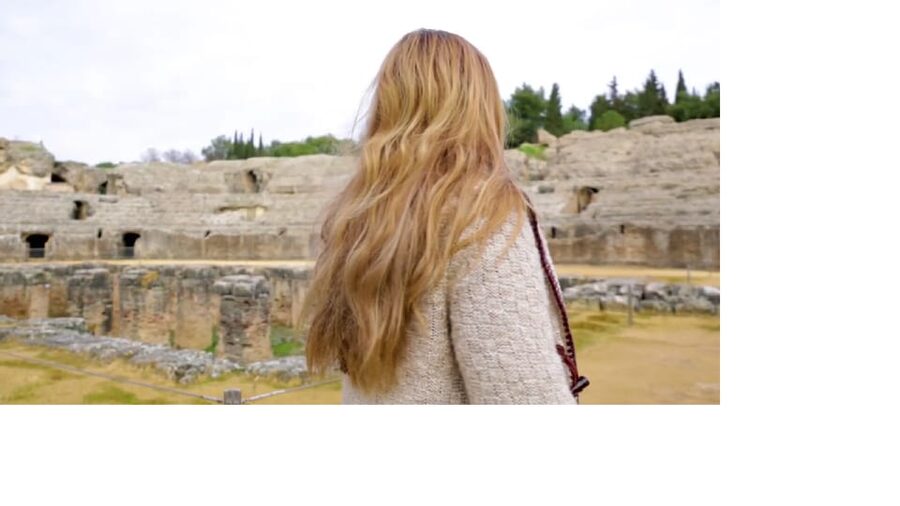
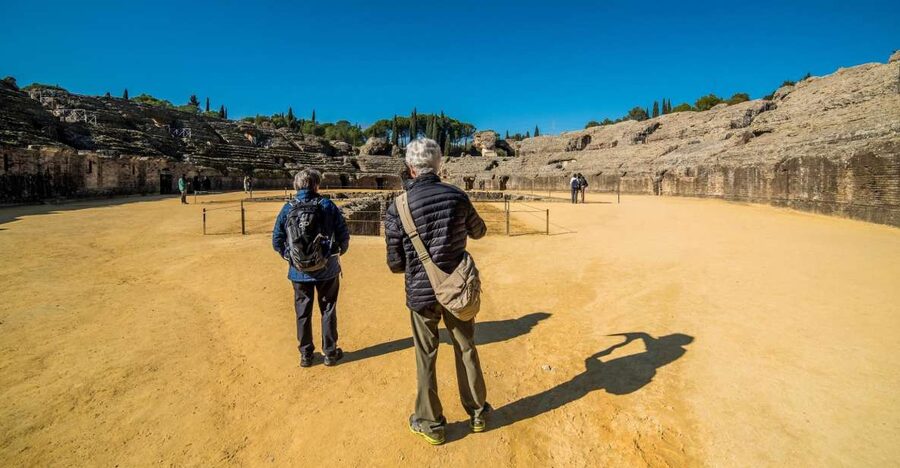
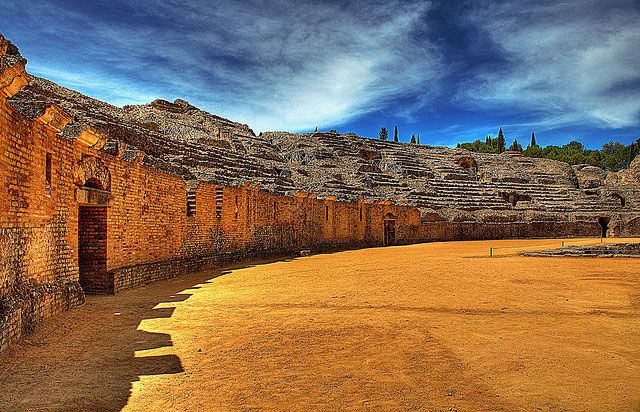
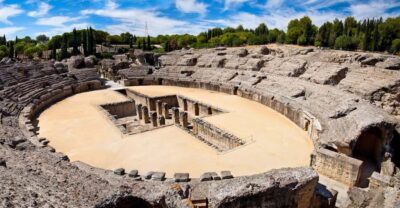
The amphitheater is Italica’s great showpiece. It could hold about 25,000 people and is described as the third-largest in the Roman Empire. That figure is hard to grasp until you stand within the oval structure and look across its tiers.
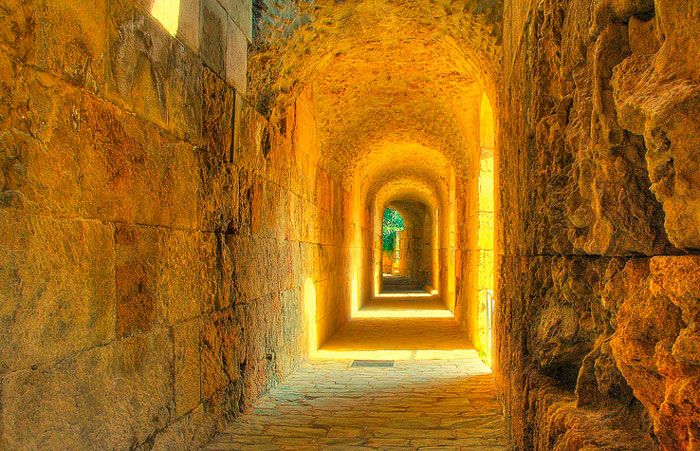
The scale is impressive even in its damaged state. The seating, entrances, arena, and service areas give you a sense of how crowds entered, watched, and left. You can also walk through tunnels beneath the seating, a detail that adds more than a quick view from above.
These underground passages helped move people, animals, and equipment around the arena. Your guide can explain how the hidden areas supported the public spectacle above. This is where the site feels most immediate, because the architecture still makes the old activity easy to picture.
The amphitheater is also where group size matters most. A large party can make it difficult to hear the guide, particularly outdoors. Stay close, ask the guide to repeat anything you miss, and use the pauses between explanations to look around on your own.
The open setting offers little shelter from strong sun. Bring water, wear sensible shoes, and prepare for warm conditions in summer. Even when the walk itself is not difficult, the combination of sun, stone, and several hours outside can wear you down.
A few more Seville tours worth comparing
- Seville: Royal Alcázar Entry Ticket
★ 4.6 · 28,378 reviews - Seville: Cathedral and La Giralda Entry Ticket
★ 4.5 · 24,592 reviews - Seville: Live Flamenco Dancing Show Ticket at the Theater
★ 4.7 · 16,396 reviews - Seville: Casa de la Memoria Flamenco Show
★ 4.8 · 12,964 reviews
The Roman theater at Santiponce
The Roman theater is partially reconstructed and located in Santiponce. It is smaller in visual impact than the amphitheater, but it completes the picture of Italica as a city with several forms of public entertainment.
A theater tells you something different from an arena. Here, the focus was staged performance rather than mass spectacle. The surviving structure and reconstruction help you understand the arrangement of the audience and performance space.
The order of the stops can change because of unexpected circumstances. You may see the theater before or after the main archaeological area, so do not plan around a fixed sequence. The important point is that the tour connects the theater with the wider city rather than treating it as an isolated photo stop.
The possible monastery addition
Several past departures have included a visit to a monastery after Italica. It is not listed among the core inclusions, which are transport, entrance to Italica, and an official guide, so you should not treat it as guaranteed.
When it is included, the monastery offers a change of pace after the open-air ruins. The architecture and religious history create a different kind of visit, and the building has been a highlight for some people.
The tradeoff is clear. A monastery stop can add variety, but it can also reduce free time at Italica. At least one departure left people wishing they had more time to explore the Roman site independently, while another found the monastery less interesting than the ruins.
If your priority is Roman archaeology, ask the operator what is planned for your date. If you enjoy adding a second historic site to a half-day outing, the possible monastery visit may be welcome.
How the guides affect the day
This tour depends heavily on the person holding the microphone. The strongest guiding turns the ruins into a story about emperors, households, public baths, religious spaces, and arena crowds.
Alberto has been praised for answering questions clearly and keeping the group involved. Miguel and Jesus have been noted for humor, energy, and strong explanations. José Luis has been appreciated for making the ancient city easy to follow, while Nieves has been described as warm and entertaining.
That does not mean every departure will feel identical. One account described a friendly guide who did not provide enough historical context. A guide can be pleasant without giving the depth you want, so it is worth asking questions when a detail catches your interest.
Group size is another practical factor. A large group can make it hard to hear, especially near the amphitheater or in open areas. If you use hearing aids or simply prefer detailed explanations, stay near the guide and consider asking where the group will gather before you move to take photographs.
Is $51 a fair price?
At $51 per person, the tour is reasonably priced if you value convenience and interpretation. Your fee covers round-trip transport from Seville, admission to Italica, and a live official guide. Those pieces would take time and planning to arrange separately.
The strongest value comes from the transport. Italica is close to Seville, but a guided coach trip removes uncertainty and gives you a central return. You also get three hours at a major Roman site rather than a brief stop squeezed into a larger day.
The price is less compelling if you want a slow archaeological visit with long stretches alone. The schedule is fixed, and the guided portion occupies most of the time. You may see the major areas well, but you probably will not study every mosaic or public building at your own pace.
An optional lunch is available for €18. Since it is not part of the basic price, compare the cost and timing with your own plans in Seville. The most useful part of the purchase remains the transport, admission, and guiding.
Who will enjoy this tour most
I would choose this outing if you have a half-day in Seville and want to see Roman Spain without renting a car or managing public transport. It suits first-time visitors who want the main story explained as they walk.
It also works well for families with older children and teenagers. The amphitheater, tunnels, statues, and stories about Roman public life give younger visitors something concrete to look at. A family with a four-year-old and a one-and-a-half-year-old managed the outing, though a stroller was useful when the terrain allowed it and carrying small children became tiring.
History fans will appreciate the link to Trajan and Hadrian, the city plan, and the surviving decorative work. Fans of Game of Thrones may know the amphitheater from its screen appearance, but the site is worth visiting even if you have never seen the show.
You may prefer an independent visit if you want museum displays, long photography stops, or complete control over the pace. One person specifically wished the museum or display area had been included, so check what is open and included if that matters to you.
Practical tips for a better visit
- Bring water and sun protection. Much of the site is open to the weather.
- Wear shoes for uneven ground. You will walk through streets, ruins, and the amphitheater complex.
- Arrive early at your pickup point. The three morning departures are close together, and delays can be inconvenient.
- Stay within earshot of the guide. Large groups can make outdoor explanations hard to catch.
- Ask about free time. The three-hour archaeological visit may be largely guided, with limited time to explore alone.
- Check the language arrangement. Standard guiding is in English or Spanish, and bilingual tours may operate when needed.
- Confirm the monastery stop. It may be added, but it is not part of the core description and can change the balance of the day.
- Use the cancellation flexibility if your plans are uncertain. You can cancel up to 24 hours in advance for a full refund, and the reserve-now, pay-later option leaves payment until later.
Should you book the Italica tour from Seville?
I would book it if you want a well-organized introduction to Roman Hispania, especially if you have only one morning or afternoon available. The amphitheater, tunnels, mosaics, and connection to two emperors make Italica more than a routine pile of stones.
I would hesitate only if you need lots of unscheduled time or dislike guided pacing. In that case, the three-hour visit may feel compressed, and an unexpected monastery stop could take time away from the ruins.
For most people staying in Seville, $51 is a fair exchange for transport, entry, and a guide who can explain what you are seeing. Choose a departure with a language you can follow, prepare for sun and walking, and treat the amphitheater as the centerpiece. That is where Italica makes its strongest impression.
FAQ
How long does the Italica tour take?
The full experience lasts four hours, including about 30 minutes by coach each way and a guided visit of roughly three hours at Italica.
Where does pickup take place?
Pickup is available at Calle Rastro 12A at 9:45, Hotel Don Paco at 9:50, and Calle Trajano 6 at 10:00.
What is included in the price?
The $51 price includes round-trip transportation between Seville and Italica, entrance fees to Italica, and an official tourist guide.
What languages are available?
Live guiding is available in English and Spanish. French, German, and Italian tours can be arranged on request.
Is the Roman theater included?
The tour includes the partially reconstructed Roman theater in Santiponce, along with the Archaeological Ensemble of Itálica.
Is lunch included?
No. An optional lunch is available for €18, but it is not included in the main tour price.
Can I cancel the booking?
Yes. You can cancel up to 24 hours before the activity for a full refund. A reserve-now, pay-later option is also available.
Just added around Seville
- Seville: Wine and Gourmet Tapas Tour★ 5.0 · 3 reviews
- Tapas Tour Cordoba & Wine Experience with chef and sommelier★ 4.8 · 3 reviews
- The most complete tour of Seville: All the highlights included★ 5.0 · 3 reviews
- Seville: Spritz Tasting Experience★ 4.8 · 3 reviews
- Ronda and White Villages Private Day Trip from Seville★ 5.0 · 3 reviews
- Jerez: Historic center of Jerez and horse show★ 5.0 · 3 reviews
- SEVILLE: REAL ALCÁZAR TOUR★ 5.0 · 3 reviews
- Royal Alcazar of Seville Guided Tour★ 5.0 · 3 reviews
Italica Roman Ruins, compared.
Historical Italica: Half-Day Guided Tour from Seville
Read our review →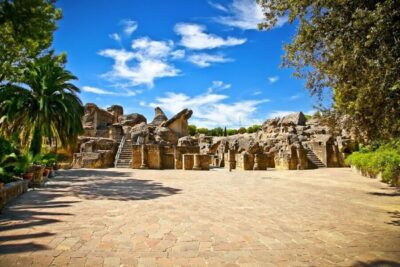
Visit to Italica Roman Ruins Tour tickets included
Read our review →
Private hald day tour to the historic roman city of Italica
Read our review →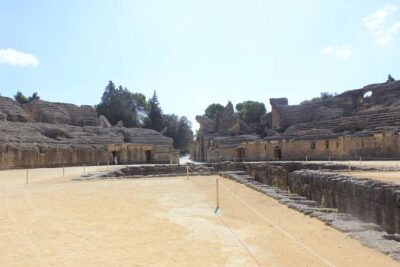
Browse the lists this tour appears in