
Reviewed · ITALICA ROMAN RUINS
Private hald day tour to the historic roman city of Italica
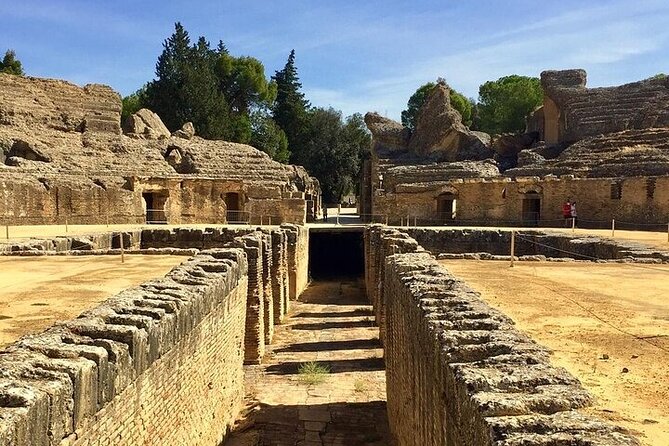
The big draw here is Italica’s Roman amphitheater, a vast ruin outside Seville where mosaics, city streets, and imperial connections give ancient Spain a clear shape. You also visit San Isidoro del Campo, a very different site: a medieval fortress monastery with Gothic and Mudejar details. Together, the stops show two important chapters of Andalusian history in one morning or afternoon.
I like the private format, since only your group takes part and the guide can keep the pace personal. I also like the hotel pickup and included admission, which remove two small but common travel headaches. The main consideration is time: four hours is enough for a useful introduction, but not a slow, every-corner exploration.
In This Review
- Key points to know
- Why Italica makes a smart half-day from Seville
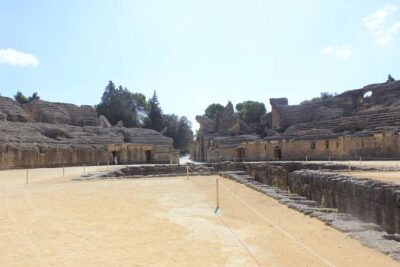
- The amphitheater: Italica’s main event
- Mosaics and the smaller details
- San Isidoro del Campo, a different kind of monument
- What a private tour changes
- Pickup from Seville and the four-hour timing
- Is the $93.71 price good value?
- Who will enjoy this most?
- Practical things to know before booking
- The final call: should you book it?
- FAQ
- Where does this tour take place?
- How long does the tour last?
- Which sites are included?
- How much time is spent at each site?
- Is admission included?
- Is this a private tour?
- What happens if bad weather cancels the tour?
Key points to know
- Two major sites in one half-day: Spend about two hours at Italica and one hour at San Isidoro del Campo.
- Imperial Roman connections: Italica is presented as the birthplace of emperors Trajan and Hadrian.
- Private touring: Your group travels and visits the sites without being combined with strangers.
- Strong guide reports: Guides including Jesus, José, Alberto, Miguel, Nieves, Mari Paz, Nacho, and José Luis have been praised for clear explanations, humor, and enthusiasm.
- Convenient inclusions: Pickup, mobile ticketing, and admission to both stops are included.
- Flexible cancellation: Cancel at least 24 hours before the start for a full refund, subject to the weather policy.
Why Italica makes a smart half-day from Seville
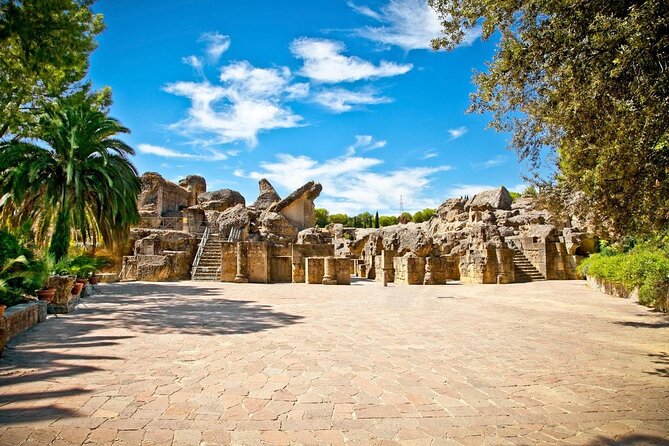
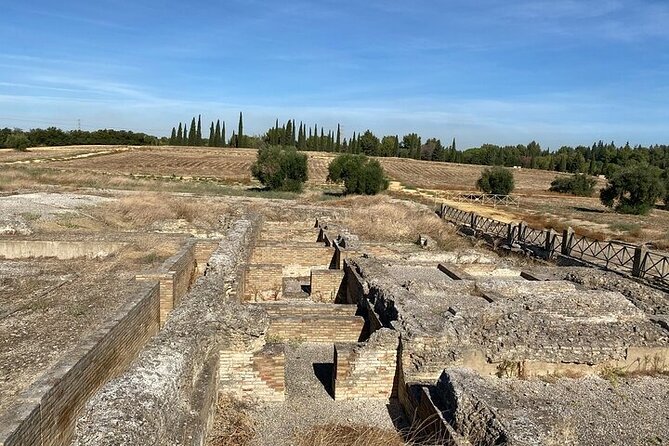
Seville is packed with famous sights, but its Roman past can be easy to miss. Italica gives you a chance to step outside the city center and see the remains of a substantial Roman settlement rather than just a display case of small objects.
The site is tied to two Roman emperors, Trajan and Hadrian. That connection gives your guide a useful way to explain why Italica mattered, how Roman power reached the Iberian Peninsula, and what life in a Roman city could look like. You are not simply walking past old stones. You are seeing the framework of streets, buildings, decorative floors, and public entertainment.
I especially like the combination of scale and detail. The amphitheater gives you the grand view, while the mosaics reward a closer look. A good guide can connect those pieces, explaining how public spectacles, private homes, social rank, and Roman customs fit together.
The tour is offered in English, and the guide is a major part of its value. Guides who have led this experience include Jesus, José, Alberto, Miguel, Nieves, Mari Paz, Nacho, and José Luis. You cannot request a particular person based on the information available, but the recorded feedback points to a consistent strength: guides explain the setting rather than merely pointing out ruins.
More History Tours in Seville
- Sevilla Food Tour: Tapas, Wine, History & Traditions
★ 5.0 · 3,468 reviews - Ultimate Seville Tapas, Wine & History Small Group Tour
★ 5.0 · 1,766 reviews - Seville: Tapas, Taverns, and History Walking Tour
★ 4.9 · 676 reviews
The amphitheater: Italica’s main event
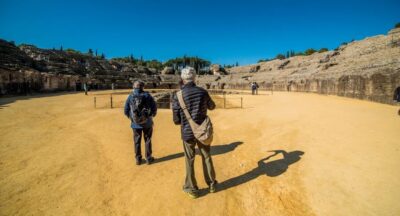
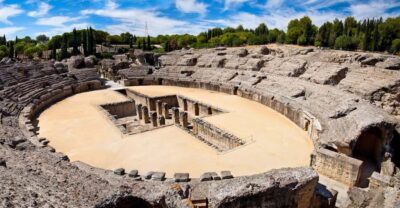
The Anfiteatro de Italica receives about two hours of the visit, and that is the right choice. It is the site’s most dramatic feature and needs time for you to understand its size and purpose.
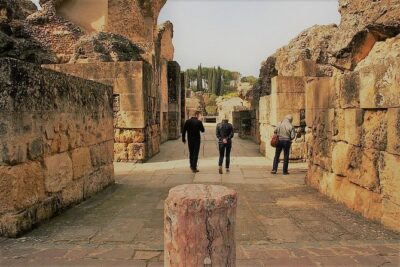
You can expect to see the surviving structure of the Roman amphitheater along with the surrounding remains of Italica. Its scale helps you picture the city as a working Roman center, not a small provincial outpost. The guide’s explanation is important here because ruins rarely explain themselves. Without context, an amphitheater can become a series of arches and broken walls. With context, it becomes a place connected to public life, entertainment, status, and Roman customs.
The guides have been praised for bringing those subjects to life with stories and specific details. Jesus, in particular, has been noted for explaining Roman society and customs in a way that made the remains easier to understand. Nacho has been described as keeping the visit dynamic, while José Luis has been praised for combining historical explanation with kindness and humor.
That mix matters. A two-hour archaeological visit can feel heavy if it becomes a lecture. A lively guide helps you stay focused, especially if your group includes people with different levels of interest in Roman history.
Mosaics and the smaller details
Italica is not only about the amphitheater. The mosaics are one of the best reasons to visit with a guide who pays attention to decoration as well as architecture.
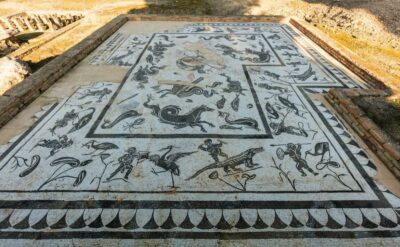
Mosaic floors can look beautiful at first glance, but the patterns also tell you something about the people who commissioned them. Their quality and design point to wealth, taste, and the role of the home within Roman society. Your guide can help you look past the color and geometry to ask what these floors say about daily life and social standing.
I like this part of the visit because it slows the experience down. The amphitheater is about mass entertainment and civic scale. The mosaics are more personal. Together, they give you two sides of Italica: the public city and the private world of its residents.
The exact amount of time spent at each feature will depend on your guide and group. Since the full stop lasts around two hours, you should have a chance to see more than the amphitheater, but this is still an introduction rather than an exhaustive archaeological study.
San Isidoro del Campo, a different kind of monument
After Italica, the tour continues to Monasterio de San Isidoro del Campo for about one hour. This changes the mood completely.
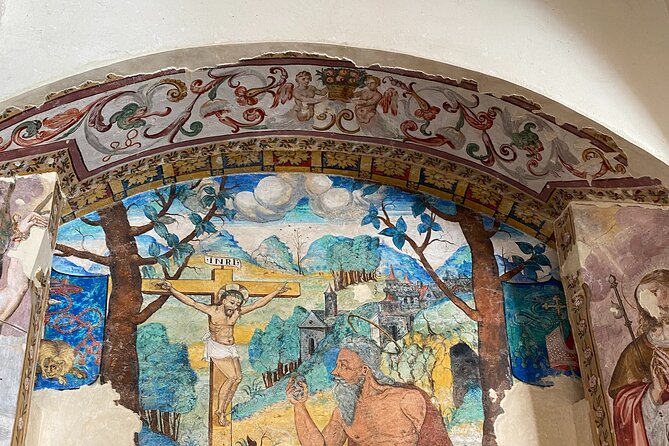
The monastery is described as a Gothic and Mudejar-style fortress monastery. That combination gives you a place with both religious and defensive character. It is not simply an add-on to the Roman ruins. Its architecture belongs to a later period and helps show how the area continued to matter long after Roman rule had faded.
I like the pairing because it prevents the day from becoming a single-period history lesson. Italica takes you into the Roman world, while San Isidoro del Campo brings you into medieval Andalusia. The contrast makes both places more memorable.
An hour is enough to get a focused introduction to the monastery, though it will not permit a long, unhurried inspection of every architectural feature. The guide’s storytelling again makes a difference. A visit here works best when someone explains how the Gothic and Mudejar elements fit together and why the building has the appearance of a fortress as well as a monastery.
More Roman Italica trips:
- From Seville: Italica Roman City & Medieval Monastery Tour
★ 4.5 · 1,051 reviews - Historical Italica: Half-Day Guided Tour from Seville
★ 4.5 · 416 reviews - Seville: Game of Thrones and Roman Empire Italica Tour
★ 4.3 · 372 reviews - Visit to Italica Roman Ruins Tour tickets included
★ 4.5 · 285 reviews
What a private tour changes
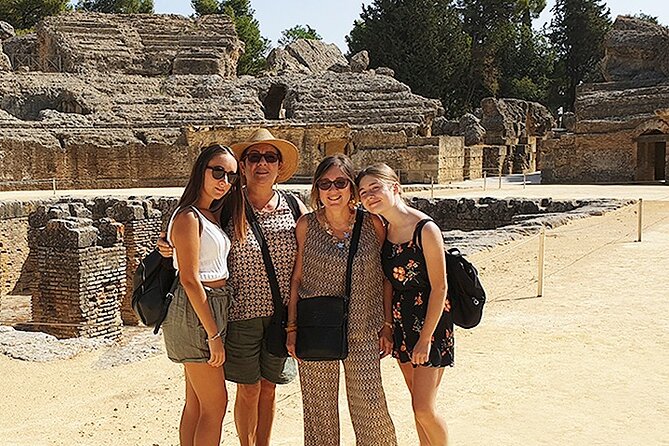
This is a private activity, so only your group participates. That is useful if you want to ask questions, pause for explanations, or keep the visit moving when someone in your party has had enough ancient masonry for one day.
A private tour does not automatically mean a slower or more detailed experience. The itinerary still covers two sites in roughly four hours, including transport from Seville. But it does give you more control than a large shared outing. If your group includes serious Roman-history fans, a guide can spend more time on Italica. If you are more interested in architecture, you can ask for extra attention at San Isidoro del Campo.
The guide names associated with the experience include Jesus, José, Alberto, Miguel, Nieves, Mari Paz, Nacho, and José Luis. Their reported strengths vary slightly, but the pattern is clear: clear historical explanation, enthusiasm, good humor, and an ability to keep the visit engaging. Nieves has also been praised for explaining in both English and Spanish, which may help mixed-language groups.
Because only your party takes part, this format is especially suitable for couples, families, and small groups who value conversation over a fixed script. It is less useful if you want a long, free-form day at the ruins. The half-day structure keeps things efficient, but it also sets a firm limit.
Pickup from Seville and the four-hour timing
Pickup is offered, and you are asked to provide your accommodation details so the pickup time and place can be confirmed. That is a practical advantage in Seville, where finding the right departure point can take time you would rather spend sightseeing.
One guide has been specifically praised for making hotel pickup easy. That is a small detail, but it matters. A smooth start is particularly helpful for a morning tour, when you may be trying to reach the departure point while still getting oriented in the city.
The advertised duration is approximately four hours. Around two hours are allocated to Italica and one hour to San Isidoro del Campo, leaving roughly an hour for transportation and transitions. That timing explains the tour’s appeal: you can visit both sites without giving up an entire day in Seville.
At the same time, you should keep your expectations realistic. This is not a leisurely archaeological field day. You will receive a well-shaped overview of two important places, but you may want a separate visit if you prefer to read every panel, linger over every mosaic, or explore at a very slow pace.
Is the $93.71 price good value?
At $93.71 per person, the price is not the cheapest way to see Italica. It is also not simply an entrance ticket. The cost includes private touring, pickup, admission to both sites, and an English-language guide.
That package can be good value if you are staying in Seville for a short time or if you want the background explained as you go. Transport alone takes planning, and admission costs would otherwise be separate. The private setup adds the most value for people who want a flexible conversation rather than a large group moving from point to point.
The value is less clear if you are traveling alone or mainly want independent time at Italica. A private per-person price can feel high when compared with making your own way to the site. In that case, the deciding question is simple: do you want convenience and interpretation, or the lowest possible cost?
Group discounts may improve the price for larger parties. Since the tour is often booked well in advance, with an average lead time of 59 days, it is sensible to check availability early if your Seville dates are fixed.
Who will enjoy this most?
I would recommend this tour to anyone who wants more than Seville’s central monuments but does not want to organize a full day away from the city.
It suits:
- Couples looking for a private outing with simple pickup
- Families who benefit from a guide adjusting the pace
- Visitors interested in Roman architecture, mosaics, and public life
- People who want Roman and medieval sites in the same outing
- Small groups who prefer to ask questions freely
- First-time visitors who want historical context without doing extensive preparation
It may be less suitable for someone who wants to spend several hours at Italica alone. The itinerary moves on to the monastery after about two hours, so the experience favors variety over exhaustive exploration.
The tour also requires good weather. If poor weather causes cancellation, you will be offered another date or a full refund. For the usual cancellation policy, cancel at least 24 hours before the start time for a full refund. Changes or cancellations made less than 24 hours ahead are not accepted for a refund.
Practical things to know before booking
Confirmation arrives at the time of booking, and the ticket is available on your mobile. You should still provide accurate accommodation details so the pickup arrangement can be confirmed.
Service animals are allowed, and most people can take part. The supplied information does not give detailed guidance about walking surfaces, seating, shade, or restroom locations, so anyone with specific mobility concerns should ask the provider before booking.
English is offered. If your group needs another language, do not assume it is available from the standard tour information. One guide, Nieves, has been praised for explaining in both English and Spanish, but guide assignments are not guaranteed.
The tour is offered by Naturanda Turismo Ambiental. Its strongest feature is the guide-led interpretation, so the experience will depend heavily on the person assigned to your group. The range of praised guides suggests a solid team, but it is still worth telling the provider what interests you most, especially if your group has a strong preference for Roman culture, art, architecture, or medieval Spain.
The final call: should you book it?
Book this tour if you want an easy, private way to see Italica and San Isidoro del Campo in one half-day. The combination is unusually effective: the amphitheater and mosaics show Roman public and private life, while the fortress monastery shifts the story into medieval Andalusia.
The $93.71 price makes the most sense for couples and small groups who value pickup, included admission, and a guide who can explain what the ruins mean. It is also a good fit if you have limited time in Seville and do not want to spend your evening planning transport.
Skip it if your main goal is the lowest-cost visit or a slow, independent day at Italica. For most people who want context, convenience, and two contrasting historic sites without a full-day commitment, this is a well-balanced choice.
FAQ
Where does this tour take place?
The tour is based in Seville, Spain, with pickup available from your accommodation.
How long does the tour last?
The experience lasts approximately four hours.
Which sites are included?
The tour includes the Anfiteatro de Italica and Monasterio de San Isidoro del Campo.
How much time is spent at each site?
The planned visit includes about two hours at Italica and one hour at San Isidoro del Campo.
Is admission included?
Yes. Admission tickets for both stops are included.
Is this a private tour?
Yes. Only your group participates in the activity.
What happens if bad weather cancels the tour?
You will be offered a different date or a full refund if the experience is canceled because of poor weather. You can also cancel at least 24 hours before the start time for a full refund.
Just added around Seville
- Seville: Wine and Gourmet Tapas Tour★ 5.0 · 3 reviews
- Tapas Tour Cordoba & Wine Experience with chef and sommelier★ 4.8 · 3 reviews
- The most complete tour of Seville: All the highlights included★ 5.0 · 3 reviews
- Seville: Spritz Tasting Experience★ 4.8 · 3 reviews
- Ronda and White Villages Private Day Trip from Seville★ 5.0 · 3 reviews
- SEVILLE: REAL ALCÁZAR TOUR★ 5.0 · 3 reviews
- Royal Alcazar of Seville Guided Tour★ 5.0 · 3 reviews
- Jerez: Historic center of Jerez and horse show★ 5.0 · 3 reviews
Italica Roman Ruins, compared.
Historical Italica: Half-Day Guided Tour from Seville
Read our review →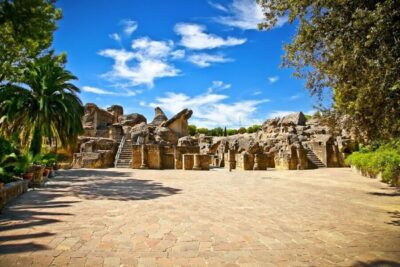
Visit to Italica Roman Ruins Tour tickets included
Read our review →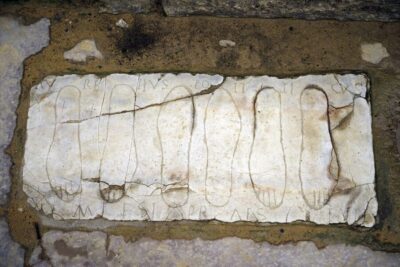
Browse the lists this tour appears in