
Reviewed · ITALICA ROMAN RUINS
Italica Roman City Tour from Seville
Italica gives you a close look at Roman Spain without leaving Seville far behind. In about 15 minutes, you reach the ancient city where emperors Trajan and Hadrian were born, then walk past mosaics, public baths, and one of the Roman Empire’s biggest amphitheaters.
I like the expert storytelling, especially when guides such as Jesus, Luca, Catherine, Alberto, and Mario turn broken walls into a working city. I also like the easy half-day format, with transport and admission handled for you. The main catch is that the four-hour outing includes travel, and some departures add an unadvertised monastery stop, leaving roughly two hours at Italica.
In This Review
- Key points at a glance
- Why Italica is worth leaving Seville for
- The ride from Seville and what four hours really means
- Walking the old streets of Italica
- The 25,000-seat amphitheater
- Mosaics, baths, and the Traianeum
- The theater and possible monastery stop
- Guide quality can make or break the visit
- Heat, shoes, and practical comfort
- Is $46.85 good value?
- Who should book this Italica tour?
- Cancellation and booking details
- Should you book it?
- FAQ
- How long does the Italica tour from Seville last?
- How far is Italica from Seville?
- What language is the tour offered in?
- What does the tour include?
- How large can the group be?
- Is the tour physically demanding?
- Is San Isidoro del Campo Monastery included?
Key points at a glance
- A Roman city just outside Seville: Italica is only about 15 minutes away, making it a practical morning excursion.
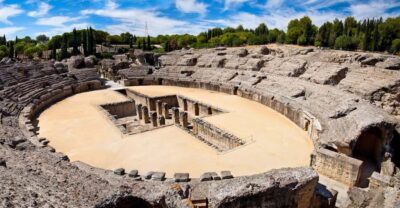
- A giant amphitheater: The arena held about 25,000 people and ranks among the largest in the Roman world.
- Mosaics reward careful walking: The preserved floors are among the site’s most memorable details, so watch your footing and take time to look down.
- Guide quality matters: Jesus, Luca, Catherine, Alberto, and Mario received especially warm praise, while some English-language departures had problems with accents or translation.
- Expect uneven ground: You will walk on rough surfaces with changes in level. Sturdy shoes are essential.
- The itinerary can vary: Some groups visit San Isidoro del Campo Monastery after Italica, and the tour may operate in two languages.
Why Italica is worth leaving Seville for
Seville has plenty of Roman traces, but Italica lets you walk through the remains of an actual Roman city. Publius Cornelius Scipio Africanus founded it in 206 B.C. after defeating Carthaginian forces. Later, it became associated with two emperors, Trajan and Hadrian, both born in the city.
That imperial connection gives the place more weight than a simple collection of ruins. You are not looking at one isolated monument. You are moving along old streets, past homes, public buildings, baths, and ceremonial spaces that once formed a large urban center.
I find Italica most rewarding when a guide explains how the pieces fit together. Without that help, the site can look like a broad spread of stone foundations and tiled floors. With a good guide, you can picture how people moved through the streets, used the baths, gathered for entertainment, and displayed wealth through elaborate mosaic work.
The archaeological site is also close enough to Seville for a comfortable half-day plan. You start at 10:00 a.m. and return after about four hours, though the exact ending point can differ from the starting location. That leaves room for lunch, an afternoon museum, or more wandering in Seville.
More Roman Italica trips:
- From Seville: Italica Roman City & Medieval Monastery Tour
★ 4.5 · 1,051 reviews - Historical Italica: Half-Day Guided Tour from Seville
★ 4.5 · 416 reviews - Seville: Game of Thrones and Roman Empire Italica Tour
★ 4.3 · 372 reviews
The ride from Seville and what four hours really means
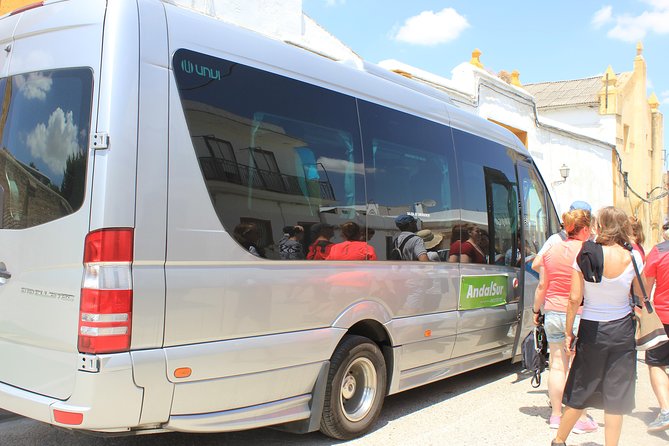
The trip from Seville is short, usually described as about 15 to 20 minutes by air-conditioned vehicle. That is a real advantage in hot weather. You do not need to arrange a bus, work out the local route, or buy separate entrance tickets.
Still, do not read four hours as four hours inside Italica. The total includes pickup or meeting arrangements, the drive there and back, and possibly an additional stop. On many departures, the time walking through Italica is closer to two hours.
That is enough for the main sights, but it is not unlimited time for photography or quiet exploration. I would book this trip for a clear introduction, not for an all-day archaeological study.
The bus has also caused trouble for people prone to motion sickness. The road can feel swaying, so sit where you usually feel most comfortable and consider taking suitable precautions before departure. That advice matters more here than it would on a simple city walking tour.
Group size can reach 55 people. A large group keeps the price at a reasonable $46.85 per person, but it can make it harder to hear a guide or ask many questions. The strongest guides keep people together and explain clearly. Less polished departures may split by language, pause while several languages are covered, or leave part of the group too far from the speaker.
Walking the old streets of Italica
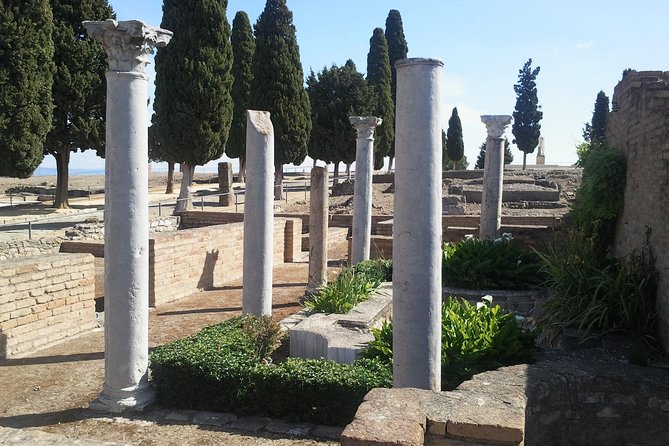
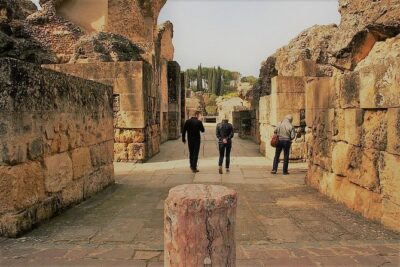
The first part of the visit takes you through the Archaeological Ensemble of Italica. The appeal is the sense of scale. You are not simply viewing a single ruin from behind a barrier. You walk through the former city plan and see how its streets and buildings were arranged.
The surfaces are not smooth. Expect rough ground, uneven paving, and level changes. I would wear firm walking shoes with good grip, not thin sandals or new shoes that still need breaking in.
Your guide should help you read the remains. A wall fragment may mark a home, a public building, or part of a larger complex. The best commentary connects those remains to Roman daily life rather than giving you a string of dates. Luca was especially praised for helping people picture how the buildings worked, while Jesus was noted for his command of Italica and his light humor.
You will also have chances to take photographs. The broad ruins, geometric floors, and amphitheater make good subjects, but the visit may feel brisk. If photography is important to you, keep your camera ready and use any free time carefully.
The 25,000-seat amphitheater
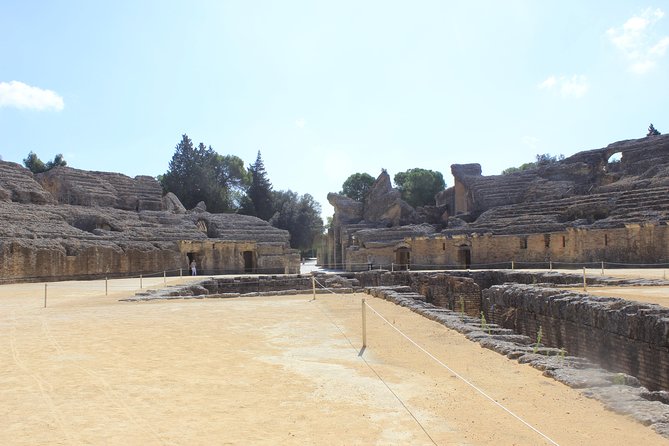
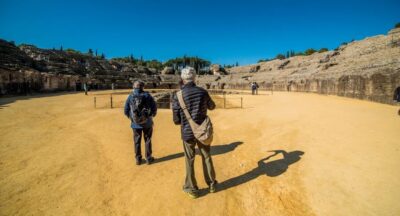
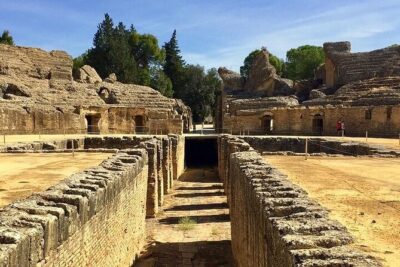
The amphitheater is the visual centerpiece. It held about 25,000 people and was the third-largest amphitheater in the Roman Empire. Even in its ruined state, the scale is easy to grasp.
You can see why this stop creates such a strong impression. The arena is far larger than the surrounding streets suggest, and its surviving structure gives you a better sense of Roman public entertainment than a small foundation ever could.
This is also the part of the site that interests people who know Italica from Game of Thrones. The amphitheater was used as a filming location, and some guides point out the areas connected with the show. That is a fun extra, but the ancient monument is the main event. You do not need to be a fan to appreciate it.
Listen closely here. Large open spaces can make a guide difficult to hear, especially in a mixed-language group. Stay near the guide and do not assume you will get a long stretch afterward to explore alone. One useful improvement would be another 20 or 30 minutes for personal photographs and quiet viewing, but the standard schedule may not provide it.
A few more Seville tours worth comparing
- Seville: Royal Alcázar Entry Ticket
★ 4.6 · 28,378 reviews - Seville: Cathedral and La Giralda Entry Ticket
★ 4.5 · 24,592 reviews - Seville: Live Flamenco Dancing Show Ticket at the Theater
★ 4.7 · 16,396 reviews - Seville: Casa de la Memoria Flamenco Show
★ 4.8 · 12,964 reviews
Mosaics, baths, and the Traianeum
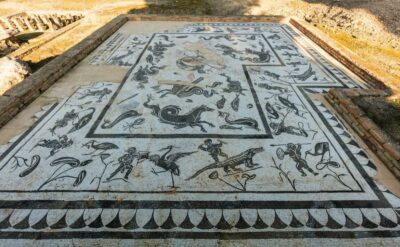
The mosaic floors are among Italica’s finest details. Look down as you walk. Their patterns show the taste and expense that went into private homes and public spaces, and they make the ancient city feel more personal than the larger ruins do.
The public baths offer another way to understand Roman urban life. They were not only practical facilities. They were social places, tied to exercise, conversation, and the daily rhythm of the city. A guide can help you see the baths as a functioning part of the community rather than a few exposed rooms.
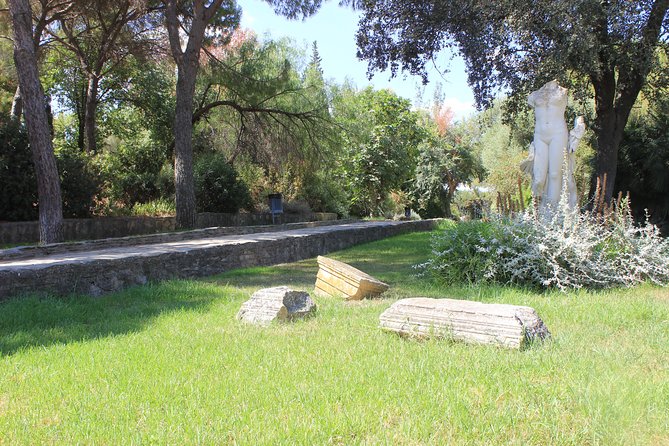
The Traianeum adds an imperial dimension to the visit. It was connected with Emperor Trajan, who was born at Italica. Statues of Diana, Venus, and Trajan add visual interest, though you should remember that the ruins are not a fully rebuilt Roman town. Much of what you see remains partial, open to the sky, and dependent on explanation.
That is why the guide makes such a difference. Strong guides such as Alberto and Luca were praised for art history and for explaining restoration. On the other hand, some English-speaking groups had difficulty understanding guides with heavy accents or limited English vocabulary. The language is listed as English, but the quality of delivery can vary by departure.
The theater and possible monastery stop
The itinerary also refers to the partially reconstructed Roman theater in nearby Santiponce. It offers another view of Roman public life, though the available information does not make clear how much time every departure spends there.
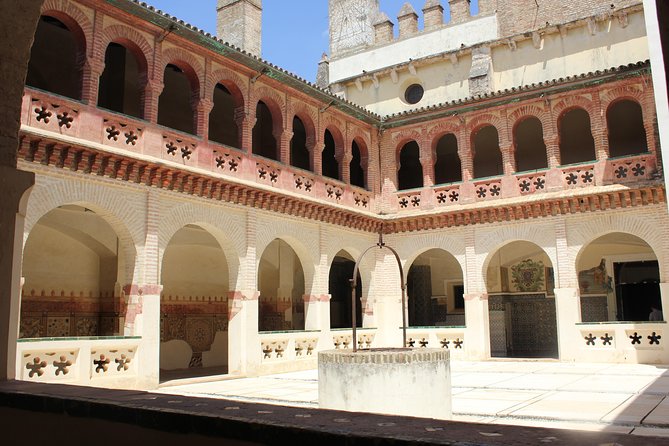
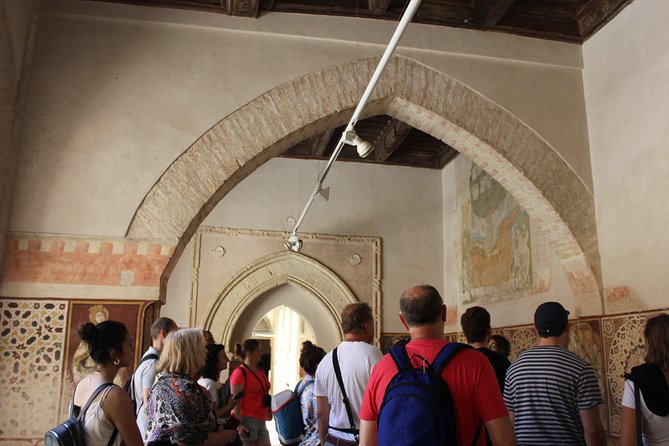
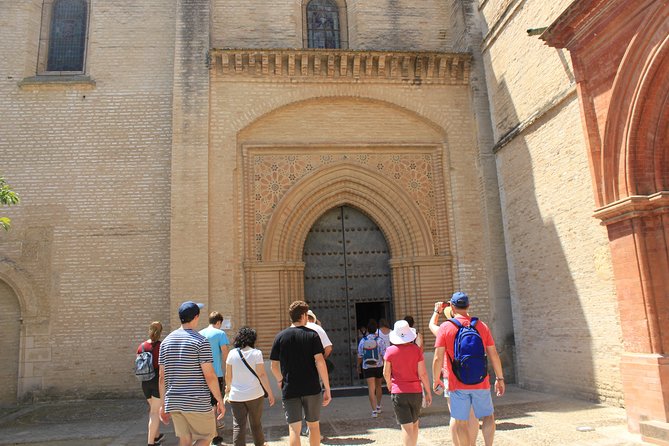
Some tours also stop for about 30 minutes at San Isidoro del Campo Monastery. This can be a pleasant addition, especially if you enjoy art, religious buildings, and restoration work. It adds a second layer of history to the outing and breaks up the return trip.
The problem is communication. The monastery is not clearly presented in every description of the Italica outing, and some people choose this trip specifically to avoid an extra stop. If your priority is Italica, ask before booking or at the start of the tour if San Isidoro del Campo is part of that day’s plan.
The extra stop can also reduce time at the Roman site. One departure spent about two hours at Italica and roughly 30 minutes at the monastery, with more time used for transportation and a short refreshment break. That is still a pleasant four-hour excursion, but it is not the same as a dedicated Italica visit.
Guide quality can make or break the visit
The most praised part of this experience is the guiding. Jesus was described as entertaining and well informed. Catherine brought humor and warmth while working in difficult heat. Alberto was praised for art history, and Luca was singled out for making architecture easy to imagine. Mario also received credit for combining history with a relaxed approach.
Those names do not guarantee who will lead your group. They do show the level of experience available within the company. When the guide is strong, the tour becomes much more than transport to an archaeological site.
There are also clear weak points. Some guides have been hard to understand in English. One person found that more than half of the commentary was difficult to follow, and another found that the guide focused too much on general Spanish history instead of Italica.
Mixed-language tours can create another issue. The order of visits may change, and the operator may combine English, Spanish, and French groups. In that case, the guide may repeat information in several languages, cutting into the time available for each stop. The operator notes that two languages may be used to handle schedule changes, so this is worth keeping in mind if you want a focused English tour.
Heat, shoes, and practical comfort
Andalusia can be very hot, and Italica offers limited shade across its open archaeological areas. The experience has been completed comfortably on hot days, but you should bring water, sun protection, and a hat. A short break at a nearby restaurant has been included on some outings, with drinks and ice cream available, but you should not count on that as your only chance to cool down.
Plan for moderate physical fitness. You do not need to be an athlete, but the site requires steady walking across uneven surfaces. If you tire easily, stay close to the guide and use pauses to look rather than trying to cover every corner.
The air-conditioned vehicle is valuable here. It protects you from the hottest part of the road trip and saves the work of arranging transport independently. Still, the moving bus can sway on the road, so people with motion sickness should plan ahead.
Is $46.85 good value?
At $46.85 per person, this is a fair price for transport, admission, and a professional art historian guide. The price is especially sensible if you want context and do not want to manage the trip to Santiponce yourself.
The value depends on what you want from Italica. If you want a simple introduction, the half-day format works well. You see the amphitheater, streets, mosaics, baths, statues, and Traianeum without giving up an entire day in Seville.
If you want long stretches alone, detailed photography, or a slow look at every building, the value is weaker. A group of up to 55 people and a possible monastery stop can make the visit feel compressed. You are paying for convenience and interpretation, not maximum time on the ruins.
Admission is included, as is transportation in an air-conditioned vehicle. Breakfast is not included, so eat before the 10:00 a.m. start or make your own plan for food. The tour is offered in English, though the operator may combine languages if schedules change.
Who should book this Italica tour?
I would choose this tour if you have limited time in Seville and want an organized introduction to Roman Spain. It suits people who enjoy history but prefer a guide to help explain what they are seeing. It is also a good fit for anyone who wants to visit the Game of Thrones filming location without arranging transport independently.
Families and older visitors should think about the uneven ground and heat. The site is manageable for people with moderate fitness, but this is not a smooth, effortless attraction. Anyone who strongly dislikes buses, crowded groups, or mixed-language commentary may prefer another arrangement.
The tour also works well for first-time visitors to Italica. You can learn the basic story, see the main monuments, and decide later if you want to return for a longer independent visit.
Cancellation and booking details
You can cancel for a full refund up to 24 hours before the local start time. Changes or cancellations made within 24 hours are not accepted for a refund.
The experience depends on good weather. If poor weather causes cancellation, you will be offered another date or a full refund. Confirmation is provided at booking, but a last-minute availability failure has occurred when booking systems and the operator were not synchronized, so booking earlier than the average 28-day lead time is a sensible precaution.
Should you book it?
Book it if you want a convenient, guide-led half-day centered on one of southern Spain’s most important Roman sites. The amphitheater is impressive, the mosaics are memorable, and a strong guide can make the entire city understandable.
Before paying, confirm whether your departure includes the monastery and how much time is planned inside Italica. If you can accept a large group, uneven ground, possible heat, and a tour that may devote only about two hours to the ruins, $46.85 is reasonable. If you want quiet exploration and complete control of your schedule, visit independently instead.
FAQ
How long does the Italica tour from Seville last?
The tour lasts approximately four hours, including transportation and the site visit.
How far is Italica from Seville?
Italica is located about 15 minutes from Seville by vehicle, though some trip descriptions and experiences place the drive closer to 20 minutes.
What language is the tour offered in?
The tour is offered in English. The order of visits may change, and the operator may conduct a departure in two different languages when needed.
What does the tour include?
The price includes admission to the Archaeological Ensemble of Italica, an art historian guide, and transport in an air-conditioned vehicle.
How large can the group be?
The tour can have a maximum of 55 travelers.
Is the tour physically demanding?
You should have a moderate fitness level. The archaeological site has rough, uneven surfaces and changes in level, so sturdy shoes are recommended.
Is San Isidoro del Campo Monastery included?
Some departures include a short visit to the nearby monastery, but it is not clear that every departure follows the same itinerary. Confirm this detail before booking if you want to spend all available sightseeing time at Italica.
Just added around Seville
- Seville: Wine and Gourmet Tapas Tour★ 5.0 · 3 reviews
- Tapas Tour Cordoba & Wine Experience with chef and sommelier★ 4.8 · 3 reviews
- The most complete tour of Seville: All the highlights included★ 5.0 · 3 reviews
- Seville: Spritz Tasting Experience★ 4.8 · 3 reviews
- Ronda and White Villages Private Day Trip from Seville★ 5.0 · 3 reviews
- Jerez: Historic center of Jerez and horse show★ 5.0 · 3 reviews
- SEVILLE: REAL ALCÁZAR TOUR★ 5.0 · 3 reviews
- Royal Alcazar of Seville Guided Tour★ 5.0 · 3 reviews
Italica Roman Ruins, compared.
Historical Italica: Half-Day Guided Tour from Seville
Read our review →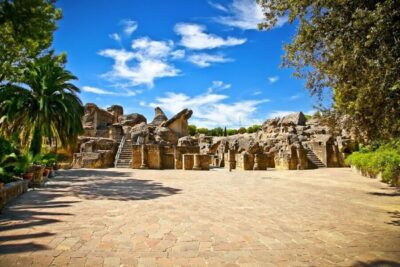
Visit to Italica Roman Ruins Tour tickets included
Read our review →
Private hald day tour to the historic roman city of Italica
Read our review →Browse the lists this tour appears in