
Reviewed · ITALICA ROMAN RUINS
Italica 2-Hour Private Guided Tour
Italica gives you a close look at Roman Spain without the crowds and scale of Rome. The amphitheater is the star, but the mosaics, baths, gym, bread oven, and city streets make the visit feel like more than a quick photo stop. The site also appeared in Game of Thrones, which adds a fun modern layer to an ancient place.
I like the private format, since your guide can spend more time on the parts that interest you, and I like the practical two-hour length. Guides including Carmen, Javier, Alex, David, and Miguel have been praised for clear explanations and warm personalities. The main drawback is transport: the listed meeting point is at Italica, while transport from Seville may need to be requested or arranged separately.
In This Review
- Key Points to Know Before You Go
- Why Italica Makes a Good Half-Day Trip from Seville
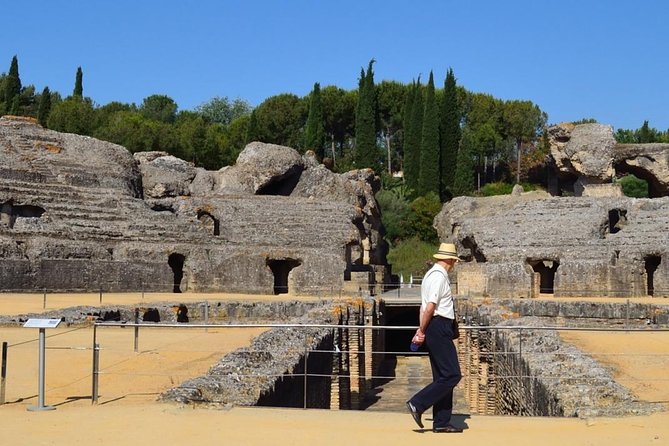
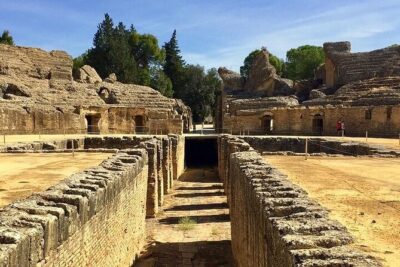
- The Amphitheater: Italica’s Most Powerful Ruin
- Mosaics in the House of the Planetarium
- Baths, Gym, Bread Oven, and City Streets
- Trajan, Hadrian, and the Story Behind the Stones
- What the Private Format Really Adds
- Getting to the Meeting Point
- Weather, Walking, and Who Will Enjoy It
- Is the $106.82 Price Worth It?
- Should You Book the Italica Tour?
- FAQ
- Where does the Italica tour start?
- What time does the tour begin?
- How long does the visit last?
- Is transportation from Seville included?
- What does the tour price include?
- Is the tour offered in English?
- Can I cancel for a full refund?
Key Points to Know Before You Go
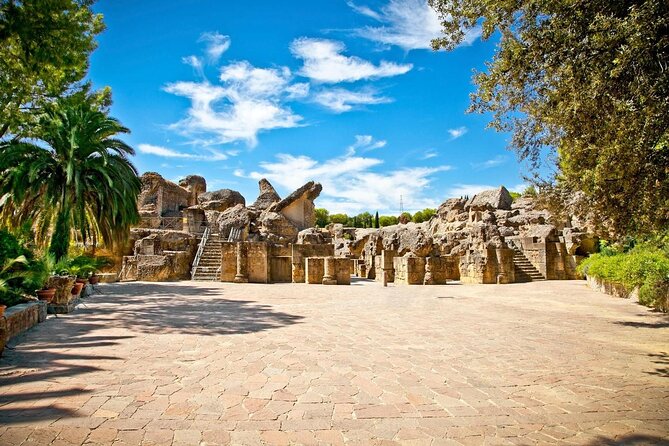
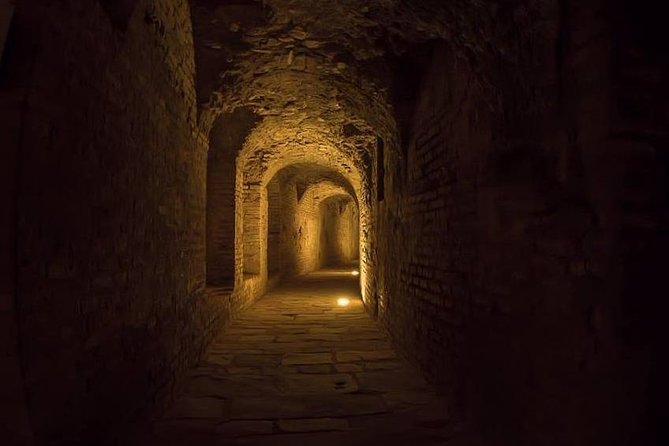
- The amphitheater is the main event: See the broad arena, surviving underground areas, and a filming location used in Game of Thrones.
- Roman life appears in small details: Visit the thermal baths, gym, bread oven, houses, streets, and House of the Planetarium.
- This is a true private tour: Only your group takes part, so you can ask questions and set the pace within the two-hour visit.
- Guides make a major difference: Carmen, Javier, Alex, David, and Miguel are among the guides associated with especially strong experiences.
- Plan your transport carefully: The tour begins and ends at Italica unless transportation is arranged separately.
Why Italica Makes a Good Half-Day Trip from Seville
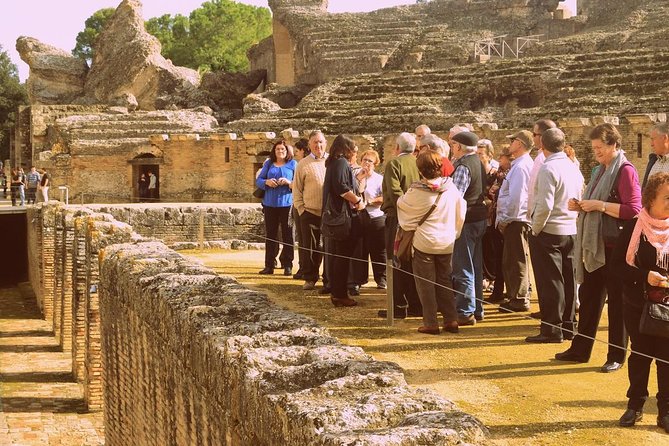
Seville is known for grand churches, tiled courtyards, and Moorish palaces. Italica gives you a different side of the region: a Roman city spread across open ruins just outside the modern city.
The site was established in 206, when the Roman general Scipio created a settlement for soldiers wounded in the battle of Ilipa against the Lusitanians. Over time, Italica became an important Roman city and the birthplace of emperors Trajan and Hadrian. Your guide uses those facts as a starting point, then connects the surviving stones to daily Roman life.
I like the way this visit balances famous sights with ordinary details. You are not only looking at a giant arena. You are also seeing where people bathed, exercised, baked bread, lived, and walked along paved streets.
The visit lasts about one hour and thirty minutes to two hours, with two hours being the stated time for the site. That is enough time to see the main ruins without turning the outing into an exhausting archaeology lesson. If you enjoy ancient Rome but prefer a manageable visit, the length works well.
More Roman Italica trips:
- From Seville: Italica Roman City & Medieval Monastery Tour
★ 4.5 · 1,051 reviews - Historical Italica: Half-Day Guided Tour from Seville
★ 4.5 · 416 reviews - Seville: Game of Thrones and Roman Empire Italica Tour
★ 4.3 · 372 reviews
The Amphitheater: Italica’s Most Powerful Ruin
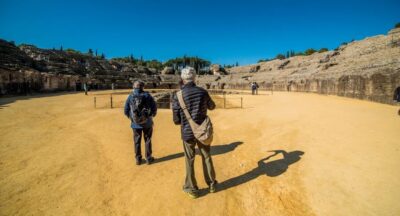
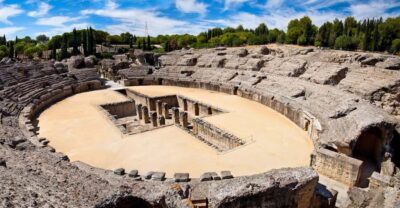
Your first major stop is the Anfiteatro de Italica, a large Roman arena with enough surviving structure to make its original purpose easy to picture. This is where games were held, and your guide explains how public entertainment fit into Roman society.
The amphitheater is also the part most likely to appeal to modern television fans. It was used as a filming location for Game of Thrones. A guide may show you footage from the series and point out the areas that appeared on screen. That connection is entertaining, but it does not replace the site’s Roman importance. The arena is worth seeing even if you have never watched the show.
What I find useful about a guided visit here is the scale. Ruins can be difficult to read on your own. A guide can explain the arena’s layout, the function of the spaces around it, and how the games may have worked. You get a clearer sense of the building as a working public venue instead of a collection of broken walls.
The open setting can also mean strong sun and little shelter. The visit requires walking around the archaeological site, so comfortable shoes, water, and weather protection are sensible. The experience is much easier when you are ready for heat, especially since one particularly hot visit still felt manageable because the guide kept the discussion lively and moving.
Mosaics in the House of the Planetarium
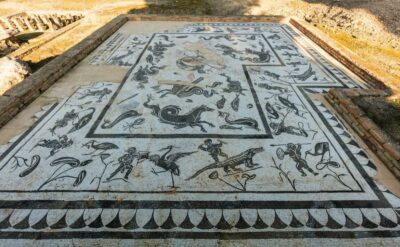
The House of the Planetarium is one of Italica’s finest stops. Its preserved mosaics add color and detail to a site otherwise dominated by stone, earth, and partial walls.
The name points to the house’s most famous decoration, a mosaic showing the planetary gods. Your guide explains what you are seeing and places the artwork within the Roman home. This is the moment when Italica feels less like a military settlement and more like a prosperous city where wealthy residents displayed art inside their houses.
Two restored Roman houses are included in the route. Their remains help you understand how rooms were arranged and how domestic life fitted into the wider city plan. You will not find a complete Roman home waiting for you, but the combination of walls, floors, and mosaics gives you enough clues to picture the original spaces.
The mosaics are a strong reason to choose a guided visit rather than simply wandering through the site. Without explanation, it is easy to admire the patterns and move on. With a guide, you learn why certain rooms mattered and how these decorations signaled status.
If you have already seen Pompeii or Ostia, you may find Italica more limited. One guide made that comparison directly in explaining the site’s strengths and limits. Italica has important surviving pieces, especially the amphitheater and mosaics, but it does not offer the same broad range of intact buildings as Italy’s largest Roman sites.
Baths, Gym, Bread Oven, and City Streets
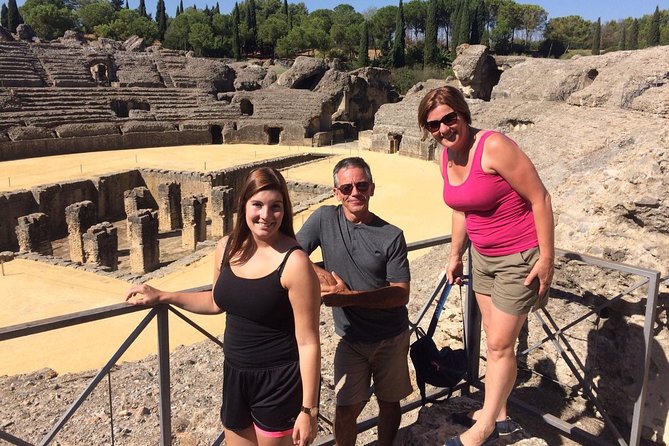
The route also covers the largest thermal baths at Italica. Roman baths were not simply places to wash. They were social spaces where people met, exercised, relaxed, and spent time in heated and cooled rooms.
The remains do not give you a fully restored bathhouse, but your guide can help you understand the complex’s purpose and scale. Look for the way rooms connect and imagine the engineering behind the thermal water system. This is one of the stops where historical explanation matters more than visual drama.
The gym adds another piece to Roman public life. Ancient cities valued physical training, and the presence of a gym shows that Italica was designed for more than housing soldiers. The guide also points out a former bread oven, a small but memorable detail that brings food production into the picture.
I especially like details such as the bird house. It is easy to focus only on emperors and arenas, but features like this reveal how people organized their homes and surroundings. The site becomes more personal when you hear about the less famous corners.
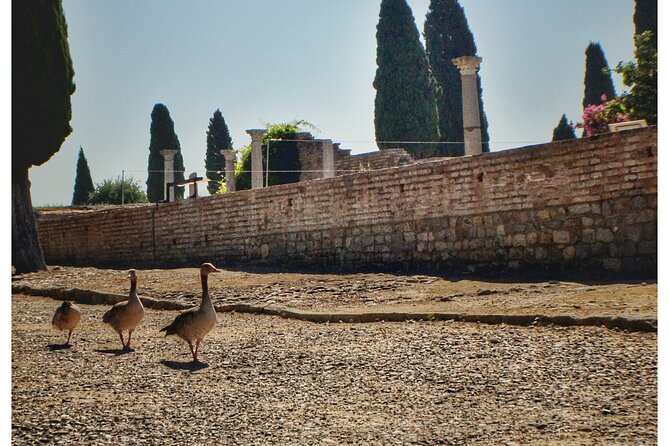
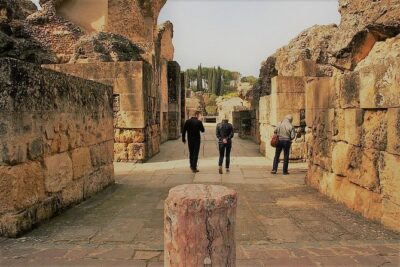
Remnants of city streets link the separate ruins together. Walking those routes helps you understand the city as a planned place, not a group of unrelated attractions. You can see how houses, public buildings, and services once occupied the same urban setting.
A few more Seville tours worth comparing
- Cordoba’s Authentic Patios: 2-Hour Tour with Tickets
★ 4.4 · 896 reviews - Seville City Tour 2 Hour Monumental Segway Tour
★ 5.0 · 472 reviews - Seville City Tour: 2-Hour Monumental Segway Tour
★ 4.9 · 117 reviews - 2 Hours Tour around Cádiz: History, anecdotes and curiosities
★ 5.0 · 89 reviews
Trajan, Hadrian, and the Story Behind the Stones
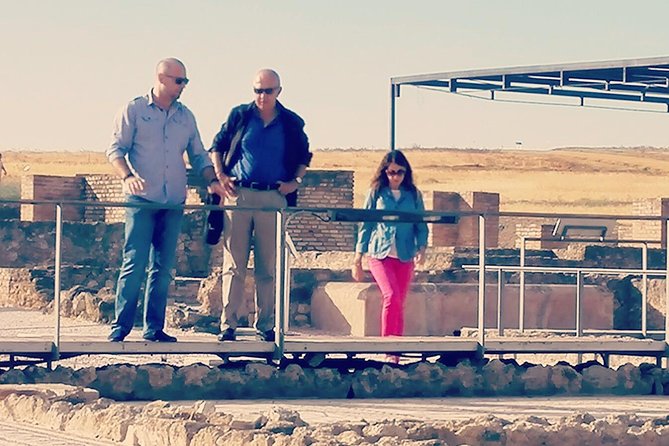
Italica’s connection to Trajan and Hadrian gives the guide a strong narrative thread. Both emperors were born here, and their link to the city helps explain why Italica matters beyond its surviving buildings.
A monument to Trajan is included in the route. Your guide discusses its significance and uses it to connect the local site with the wider Roman Empire. This is useful context because Italica can otherwise seem like an isolated ruin outside Seville. The monument reminds you that people from this city reached the highest level of Roman power.
The tour also begins with Scipio and the settlement’s military origins. That early background helps explain the city’s development. You see how a place connected to wounded soldiers later became a substantial Roman center with houses, baths, streets, and public entertainment.
Guides such as Carmen and Javier have been singled out for clear storytelling, while Alex has been praised for keeping the two hours moving even in poor weather. David has also been appreciated for helping with photographs and getting back into Seville. The guide matters here because the site needs interpretation. The stones are attractive, but the story makes them memorable.
What the Private Format Really Adds
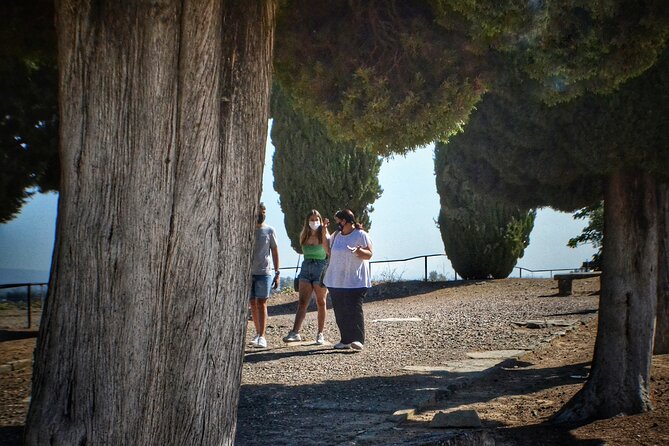
A private tour means only your group participates. That is valuable at an archaeological site because you can stop to ask about a mosaic, a building, or Roman customs without waiting for a large group to catch up.
The format also suits mixed interests. One person can ask about Game of Thrones, another can focus on emperors, and someone else can ask about baths or Roman homes. A good guide can adjust the balance.
The private setup does not guarantee a fixed guide. The experience has been led by people including David, Carmen, Alex, Javier, and Miguel. Their approaches may differ, but the strongest accounts describe guides who were punctual, friendly, clear in English, and comfortable with both local and Roman history.
You should also be realistic about the price. At $106.82 per person, this is not the cheapest way to see Italica. The value improves when you are traveling as a small private group and want a personal explanation rather than a basic entrance visit. Tickets and a professional guide are included, but food, drinks, hotel pickup, and standard transportation are not.
Some visitors have paid extra for hotel pickup and found it worthwhile. In other cases, the company or guide helped with a ride back to Seville, but you should not count on that unless it is arranged in advance. The formal meeting point is Italica, and transportation to or from the attraction is available only by request.
Getting to the Meeting Point
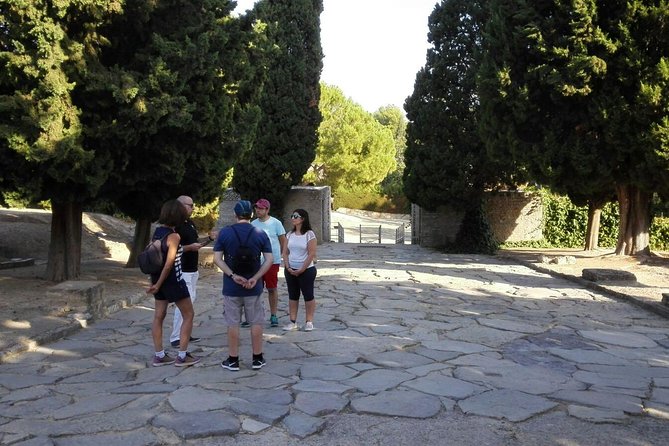
The start time is 10:00 a.m., and the listed start and end point is Italica in the province of Seville. This detail deserves attention when you book. The general description refers to meeting in central Seville and traveling the short distance to the ruins, but the meeting-point information places the start at Italica.
If you need transportation, request it before the tour. Do not assume hotel pickup is included. One practical public transport tip is to take the M17OA bus from the city bus station. It runs about every half hour, and Italica is the last stop as the bus turns around, making the stop fairly easy to identify.
The short distance from Seville makes Italica a convenient outing, but transport still takes planning. Build in enough time to reach the entrance by 10:00 a.m. If you are arranging your own way back, remember that the activity ends at the same meeting point.
Weather, Walking, and Who Will Enjoy It
The tour requires good weather and may be canceled if conditions are poor. In that case, you can accept another date or receive a full refund. You can cancel for a full refund up to 24 hours before the start time, but changes or cancellations inside that window are not accepted.
Most people can take part, and service animals are allowed. Children must be accompanied by an adult. The information does not provide a detailed accessibility assessment, so if you have specific mobility needs, ask the operator before booking.
This tour suits you best if you enjoy ancient history, Roman architecture, mosaics, or television locations. It also works well for families with older children who can appreciate the amphitheater and ask questions about gladiatorial games and Roman life.
You may want a different experience if you expect a site as extensive as Pompeii or Ostia. Italica is smaller in scope, and several ruins are partial. The reward comes from a focused visit, a strong amphitheater, fine mosaics, and a guide who can fill in what the stones no longer show.
Is the $106.82 Price Worth It?
The answer depends on what you want from Italica. If you only want to enter, take photos, and see the Game of Thrones location, a private tour may cost more than you need to spend.
If you want the ruins explained in clear English and prefer a visit built around your interests, the price is easier to justify. You receive admission, a professional guide, and a private group experience. There is no food or drink included, and transportation is separate unless requested, so calculate those costs before booking.
I see the best value for couples, families, and small groups who can share the private-tour cost. The two-hour visit is long enough to cover the main sights but short enough to fit into a Seville itinerary. It also helps you avoid the common problem of walking through Roman ruins without knowing what you are looking at.
Should You Book the Italica Tour?
Book it if you want a compact, well-explained Roman site near Seville, especially if the amphitheater, mosaics, and Game of Thrones connection appeal to you. The private format and praised guides, including Carmen, Javier, Alex, David, and Miguel, make the experience more personal than a simple admission ticket.
Think twice if you want a vast archaeological city with many complete buildings, or if you dislike arranging your own transport. For most people with a half-day available, Italica offers a worthwhile change of pace from Seville’s central sights. Just confirm the meeting point and transport plan before you pay.
FAQ
Where does the Italica tour start?
The listed meeting point is Italica, at V41970, Seville, Spain. The activity ends back at the same meeting point.
What time does the tour begin?
The stated start time is 10:00 a.m.
How long does the visit last?
The tour lasts approximately one hour and thirty minutes to two hours. The site visit is listed as two hours.
Is transportation from Seville included?
Standard transportation is not included. Transportation to and from the attraction may be available by request, and hotel pickup and drop-off are not included.
What does the tour price include?
The price includes a professional guide, a private tour, and admission tickets. Food and drinks are not included.
Is the tour offered in English?
Yes. The experience is offered in English.
Can I cancel for a full refund?
Yes. You can cancel at least 24 hours before the scheduled start time for a full refund. Cancellations or changes made less than 24 hours before the start time are not accepted. If poor weather causes the operator to cancel, you are offered another date or a full refund.
Just added around Seville
- Seville: Wine and Gourmet Tapas Tour★ 5.0 · 3 reviews
- Tapas Tour Cordoba & Wine Experience with chef and sommelier★ 4.8 · 3 reviews
- The most complete tour of Seville: All the highlights included★ 5.0 · 3 reviews
- Seville: Spritz Tasting Experience★ 4.8 · 3 reviews
- Ronda and White Villages Private Day Trip from Seville★ 5.0 · 3 reviews
- Jerez: Historic center of Jerez and horse show★ 5.0 · 3 reviews
- SEVILLE: REAL ALCÁZAR TOUR★ 5.0 · 3 reviews
- Royal Alcazar of Seville Guided Tour★ 5.0 · 3 reviews
Italica Roman Ruins, compared.
Historical Italica: Half-Day Guided Tour from Seville
Read our review →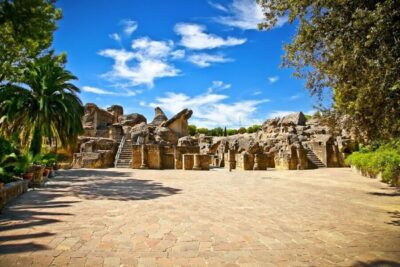
Visit to Italica Roman Ruins Tour tickets included
Read our review →
Private hald day tour to the historic roman city of Italica
Read our review →Browse the lists this tour appears in