
Reviewed · MUSEUMS
Private Tour of the Museum of Fine Arts, Seville
Seville’s Museum of Fine Arts puts some of Andalusia’s finest painting and sculpture inside a former convent that is itself part of the experience. In two hours, a private guide leads you from Sevillian Gothic art through the Renaissance and Baroque to 19th-century local painting, with special attention to Murillo and the artists who shaped Seville.
I like the private format, since you can follow the guide’s pace and ask about the works that catch your eye. I also like the strong local focus: this is not a general European art tour, but a close look at Seville’s artists, religious life, and artistic traditions. The main drawback is the price, $261 for up to four people, which is a serious expense for a two-hour museum visit unless you fill the group or care deeply about art.
In This Review
- Key points at a glance
- Why Seville’s Museum of Fine Arts deserves two hours
- Meeting at Plaza del Museo
- From Gothic beginnings to the Sevillian Renaissance
- Baroque Seville through Zurbarán, Valdés Leal, and Alonso Cano
- The former church and Murillo’s Seville
- Sculpture from Santa María de las Cuevas
- 19th-century Sevillian life and costumbrismo
- What the private format is worth
- Who will get the most from this visit
- Practical details before you reserve
- Should you book the Museum of Fine Arts private tour?
- FAQ
- Where does the tour begin?
- Where does the tour end?
- How long does the tour last?
- What languages are available?
- Is museum admission included?
- How many people can join the private group?
- Who will I look for at the meeting point?
- Can I cancel for a refund?
Key points at a glance
- A former convent in Plaza del Museo: The setting gives the visit architectural interest before you even reach the galleries.
- Art from Gothic to the 19th century: You follow the development of Sevillian art across several important periods.
- A dedicated Murillo room: The former convent church holds a major display devoted to Bartolomé Esteban Murillo.
- Important Baroque names: Works by Zurbarán, Valdés Leal, and Alonso Cano show Seville at its artistic height.
- Sculpture by Martínez Montañés and Juan de Mesa: These pieces add depth to a collection often associated mainly with painting.
- A two-hour private visit: English and Spanish are available, with Julio praised for clear context and an engaging manner.
Why Seville’s Museum of Fine Arts deserves two hours
Many people come to Seville for the cathedral, palace, and flamenco. The Museum of Fine Arts gives you a quieter view of the city, one shaped by convents, religious orders, local patrons, and workshops. Its collection explains why Seville became such an important center for Spanish art.
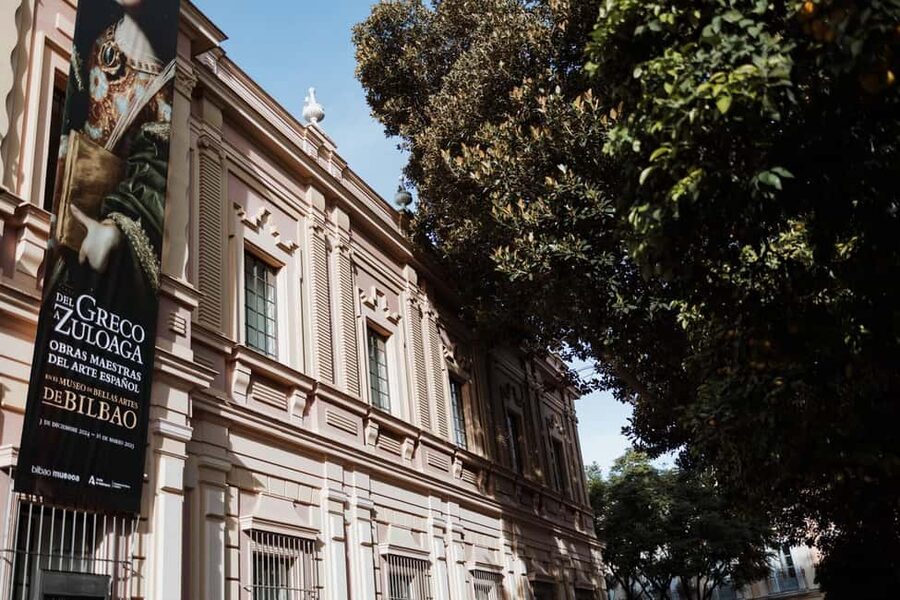
The museum is housed in the former Convent of La Merced. The building began in the 13th century and was remodeled in the 17th century, so you are not simply walking into a modern gallery with old paintings on the walls. Renaissance and Baroque design frame the visit, and the former church provides one of the most memorable rooms in the museum.
That setting matters. Much of the collection was made for churches, convents, and religious communities. Seeing these works in a former religious complex helps you understand their original purpose. The paintings were not created only for private admiration. They taught religious stories, honored saints, encouraged devotion, and displayed the skill of local artists.
I would allow the full two hours. The museum is large enough to reward a guided route, but not so sprawling that a focused visit feels rushed. A guide can help you spend time on the key works rather than losing energy among rooms that may have less meaning for your interests.
More museums in Seville:
- Seville: Puro Flamenco Show with Optional Museum Ticket
★ 4.8 · 6,088 reviews - Jerez de la Frontera: Andalusian Horse Dance and Museums
★ 4.7 · 1,289 reviews - Seville: Museum of Illusions Entry Ticket
★ 4.2 · 1,196 reviews
Meeting at Plaza del Museo
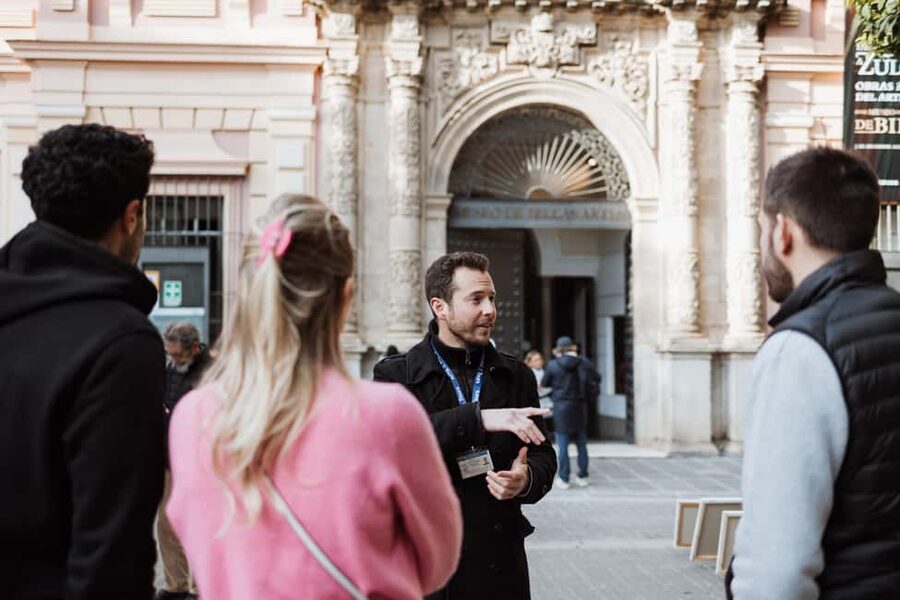
The tour begins and ends at Plaza del Museo, a useful arrangement because you do not need transport between the meeting point and the museum. Your guide waits at the selected meeting point with a blue umbrella or a company name badge from Seville Guides & Tours.
Give yourself enough time to reach the plaza without rushing. The meeting point is straightforward, but the quality of the visit depends on starting calmly and finding the guide before the two-hour clock begins. Look for the blue umbrella or the company name badge rather than relying only on a phone call.
The plaza also gives you a first sense of the museum’s place in Seville. You are in the historic center, close to one of the city’s major cultural buildings, not at an isolated attraction reached by a long transfer. When the tour ends, you return to the same point, which makes it easy to continue exploring on foot.
The guide speaks English or Spanish, and the booking information lists the tour as wheelchair accessible. Since the visit is private, you can ask the guide to explain terms, repeat a point, or spend more time with a particular artist. That flexibility is more useful here than on a large group tour, since the collection covers several centuries and can otherwise feel like a fast parade of names.
From Gothic beginnings to the Sevillian Renaissance
The collection traces the growth of art in Seville, beginning with Sevillian Gothic works. These early pieces offer a useful starting point because they show the city before the Renaissance brought new ideas about the human body, space, and classical influence.
You will then reach important Renaissance works, including Torrigiano’s San Jerónimo Penitente. The sculpture is described as a milestone in the Sevillian Renaissance, and it gives the guide a chance to explain how sculpture changed during this period. A three-dimensional figure can communicate physical strain, emotion, and religious devotion in a different way from a flat painted image.
This is one reason a guide helps. If you move through the museum alone, you might admire the sculpture without knowing why it matters in Seville. A good explanation connects the object to the local development of art rather than treating it as an isolated masterpiece.
The route also includes works linked to Francisco Pacheco and the Mercedarian order. His series dedicated to San Pedro Nolasco and San Román Nonato represents Mannerism, a style that followed the Renaissance and often favored unusual proportions, sophisticated poses, and a more controlled, artificial feeling.
You do not need to arrive with a background in art history. The useful question is not simply What style is this? It is how the style reflects changing taste, religious needs, and artistic training in Seville. That is the kind of context this tour is designed to provide.
Baroque Seville through Zurbarán, Valdés Leal, and Alonso Cano
The Baroque section is likely to be the center of the visit for many people. Seville produced several major artists during this period, and the museum brings together works by Francisco de Zurbarán, Juan de Valdés Leal, and Alonso Cano, along with leading Sevillian painters.
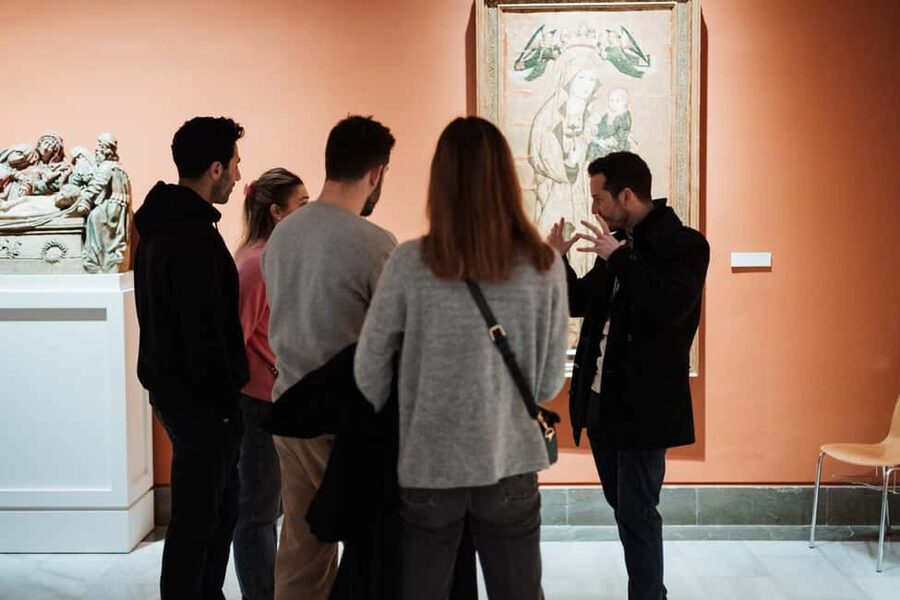
Baroque art can be easy to recognize once you know what to watch for: drama, strong emotion, theatrical light, and figures arranged to pull your eye into the scene. A guide can point out how these artists made religious subjects feel immediate and human, rather than distant or purely symbolic.
Zurbarán is known for powerful religious images, often with a calm, direct force. Valdés Leal brings a more intense and sometimes unsettling mood. Alonso Cano adds another important voice to the period. The value of seeing these artists together is that you can compare their choices instead of learning about each one in isolation.
The tour does not promise that every room will receive equal attention. That is a strength, not a problem. Two hours is enough for a thoughtful selection, but not enough for a line-by-line account of the whole museum. Expect the guide to choose works that explain the collection’s main story and Seville’s place in Spanish art.
If you prefer to read every label or examine each painting at length, a private tour may leave you wanting extra time afterward. Ask the guide near the end which rooms or works deserve a second look, then stay on your own if museum rules and opening hours allow. The supplied details do not specify an additional self-guided period, so treat that as something to confirm locally.
A few more Seville tours worth comparing
- Seville: Royal Alcázar Entry Ticket
★ 4.6 · 28,378 reviews - Seville: Cathedral and La Giralda Entry Ticket
★ 4.5 · 24,592 reviews - Seville: Live Flamenco Dancing Show Ticket at the Theater
★ 4.7 · 16,396 reviews - Seville: Casa de la Memoria Flamenco Show
★ 4.8 · 12,964 reviews
The former church and Murillo’s Seville
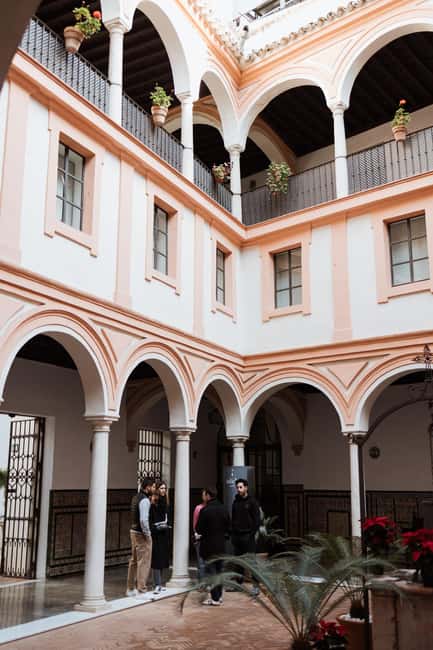
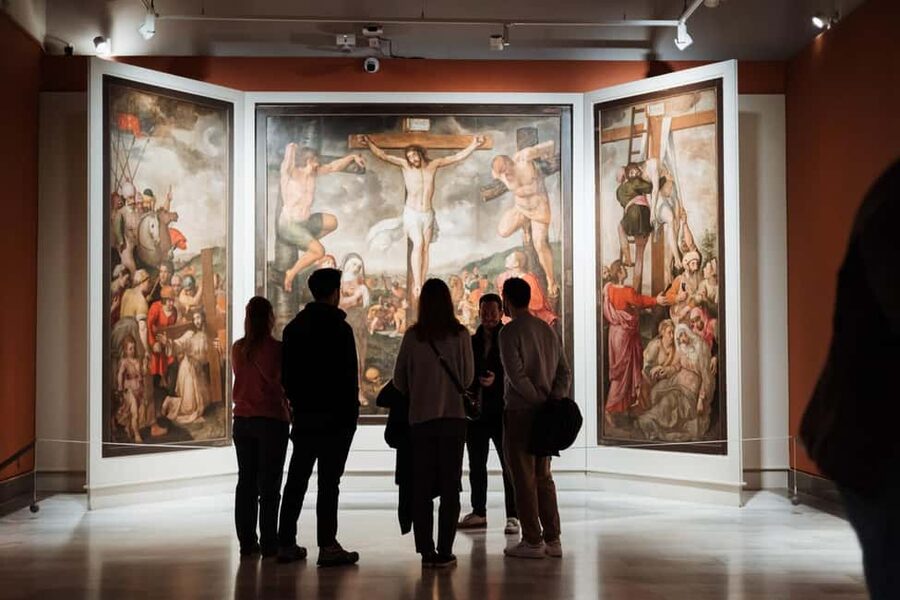
The spectacular room devoted to Bartolomé Esteban Murillo occupies the former church of the convent. This is one of the strongest reasons to visit the museum, since the architecture and the paintings belong together in a way that a standard gallery cannot reproduce.
Murillo is closely tied to Seville, and his work helps explain the city’s religious and artistic character. The dedicated room gives the guide a natural place to discuss his subjects, methods, and importance. It also gives you a clear pause in the chronology, a point where the museum’s building and collection reinforce each other.
Pay attention to the room itself, not only to the paintings. The former church changes the scale of the experience. Religious works displayed in a former sacred space carry a different sense of place than they would in a plain white gallery.
The guide named in the available feedback is Julio. He is described as personable, gracious, and strong at explaining the historical setting and the importance of the art to Seville and Europe. Guides can vary by date, so Julio should not be assumed for every booking, but his name is useful if you are able to request or confirm him.
Sculpture from Santa María de las Cuevas
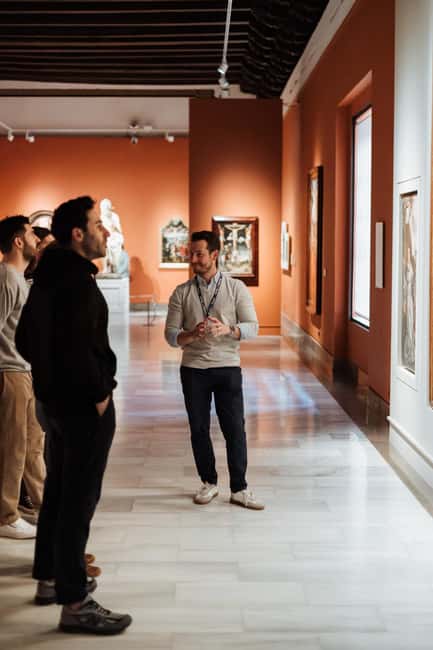
The museum is not only a painting collection. Another important section includes sculptures from the former Convent of Santa María de las Cuevas, including work by Martínez Montañés and Juan de Mesa.
These artists are central names in Sevillian sculpture. Their presence broadens the tour and helps you see how religious art worked across different materials. Paintings shape a scene with color and light, while sculpture uses volume, surface, posture, and the viewer’s position in the room.
This section may be especially useful if you have already seen Seville’s churches and want to understand the artistic tradition behind their figures and altarpieces. The tour can connect what you see in the museum with the wider religious art of the city, although the exact works discussed depend on the guide and the available route that day.
I appreciate this part of the collection because it prevents the visit from becoming a simple parade of famous painters. Sculpture gives the museum a more rounded story and shows the skill of artists whose work shaped public worship and local visual culture.
19th-century Sevillian life and costumbrismo
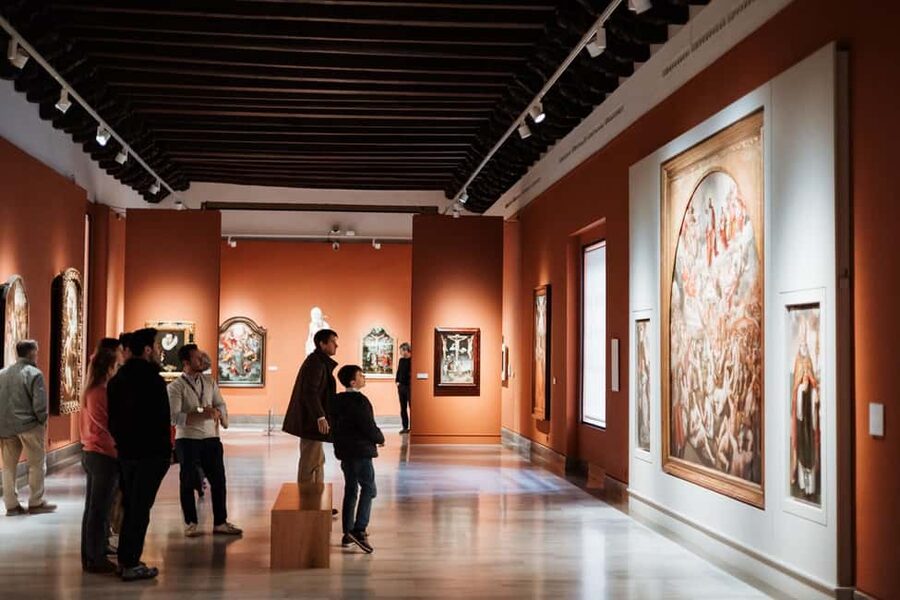
The final major period is 19th-century Sevillian costumbrismo. This style focuses on local customs, people, clothing, work, and daily scenes. It brings the story closer to recognizable life in Seville and offers a change from the religious subjects that dominate earlier rooms.
The collection includes Gonzalo Bilbao, Antonio María Esquivel, and José Villegas Cordero. These artists help show how Sevillian painting changed as the city entered a modern period and artists looked more closely at local identity and ordinary life.
For me, this later section gives the tour a satisfying finish. You begin with medieval and religious art, move through the Renaissance and Baroque, and end with scenes tied to the culture of Seville itself. The sequence makes more sense than seeing a random selection of beautiful objects.
If your main interest is Murillo or Spanish Baroque painting, you may find the 19th-century rooms less compelling. Still, they are worth keeping in the route because they show that Seville’s art did not stop with its famous religious painters.
What the private format is worth
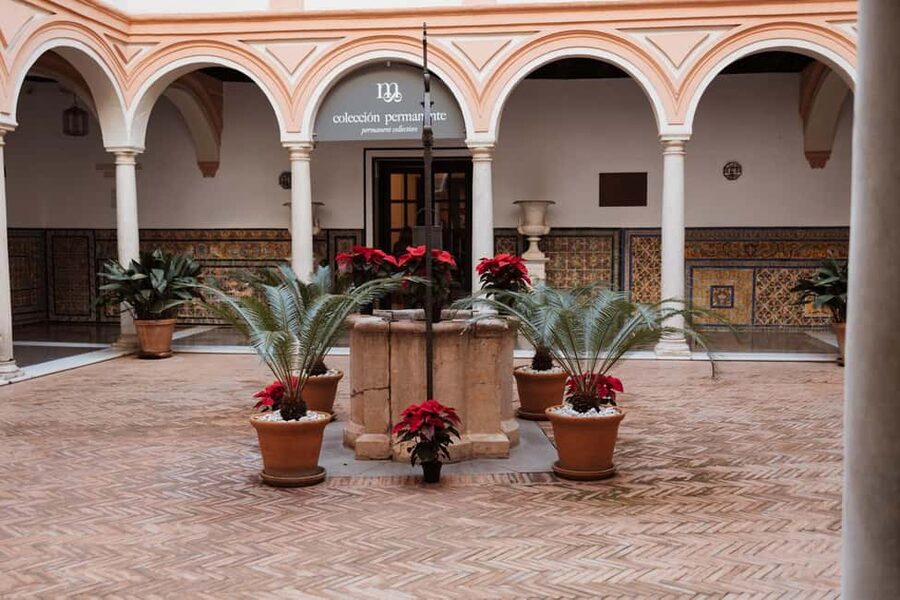
The listed price is $261 for a group of up to four people. That is the total group price rather than a per-person amount, so four people would pay about $65.25 each, while two people would pay about $130.50 each. The museum entrance and an English or Spanish-speaking guide are included. Food, drinks, and gratuity are not included.
At full capacity, the price is easier to justify. You are paying for a private guide, not just admission, and the subject benefits from explanation. The best value comes when your group has a shared interest in art and wants to ask questions without slowing down strangers.
For one person or two people, the cost is harder to defend unless you place a high value on expert interpretation or have limited time in Seville. A standard museum visit costs less, but it will not give you the same tailored route or personal attention.
I would book this for a couple, family, or small group that wants a serious cultural visit without spending half a day in a museum. I would skip it if you prefer to wander alone, read labels, and decide your own route. The private format is the reason to pay the premium.
The two-hour length is practical. It fits into a sightseeing day and avoids the fatigue that can set in during a much longer art tour. Check the available starting times before booking, since the schedule varies.
Who will get the most from this visit
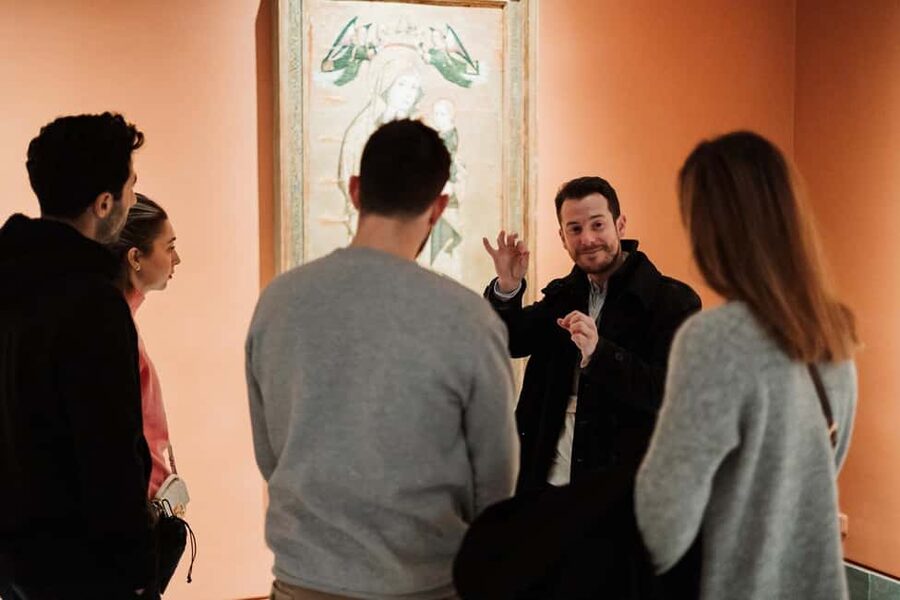
This tour suits you if:
- You want to understand Seville through its artists and religious institutions.
- You enjoy painting but do not want to prepare by reading an art-history book.
- You are interested in Murillo, Zurbarán, Valdés Leal, or Sevillian sculpture.
- You are traveling with up to three companions and can share the group price.
- You prefer asking questions to listening quietly in a large group.
- You want a cultural stop in the historic center rather than another major outdoor monument.
It may not suit you if you have little interest in religious art. Much of the collection comes from churches and convents, and the tour spends substantial time on Christian subjects, saints, orders, and devotional works.
The museum can also be a poor fit for anyone who wants a quick list of famous paintings and nothing else. The real benefit is the story of how art developed in Seville, from Gothic beginnings to the Baroque and later local scenes.
Practical details before you reserve
The tour lasts two hours and begins and ends at Plaza del Museo. Your guide carries a blue umbrella or a Seville Guides & Tours name badge, and the activity is offered in English or Spanish.
Admission to the museum is included. Food and drinks are not, and gratuity is optional rather than part of the stated price.
The activity is listed as wheelchair accessible. If you have specific mobility needs, confirm the details when booking so the meeting arrangement and museum route work well for you.
You can cancel up to 24 hours in advance for a full refund. The reserve-now, pay-later option lets you hold a place without paying today, which may help if you are still arranging your Seville schedule.
Three perfect ratings praise Julio’s personal manner, historical explanations, and choice of works. That points to the tour’s central strength: not simply getting inside the museum, but understanding why these works matter to Seville and to European art.
Should you book the Museum of Fine Arts private tour?
Book it if you want a focused, personal introduction to Seville’s art and can share the $261 group price with several people. The former convent, Murillo room, Baroque collection, and Sevillian sculpture give the visit plenty of substance, while the two-hour format fits neatly into a busy day.
Think twice if you are traveling alone, watching your budget, or mainly want to browse without guidance. For the right group, this is a thoughtful way to meet Seville through its painters and sculptors, with enough local context to make the museum’s rooms feel connected rather than random.
FAQ
Where does the tour begin?
The tour begins at Plaza del Museo in Seville.
Where does the tour end?
The activity ends back at the meeting point in Plaza del Museo.
How long does the tour last?
The guided visit lasts two hours.
What languages are available?
The tour is available in English or Spanish.
Is museum admission included?
Yes. Entrance to the Museum of Fine Arts is included.
How many people can join the private group?
The price covers a private group of up to four people.
Who will I look for at the meeting point?
Your guide waits with a blue umbrella or a Seville Guides & Tours name badge.
Can I cancel for a refund?
Yes. You can cancel up to 24 hours in advance for a full refund.
Just added around Seville
- Seville: Wine and Gourmet Tapas Tour★ 5.0 · 3 reviews
- Tapas Tour Cordoba & Wine Experience with chef and sommelier★ 4.8 · 3 reviews
- The most complete tour of Seville: All the highlights included★ 5.0 · 3 reviews
- Seville: Spritz Tasting Experience★ 4.8 · 3 reviews
- Ronda and White Villages Private Day Trip from Seville★ 5.0 · 3 reviews
- Jerez: Historic center of Jerez and horse show★ 5.0 · 3 reviews
- SEVILLE: REAL ALCÁZAR TOUR★ 5.0 · 3 reviews
- Royal Alcazar of Seville Guided Tour★ 5.0 · 3 reviews
Museums, compared.
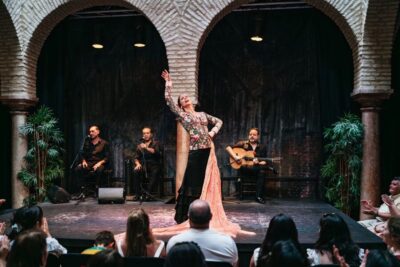
Puro Flamenco Show with Optional Museum Ticket
Read our review →


A Fantastic Visit To The Museum Of Illusions Seville
Read our review →
Medina Azahara Museum and Archaeological Site Tour
Read our review →
Combined ticket: Puro Flamenco Show + Flamenco Museum visit
Read our review →
Browse the lists this tour appears in