
Reviewed · HORSES
Jerez de la Frontera: Andalusian Horse Dance and Museums
Jerez’s Andalusian horse show is far more than a polished performance. It is a close look at a Spanish tradition where horse, rider, music, costume, and old-fashioned ceremony work together. The horses perform pirouettes, piaffe, Spanish walk, airs above the ground, and paired routines in the Royal Andalusian School’s elegant arena.
I like two things in particular: the horses’ precision and calm, and the chance to see the training areas, stables, tack, carriages, and museums before the show. You get both the spectacle and the working world behind it. The main drawback is timing. The schedule is tightly packed, some areas close on Saturdays and public holidays, and the seating can feel uncomfortable during the 90-minute performance.
- A 90-minute equestrian ballet combines classical dressage, Doma Vaquera, carriage driving, Spanish music, and 18th-century style costumes.
- The Art Equestrian Museum explains how horses shaped Andalusian culture through 11 rooms of displays.
- The Carriage Museum presents historic vehicles, harnesses, costumes, and the skills needed to drive them.
- Training areas and stables can add a valuable behind-the-scenes look before the show.
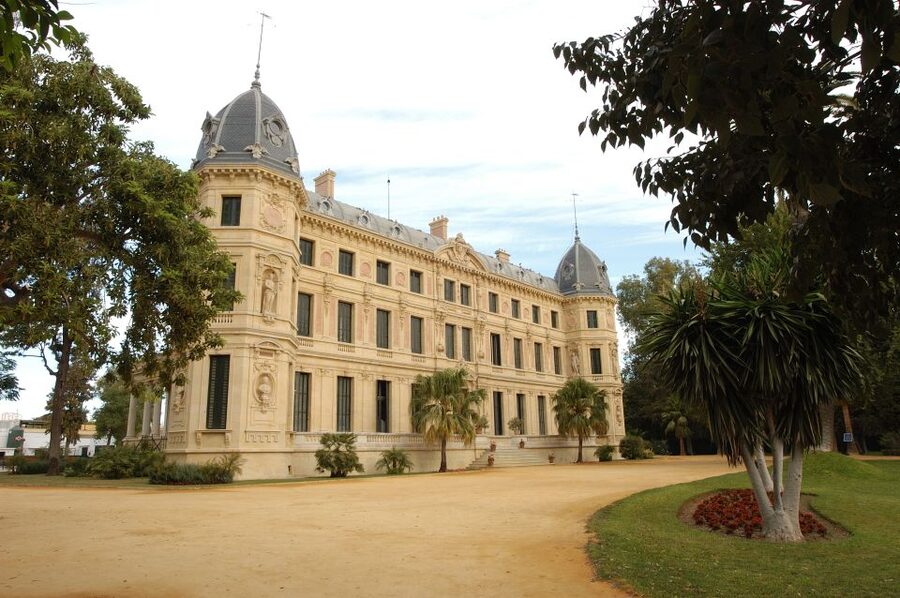
- The palace gardens provide a pleasant setting, with exotic plants and 19th-century architecture.
- The $38 price is good value if you have time for the show and museums, not just the performance.
In This Review
- Why the Andalusian Horse Show Feels Different
- Spanish Music, Traditional Dress, and Doma Vaquera
- Begin With the Film and 19th-Century Palace
- Eleven Rooms in the Art Equestrian Museum
- The Saddlery Shows the Work Behind the Show
- The Carriage Museum Is Worth Your Time
- Seeing the Horses Before They Enter the Arena
- Planning Around the Noon Performance
- Getting to the School From Jerez, Seville, or Cádiz
- Is $38 Good Value for Three and a Half Hours?
- Who Will Enjoy This Most?
- Should You Book the Andalusian Horse Experience?
- FAQ
- How long does the experience last?
- What does the horse show include?
- Where do I exchange my ticket?
- What museums are included?
- What are the museum opening hours?
- Are the palace and saddlery always open?
- Can I take photographs or record video?
- Is the experience wheelchair accessible?
- What should I bring?
Why the Andalusian Horse Show Feels Different
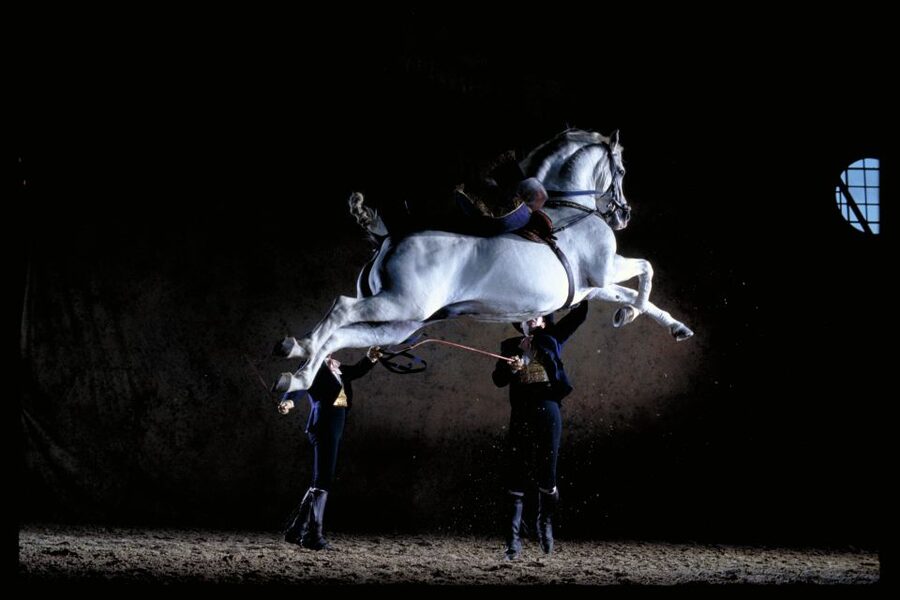
The main event, How the Andalusian Horses Dance, takes place at the Royal Andalusian School of Equestrian Art in Jerez de la Frontera. It is presented as a ballet, and that description fits. The horses do not simply run, jump, or parade. They move through controlled exercises with the poise of trained dancers.
The performance lasts from noon until 1:30 PM. Expect six to eight choreographies, though the exact selection may vary. The program can include The Colts, Airs on Horseback, Pas de Deux, Passage and Piaffer, Domino on Horseback, Airs Above the Ground, and Fantasy.
The names sound grand, but the appeal is easy to understand once you see the movement. In the Pas de Deux, two horses and riders work together. In the passage and piaffe sections, the animals lift their legs with extraordinary control while appearing almost to remain in place. The Spanish walk is instantly recognizable, while the more advanced haute école exercises show how much balance and trust sit behind the show.
The highest, most dramatic movements are called airs above the ground. These can include levades, caprioles, and courbettes. They require strength from the horse and exact timing from the rider. The show also includes group work, with horses and riders performing in unison. That final coordinated display gives the performance its proper finish.
Spanish Music, Traditional Dress, and Doma Vaquera
The presentation is carefully rooted in Spain. Classical music accompanies the exercises, and the riders wear costumes inspired by the 18th century. This is not a modern arena production with flashing lights and loud effects. Its style is formal, restrained, and ceremonial.
You will also see movements based on Doma Vaquera, the traditional working style associated with Spanish cattle ranching. That gives the performance a different character from the famous Lipizzaner shows in Vienna. The basic discipline is classical dressage, but the Spanish setting, riding traditions, costumes, and references to rural work make the show distinctly Andalusian.
The horses are usually the main reason people book. You do not need to ride or own horses to admire the show, but an interest in animals helps you understand what you are seeing. The performance is quiet enough for you to notice the relationship between rider and horse. Many families find the movement absorbing, and even young children can follow the drama of the animals entering, pairing off, and working as a group.
The horses’ control is impressive, but the atmosphere is not meant to be wild or dangerous. The power is held in reserve. What you see is a carefully rehearsed display of obedience, balance, and communication.
More Horse Experiences in Jerez
- Jerez de la Frontera: How the Andalusian Horses Dance
★ 4.6 · 6,168 reviews - Jerez: Yeguada de la Cartuja Carthusian Horses Tour
★ 4.8 · 970 reviews - From Seville: Jerez, Cádiz and Andalusian Horses
★ 4.4 · 143 reviews
Begin With the Film and 19th-Century Palace
The entrance is through the Visitor Reception Centre. If you arrive early, the digital cinema offers an audiovisual presentation about the history of equestrian art in Andalusia. It is available until 11 AM, so check the timing before settling into the rest of the visit.
This film is useful because it gives the show some context. Without it, a visitor unfamiliar with Spanish riding traditions may see elegant horses performing difficult movements without knowing why those movements matter. The presentation helps connect the horses to Andalusia, the school, and the long development of equestrian art.
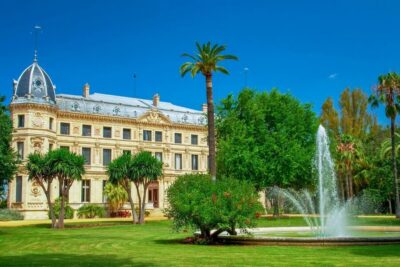
From the reception area, you move into the gardens. They contain a variety of exotic plants and provide a calm pause before the museums and show. The palace rises above them in grand 19th-century style. It is not simply a backdrop for the arena. The architecture sets the tone for the whole visit, which feels more like a formal cultural institution than a casual animal attraction.
You may want to allow a few minutes to walk through the grounds at an unhurried pace. The site is clean and well organized, and the gardens give you a chance to slow down before the performance. In hot weather, they may also be your best place to find a little relief between indoor areas.
Eleven Rooms in the Art Equestrian Museum
The Art Equestrian Museum is in the palace basement and is open from 10 AM to 2 PM. Its 11 rooms cover the origins and development of equestrian art and the role of the horse in Andalusia.
This is the part of the visit that turns the show into more than an hour and a half of pageantry. You see how riding developed as both practical work and formal art. Displays and film clips explain the school, horse training, and different parts of equestrian culture. Information is available in both Spanish and English, which makes the museum easier to use if you do not read Spanish.
The museum is not only about famous horses. It also helps you notice the tools and methods behind the performance. Saddlery, harnesses, clothing, and training traditions all contribute to what happens in the arena. Once you understand that, a piaffe or carriage turn becomes less of a mysterious trick and more of a highly trained skill.
I would not rush through this museum. If you have booked the experience for the horse show alone, it is tempting to treat the exhibits as something to tick off. Give the displays time, especially if you want to understand the difference between formal dressage and working traditions such as Doma Vaquera.
The Saddlery Shows the Work Behind the Show
The saddlery is where harnesses are made and repaired. It is an especially useful stop for anyone curious about how the horses and carriages are prepared.
The show’s elegance depends on a large amount of practical work. Leather, fittings, bridles, saddles, and carriage harnesses must be maintained carefully. The saddlery lets you see that craftsmanship rather than only the finished display.
Opening times matter here. The saddlery and palace are closed on Saturdays and public holidays, so do not assume every part of the complex will be open on every performance day. The Art Equestrian Museum and Carriage Museum have their own hours, so check the schedule when planning your visit.
A completely different day out from Jerez:
- Jerez: Royal Andalusian School of Equestrian Art Admission
★ 4.6 · 882 reviews - Jerez: Bodegas Fundador Guided Tour with Tasting Session
★ 4.8 · 714 reviews - Jerez: Guided Winery Tour with Wine Tasting
★ 4.4 · 636 reviews - From Seville: Cadiz and Jerez de la Frontera Day Trip
★ 4.2 · 595 reviews
The Carriage Museum Is Worth Your Time
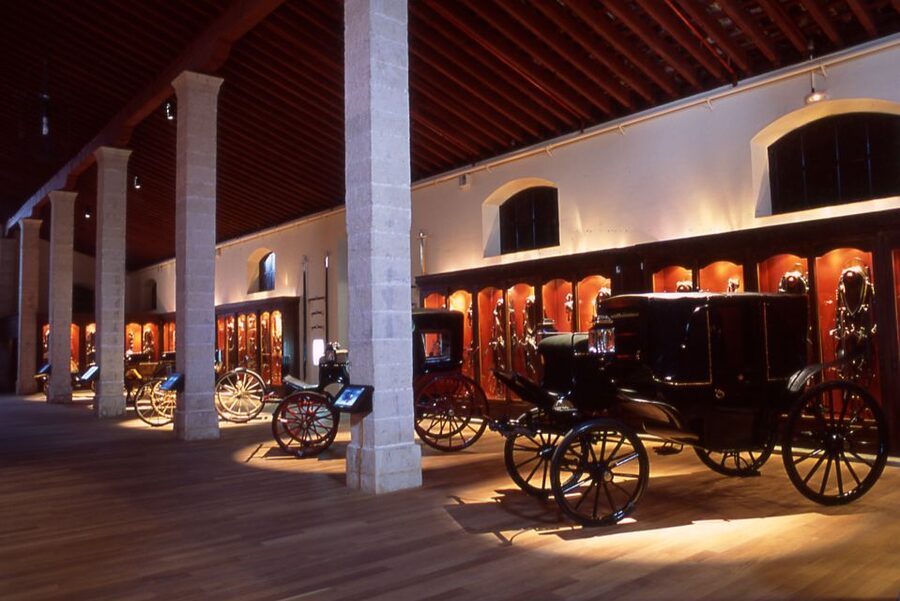
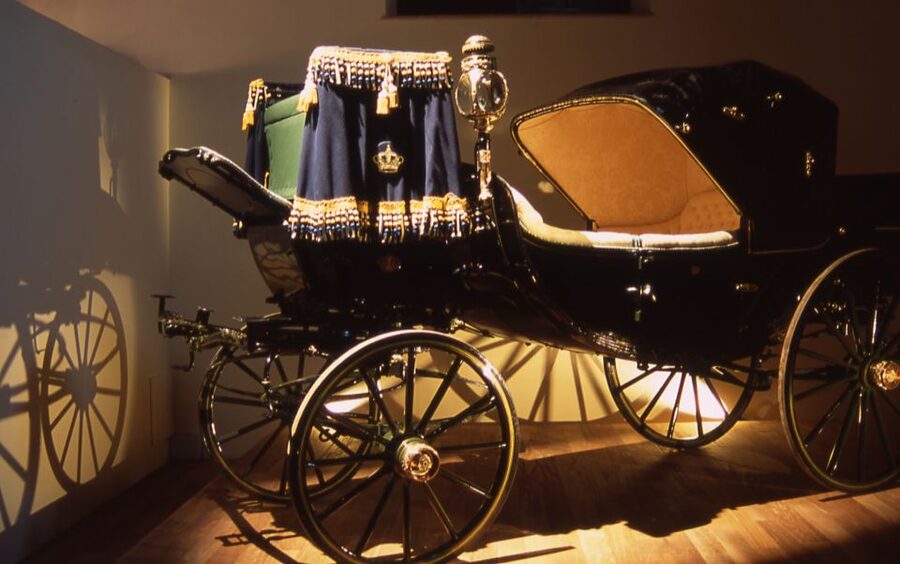
The Carriage Museum comes at the end of the visit and is open from 10 AM to 3 PM. It contains historic vehicles once used for transportation and now used for sport and exhibitions, along with harnesses and equestrian costumes.
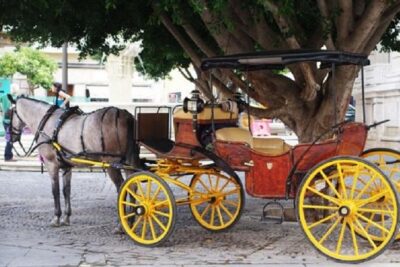
The carriages are not decorative leftovers. They show how much skill is needed to handle a team of horses from a coachman’s position. During the show, you may see drivers demonstrate precise control as horses pull the vehicles around the arena. The carriage section adds a second form of horsemanship to the day.
I would save enough time for this museum rather than treating it as a quick final room. The vehicles are substantial, and the costumes and harnesses help explain the formal image of the school. Photography restrictions apply across the visit, so you will need to look closely and remember what you see rather than rely on pictures later.
Seeing the Horses Before They Enter the Arena
One of the most valuable parts of the visit can be watching horses in the training areas and stables. Depending on the day and access arrangements, you may see horses being groomed, warmed up, schooled, or prepared for the performance.
This behind-the-scenes view changes the way you watch the show. You see the patience involved in grooming and preparation, and you can observe how much care the staff give the animals. Some visitors are able to get quite close to the horses in the stables or see them on the horse walker.
The training areas can be as interesting as the main performance, especially if you work with horses or have a serious interest in riding. They show that the polished arena routine rests on daily practice. If an optional behind-the-scenes or training portion is available when you book, I would consider paying extra for it if horses are your main reason for coming.
There is one practical catch. Directions between parts of the school are not always perfectly clear. You may be asked to leave one area and walk along the main street to find another entrance. Follow the signs, ask staff for help, and allow extra time rather than assuming every museum door is inside the same building.
Planning Around the Noon Performance
The schedule rewards an early start. The audiovisual presentation ends at 11 AM, the Art Equestrian Museum runs until 2 PM, and the Carriage Museum closes at 3 PM. The show occupies the middle of the day, from noon to 1:30 PM.
A sensible plan is to arrive early, see the film if it is open, visit the palace and Art Equestrian Museum, then make your way toward the arena. After the show, you can see the Carriage Museum and any remaining grounds or stable areas.
Do not leave the museums until the end without checking their closing times. The show is the fixed centerpiece, but the supporting attractions are what make the $38 admission feel worthwhile.
The venue is wheelchair accessible. Bring your passport or ID card, since it is required information for the visit. Pets are not allowed, and smoking, glass objects, weapons, sharp objects, and video recording are prohibited. Cameras are also listed as not allowed, so plan for a phone-free, camera-free experience. That restriction may disappoint you, but it does keep the audience focused and prevents flashes from distracting the horses.
Seating is the one area where expectations should be moderate. Some seats provide good views and generous legroom, while other seating has been found uncomfortable. If you have mobility concerns, ask staff for help when exchanging your ticket.
Getting to the School From Jerez, Seville, or Cádiz
When you arrive at the Royal Andalusian School, go to the ticket office and exchange your ticket. Staff are described as helpful and multilingual, and the exchange process is straightforward.
From Jerez train station, a taxi ride takes about 10 minutes. The walk back to the station takes roughly 25 minutes, according to the practical timing available from the visit. You can also reach the school on foot from central Jerez, though the exact walk depends on where you stay.
If you are coming from Seville by train, buy your return ticket in advance. Afternoon trains can sell out, and a late finish at the school can leave you waiting for the next available service. A taxi is also useful if you are arriving with luggage. Staff may be able to store bags, but do not build your entire transport plan around that courtesy.
From the port of Cádiz, a taxi ride takes about 30 minutes, making the experience possible during a port stop if your ship schedule allows plenty of room. If you are driving, parking can be difficult, and surrounding streets may carry fines. Public transport or a taxi is less stressful.
Is $38 Good Value for Three and a Half Hours?
At $38 per person, this is good value if you use the full three and a half hours. The price covers the 90-minute show, the audiovisual presentation, the palace when open, the saddlery when open, the Art Equestrian Museum, and the Carriage Museum.
The price is less attractive if you arrive just before noon and leave immediately after the performance. The horse ballet is the star, but the museums explain why the show looks the way it does. I would treat the admission as a cultural visit with a performance at its center, not as a simple theater ticket.
Free cancellation up to 24 hours before the scheduled visit and reserve-now, pay-later booking make it easier to fit into a changing Andalusia itinerary. Still, the real planning issue is the performance day and the opening calendar. Check the available start times and avoid a Saturday or public holiday if the palace and saddlery matter to you.
Who Will Enjoy This Most?
This is an easy choice for horse lovers, riders, and anyone interested in Spanish traditions. The combination of classical dressage, Doma Vaquera, carriage driving, and traditional costume gives you a strong sense of place.
It also suits families. The show is visual, musical, and easy to follow even if you know little about dressage. Young children may not have the patience for every museum room, but the horses and carriages provide plenty to hold their attention.
You do not need to be an expert, though horse knowledge will help you appreciate the more technical movements. If you prefer informal animal encounters, this may feel too formal. The horses are presented in a disciplined artistic setting, not as a petting experience or open farm visit.
The no-camera rule may also frustrate photographers. If you can put the phone away and watch closely, the restriction becomes less of a problem. You will remember more of the show than you would after spending half of it trying to frame a picture.
Should You Book the Andalusian Horse Experience?
I would book this for a visit to Jerez, especially if you can arrive early and stay through the museums. The show is the emotional highlight, but the stables, training areas, saddlery, palace, and carriage collection give the experience substance.
Book with care if you need a specific return train, are visiting on a Saturday or public holiday, or dislike firm schedules. Bring identification, skip the camera, and allow time to find the different entrances.
For $38, you get a distinctive piece of Andalusian culture rather than a generic stage show. If the sight of a horse performing a perfect piaffe sounds appealing, this is one of the strongest reasons to make time for Jerez.
FAQ
How long does the experience last?
The full experience lasts about 3.5 hours. The horse show itself runs from 12 PM to 1:30 PM.
What does the horse show include?
The show includes six to eight choreographies based on classical dressage, Doma Vaquera, and traditional equestrian work. Exercises may include the Spanish walk, piaffe, passage, pirouettes, levades, caprioles, courbettes, carriage driving, paired routines, and group performances.
Where do I exchange my ticket?
Go to the ticket office at the Royal Andalusian School of Equestrian Art when you arrive.
What museums are included?
Admission includes the Art Equestrian Museum and the Carriage Museum. The visit can also include the palace, saddlery, gardens, and an audiovisual presentation, subject to opening times.
What are the museum opening hours?
The Art Equestrian Museum is open from 10 AM to 2 PM. The Carriage Museum is open from 10 AM to 3 PM. The audiovisual presentation is available until 11 AM.
Are the palace and saddlery always open?
No. The palace and saddlery are closed on Saturdays and public holidays.
Can I take photographs or record video?
The listed rules prohibit cameras and video recording. Plan to visit without photography equipment.
Is the experience wheelchair accessible?
Yes, the activity is wheelchair accessible.
What should I bring?
Bring your passport or ID card. Pets, smoking, glass objects, weapons, sharp objects, cameras, and video recording are not allowed.
More Museums in Jerez
- Seville: Puro Flamenco Show with Optional Museum Ticket
★ 4.8 · 6,088 reviews - Seville: Museum of Illusions Entry Ticket
★ 4.2 · 1,196 reviews - A Fantastic Visit To The Museum Of Illusions Seville
★ 4.5 · 390 reviews - Cordoba: Medina Azahara Museum and Archaeological Site Tour
★ 4.8 · 199 reviews
Just added around Jerez
- Jerez: Historic center of Jerez and horse show★ 5.0 · 3 reviews
- Jerez de la Frontera: 1.5-Hour Walking Tour with a Guide★ 5.0 · 3 reviews
- Visit to the Church of San Miguel★ 5.0 · 3 reviews
- JEREZ DE LA FRONTERA: GUIDED TOUR TO THE COOPERAGE★ 5.0 · 3 reviews
- Jerez Historic Guided Tour with Horse Show★ 5.0 · 4 reviews
- Jerez: Tour Bodegas Páez Morilla ESPAÑOL/DEUTSCH★ 5.0 · 4 reviews
- From Jerez: Day Trip to Tangier with Ferry & Lunch★ 4.8 · 5 reviews
- JEREZ DE LA FRONTERA: PREMIUM GUIDED TOUR TO THE COOPERAGE★ 5.0 · 5 reviews
Horses, compared.
Jerez & Cadiz Winery with Tasting & Opt Horse Show from Seville
Read our review →Browse the lists this tour appears in