
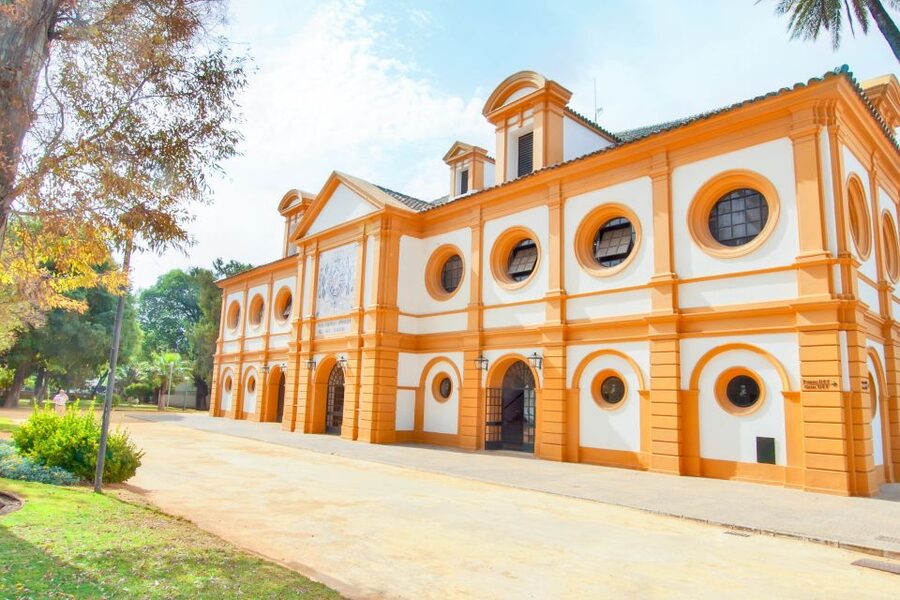
Reviewed · JEREZ TOURS
Jerez: Royal Andalusian School of Equestrian Art Admission
Jerez’s Royal Andalusian School is not simply a horse show venue. It is a working school where you can watch Andalusian horses training, inspect their immaculate stables, and see the craft behind the saddles and harnesses. I especially like the hands-on look at the humidity-controlled tack room and the chance to watch riders work in the arena. The palace and gardens give the visit welcome variety.
The main thing to check is your ticket type and timing. This admission covers the school facilities and training, not the full How the Andalusian Horses Dance performance. Guided stable visits and training displays also follow a schedule, and some English tours have started around 11:15 rather than at the booked time.
In This Review
- Key points before you book
- Why this school matters in Jerez
- Begin with the history of Andalusian riding
- Walk through Garnier’s palace and formal gardens
- The Museum of Equestrian Art in 11 rooms
- Enter the saddlery and humidity-controlled tack room
- Watch the horses train in the arena
- Get close to the horses in the octagonal stables
- Finish with the carriage museum
- How the guided visit works
- Price, timing, and practical trade-offs
- Who will enjoy this visit most
- Should you book the Royal Andalusian School?
- FAQ
- How long does the visit last?
- Does this ticket include the full horse show?
- Can I watch the horses train?
- Is the stable visit guided?
- Can I visit on a Saturday?
- What do I need to bring to collect my ticket?
Key points before you book
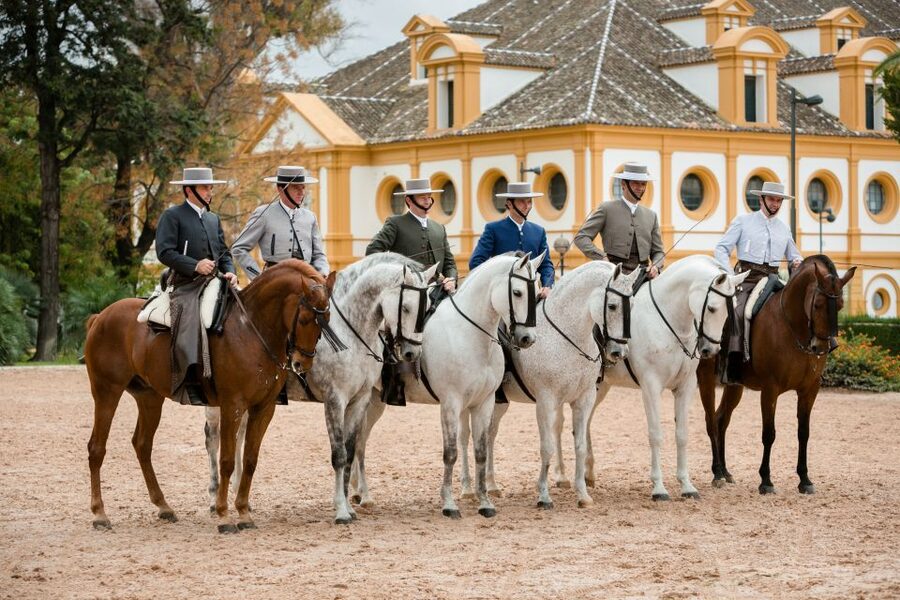
- Watch real training, not only a display: See riders and horses work in the outdoor rings and indoor arena on scheduled days.
- Enter the octagonal stables: The stable complex brings you close to the school’s best-known horses, although touching them is not guaranteed.
- See working saddlery: The master harness maker and apprentices make and repair equipment, except on Saturdays.
- Explore 11 museum rooms: The Museum of Equestrian Art explains the horse’s role in Andalusia, with interactive displays and historic objects.
- Allow more than two hours if you can: The formal visit lasts about two hours, but the museums, grounds, and training areas can keep you there longer.
- Expect a morning-focused visit: Some facilities close or have limited service later in the day, and the full program can change.
Why this school matters in Jerez
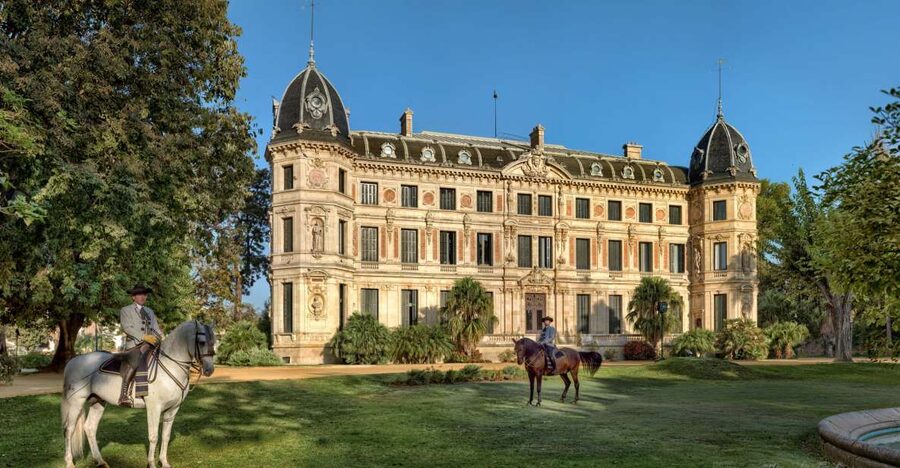
Jerez is known for sherry, flamenco, and horses, and this school brings the equestrian side of the city into clear view. The Royal Andalusian School of Equestrian Art trains horses and riders in classical dressage, preserving a style closely tied to Andalusian culture.
That makes the visit more interesting than a quick look at handsome animals. You see the daily work behind the polished performances: grooming, saddlery, training, stable care, and the patient communication between rider and horse.
At $18 per person, the admission is strong value if you have any interest in horses, riding, Spanish design, or local traditions. You are not paying for one short arena show. The ticket includes a group of facilities that would otherwise be separate stops: the palace rooms, gardens, horse museum, stables, training areas, saddlery, tack room, and carriage museum.
The experience also works for people who are only vaguely interested in horses. The palace, historic displays, and carriage collection give you enough to see even if you cannot tell a piaffe from a pirouette. Horse lovers, though, will find the working areas are the real reason to come.
More Jerez trips:
- Jerez de la Frontera: How the Andalusian Horses Dance
★ 4.6 · 6,168 reviews - Jerez de la Frontera: Andalusian Horse Dance and Museums
★ 4.7 · 1,289 reviews - Jerez: Yeguada de la Cartuja Carthusian Horses Tour
★ 4.8 · 970 reviews
Begin with the history of Andalusian riding
Your visit starts at the visitor reception center. An audio-visual presentation on equestrian art in Andalusia is available until 11:00 in the morning, so arriving early matters if you want this introduction.
This presentation helps put the rest of the school in context. Without it, the horses and equipment are beautiful but can seem like a series of disconnected sights. With some background first, you can better understand why the school treats riding as both sport and art.
Timing here can be a little awkward. One English-language visit began around 11:15, and the introductory video has not always run as expected. The program may be altered by management, so I would build in patience rather than planning a tight connection afterward.
Printed or mobile proof of your booking is essential at the ticket office. If you buy a discounted ticket, carry the required proof of eligibility. Without it, you may have to pay the difference to the standard price, assuming full-price tickets are still available.
Walk through Garnier’s palace and formal gardens
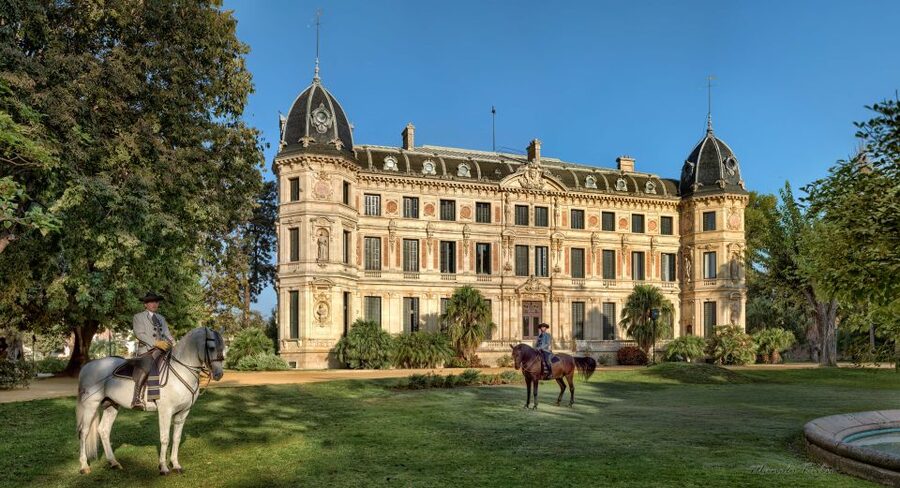
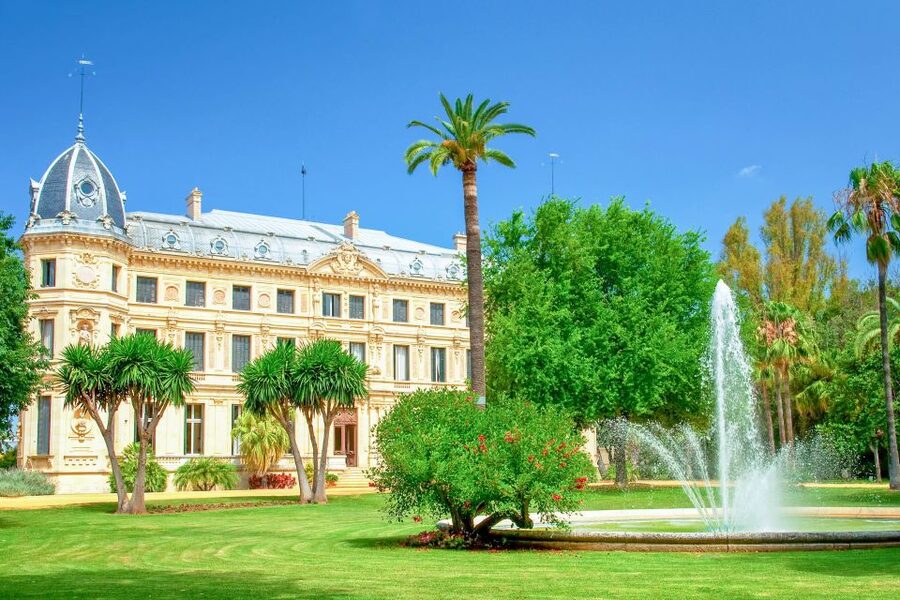
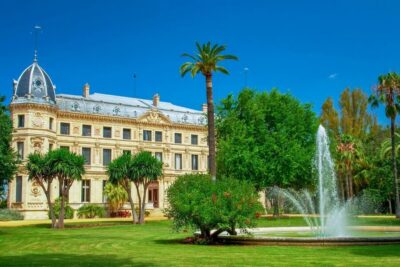
From reception, you enter the school gardens. The grounds provide a calm opening to the visit, with exotic plants arranged around a large central fountain. Water jets draw your eye toward the palace and make the approach feel more ceremonial than an ordinary museum entrance.
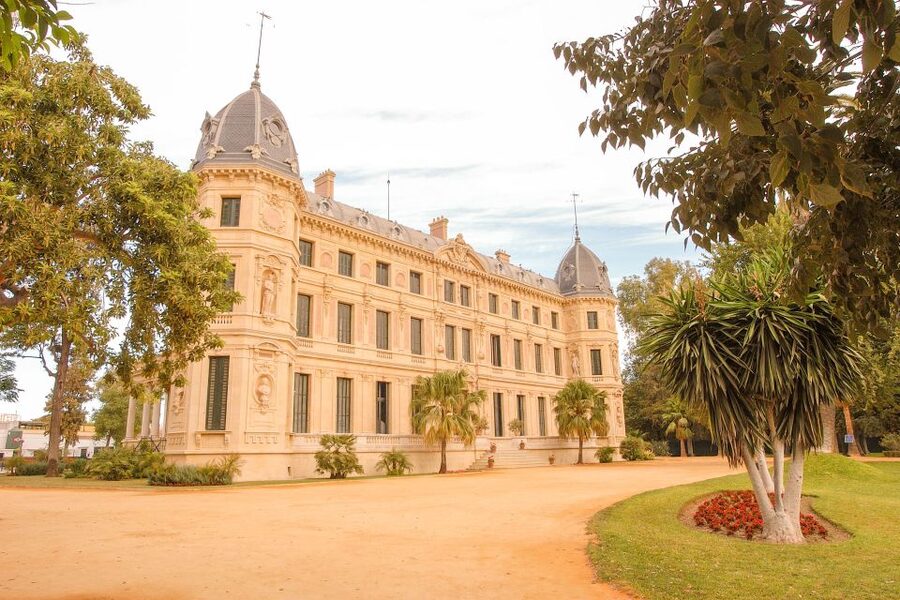
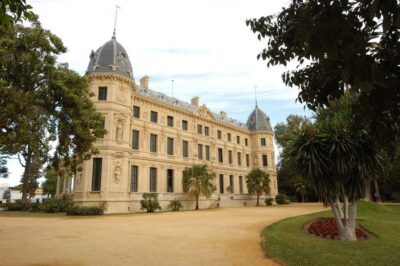
The palace was designed by Charles Garnier, the architect associated with grand 19th-century European buildings. Here, the setting matters. The school’s horses are not kept in an anonymous sports complex. They train beside an elegant building and formal gardens that reflect the institution’s royal image.
On the ground floor, you can see halls decorated in their original style. These rooms are worth taking at a slower pace, especially if you appreciate architecture and interiors. They also give non-riders something substantial to enjoy while other members of your group focus on the horses.
The gardens are easy to underestimate. They are not the main attraction, but they create breathing room between the reception area, palace, museums, and training facilities. In hot weather, the open grounds can also make the visit feel more tiring, so take water before entering. Bottles and cans are not allowed inside the grounds, however, so follow the school’s instructions about what you may bring.
The Museum of Equestrian Art in 11 rooms
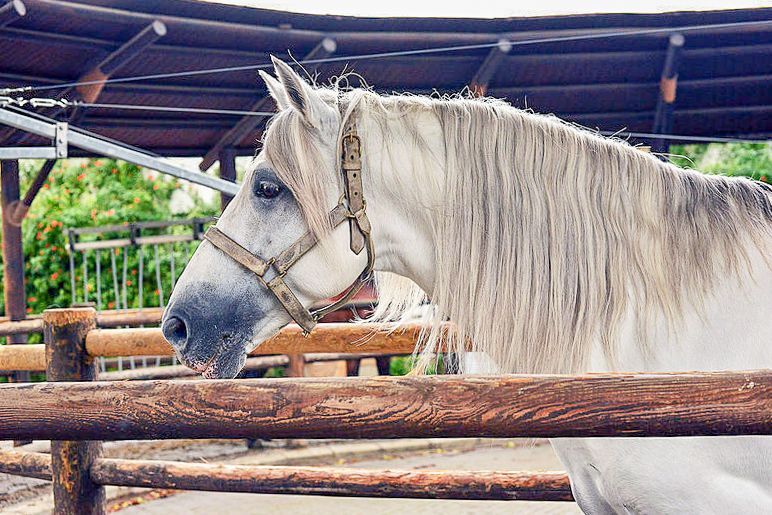
The Museum of Equestrian Art occupies the basement and contains 11 rooms devoted to the origins and development of equestrian art in Andalusia. It covers the horse’s place in the region and the work of the Royal School itself.
This is more than a collection of saddles on a wall. The displays explain the movements and training traditions that lead to the controlled, highly polished work seen in the arena. You also get a better sense of how horses, riders, equipment, and ceremony fit together.
Interactive exhibits add variety. Some video displays have not always worked, so do not expect every screen to be operating. Even with that limitation, the museum remains useful because it supplies the background that the live training alone cannot provide.
I would visit the museum before or after the stable tour, depending on your assigned schedule. If your guided portion begins later, the museum and palace give you a sensible way to use the waiting time. Read the displays at your own pace, and save enough energy for the carriage museum at the end.
A completely different day out from Jerez:
- Jerez: Bodegas Fundador Guided Tour with Tasting Session
★ 4.8 · 714 reviews - Jerez: Guided Winery Tour with Wine Tasting
★ 4.4 · 636 reviews - From Seville: Cadiz and Jerez de la Frontera Day Trip
★ 4.2 · 595 reviews - Jerez de la Frontera: Sherry Winery Tour with Tasting
★ 4.6 · 309 reviews
Enter the saddlery and humidity-controlled tack room
One of the most valuable parts of this visit is the look at the saddlery. The school’s master harness maker and apprentices make and repair the equipment used by horses and riders.
This is a fine reminder that equestrian performance depends on skilled hands well beyond the arena. A poorly fitted saddle or damaged harness can affect both horse and rider, so the craft is practical, not just decorative. You may see the tools, materials, and careful work that keep the school functioning.
The tack room is another highlight. It holds the harnesses used for everyday training and public shows, and it is humidity controlled to protect the leather. That detail tells you how seriously the school treats its equipment. The room is not merely storage. It is part of the school’s daily system of care.
The saddlery and related demonstrations are not available on Saturdays according to the activity information. If this behind-the-scenes work is a priority, choose another day.
Watch the horses train in the arena
Training is the heart of the visit. Outdoor exercise rings let you see horses and riders working through their routines, while the indoor arena provides a more formal setting in authentic Andalusian style.
The indoor arena seats 1,600 people and is designed for both training and shows. Seeing it without the full performance can be surprisingly revealing. You watch the exercises in a working setting, where repetition and precision matter more than theatrical effect.
Depending on the day and schedule, you might see stallions being lunged, carriage driving, or riders practicing dressage movements. The quality of the horses and the control of the riders make even a practice session worth your attention.
Photography is restricted inside the arena, so do not assume you can record everything. Also, training is listed as unavailable on Saturdays. This is one of the most important distinctions between visiting during the week and arriving on a weekend.
The atmosphere can vary. Sometimes you may watch from good seats in the sun, while at other times you may be part of a larger group waiting for the next activity. The school is generally well organized, but language groups and bus tours can affect the flow.
Get close to the horses in the octagonal stables
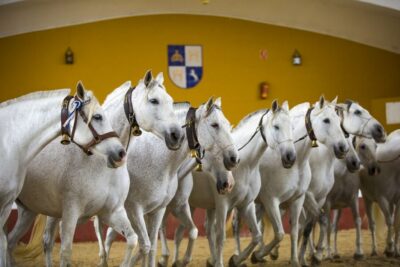
The stables form an octagonal complex and contain some of the school’s most emblematic horses. This is where the visit feels most personal. You see the animals at rest, close enough to study their size, coloring, posture, and calm behavior.
The horses are beautifully cared for, and the premises are kept very clean. That matters because the stables show the daily reality behind the performances. You are not seeing animals brought out for a few minutes and then hidden away. You are seeing their living and working environment.
The central tack room holds the equipment used for training and shows. A guide can explain how the various pieces are stored and used, and you can ask about the horses and their care. Guides assigned to this portion have included Javi, Elena, and Harry, although your guide will depend on the date and language of your visit.
You might be able to touch a horse during the visit, but do not book this expecting a guaranteed hands-on encounter. Some people have found the experience slightly distant when horses remained behind the bars. That is understandable, but the school’s focus is observation and training rather than a petting session.
Finish with the carriage museum
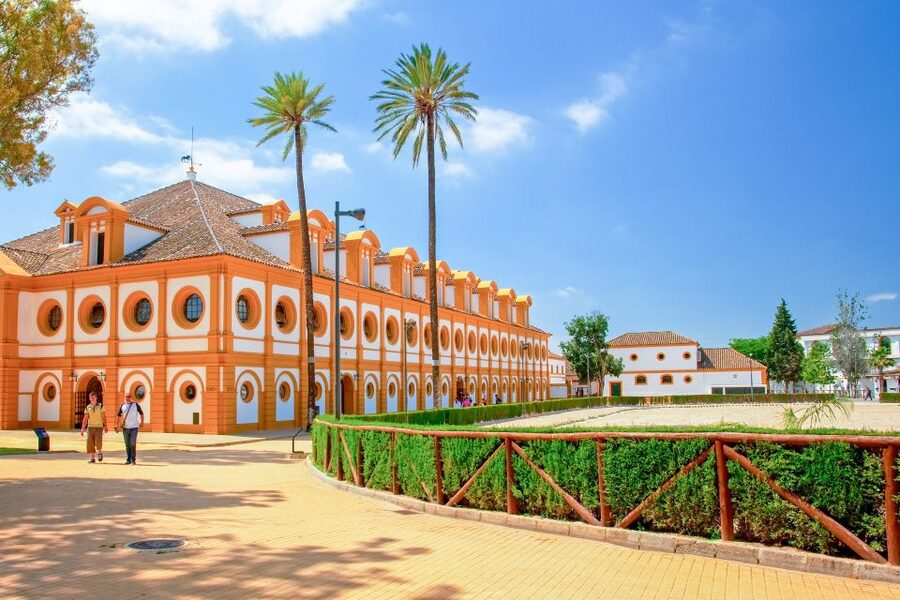
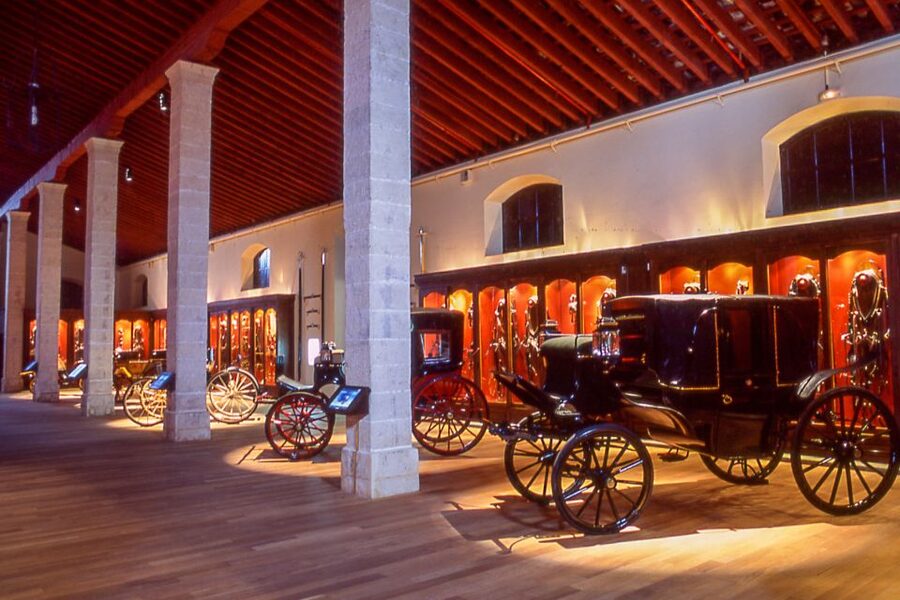
The carriage museum marks the final part of the route. Its collection includes carriages, horses, harnesses, and equestrian costumes.
This stop rounds out the visit by showing how horses served transport, ceremony, and public life before modern travel changed those roles. The vehicles also make the connection between practical horsemanship and formal spectacle.
The carriage museum is easy to skip if you are tired, visiting in hot weather, or spending too long in the stables. I would try to keep it on your plan. It is included in the admission and helps you see the school’s traditions from a different angle.
The route includes a lot for one admission. You may spend close to the stated two hours, or longer if you explore independently and catch additional training. One person spent nearly four hours on the grounds, though that is not necessary for everyone.
How the guided visit works
The guided element is most useful in the working areas. You can look at a stable or piece of equipment on your own, but a staff guide explains what you are seeing and answers questions about the horses, training, and care.
Guides are available in Spanish, English, French, and German. The quality of an individual language tour can vary, and the timing of language groups may not always match the time you expected. If a fluent English guide is important to you, ask at the ticket office when you arrive and allow some flexibility.
The guide is often a school employee, which is a real advantage. You get explanations from someone connected to the institution rather than a general city guide repeating a short script. That can make the saddlery, tack room, and stable sections much more meaningful.
Still, expect some group management. If an English group is small, you might wait for other English-speaking visitors or join a larger multilingual schedule. The horse training remains understandable even when the spoken explanation is less clear.
Price, timing, and practical trade-offs
At $18, this is one of Jerez’s better-value cultural visits. The price includes full admission to the school facilities, not just entry to the museum. The combination of live training, stables, palace, gardens, and two museums gives you a full morning rather than a single exhibit.
The ticket does not automatically mean you are attending the famous staged horse performance. If you specifically want the polished show, check that you are booking the performance rather than the admission and training visit. Confusion between these products has caused disappointment, especially for people who expected a full dance presentation.
Plan your visit around the school’s operating rhythm. The audio-visual introduction is available until 11:00, training and saddlery access exclude Saturdays, and older scheduling information indicates that some areas may close by 2:00 in the afternoon. Check the current starting time before you commit to another appointment.
Free cancellation is available up to 24 hours before the visit, and you can reserve now while paying later. The site is wheelchair accessible. Do not bring animals, bottles, cans, or items management considers unsuitable, and remember that a printed or mobile receipt is required at the ticket office.
There is a café, but opening times and food choices may be limited. I would not rely on it for a full meal. A thunderstorm can also change the comfort of the garden and outdoor viewing areas, so a little weather flexibility helps.
Who will enjoy this visit most
I would choose this experience for:
- Anyone who loves horses or classical dressage.
- Families and mixed-interest groups, since the palace, museum, gardens, and carriages offer more than horse training.
- Visitors who want to see how a major performance institution works behind the scenes.
- People with a morning free in Jerez.
- Anyone comparing the cost of a full show with a lower-cost cultural visit.
I would be more cautious if you only want to watch a finished performance. This ticket is about the school and its daily work. It may satisfy you, but it is not a substitute for the full show.
It is also not ideal for a rushed itinerary. The school has several separate areas, and the experience improves when you can wait for training, listen to the guide, and walk through the museums without checking the clock.
Should you book the Royal Andalusian School?
Yes, if you want a close look at Andalusian horses, the people who care for them, and the setting where they train. The best parts are the stables, tack room, saddlery, and arena. The horses are superb, the facilities are exceptionally clean, and the guide adds useful detail.
Book on a weekday if training and saddlery matter most. Arrive prepared for schedule changes, confirm that you have chosen the admission visit rather than the full performance, and allow at least two hours. If you can spare extra time, add the carriage museum and enjoy the palace gardens at an unhurried pace.
For $18, you get far more than a quick glimpse of horses. You get a practical look at a living Andalusian tradition, with enough art, architecture, and museum material to make the visit worthwhile even for people who do not ride.
FAQ
How long does the visit last?
The stated duration is two hours. You may spend longer if you take your time in the museums, gardens, palace, and carriage collection or watch additional training.
Does this ticket include the full horse show?
The admission covers the school facilities, including the training areas and museums. It does not state that the full staged performance is included, so check the exact ticket option before booking.
Can I watch the horses train?
Yes, training takes place in the outdoor exercise rings and indoor arena, except on Saturdays according to the activity information. The exact program may be changed by management.
Is the stable visit guided?
Yes. The visit includes a guided tour of the stables and tack room. Guides may speak Spanish, English, French, or German, depending on the scheduled option.
Can I visit on a Saturday?
You can visit the school facilities, but horse training and saddlery activities are listed as unavailable on Saturdays. Choose another day if those parts are important to you.
What do I need to bring to collect my ticket?
You must show your printed receipt or mobile booking confirmation at the ticket office. If you purchased a discounted ticket, you must also show proof of eligibility.
Just added around Jerez
- Jerez: Historic center of Jerez and horse show★ 5.0 · 3 reviews
- Jerez de la Frontera: 1.5-Hour Walking Tour with a Guide★ 5.0 · 3 reviews
- Visit to the Church of San Miguel★ 5.0 · 3 reviews
- JEREZ DE LA FRONTERA: GUIDED TOUR TO THE COOPERAGE★ 5.0 · 3 reviews
- Jerez Historic Guided Tour with Horse Show★ 5.0 · 4 reviews
- Jerez: Tour Bodegas Páez Morilla ESPAÑOL/DEUTSCH★ 5.0 · 4 reviews
- From Jerez: Day Trip to Tangier with Ferry & Lunch★ 4.8 · 5 reviews
- JEREZ DE LA FRONTERA: PREMIUM GUIDED TOUR TO THE COOPERAGE★ 5.0 · 5 reviews
Jerez Tours, compared.
Bodegas Fundador Guided Tour with Tasting Session
Read our review →


Browse the lists this tour appears in