
Reviewed · SEVILLE PALACES
Private visit to Casa de Pilatos and Casa Salinas
Casa de Pilatos and Casa Salinas reveal two very different sides of Seville’s grand homes. One is a major palace with Gothic, Mudejar, and Renaissance design. The other is a smaller private residence where daily life still shapes the rooms. The walk between them adds old Jewish-quarter streets and two important churches.
I like the private format, since your guide can focus on your interests instead of delivering a fixed speech to a large group. I also like the route’s variety, moving from palace architecture to religious history and then to a Roman mosaic. The main drawback is simple: entrance tickets are not included, so the final cost is higher than the displayed $0 price suggests.
In This Review
- Key points to know before booking
- Casa de Pilatos brings Seville’s history into one courtyard
- San Bartolomé adds a short but useful history lesson
- Santa María la Blanca shows Seville’s changing religious identity
- Casa Salinas feels more personal than a public palace
- How the private format affects the experience
- Timing, meeting point, and practical details
- Who will get the most from this palace walk
- Should you book Casa de Pilatos and Casa Salinas?
- FAQ
- Where does the tour begin?
- Where does the tour end?
- How long does the experience last?
- Are entrance tickets included?
- Is entry to Iglesia de Santa Maria la Blanca included?
- Is this a private tour?
- Are radio guides required?
- Can I cancel for a full refund?
- What happens if bad weather cancels the tour?
Key points to know before booking
- Casa de Pilatos combines three design traditions: Gothic, Mudejar, and Renaissance details share the same courtyards, walls, ceilings, and stairways.
- Casa Salinas is still a private home: the rooms and ground-floor spaces retain a more personal feel than a formal museum.
- The route crosses San Bartolomé: narrow streets connect the palaces and provide context about Seville’s Jewish and Christian past.
- Two guides receive special praise: Clara has led visits in English and German, while Carmen is noted for her careful and attentive guiding.
- Tickets cost extra: your guide assists with buying admission at both palaces, but the tour price does not cover entry.
- The walk lasts about two hours: allow enough time to arrive at Casa de Pilatos and wear comfortable shoes for the streets between stops.
Casa de Pilatos brings Seville’s history into one courtyard
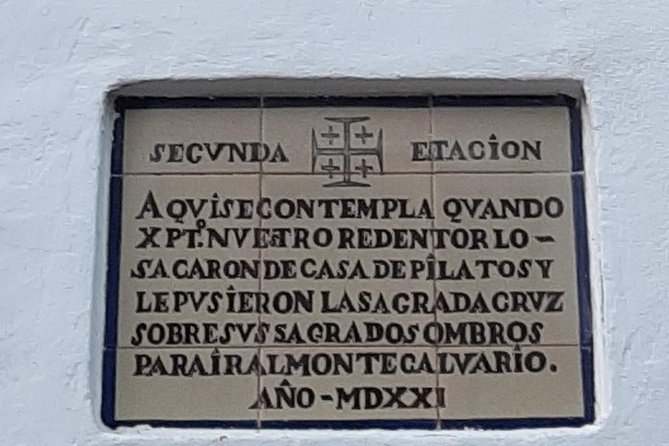
Casa de Pilatos is the natural place to begin. At first, the palace can seem like a beautiful collection of tiles, arches, gardens, and carved ceilings. Your guide helps connect those pieces to the people who built the house and the families who lived there.
The palace is especially useful for understanding how Seville’s Christian, Islamic, and Italian influences met. You will see Gothic, Mudejar, and Renaissance styles sharing the same complex rather than sitting in separate museum rooms. This mix gives Casa de Pilatos its character. It is not a single-style palace built according to one plan. It developed through different periods and tastes.
Pay close attention to the monumental entrance and the tilework covering the walls. The tiles are more than decoration. They create a strong visual rhythm around the courtyards and help explain the Spanish fondness for patterned ceramic surfaces. The guide can point out how the decorative details work with the building’s structure instead of simply sitting on top of it.
The sculpture collections add another layer. You will also see impressive coffered ceilings and the grand staircase leading to the upper floor. The staircase is one of the moments when the palace’s scale becomes clear. From there, the building feels less like a private residence and more like a carefully planned display of status.
The gardens provide a welcome pause, particularly during Seville’s warmer months. The tour description specifically includes time to discuss the cooler feel of these spaces and how the residents used the house. That practical angle matters. You are not only looking at architecture. You are considering how a large household moved through its rooms, courtyards, and gardens.
The visit here lasts about an hour. Admission is not included, and your guide assists with purchasing the ticket. That help is useful if you want to avoid handling the entry process alone, but you should confirm the current admission cost when booking since the advertised experience price is shown as $0.
More palace visits in Seville:
- Seville: Casa de Pilatos Ground Floor Entry Ticket
★ 4.5 · 5,691 reviews - Seville: Flamenco at El Palacio Andaluz with Optional Dinner
★ 4.5 · 1,119 reviews - Flamenco Show at El Palacio Andaluz Admission Ticket in Seville
★ 4.5 · 136 reviews
San Bartolomé adds a short but useful history lesson
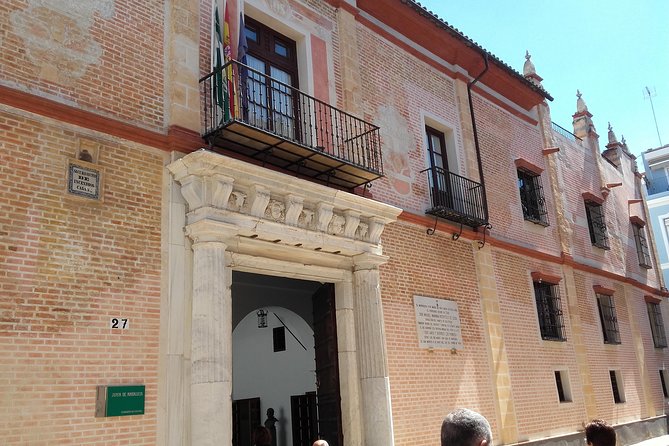
After Casa de Pilatos, you walk toward the second palace through the narrow streets of the San Bartolomé neighborhood. This is not a long transfer, but it gives the tour a better sense of place than a taxi ride would.
The route passes the House of Mañara and the Church of San Bartolomé. The church occupies the site of one of Seville’s three synagogues. That fact makes the street itself part of the experience. Your guide can help you picture how the neighborhood changed as Seville’s religious and political life shifted.
This section is best understood as a bridge between the two houses. It is not a separate guided attraction with a long interior visit. Instead, the streets and façades give you a chance to ask questions and see how palaces, churches, and former Jewish spaces sit close together in the old center.
You should expect some uneven pavement and narrow passages. The tour is described as suitable for most people, and it is near public transportation, but comfortable footwear remains a smart choice. The walk is short, yet standing and moving through historic streets can be tiring if you have already spent the morning sightseeing.
Santa María la Blanca shows Seville’s changing religious identity
The next stop is Iglesia de Santa Maria la Blanca. The visit is brief, about ten minutes, and admission is free. You pass in front of the church while learning that the building began as a mosque, was later ceded by Ferdinand III to Seville’s Jewish community for use as a synagogue, and was eventually changed into a church.
That sequence gives you a compact lesson in Seville’s changing religious identity. The building’s story is not presented as an isolated fact. It fits the wider route, which has already taken you past the former synagogue site associated with San Bartolomé.
Do not expect a long church visit here. The stop is mainly about context and explanation. If you want a detailed examination of every interior feature, the ten-minute timing may feel short. If you value a clear overview of how the city’s religious buildings changed use, it is a worthwhile pause.
This is also where a private guide can make a difference. Guides Clara and Carmen are both associated with this experience, and Clara is noted for leading tours in strong English and German. The available feedback also highlights her ability to shape an individual visit. That matters for a route with several layers of religious and architectural history, since you can ask for more detail or keep the pace moving.
Casa Salinas feels more personal than a public palace
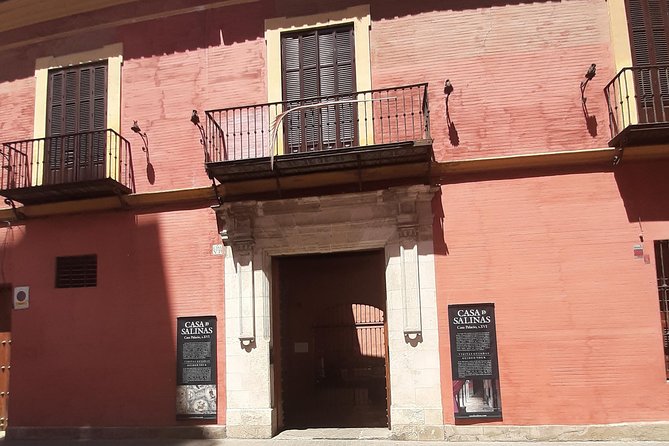
Casa Salinas is the quieter second half of the tour. This sixteenth-century palace house remains a private residence, and its owners have restored it with care. That private status changes how you experience the building.
Casa de Pilatos feels grand and ceremonial. Casa Salinas gives you a closer look at how an important Seville home might function from room to room. You visit ground-floor rooms that are still used by the owners, then continue into the courtyard.
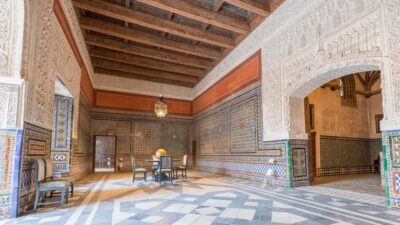
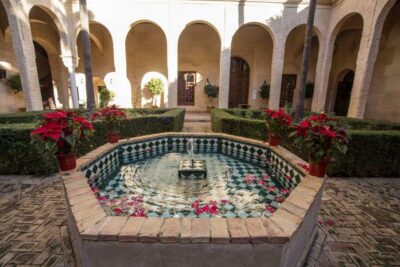
The courtyard is the architectural centerpiece. Look for the arched galleries, plasterwork, and Genoese marble columns. The combination is refined without feeling overly formal. Tiled wall panels and Cartuja windows add local character, while the open courtyard brings light into the surrounding rooms.
The Roman mosaic is the surprise here. In the courtyard, you see an impressive second-century mosaic dedicated to Bacchus, the Roman god of wine. It connects the house to Seville’s much older past and shows how archaeological remains can become part of a later residence.
Your time at Casa Salinas is about forty minutes. Admission is not included, so again, factor in the ticket price. The guide helps with purchasing entry, which keeps the transition straightforward, but you should not confuse assistance with included admission.
Carmen has been singled out for being well informed, attentive, and respectful during the visit. Those qualities fit Casa Salinas particularly well. A private home calls for a measured approach, and a good guide should explain the details without rushing you through rooms that still have a personal purpose.
A few more Seville tours worth comparing
- Seville: Royal Alcázar Entry Ticket
★ 4.6 · 28,378 reviews - Seville: Cathedral and La Giralda Entry Ticket
★ 4.5 · 24,592 reviews - Seville: Live Flamenco Dancing Show Ticket at the Theater
★ 4.7 · 16,396 reviews - Seville: Casa de la Memoria Flamenco Show
★ 4.8 · 12,964 reviews
How the private format affects the experience
This is a private activity, so only your group takes part. That is the main reason to choose it over a standard group walk. You can ask about a particular period, focus on architecture, or request more explanation about Seville’s Jewish and Christian past.
A private guide also helps with the practical rhythm of the day. The route includes two paid monuments and two short exterior or contextual stops. Your guide explains the sites and assists with ticket purchases, so you do not have to work out each palace visit on your own.
The format is especially useful if your group includes people with different interests. One person can ask about the sculpture collection at Casa de Pilatos, while another can focus on the owners and household life. The guide can also adjust the amount of detail, within the fixed two-hour timeframe.
The tradeoff is price clarity. The supplied price is listed as $0, but monument tickets, purchases, and any required radio guides are extra. For groups of seven or more, radio guides are required and charged at the beginning of the tour. Since this is a private walk, the cost can make sense for a small group that values personal attention, but you should confirm the actual booking price and admission fees before committing.
Timing, meeting point, and practical details
The tour begins at Casa de Pilatos, at Plaza de Pilatos, 1, in Seville’s old center. It ends at Casa Salinas, on Calle Mateos Gago, 39. That makes the route useful if you plan to continue sightseeing in the central area after the tour.
The total duration is about two hours. Casa de Pilatos takes around one hour, Santa Maria la Blanca about ten minutes, and Casa Salinas about forty minutes. The remaining time covers the walk through San Bartolomé and the explanations along the way.
A mobile ticket is provided. Confirmation is normally issued at booking, unless you book within nine days of the travel date. In that case, confirmation may arrive within 48 hours, subject to availability.
The activity is near public transportation, and service animals are allowed. Most people can participate. The experience requires good weather, and if poor weather causes cancellation, you are offered another date or a full refund.
Free cancellation is available up to 24 hours before the start time. Cancel within 24 hours, and you should not expect a refund. Any changes made inside that window are not accepted, with cut-off times based on Seville’s local time.
Who will get the most from this palace walk
I would choose this tour if you want architecture explained in context rather than simply photographed. Casa de Pilatos alone offers plenty to see, but the route becomes more meaningful when you connect its Mudejar details, Christian ownership, and Renaissance influences with the nearby religious sites.
It also suits you if you prefer smaller, slower experiences. The private setup gives you room to ask questions and avoid being tied to the interests of a large group. Clara’s English and German language ability may be useful for some visitors, while Carmen’s careful guiding style is another reason to confirm which guide is available for your date.
History-focused visitors will appreciate the route’s movement across several periods: Roman, Islamic, Jewish, Christian, and Renaissance. Architecture fans will find plenty to examine in the tiles, ceilings, columns, windows, and stairway. You will get less from it if you want a fast checklist of Seville’s biggest sights or a tour filled with dramatic spectacle.
The main limitation is that Casa Salinas may feel small after Casa de Pilatos. Its value comes from its private-home setting, restoration, and Roman mosaic, not from sheer size. That contrast is part of the point, but you should know what you are booking.
Should you book Casa de Pilatos and Casa Salinas?
Book this private walk if you want two distinctive historic homes, a guide who can tailor explanations, and a short route through Seville’s layered religious past. The strongest features are the mix of architectural styles at Casa de Pilatos, the lived-in quality of Casa Salinas, and the chance to connect both with San Bartolomé and Santa Maria la Blanca.
Before booking, confirm the real price, since admission tickets are extra and the displayed tour cost is $0. Check the language and guide assigned to your date, especially if you want English or German. I would also avoid scheduling it in poor weather, since the activity requires suitable conditions.
For a private group willing to pay separately for entry, this is a focused and thoughtful way to see two palaces that are easy to treat as mere photo stops. It is less suitable if you want an inexpensive tour with all admissions included.
FAQ
Where does the tour begin?
It begins at Casa de Pilatos, Plaza de Pilatos, 1, in Seville’s old center.
Where does the tour end?
The tour ends at Casa Salinas, Calle Mateos Gago, 39, in Seville.
How long does the experience last?
The tour lasts approximately two hours.
Are entrance tickets included?
No. Admission tickets to Casa de Pilatos and Casa Salinas are not included. The guide assists you with purchasing them.
Is entry to Iglesia de Santa Maria la Blanca included?
The stop at Iglesia de Santa Maria la Blanca is free.
Is this a private tour?
Yes. Only your group participates in the activity.
Are radio guides required?
Radio guides are required for groups of seven or more people. They are charged at the beginning of the tour.
Can I cancel for a full refund?
Yes. You can cancel at least 24 hours before the start time for a full refund. Cancellations within 24 hours are not refunded.
What happens if bad weather cancels the tour?
You will be offered a different date or a full refund if poor weather causes the experience to be canceled.
Just added around Seville
- Seville: Wine and Gourmet Tapas Tour★ 5.0 · 3 reviews
- Tapas Tour Cordoba & Wine Experience with chef and sommelier★ 4.8 · 3 reviews
- The most complete tour of Seville: All the highlights included★ 5.0 · 3 reviews
- Seville: Spritz Tasting Experience★ 4.8 · 3 reviews
- Ronda and White Villages Private Day Trip from Seville★ 5.0 · 3 reviews
- Jerez: Historic center of Jerez and horse show★ 5.0 · 3 reviews
- SEVILLE: REAL ALCÁZAR TOUR★ 5.0 · 3 reviews
- Royal Alcazar of Seville Guided Tour★ 5.0 · 3 reviews
Seville Palaces, compared.
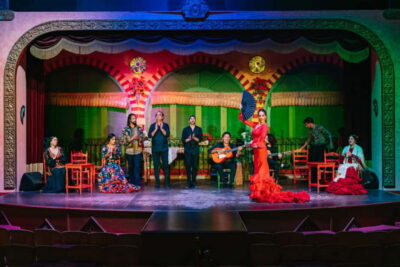
Flamenco at El Palacio Andaluz with Optional Dinner
Read our review →
Flamenco Show at El Palacio Andaluz Admission Ticket in Seville
Read our review →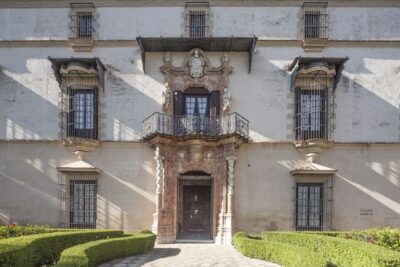
Palacio de Las Dueñas Entry Ticket and Guided Tour
Read our review →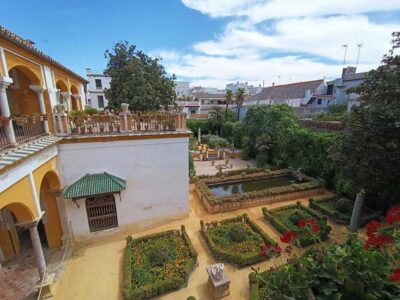
Guided visit of the Casa de Pilatos with entrance tickets
Read our review →
Palacio de Las Dueñas, La Macarena & Las Setas Tour
Read our review →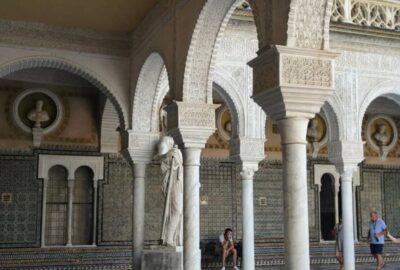
Browse the lists this tour appears in